Share
Field Notes
Avoiding Dockages and Pushing Yield with Wheat
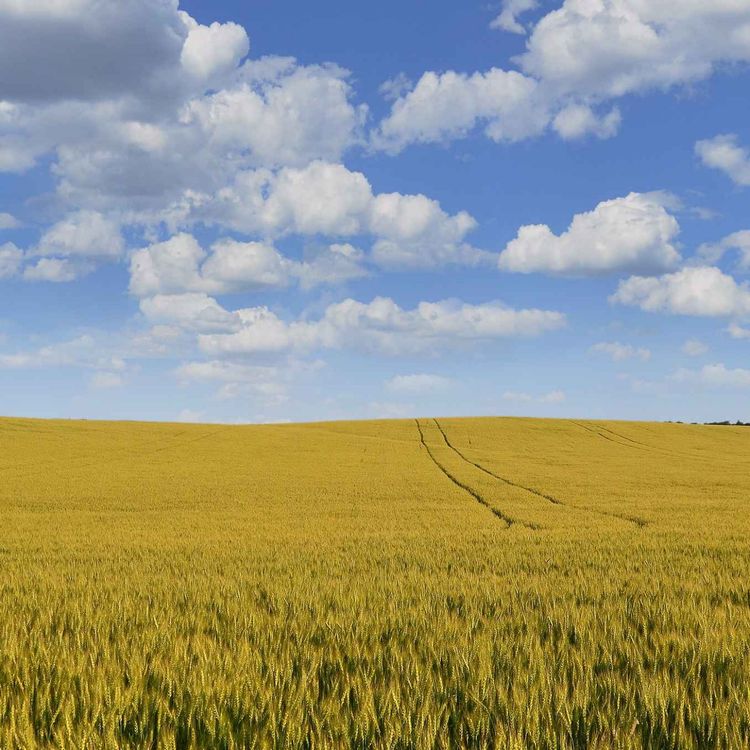
Before dairy, wheat was king in Wisconsin. Between 1840 and 1880, the state was largest wheat producer in United States, providing a full sixth of the nation's supply. Today, wheat is 5% of total grain crop (corn, soy, wheat) acres in the state. While there are benefits to having wheat in the rotation and a healthy local market for straw, a higher potential for dockages due to quality standards than corn or soy can be a deterrent for farmers. We talk with Charlie Hammer a farmer near Beaver Dam and independent crop consultant Bill Stangel of Soil Solutions Consulting about how they manage their significant wheat acreage in Dodge County to keep DON levels low and test weight high to meet grade and push yields.
Photo taken by Richard Hurd and under creativecommons.org/licenses/by/4.0/legalcode
More episodes
View all episodes
6. BMPs of NMPs #6: On-Farm Nutrient Management Implementation in Southwestern WI
09:40||Ep. 6On the sixth and final episode of the BMPs of NMPs, Landon Baumgartner and Dan Smith discuss the trends that they have seen in their home area of southwestern Wisconsin's driftless area. They highlight the importance of farmer innovation, particularly in the area's steep slopes, in forwarding the goals of nutrient management, including no-till planting, cover crops, and variable rate applications. While emphasis on reducing phosphorus losses from soil runoff and manure management remain key in the area, new attention is being paid to nitrogen loading, especially with the proximity of the Mississippi River.
5. BMPs of NMPs #5: Nutrient Management Planning and Soil Health
13:18||Ep. 5This fifth episode of the BMPs of NMPS offers a deep dive into the nuances of Nutrient Management Planning (NMP) and soil health, led by Chris Bandera and Jamie Patton. Emphasizing that while soil fertility is a core component of a high-functioning soil system, it is not synonymous with the broader concept of soil health. We’ll explore the critical role of context such as soil texture and climate in setting expectations for soil health indicators. Listeners will gain insight into how it's possible to have high fertility with poor soil function, and vice versa. We’ll discuss how to track progress on the soil health journey, highlighting the use of basic tools like observation and a shovel, alongside laboratory tests, and stressing the importance of establishing a good baseline for comparison over time.
4. BMPs of NMPs #4: Soil and Land Feature Restrictions for 590 and CAFO Farms
11:24||Ep. 4In this fourth episode of the BMPs of NMPs, Hava Blair and Andrea Topper join host Landon Baumgartner to unpack how Wisconsin’s diverse soils and sensitive land features shape farming practices. They explore the unique challenges of regions like the Driftless Area, Central Sands, and Silurian bedrock zones, and explain common restrictions such as setbacks near water bodies, wells, and wetlands. The discussion highlights differences between 590 farms and CAFO operations, and introduces SnapPlus, Wisconsin’s free nutrient management planning software that helps farmers visualize soil types, sensitive features, and regulatory requirements on their own fields.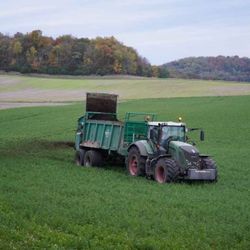
3. BMPs of NMPs #3: Calculating Soil Erosion, PI, SCI, and Management Strategies
12:02||Ep. 3In episode three of the BMPs of NMPs, Landon Baumgartner discusses soil conservation and nutrient management with Hava Blair and Andrea Topper. They explain the use of the SNAP Plus software, which incorporates the RUSLE2 equation to calculate soil loss, considering critical and predominant soil types. The Phosphorus Index (PI) is also discussed, which estimates phosphorus loss in runoff, influenced by factors like crops, tillage, and soil erosion. Despite improvements in phosphorus management, there's still room for phosphorus reduction in water bodies. The conversation underscores the importance of software tools like SNAP Plus in planning and assessing conservation strategies.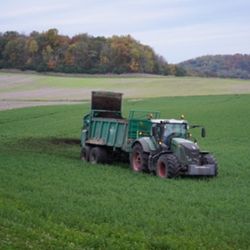
2. BMPs of NMPs #2: Wisconsin's 590 Nutrient Management Standard Today and Beyond
10:33||Ep. 2In the second episode of the BMPs of NMPs, Daniel Smith of UW-Madison Extension's Nutrient and Pest Management program and Sara Walling of Clean Wisconsin talk about the current and future status of of Wisconsin's 590 Nutrient Management Standard, adoption of these practices throughout the state, and our history of using the best available science to ensure farm profitability and sustainability. Looking beyond 2026, we discuss how a mix of nitrogen loss reduction, rural public health, and continued emphasis on phosphorus surface runoff will continue to motivate the future of conservation, leaning into Wisconsin’s unique investments in research, technology, programming, and tools that support them all.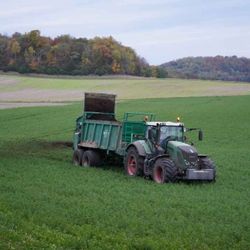
1. BMPs of NMPs #1: Introduction to Nutrient Management Planning
14:31||Ep. 1This is a special series from Field Notes produced with the help of the Nutrient and Pest Management (NPM) team at UW-Madison Extension and guest-hosted by Landon Baumgartner (Southwest Regional Outreach Specialist for NPM). Across six episodes, we dive into the fundamentals and best management practices (BMPs) of Nutrient Management Planning (NMP) in Wisconsin, so we couldn't help by calling the series the BMPs of NMPs.On this first episode, Andrea Topper (DATCP Nutrient Management Outreach Specialist), and Chris Clark (Northeast Regional Outreach Specialist for the Nutrient and Pest Management Program), bring diverse perspectives on nutrient management from across the state. Whether you're new to nutrient management or looking to refresh your understanding, this episode offers a grounded, accessible entry point into the topic—perfect for farmers, educators, and conservation professionals alike.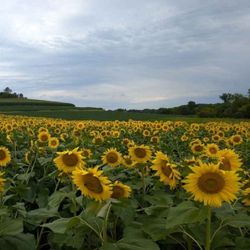
27. Sunflower Production in Wisconsin
33:21||Ep. 27In years of low commodity prices, most farmers think about where they might be able to cut costs. Some might begin to think about alternative crops can fit into row crop production. Enter the sunflower. From birdseed, to oilseed, and just looking dang pretty, sunflower production in the state remains miniscule compared to corn, soy, and wheat, but new crops like it can help farmers diversify income streams and reduce risk. So how do we grow them anyways? To find out, we talk with two farmers who also happen to be researchers/educators, Sam Bibby, farmer in Trempeleau County and Regional Crops Educator with UW Madison Extension in La Crosse, Vernon, and Crawford counties and Ben Brockmueller, farmer in South Dakota and Research Technician with Dr. Erin Silva's lab at UW Madison.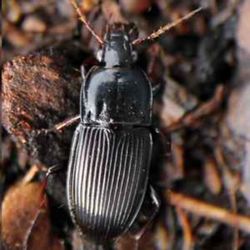
25. Good Bugs and Planting Naked Seed
36:46||Ep. 25Treated seed is the default for planted soybean (60-80%) and especially corn (close to 100%) acres across the US. While there are certainly advantages to some seed treatments, especially fungicidal treatments for early planted soybeans, others like insecticidal seed treatments can have a negative effect on the beneficial insects--aka good bugs--that prey on major pests in agricultural fields. Some farmers in a bid to save some money and help out the beneficials have gone back to planting naked seed. To break it all down with chat with Dane Elmquist, a conservation cropping specialist with UW-Madison Extension and big fan of arthropods, and Tom Ripp, a no-till and cover cropping grain farmer just outside of Black Earth, who plants naked soybeans.