Share
Faces of Medicine
Introducing Faces of Medicine
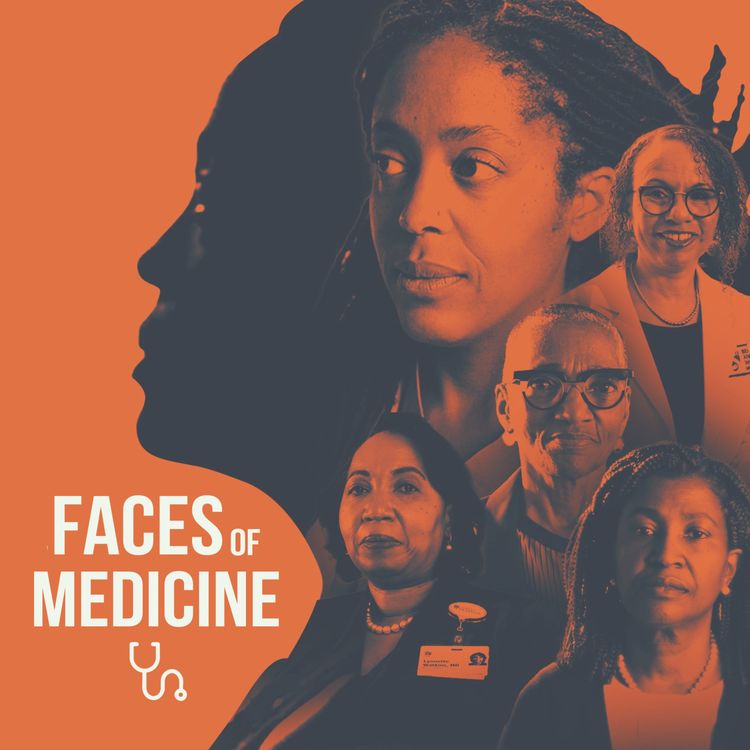
What does it take to become a Black female physician in America? In this trailer, Dr. Khama Ennis introduces Faces of Medicine—a podcast series that goes beyond the white coat to share the real, unfiltered stories of Black women doctors.
With Black women representing only 2.8% of all US physicians, these voices have been historically underrepresented. Through in-depth conversations with doctors from the acclaimed documentary film and beyond, you'll hear about the mentors who championed them, the barriers they overcame, and the resilience that carried them forward.
Whether you're an aspiring physician, healthcare professional, or simply curious about the doctors caring for our communities, these stories will inspire and transform how you see medicine.
Host and Executive Producer: Dr. Khama Ennis
Senior Producer: Alex Smith
Project Manager & Associate Producer: Seth Lepore
Assistant Producers: Jenahye Johnson & Monty Ross
Theme music by DK the Punisher
Rent the Faces of Medicine documentary on Kinema
Visit our website: https://www.facesofmedicine.org
Screen the documentary: https://www.screenfaces.co
Follow us on Facebook: https://www.facebook.com/facesofmed
Subscribe and leave a review!
More episodes
View all episodes
4. Dr. Kimberlynn Heller
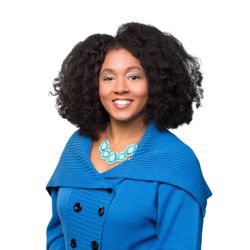
39:42||Season 3, Ep. 4On this episode, Dr. Kimberlynn Heller is an ObGyn in Portland, Oregon, who grew up in Flint, Michigan. Dr. Heller’s very own delivery was difficult and led to an injury with a resulting disability that limits movement in one of her arms. Despite that challenge, a mentor helped her learn how to thrive as a surgeon. Dr. Heller also discusses the incredible experience of attending Howard University, one of the top rated HBCUs in the country, as well as how her father instilled in her a no-excuses approach to tackling obstacles. All of these factors, plus her own refusal to ever give up, have kept her on the path to success. Dr. Heller insists that one of the most important keys to her success is being stubborn in the face of challenges.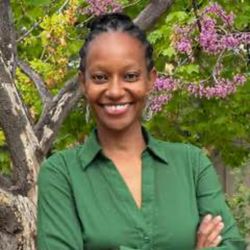
3. Dr. Amen Sergew
49:46||Season 3, Ep. 3On this episode, Dr. Amen Sergew is an integrative pulmonologist in Denver, Colorado, who moved to the U.S. from Ethiopia as a teenager. Though she grew up speaking English, she says that one of the hardest parts of adapting to life in the U.S. was navigating culture shock, especially since her life in Ethiopia was nothing like what was portrayed in the media here during the 1990s. Dr. Sergew had the added challenge of being undocumented during much of her teen and early adult years - right up until her last year of medical school. That experience has continued to shape how she cares for patients. Sergew also discusses stepping away from academic medicine in order to treat patients with a more integrative approach.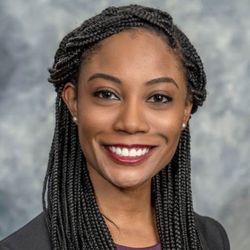
2. Dr. Petal Elder
42:28||Season 3, Ep. 2On this episode, we heard from Dr. Petal Elder. She’s an internist at Beth Israel Deaconess Medical Center in Boston who grew up in Trinidad and Tobago. Like about one-in-four doctors currently practicing in the U.S., she went to medical school outside of the country. Dr. Elder attended medical school in Ireland from which she had the opportunity to pursue clinical rotations all around the world, eventually landing in Massachusetts for residency. She is the youngest doctor featured on Faces of Medicine and experienced first hand some of the life-threatening challenges of pregnancy experienced by many Black women while she was still a resident. Her story illustrates the importance of listening to your instincts and following your own path, even if it’s different from the one you told everyone you’d be following.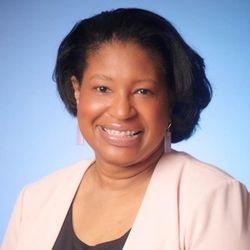
1. Dr. Monica Taylor-Desir
52:34||Season 3, Ep. 1On this episode, Dr. Monica Taylor-Desir is a Mayo Clinic psychiatrist with a commitment to bringing mental health treatment into communities where patients live. Dr. Taylor-Desir grew up between Houston and Ohio. She has always been a spiritual person, which sometimes created a tension with the hard science-based traditions of Western medicine. She discovered, however, that holding on to her spiritual side served her well during her years working in Native American communities. She has woven together all of these aspects of her identity as she cares for patients, flips scepticism about the importance of mental health within her own community and addresses the impact of racism on patients and physicians alike.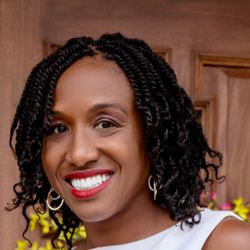
6. Dr. Danielle Olveczky
37:14||Season 2, Ep. 6On this episode, we hear from Dr. Daniele Olveczky, a Geriatric Hospitalist physician at Beth Israel Deaconess Medical Center in Boston. Her early life was in Trinidad and Tobago, but when her family lost nearly everything, she found herself living with an aunt in London before another move took her family to Louisiana. Olveczky graduated from Dillard University before heading to medical school at John Hopkins University and completing her residency in Boston. Some hostile interactions along the way left her plagued with self-doubt. Olveczky also talks about how she grew to love taking care of older people and about her specialty, which involves caring for patients at night.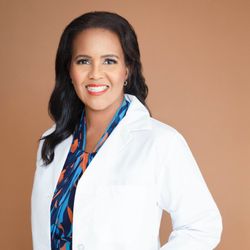
5. Dr. Adrienne Phillips
22:43||Season 2, Ep. 5On this episode, we hear from Dr. Adrienne Phllips. She’s a doctor and researcher at RWJ Barnabas Health in New Jersey who specializes in the treatment of blood cancer. Unlike most of the women profiled on Faces of Medicine, she came from a family of doctors. Phillips, who attended Brown University, Columbia and Harvard, says she was drawn to her specialty in part as a way to help Caribbean people who are disproportionately affected by the illnesses she treats. Phillips talks about how her family’s legacy has shaped her and about finding her own path as a third generation physician.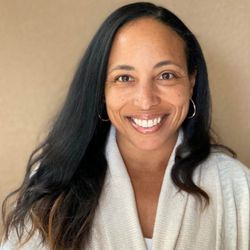
4. Dr. Shani Muhammad
47:29||Season 2, Ep. 4On this episode, we hear from Dr. Shani Muhammad, a family medicine doctor in the Los Angeles area. She calls planning a “guiding principal” and has felt throughout her life that she must follow a plan in order to succeed. But the demands of medical training - not to mention marriage and parenthood - have shaped her life and career in ways she never imagined. Mumammad talks about having a successful career in medicine, even when things don’t go as planned.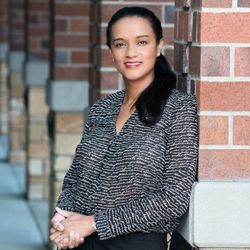
3. Dr. Terry Moy-Brown
45:48||Season 2, Ep. 3On this episode, we hear from Dr. Terry Moy-Brown. She’s a board certified emergency physician working in urgent care at Vancouver Clinic in Washington state. Moy-Brown grew up in Honduras and experienced more than a little culture shock when she & her family immigrated to Miami after her high school graduation. Her studies and work have taken her from Oklahoma and Florida to upstate New York and Washington state. As an emergency physician, she knows first hand that working in healthcare can lead some people to feel jaded, but she held on tight to the spirit of caring and empathy that brought her to the field in the first place. Moy-Brown believes in the importance of staying true to yourself.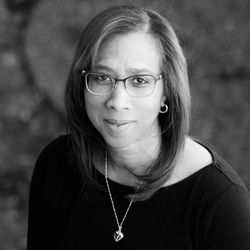
2. Dr. Chasity Jennings-Nunez
45:46||Season 2, Ep. 2On this episode, we hear from Dr. Chasity Jennings-Nunez, an OB-GYN who lives and works in the Los Angeles area. Jennings-Nunez grew up in a supportive all-Black neighborhood in Houston, and she went on to college at Tulane in New Orleans and then medical school at Harvard. When she accepted a residency at a community hospital in Los Angeles, she had some concerns about not going to a more well-known academic hub. But she loved working in the community and ended up staying at the hospital for many years, embracing the opportunity to help address health care disparities. Jennings-Nunez’s story provides a case study in embracing the unknown.