Share
Evolution Exchange USA Podcast
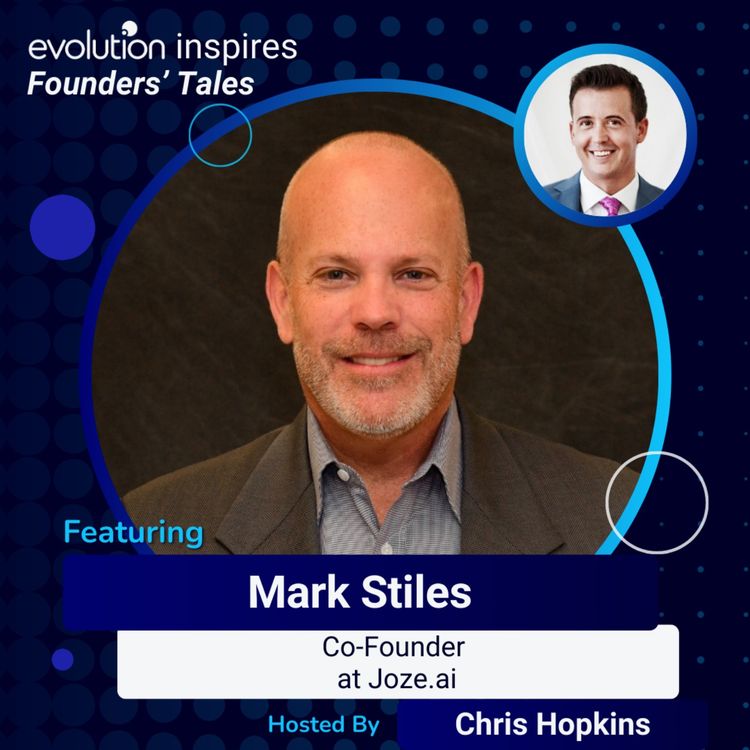
Founders' Tales - Using AI to Resolve Conflict and Reduce Human Pain
In this episode of Founders’ Tales, we sit down with Mark Stiles, founder and co creator of Joze.ai, to explore an ambitious mission that aims to solve conflict for humanity. After spending three decades as an attorney focused on proactive planning, Mark saw firsthand the emotional, financial, and generational damage caused by unresolved conflict. Those experiences inspired him to leave legal practice and build Joze.ai, an artificial intelligence platform designed to help people resolve disputes in a healthier, more constructive way.
Mark walks us through how Joze.ai evolved from an early proof of concept into a conflict resolution platform built with input from mediators, lawyers, therapists, educators, and strategic coaches. He explains how the product supports real human conflict through structured conversations, guided AI interaction, and optional human oversight through what the team calls a success sherpa.
The conversation covers Joze.ai’s initial go to market focus on divorce and family conflict, as well as future applications including sibling disputes, inheritance planning, and proactive founder agreements. Mark also shares why preventing conflict before it happens is just as important as resolving it once it exists.
Beyond the product, Mark reflects on transitioning from a long legal career into the startup world, building a mission driven team, and finding inspiration through the Boston startup ecosystem. He shares lessons on founder alignment, vulnerability, community support, and staying grounded while navigating the emotional highs and lows of startup life.
This episode is a thoughtful and human centered look at how technology can be used not just to optimize systems, but to reduce pain, improve communication, and help people move forward together.
More episodes
View all episodes
Founders' Tales - Using AI to Map Government Influence with Wipp.ai
12:09|In this episode of Founders’ Tales, Chris Hopkins from Evolution Recruitment speaks with Daniela Cuellar Zapata, founder and CEO of Wipp.ai, an AI driven civic intelligence platform designed to map networks of influence across government decision making.Daniela shares her journey from studying economics and working at PepsiCo to becoming an AI developer during her time at Harvard Business School and MIT. Wipp.ai was created to address the lack of transparency in how policy decisions are shaped, helping organizations better understand how influence flows between lawmakers, stakeholders, and industries.The conversation explores the realities of committing fully to entrepreneurship, the importance of choosing the right co founders, and why shared values and long term commitment are essential when building a startup. Daniela also discusses how early investors often back founders before metrics exist, highlighting the importance of trust, relationships, and belief in a long term vision.She also reflects on the advantages of building in Boston’s academic ecosystem, while acknowledging the challenges of building an AI company outside of traditional biotech focus areas. Daniela shares honest advice for founders about resilience, willpower, and the emotional highs and lows that come with startup life.
Founders' Tales - Rethinking Human Health Through Hormone Data
11:49|In this episode of Founders’ Tales, Chris Hopkins from Evolution Recruitment speaks with Shilpi Gupta, founder of QYN Labs, a longevity technology company building sensing and intelligence systems to better understand human hormones.Shilpi shares her journey from designing large scale robotics systems at Amazon Robotics to applying systems engineering principles to biology. QYN Labs is focused on creating real time hormone intelligence, addressing a major gap in how we measure and understand one of the body’s most critical control systems.The conversation explores how advances in sensing technology and cultural shifts toward prevention and longevity have created the conditions for this innovation to emerge today. Shilpi explains why strong systems architecture is essential in deep tech, highlighting the importance of building solid technical foundations before layering software and AI.She also discusses what separates true builders from operators, the importance of balancing speed with direction, and how founders must develop conviction even when data is incomplete. The episode highlights Boston’s strength as a deep tech ecosystem, where patient, science driven innovation is supported by strong academic networks and long term thinking.
Founders' Tales - From Pivot to Profit Building BirdDog in Sales Tech
17:10|In this episode of Founders’ Tales, Chris Hopkins from Evolution Recruitment sits down with Jack Porter, Co-Founder of BirdDog, a sales technology company helping teams improve research, deal quality, and overall performance. Jack shares how BirdDog started as an investing platform before an unexpected pivot into sales tech, driven entirely by real user behavior. What began as a failed idea quickly transformed into a focused product after sales professionals began using the platform for research, revealing a much stronger opportunity.The conversation explores the realities of early stage building, including spending months refining data quality before generating revenue, the impact of poor onboarding on customer churn, and the importance of deeply understanding user needs before trying to scale. Jack also explains how BirdDog differentiates itself by clearly proving ROI to customers through measurable outcomes like deal size, close rates, and time saved.Jack reflects on the challenges of fundraising, including multiple VC rejections that ultimately led the team to bootstrap the business. This decision allowed them to maintain full control, focus on product quality, and build at a sustainable pace without external pressure. This episode is a practical look at building a startup the hard way, staying focused on customers, learning from mistakes, and creating long term value in a competitive market.
Founders' Tales - Building a Unified Future for Multicloud & SaaS Data Protection
29:01|In this episode of Founders’ Tales, Simon Taylor breaks down how he built HYCU into a global data protection platform serving thousands of customers across 78 countries. What began as an attempt to simplify scattered backup systems grew into a unified solution that protects data across on-prem environments, public clouds, and countless SaaS applications.Simon explains how the company discovered the limitations of creating individual backup integrations for every SaaS tool, which pushed them to redesign their product into an open platform where SaaS vendors can build their own integrations. This shift became a defining moment in HYCU’s growth strategy and opened the door for rapid ecosystem expansion.He also reflects on the deeper challenges that come with scaling a company, especially the work of building the right team and nurturing a culture rooted in authenticity, grit, and empathy. Simon shares lessons about fundraising, storytelling, expansion discipline, and the importance of building trust with investors and board members. He also talks about how mindfulness, transparency, and strong relationships play a major role in staying grounded through the uncertainties of entrepreneurship.This episode offers powerful insights into leadership, culture building, and strategic pivots for anyone building in SaaS, cloud, or enterprise tech.
Founders' Tales - Building Layer Three Cybersecurity for the AI Era
13:07|In this episode of Founders’ Tales, Nash Gadre, founder of Camouflage Networks, explains how his company is reinventing cybersecurity by securing networks at layer three of the OSI model. His team is building a system that creates a secure connection between machines and AI agents, giving organizations the ability to shut down threats at their source and prevent high-impact breaches.Nash shares how his experience in fintech exposed him to sophisticated cyberattacks, including those powered by AI, which pushed him to develop a more unified and resilient security solution. He talks about the product’s evolution from early closed-source prototypes to an open-source WireGuard-based platform that is now enhanced through AI-driven testing.The conversation also covers lessons on releasing prototypes early, learning directly from customer pain points, the challenge of recruiting top cryptographers, and the advantages of building a security startup in Boston’s rich cybersecurity ecosystem. Nash closes with advice for founders: validate real problems through open conversations, stay optimistic even when the journey is difficult, and engage with the community to uncover opportunities for collaboration and growth.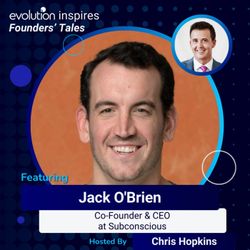
Founders' Tales - Building Long Context AI Agents with Subconscious
20:38|In this episode of Founders’ Tales, Chris Hopkins from Evolution Recruitment speaks with Jack O’Brien, co-founder and CEO of Subconscious, an AI startup building infrastructure for long running, complex tasks to solve themselves efficiently.Jack shares how Subconscious emerged from MIT research after struggling with existing AI agent tools that were slow, expensive, and ineffective on long context problems. The team rebuilt the system from the ground up to handle extended workflows with better accuracy, lower cost, and faster performance.The conversation dives into the realities of building in the AI space, where speed is everything and founders must move faster than they expect. Jack talks about the importance of choosing the right team, staying focused on real customer problems, and avoiding distractions from constant AI hype and social media noise.He also breaks down how Subconscious wins early customers through strong performance on long context tasks, as well as the hiring philosophy behind building a high intensity startup team. The episode also highlights the strength of the Boston ecosystem, especially its deep connection to MIT and access to top engineering talent.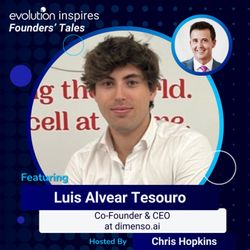
Founders' Tales - Using AI to Automate Lab Data Collection with dimensio.ai
11:27|In this episode of Founders’ Tales, Chris Hopkins from Evolution Recruitment sits down with Luis Alvear Tesouro, co-founder and CEO of dimensio.ai, a Boston based startup building real time lab data collection tools powered by artificial intelligence.Luis shares his journey from Spain to the United States on a tennis scholarship, studying computer science at Purdue University, and later working at Galley during the early AI boom. After seeing firsthand how scientists struggle to document experiments efficiently, he founded dimensio.ai to help labs capture data automatically using computer vision and voice recognition.The conversation explores the importance of product market fit, launching early instead of waiting for perfection, and learning from past startup mistakes. Luis also discusses building in Boston’s biotech ecosystem, raising capital at the right time, and the discipline required to navigate the highs and lows of startup life.
Founders’ Tales – Building Bioprinted Tissue Models for the Future of Drug Discovery with Criocore
11:20|In this episode of Founders’ Tales, we sit down with Carlos Ezio Garciamendez, Co-Founder of Criocore, a Boston based biotech startup using bioprinting technology to improve pre clinical drug development.Carlos shares how Criocore is building in vitro tissue models designed to better reflect human biology and reduce reliance on animal testing. The conversation explores Criocore’s academic roots at Harvard Medical School, the shift from research to commercialization, and why founders must constantly answer the question of real world impact.They discuss fundraising realities in biotech, the importance of focusing on commercial value alongside scientific innovation, and how Boston’s competitive ecosystem pushes startups to build technologies that truly matter. Carlos also shares practical advice for first time founders, including total commitment, learning the business fundamentals, and staying focused on pilots, customers, and repeatable growth.
Founders’ Tales – Building Climate Tech That Turns Waste Carbon Into Value with Helix Carbon
18:14|In this episode of Founders’ Tales, Chris Hopkins from Evolution Recruitment speaks with David Brown, Co-Founder and COO of Helix Carbon, a Boston based cleantech startup rethinking how carbon dioxide is utilized at an industrial scale.David shares his journey from Army Apache helicopter pilot to startup founder, and how Helix Carbon is developing technology that converts dilute and contaminated waste gas streams directly into valuable industrial gases. The conversation explores the company’s pivot toward customer driven solutions, the realities of building a hard tech startup, and why constant action is essential for early stage momentum.They also discuss building lean, resilient teams, the strengths of the Boston cleantech ecosystem, and the importance of networking, learning, and doing something even when the path forward is unclear.