Share
Everyday Emergency
AMR: A threat hidden in plain sight
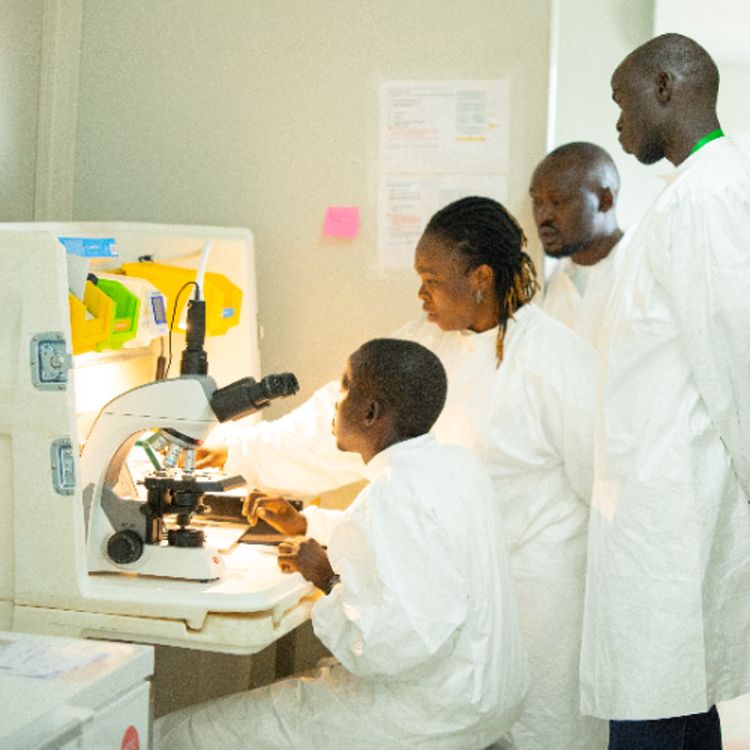
In places where MSF operates, getting access to the right antibiotics is a matter of life or death - but what happens when they stop working? In this episode of Everyday Emergency, we find out about antimicrobial resistance (AMR).
Antibiotics are the cornerstone of modern medicine, treating a vast range of infections. But, over the last few years we've been seeing a troubling phenomenon where the standard antibiotics used to treat some diseases have simply stopped working.
This is known as AMR, which is when some of the bugs which cause disease mutate and find ways to avoid the effective elements of antibiotic medicines.
What can be done when this happens and what steps is MSF taking to tackle AMR more broadly? We speak to AMR expert Mohamad Khalife.
Presented by Laura McCullough
Edited by Kate Lee and Sandy McKee
Produced by Mark Lankester
Photo: MSF
More episodes
View all episodes
2. What next for medical aid in Gaza?
32:37||Season 5, Ep. 2Last year in Gaza, MSF assisted in one in three births, supported one in five hospital beds, and provided 800,000 medical consultations. This year, however, our teams have faced the prospect that our operations in the Strip could be forced to close. In this episode, we talk to nursing activity manager Steve Davidson and field communications officer Nour Alsaqqa: two people with firsthand knowledge of MSF’s work in Gaza, the life-saving impact it’s having, and what would be lost if it couldn’t continue. Presented by Amber DowellEdited by Sandy McKeePhoto: Motassem Abu Aser
1. A crisis in the crossfire: Making childbirth safer in Northern Nigeria
17:59||Season 5, Ep. 1In Northern Nigeria, the conflict between government forces and armed groups is hitting communities hard. Vast numbers have been forced to flee, grabbing what they can, leaving behind their homes and livelihoods.Amid the fear, kidnapping and violence, another crisis is unfolding: the number of women dying in pregnancy or childbirth is among the highest in the world, with one woman dying of these complications every seven minutes according to figures from the UN.In this episode of Everyday Emergency, we're joined by Hauwa Tanko Audu, a health promotion supervisor, who tells us how the MSF team in the city of Maiduguri are working to ensure women and newborns have access to life-saving care.Presented by Amber DowellEdited by Sandy McKeePhoto: Eugene Osidiana / MSF
11. Moments that mattered: MSF's life-saving work in 2025
29:30||Season 4, Ep. 11For this special episode of Everyday Emergency, we’re taking a look back at MSF’s work over the last 12 months.This year, MSF teams were on the ground during some of the world's biggest crises. We provided essential medical care as the wars in Gaza and Ukraine continued, violence escalated in Sudan, and millions of people across the globe were caught up in crises that didn’t always make the headlines - from deadly disease outbreaks and natural disasters, to growing malnutrition.If you would like to support our life-saving medical work around the world, please visit msf.org.uk to make a donation. Thank you.Presented by Amber DowellSound production and editing by Sandy McKeeWritten and produced by Kate LeeSeries production by Mark LankesterPhoto: MSF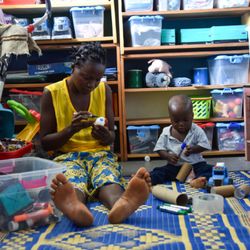
10. The unexpected power of play: Healing children in humanitarian crises
27:10||Season 4, Ep. 10In almost any humanitarian crisis – from disease outbreaks to conflict zones – children are among the most vulnerable. Last year alone, almost half of all patients admitted to MSF hospitals around the world were children under the age of five. But, while access to medical care is absolutely essential, for our youngest patients, there is something else that improves their health, promotes recovery and helps them develop: play. In this episode of Everyday Emergency, we speak to Katherine Haciömeroğlu. She is a child life specialist who has been working with MSF teams around the world to harness the power of play and help children living through healthcare crises to access the benefits of this perhaps unexpected humanitarian work. If you would like to support our life-saving medical work around the world, please visit msf.org.uk to make a donation. Thank you. Presented by Amber Dowell Edited by Sandy McKee Photo: MSF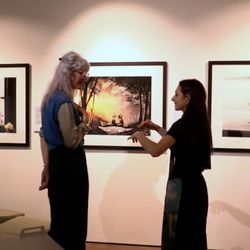
9. Art in the aftermath: Ella Baron on assignment in Ukraine
25:35||Season 4, Ep. 9The artist and political cartoonist Ella Baron has recently returned from Ukraine, where she worked with Médecins Sans Frontières / Doctors Without Borders (MSF) patients to create a series of drawings and interviews about their experiences. The patients ranged from young men injured in drone attacks to grandmothers who have lost their homes and loved ones. The images go beyond simple portraits to explore the physical and emotional impact of the war. With the works now on display in a public exhibition at Kings College in London, Ella joins us for a special episode. Ella was in Ukraine on assignment for the Guardian, where her drawings were originally published. MSF teams were already working in Ukraine at the time of the full-scale invasion in 2022. Since then we have expanded our operations to cover mobile clinics, surgery, and mental health support. If you would like to support our life-saving medical work around the world, please visit msf.org.uk to make a donation. Thank you.Presented by Amber DowellSound production and editing by Sandy McKee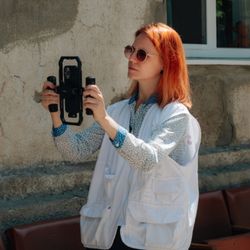
8. Ukraine: From bylines to the frontlines
33:01||Season 4, Ep. 8In February 2022, Yuliia Trofimova was a journalist living in Eastern Ukraine, where she’s from. With the violent escalation of the conflict with Russia, Yuliia and her colleagues in local media became war correspondents overnight.Today, Yuliia works as a field communications officer for MSF, travelling throughout the region to raise awareness of the health impacts of the war and the work of MSF’s medical, surgical and mental health teams as they provide essential care to people caught in the conflict.On this episode of Everyday Emergency, hear Yuliia share what it's like to bear witness to the war's impact on people's health, and its impact on her.If you would like to support our life-saving medical work around the world, please visit msf.org.uk to make a donation. Thank you.Presented by Amber DowellSound production and editing by Sandy McKee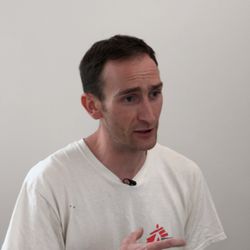
7. "We built a hospital in a house": An MSF medic returns from Syria
24:23||Season 4, Ep. 7War has taken a heavy toll on the people of Syria. Since 2011, 14 million Syrians have had to flee the violence that wracked the country. They left behind their homes and livelihoods. Essential infrastructure has been destroyed, and many Syrians have been plunged into poverty, with very limited access to essential services like medical care. But late last year, the situation shifted, and MSF teams were able to travel to areas that had previously been inaccessible. Dr Ryan McHenry is an emergency medicine doctor who recently returned from the Syria. He joins us today to share his experiences in a country emerging from the shadows of war. If you would like to support our life-saving medical work around the world, please visit msf.org.uk to make a donation. Thank you. Presented by Amber Dowell Edited by Sandy McKee Produced by Mark Lankester Photo: MSF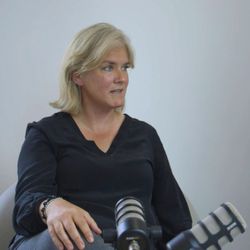
6. The E-Team: Inside MSF's emergency response unit with Dr Natalie Roberts
36:22||Season 4, Ep. 6When a crisis hits, our emergency specialists - known as the E-Team - launch into life-saving action to coordinate the response. In this episode of Everyday Emergency, we speak to Dr Natalie Roberts. Now Executive Director of Médecins Sans Frontières / Doctors Without Borders (MSF) UK, she is an experienced emergency doctor and former Head of Emergencies with our Paris-based 'Emergency Desk'. We speak to her about the work of the E-Team, how they react to emerging conflicts and disasters, and reflect on the humanitarian events she worked through, including typhoons and civil wars. If you would like to support our life-saving medical work around the world, please visit msf.org.uk to make a donation. Thank you. Presented by Amber Dowell Edited by Sandy McKee Produced by Mark Lankester Photo: MSF