Share

eussen – Health, Life & Style
#017 Music History Through the Lens - Tali Udovich | eussen - Health Life & Style
Preserving the Pulse of Music History Through the Lens
When I walk into Blender Gallery, I’m not just stepping into an art space—I’m stepping into living, breathing memory. That’s what makes this gallery different. The walls don’t just display photographs; they hold emotional weight, collective nostalgia, and cultural reverence. From the iconic gaze of Jimi Hendrix to candid moments with Fleetwood Mac, every image captures a moment in time that still pulses with life.
My work is grounded in authenticity. Every piece in the gallery is 100% original—handcrafted, signed, or authenticated by the photographers themselves or their estates. I work directly with these artists or their closest representatives to ensure each image maintains its integrity. One standout example is Dominique Tarlé, the only photographer to have documented the Rolling Stones during their 1971 exile in the South of France. He still handmakes every print in his Paris studio, right down to the stamp and signature.
It’s not just about the names or the fame. What moves people—what moves me—is the emotional connection.
More episodes
View all episodes
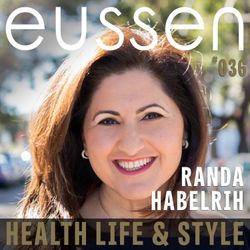
36. #036 Mission to bring inclusion to the Disability Community- Randa Habelrih | eussen - Health Life & Style
21:53||Season 1, Ep. 36Randa Habelrih’s Mission to Bring Visibility, Confidence and Inclusion to the Disability CommunityRanda Habelrih’s work in the disability space began with her son Richard. From the early years, she saw how a child could be dismissed, misunderstood and excluded long before anyone took the time to listen. Before Richard’s autism diagnosis, her concerns were brushed aside, and after the diagnosis she was told to expect very little from him. What stayed constant was a system focused on deficits rather than strengths, reflected in repeated school rejections and the bullying Richard endured from children and adults.Australia’s disability education laws promise access, but Randa realised how rarely those promises translate into practice. Teachers were overwhelmed, under-resourced and under-trained, leaving families like hers battling for support that should have been automatic. Today, many parents still come to her with the same struggles—schools declining enrolments, withholding support or making children feel unwelcome in environments meant for them.These realities shaped the foundation of Autism Mates. Randa wanted families to have a community where they could learn, connect and feel supported. The organisation began with parent groups, school education initiatives and social events to give young people a place where they belonged. But as Richard finished school, another gap became impossible to ignore: despite his abilities and interests, there was no pathway for him. She also saw how absent people with disabilities were from the media, despite representing a significant part of the population.From that need came Model Mates. Randa wanted young people with disabilities to be seen on a platform that commanded attention, and fashion provided that stage. Their first runway event at Castle Towers revealed how powerful simple visibility could be. With basic styling and a single practice session, participants stood taller and radiated confidence because they were valued and treated with respect.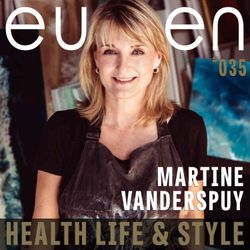
35. #035 Seascapes of Strength with Martine Vanderspuy | eussen - Health Life & Style
19:23||Season 1, Ep. 35Martine Vanderspuy spent much of her early life living abroad before settling in Australia, where she finished school in Woonona and went on to study graphic design. Her creative career began in advertising in Canada and Australia, eventually leading her to establish her own award-winning design agency.In 2015 she opened Martine Gallery, a space that became both an artistic home and a platform for raising awareness of mitochondrial disease.Her dedication to this cause is deeply personal. Martine’s youngest son, Tom, was born with mitochondrial disease, a condition that deprives the body’s cells of energy and can lead to organ failure.When he was diagnosed at just two years old, doctors did not expect him to survive. Over the years he underwent more than fifty operations, yet he grew into a healthy young man who has consistently overcome the odds.At four years old, the condition began affecting Tom’s eyes. Tests revealed he had only ten percent retinal function remaining, and Martine was told that blindness was inevitable.Refusing to accept that no solution existed, she began researching relentlessly, contacting researchers across the world from Russia to America and even NASA.Her search led her to studies showing the benefits of LED therapy on mice with similar retinal degeneration. With that knowledge, she raised funds to build a custom LED light bed with 2,500 diodes across five spectrums. Tom used it daily for two years, and follow-up tests revealed ninety-eight percent retinal function.The improvement astonished everyone involved.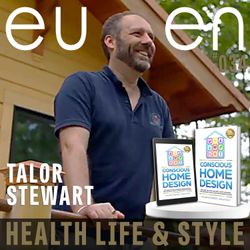
34. #034 Designing Spaces That Shape a Better Life - Talor Stewart | eussen - Health Life & Style
20:27||Season 1, Ep. 34Designing Spaces That Shape a Better LifeIn discussing Conscious Home Design, Talor offers a perspective that expands far beyond materials or trends. People often assume the concept is tied to sustainability, yet Talor’s work centers on crafting environments that support daily habits, personal goals and meaningful relationships. His approach applies to any type of home, regardless of size, age or architectural style. What matters to him is how well a space aligns with the way someone actually lives.A guiding influence for Talor is the long-running Harvard study on adult happiness, which shows that relationships are the strongest predictors of wellbeing. This research inspires him to consider how architecture can foster stronger connections—whether with other people, with oneself or with nature. Over the years, he has identified three categories of relationships: reciprocal, receiving and giving. These relationships shift through different life stages, but Talor aims to design homes that create opportunities for all three to thrive.The pandemic highlighted the importance of this approach. As people spent more time at home, many discovered that their spaces failed to support working, resting or connecting. Some lacked functional offices, others struggled with noise and privacy, and many families felt the strain of inadequate layouts. Talor watched this pressure spark a major building boom, a reminder of how deeply our environments influence our wellbeing.He often guides clients through home changes that reflect shifting phases of life—growing families, empty nests or evolving careers. With remote work now widespread, Talor emphasises that home offices must function effectively, offering professionalism, privacy and thoughtful backdrops for video communication. He understands how a simple design choice can impact confidence and relationships in subtle but powerful ways.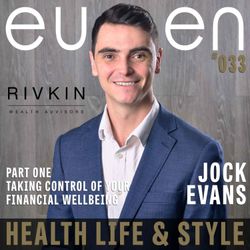
33. #033 Taking Control of Financial Wellbeing with Jock Evans of the Rivkin Group - Jock Evans | eussen - Health Life & Style: Proudly sponsored by UniFi Capital, Rivkin Private Wealth Group
27:26||Season 1, Ep. 33Taking Control of Financial Wellbeing with Jock Evans of the Rivkin GroupSpeaking with Jock Evans from the Rivkin Group reinforced how closely our sense of security is tied to financial understanding. His calm, practical approach to planning made it clear that financial advice isn’t reserved for the wealthy—it’s a tool for anyone who wants to feel in control today and confident about tomorrow.Jock began his career in accounting before realising that he wanted to help people look forward, not backward. That desire to create progress led him into financial planning, where he found the most satisfaction in working directly with people—hearing their stories, understanding their challenges, and finding ways to make their goals achievable.He described a financial planner as part coach, part strategist—someone who bridges the worlds of accounting, law, and investment management to help clients make informed decisions. Every client, he explained, is different. Some are building wealth for future generations, others are ensuring they have enough to retire comfortably. His role is to listen first, then create strategies that fit each person’s reality.One of the misconceptions Jock often encounters is that financial advice is expensive or unnecessary unless you have substantial assets. He explained that most firms, including Rivkin, offer an initial consultation at no cost or obligation. It’s simply an opportunity to talk, assess your current position, and see whether there’s value to be gained. Sometimes clients discover they’re already on track; other times, a few small adjustments make a significant difference.
32. #032 Finding Strength in Speaking Up: - Prue MacSween | eussen - Health Life & Style - Proudly sponsored by Unifi Capital, Rivkin Private Wealth
26:14||Season 1, Ep. 32Finding Strength in Speaking Up: The Story of Prue MacSweenFrom the moment I first heard Prue MacSween speak, her candour was striking. She has lived a life defined by words—spoken, written, and defended fiercely. Her story begins in the school debating team, where a love of English and communication was clear from the start. Even then, her outspokenness cost her the school captaincy after she defended a classmate she felt was unfairly treated. It set the tone for a life lived with conviction.After leaving school, she landed a cadetship at a suburban newspaper, studied marketing and advertising at Sydney Tech, and contributed to 2UE radio. Her mother soon spotted a small classified ad for a television hostess role in Townsville. Prue auditioned among a thousand hopefuls, impressed Ken Sutcliffe, and won the job. The move to Townsville launched her into a whirlwind of broadcasting—reading news, presenting weather, hosting children’s shows, and running current affairs segments. She described it as a chaotic but invaluable training ground that demanded versatility, creativity, and grit.Her next opportunity came when Channel 9’s Gerald Stone saw a tape of her work and offered her a newsroom role in Sydney. Surrounded by giants like Peter Harvey, Ian Ross, and Brian Henderson, she was the only woman in the room. Her early assignments were trivial, but she absorbed everything, determined to prove her worth. Adopting what she called “one of the blokes” mentality helped her navigate the male-dominated newsroom while honing her listening skills—something she attributes partly to her childhood spent in a wheelchair after hip surgery. That period taught her to observe people deeply and empathise with those overlooked.
31. #031 Designing a Life of Balance Through Smart Finance- Dawood Odeh | eussen - Health Life & Style - Proudly sponsored by Unifi Capital, Rivkin Private Wealth
20:19||Season 1, Ep. 31: Designing a Life of Balance Through Smart FinanceWhen Dawood Odeh speaks about finance, it’s not with the cold detachment many associate with money talk. His message is simple but transformative: financial structure isn’t just about numbers—it’s about lifestyle design. In this second conversation of his trilogy, the focus turns to how mortgages and money management can actively shape wellbeing, relationships, and even happiness.Dawood begins by reframing a mortgage as more than a debt. It’s one of the biggest financial decisions people make, and depending on how it’s structured, it can either restrict or liberate. To demonstrate, he describes three distinct life situations that show how a mortgage can align with lifestyle goals.The first example is someone who seeks peace over possessions. They’re not chasing luxury cars or holiday homes but value calm, modest living. For them, financial wellbeing comes from paying off their home as soon as possible. Their ideal mortgage is simple and low-cost, allowing extra repayments when money permits. This kind of financial clarity brings mental ease and better sleep—the satisfaction of knowing exactly when the debt will end and freedom will begin.The second example contrasts sharply. It’s the ambitious worker who wants to build wealth fast and retire young. This person embraces complexity and uses debt strategically. Multiple offset accounts, split loans, and leveraged equity form their financial toolkit. They invest in properties, using the rising value of each to buy the next. Dawood shares the story of a couple in their thirties who’ve already acquired eight properties and plan to retire early by selling a few to clear debt while living off rental income. It’s a structured path to freedom that relies on using the system intelligently rather than being constrained by it.The third example focuses on retirees who’ve paid off their homes but find their wealth locked in bricks and mortar. Their challenge is enjoying retirement without losing the home they love. Dawood explains how a reverse mortgage can unlock that value. Instead of paying the bank, the bank pays them—either through a lump sum or regular payments. The debt grows slowly over time and is repaid when the home is sold. This allows retirees to stay in familiar surroundings while having the funds to live well and support family.Beyond mortgages, Dawood discusses how equity—the value built up in a property—can be used intentionally to improve life rather than simply accumulate more debt. He illustrates this with three stories. One family uses equity to extend their home instead of moving, gaining space and peace without unnecessary costs. Another invests in a rental apartment, creating an extra income stream and future stability. The third is Dawood’s own experience: using equity from his first property to fund the early stages of his mortgage broking business. It allowed him to leave an unfulfilling corporate job and create a career that aligned with his personal values and lifestyle goals.
30. #030 Creativity Rooted in Connection and Authenticity - Tatjana Green | eussen Health Life & Style - Proudly sponsored by Unifi Capital
30:58||Season 1, Ep. 30Tatjana Green: Creativity Rooted in Connection and AuthenticityIn Spain, surrounded by filmmakers and storytellers at the Evolution Mallorca International Film Festival, filmmaker and creative director Tatjana Green reflected on how stories take shape. For more than a decade, this festival has been one of her creative homes—a place where directors, producers, and visionaries gather not just to celebrate film, but to share a deeper passion for human connection.Her production company, Brought To You By, was founded on a simple idea: to recognize everyone who contributes to the making of a story. Green created it in response to an industry culture that often credited only those at the top. The name itself serves as a reminder that creativity is collaborative—it is brought to audiences by the collective.That belief in collaboration has shaped her career since the beginning. Raised in Canada with European roots, Green traveled often with her family, crossing between cultures and absorbing the stories people carried with them. Those early experiences fostered her fascination with global storytelling and later influenced her approach to filmmaking and advertising.Contact the ShowWe always love to hear from our listeners. To get in touch please email john@eussen.com.au
29. #029 Money and Wellbeing -Dawood Odeh. Proudly sponsored by Unifi Capital | eussen Health Life & Style
21:52||Season 1, Ep. 29Finding Balance Between Money and WellbeingWhen I spoke with mortgage broker Dawood Odeh from Unifi Capital, one thing became immediately clear—our financial health and mental wellbeing are deeply connected. Dawood explained that a mortgage broker does far more than arrange home loans. They assist with everything from car and personal loans to commercial finance, covering the full spectrum of borrowing needs. What struck me was his emphasis on structure. It’s not the amount of debt that determines stress, he said, but how predictable and organized our finances are. Those who understand their repayments and maintain buffers tend to be calmer, even with larger loans, while those who “wing it” often feel trapped.Money, as Dawood pointed out, isn’t just numbers on a statement. It represents security and freedom, and when that sense of control slips, stress creeps into every part of life. He admitted he’s not immune—stress can make him skip workouts and reach for comfort food. It was a relatable confession that highlighted how financial tension can manifest in our health, relationships, and even eating habits.Dawood’s main message was clear: planning is everything. Whether it’s how to use the savings from a drop in interest rates or how to structure household expenses, strategy makes the difference between calm and chaos. He encourages people to sort their finances into essentials, lifestyle, and future goals. Subscriptions and small, recurring expenses often go unnoticed but can easily drain a budget. Facing these realities, he said, isn’t about judgment; it’s about taking back control.
28. #028 Redefining Men's Grooming Through Confidence and Care - Dully Sayed. eussen Health Life & Style. Proudly sponsored by Unifi Capital.
21:22||Season 1, Ep. 28Redefining Men’s Grooming Through Confidence and CareBarewolf Clinic has become a pioneer in reshaping the way men approach grooming and self-care. Founded by Dully Sayed in 2011, the clinic was built on a simple yet powerful idea: men feel more comfortable being treated by men. What began as a weekend side project in his ex-wife’s hair salon has grown into a brand that has carried out more than 200,000 treatments for nearly 10,000 men.Sayed, originally an electrician, saw early on that men often felt awkward or reluctant to return to female-led clinics. By keeping the model exclusively “for men by men,” Barewolf has built a space where clients feel at ease, treated with respect, and, as Sayed puts it, “like kings.” While the business model isn’t as commercially lucrative as unisex clinics—men traditionally spend less on beauty treatments—the strong identity has ensured loyalty and growth.One of the clinic’s signature treatments is the BareZillian, a male-focused version of the Brazilian. Beyond aesthetics, clients report improved comfort, hygiene, and confidence. Sayed explains that most men require six to twelve treatments for long-term results, with laser sessions reducing hair by up to 80%. Many discover unexpected benefits, such as smoother skin and rejuvenation from the laser’s stimulation of collagen. For others, hair removal goes beyond preference—it can prevent medical issues like pilonidal cysts and painful ingrown hairs.