Share
EuroIntervention | Editor's Choice
High ischaemic risk criteria in CCS patients undergoing PCI: Original Research
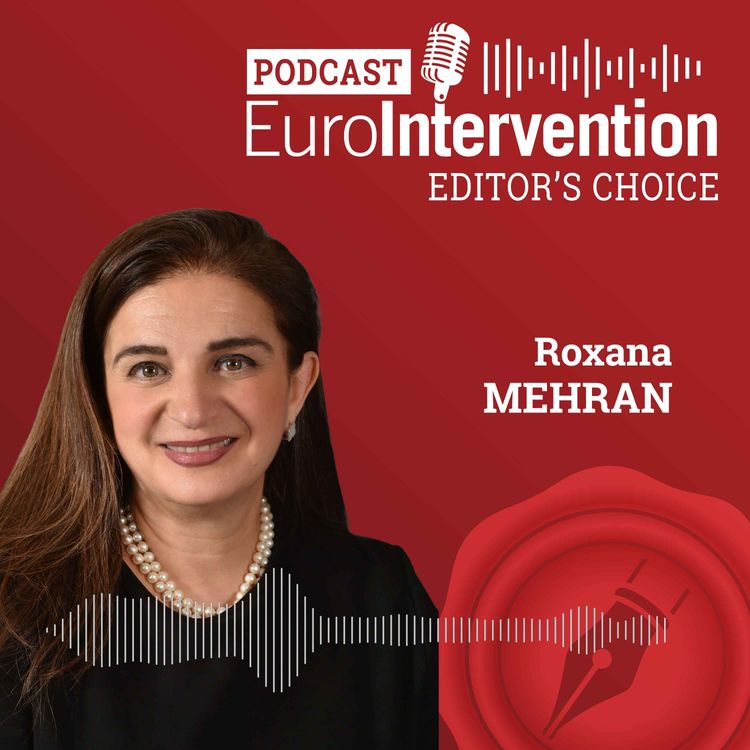
In this episode of Editor’s Choice, Professor Roxana Mehran discusses her original research article, “Prevalence and Prognostic Impact of High Ischaemic Risk Criteria in Chronic Coronary Syndrome Patients Undergoing PCI,” recently published in EuroIntervention.
In conversation with Dr Aaysha Cader, Professor Mehran explores the background, methodology, and key findings from this study conducted in patients with chronic coronary syndrome (CCS) at Mount Sinai Hospital. She highlights the prevalence of high ischaemic risk features, their association with major adverse cardiac and cerebrovascular events (MACCE), and the important role of imaging in guiding PCI in CCS patients.
This episode provides valuable insights into risk stratification and clinical decision-making for interventional cardiologists managing chronic coronary syndrome.
More episodes
View all episodes
9. Long-Term Outcomes of High-Risk Plaques with Negative FFR: The PECTUS-obs Study
16:34||Season 1, Ep. 9In this episode of Editor's Choice, Dr Aaysha Cader speaks with Professor Niels van Royen and Doctor Rick Volleberg about the findings of the PECTUS-obs study.They discuss the association between high-risk plaque and an approximately twofold increase in 5-year MACE; plaque rupture as a marker of both local and systemic vulnerability; and why combining imaging and physiology may be key to managing non-culprit lesions.
8. Left atrial appendage closure with the AnchorMan or Watchman devices: 12-month results of the SAFE-PROTECT randomised trial: Original Research
13:22||Season 1, Ep. 8In this episode of Editor's Choice, Dr Aaysha Cader speaks with Professor Huimin Chu about LAAC with AnchorMan versus Watchman 2.5 devices.They discuss how the 12-month results of the SAFE-PROTECT trial indicated the non-inferiority of the novel AnchorMan occluder for both primary and secondary endpoints: clinical success and LAA closure success at 1 year. This study found that the AnchorMan’s design, intended to improve sealing, resulted in significantly lower peridevice leak ≥3 mm compared to Watchman 2.5.
7. Door-to-unload time and mortality in patients with ST-segment elevation myocardial infarction complicated by cardiogenic shock: Original Research
18:26||Season 1, Ep. 7In this episode of Editor's Choice, Doctor Aaysha Cader speaks with Doctor Shin Nagai and Professor Toyoaki Murohara about the connection between door-to-unload time and mortality in STEMI-CS patients.They discuss how the J-PVAD registry data confirm that early unloading and prompt revascularisation are paramount; as high-volume centres achieve these targets more consistently, organised shock systems of care, such as hub-and-spoke models, appear invaluable.
6. TAVI and coronary interventions: indications, technical considerations, and clinical scenarios: State-of-the-Art
16:02||Season 1, Ep. 6In this episode of Editor's Choice, Doctor Aaysha Cader speaks with Professor Giuseppe Tarantini about the current state-of-the-art on TAVI and coronary interventions, recently published in EuroIntervention.Professor Tarantini shares insights on managing the complex interaction between CAD, PCI, and TAVI; the value of CT imaging and angiography in strategy planning; and how to optimise outcomes in different clinical scenarios.
5. Glucocorticoids to reduce PPI after TAVI: the GLUCO-TAVI randomised trial: Original Research
15:17||Season 1, Ep. 5In this episode of Editor’s Choice, Dr Aaysha Cader speaks with Dr Juan Miguel Ruiz-Nodar about the results of the GLUCO-TAVI trial, recently published in EuroIntervention.They discuss the impact of glucocorticoid therapy on reducing permanent pacemaker implantation (PPI) following TAVI, highlighting a 50% relative risk reduction at one month. Dr Ruiz-Nodar also shares insights into the mechanisms behind these findings and outlines plans for a larger randomised trial to confirm the results and define optimal dosing and treatment duration.
4. QFR versus FFR in the 2-year follow-up of FAVOR III Europe: Original Research
15:13||Season 1, Ep. 4In this episode of Editor’s Choice, Dr Aaysha Cader speaks with Doctor Birgitte Andersen about the latest findings from the FAVOR III Europe trial, recently published in EuroIntervention.They discuss the 2-year follow-up comparing quantitative flow ratio (QFR) and fractional flow reserve (FFR), including the key outcome that QFR did not demonstrate non-inferiority at one year. Dr Andersen explores potential explanations, including concerns around reproducibility and early event rate differences, and highlights the need for further research to identify patient populations best suited for angiography-based physiological assessment.
3. The ELASTA-T technique: Expert Review
15:48||Season 1, Ep. 3In this episode of Editor’s Choice, Dr Aaysha Cader speaks with Professor Michael Joner about the ELASTA-T technique, presented in the Expert Review, “Electrosurgical Laceration and Stabilisation of Tricuspid Edge-to-Edge Repair: the ELASTA-T Technique,” recently published in EuroIntervention.Professor Joner explains the clinical rationale behind ELASTA-T and its potential role in the evolving treatment landscape for recurrent tricuspid valve regurgitation. He describes how the technique can facilitate and stabilise tricuspid edge-to-edge repair, before walking listeners through the key procedural steps.The discussion concludes with practical insights and expert tips for achieving a successful Flying V configuration, offering valuable guidance for interventional cardiologists involved in structural heart interventions.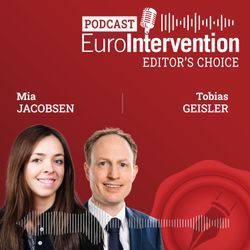
1. Transcatheter Aortic Valve Thrombosis: State-of-the-Art
17:02||Season 1, Ep. 1In the first episode of Editor’s Choice, podcast host Dr Aaysha Cader invite you to her conversation with Prof. Tobias Geisler and Dr. Mia Jacobsen about their review "State-of-the-Art: Transcatheter aortic valve thrombosis", recently published in EuroIntervention.Together, they break down why TAV thrombosis after TAVI/TAVR matters for clinicians today, clarify the key terminology used in the field, and review the latest recommendations for diagnosis, imaging strategies, and antithrombotic therapy.They also discuss the current evidence gaps and the future clinical trials needed to better understand valve thrombosis and improve outcomes for patients undergoing transcatheter aortic valve implantation.