Latest episode
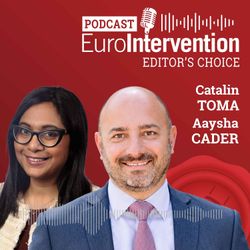
13. Safety and Effectiveness of the Vertex Pulmonary Embolectomy System in Acute Intermediate-Risk Pulmonary Embolism: SPIRARE II Pivotal Trial
14:06||Season 1, Ep. 13In this episode of Editor’s Choice, Dr Aaysha Cader and Dr Catalin Toma dive into the findings of SPIRARE II. Dr Toma shares the strategy behind enriching the trial's design; core efficacy and safety endpoint results (RV/LV ratio & MAE rates); the mechanics and potential advantages of the Vertex technology; and future clinical horizons for mechanical thrombectomy.
More episodes
View all episodes
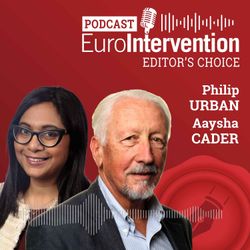
12. Percutaneous coronary intervention using sirolimus eluting balloons in patients at high bleeding risk - The SELUTION DeNovo HBR sub-study
15:54||Season 1, Ep. 12In this episode of Editor’s Choice, Dr Aaysha Cader and Dr Philip Urban discuss the findings of SELUTION DeNovo HBR, comparing SEB versus DES PCI strategies. Dr Urban describes the dual-risk profile of the enrolled HBR patients and shares the hypothesis-generating results including 1-year TVF, BARC 3+ bleeding, and NACE rates which favoured the balloon arm – possibly linked to lower use of antiplatelet therapy in SEB-treated patients.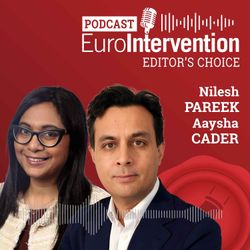
11. Phenotypes of cardiogenic shock after out-of-hospital cardiac arrest: the SCAI-V classification: Original Research
17:07||Season 1, Ep. 11In this episode of Editor’s Choice, Dr Aaysha Cader and Dr Nilesh Pareek discuss the SCAI-V classification for cardiogenic shock in OHCA patients. Dr Pareek explains how both haemodynamic status and lactate thresholds are incorporated into a 2x2 factorial design, describes the surprising finding of higher mortality in the systemic ischaemia group versus the haemodynamic shock group, and compares this classification with predecessors SCAI 2019 and SCAI 2022.
10. Reduced-dose direct oral anticoagulant versus antiplatelet strategies after left atrial appendage occlusion: Original Research
21:16||Season 1, Ep. 10In this episode of Editor’s Choice, Dr Aaysha Cader and Professor Gregory Lip compare the post-LAAO clinical outcomes of low-dose DOAC, DAPT, and SAPT, based on data from the TriNetX Global Network.With limited guideline recommendations currently in place, Professor Lip summarises the findings of the comparisons; he explains why, mechanistically, reduced-dose DOAC might be preferable to antiplatelet therapy after LAAO; and shares with Dr Cader some alternative medical therapies to LAAO, which may suit certain patients better.
9. Long-Term Outcomes of High-Risk Plaques with Negative FFR: The PECTUS-obs Study
16:34||Season 1, Ep. 9In this episode of Editor's Choice, Dr Aaysha Cader speaks with Professor Niels van Royen and Doctor Rick Volleberg about the findings of the PECTUS-obs study.They discuss the association between high-risk plaque and an approximately twofold increase in 5-year MACE; plaque rupture as a marker of both local and systemic vulnerability; and why combining imaging and physiology may be key to managing non-culprit lesions.
8. Left atrial appendage closure with the AnchorMan or Watchman devices: 12-month results of the SAFE-PROTECT randomised trial: Original Research
13:22||Season 1, Ep. 8In this episode of Editor's Choice, Dr Aaysha Cader speaks with Professor Huimin Chu about LAAC with AnchorMan versus Watchman 2.5 devices.They discuss how the 12-month results of the SAFE-PROTECT trial indicated the non-inferiority of the novel AnchorMan occluder for both primary and secondary endpoints: clinical success and LAA closure success at 1 year. This study found that the AnchorMan’s design, intended to improve sealing, resulted in significantly lower peridevice leak ≥3 mm compared to Watchman 2.5.
7. Door-to-unload time and mortality in patients with ST-segment elevation myocardial infarction complicated by cardiogenic shock: Original Research
18:26||Season 1, Ep. 7In this episode of Editor's Choice, Doctor Aaysha Cader speaks with Doctor Shin Nagai and Professor Toyoaki Murohara about the connection between door-to-unload time and mortality in STEMI-CS patients.They discuss how the J-PVAD registry data confirm that early unloading and prompt revascularisation are paramount; as high-volume centres achieve these targets more consistently, organised shock systems of care, such as hub-and-spoke models, appear invaluable.