Share
The Eurasian Knot
The Last Soviet Artist
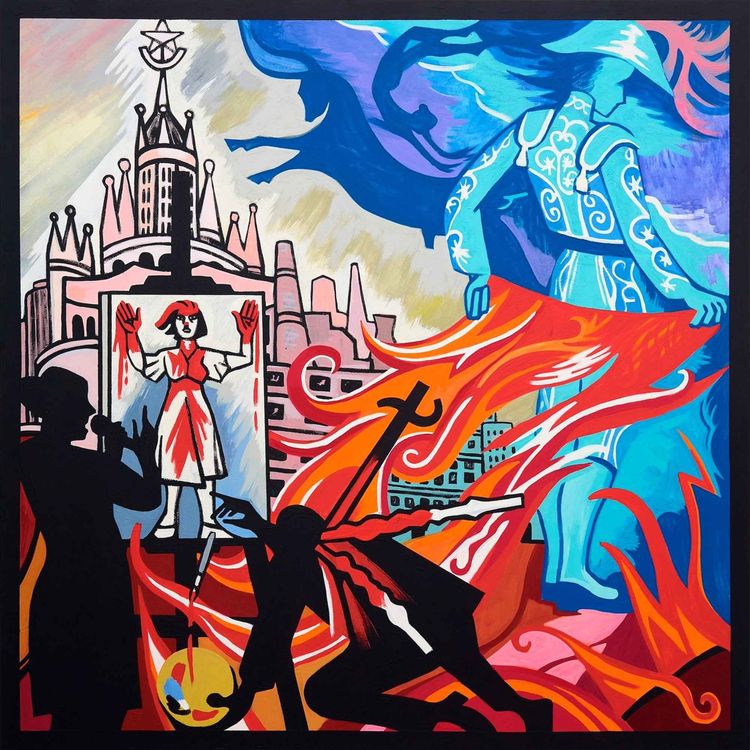
I met the graphic artist, Victoria Lomasko, about 10 years ago when she was a resident at the City of Asylum in Pittsburgh. I emceed an event with her back then. So I was happy when Victoria recently returned to the city to give a few talks at the University of Pittsburgh. Of course, the Eurasian Knot dragged her into a studio for an interview. A lot has changed for Victoria over the decade. Her graphic novel, Other Russias, represented the marginals of Russian society, and she won a Pushkin prize for the work. She got invited to speak, to show her art, and teach. She then went to Belarus to chronicle the mass protests. More art. More shows. But then Russia invaded Ukraine in 2022. The invites dried up as everything Russia became toxic. And political art forced her into exile in Germany. These experiences have caused her to question the efficacy of political art, and even her graphic style. Today, she’s embraced symbolic art that speaks to her political disillusion and difficulty in representing our current conjecture. Where does Lomasko stand today when it comes to art and politics? Tune in and find out.
Guest
Victoria Lomasko is a graphic artist and has lectured and written widely on graphic reportage. She lived in Moscow until March 2022 and now lives in exile. She is the author of Other Russias which received the Pushkin House Best Book in Translation award. Her latest book is The Last Soviet Artist published by N+1 Books
More episodes
View all episodes
The Soviet Death Penalty
46:06|The fact that the USSR executed its citizens with little jurisprudence is well known. The word “troika” is synonymous with Stalinist repressions of the 1930s. What is less known is that the Soviet Union’s death penalty regime changed significantly in the postwar period. After a brief moratorium adopted by Stalin(!) in 1947, Khrushchev revived capital punishment in 1954 as part of his war on crime. Homicide became a capital offense. The application of the death penalty became professionalized with lawyers, forensics, psychologists, and an appeals process. The narrative of appeals for clemency also changed. Whereas those from the prewar generation often cited a convict’s service to the Soviet state, supplicants after the 1960s portrayed themselves as abandoned by the welfare state. In Fate in My Hands, Yana Skorobogatov looked at about a hundred of these death penalty cases and clemency appeals from 1954-1991 to understand this new regime. What were the circumstances of the crimes and their adjudication? How did those on death row make their appeals? And how did the Soviet system correspond with the death penalty in, say, the United States? Knowing nothing about the Soviet death penalty, the Eurasian Knot spoke to Skorobogatov about her book, Fate in My Hand: The Death Penalty in the Soviet Union, and what it means for the postwar USSR and for us as the death penalty once again appears on the political agenda.Guest:Yana Skorobogatov is the Gladys and Roland Harriman Assistant Professor of Russian and Soviet History in the Department of History at Columbia University. She’s the author of Fate in My Hands: The Death Penalty in the Soviet Union published by the University of Chicago Press.
Soviet Protestants
51:25|We tend to think of the 1990s when it comes to Protestantism in Russia. It was then that evangelicals descended on Russia to shine Jesus’ light into the post-Soviet void. Yet, the Soviet Union, despite its best efforts, was a multiconfessional state. And though officially atheist, religious belief persisted, including among the Union’s small pockets of Protestants. Like with other faiths, the state’s relations with Protestants vacillated between repression, accommodation, and control. As Miriam Dobson says in her new book, The Unorthodox, things shifted after Stalin’s death. By the 1960s, regulating religious life fell under the purview of the Council of Religious Affairs. Sure, the state still emphasized atheism, closed churches, and prosecuted Protestants. But its methods were more surgical and the Council relied more on policing the margins over mass repression. So what was life like for the USSR’s Protestant minority? How did they practice their faith and maintain community despite pressures of family, society, and the state? And how did all of this connect to the larger Cold War context where the USSR’s archenemy was a Protestant majority country? The Eurasian Knot talked to Miriam about The Unorthodox to learn more about Protestant faith and community during the Cold War. Guest:Miriam Dobson is a Reader in Modern History at the University of Sheffield. She is the author of Khrushchev's Cold Summer: Gulag Returnees, Crime, and the Fate of Reform after Stalin and The Unorthodox: Soviet Protestants in Cold-War Ukraine and Russia published by Cornell University Press.
Thresholds Part 7: Olga
17:23|Over the last century, tens of millions of people quit Eastern Europe for the United States. The push-pull factors were many—war, poverty, instability, persecution at home and opportunity, refuge, and liberty abroad. But manna didn’t simply fall from the sky in America. Immigrants from Eastern Europe confronted many of the same challenges migrants do everywhere—exploitation, hardship, and discrimination.Thresholds is a REEES podcast series that will grapple with these histories through interviews with scholars and immigrants’ personal profiles. What pushed them to leave? What did they discover when they arrived? How did they change and be changed by American society? What opportunities and challenges did they face to become “American”? And what can we learn about immigration today?Guest:Olga immigrated to the United States from Moscow, Russia in 1990 as a child. She’s a high school teacher and lives in Pittsburgh, Pennsylvania.
Thresholds Part 6: Yelena
15:05|Over the last century, tens of millions of people quit Eastern Europe for the United States. The push-pull factors were many—war, poverty, instability, persecution at home and opportunity, refuge, and liberty abroad. But manna didn’t simply fall from the sky in America. Immigrants from Eastern Europe confronted many of the same challenges migrants do everywhere—exploitation, hardship, and discrimination.Thresholds is a REEES podcast series that will grapple with these histories through interviews with scholars and immigrants’ personal profiles. What pushed them to leave? What did they discover when they arrived? How did they change and be changed by American society? What opportunities and challenges did they face to become “American”? And what can we learn about immigration today?Guest:Yelena immigrated to the United States in 1979 as part of the wave of Soviet Jewish emigration. She’s a retired engineer and lives in Reading, Pennsylvania.
Thresholds Part 5: Julia
13:20|Over the last century, tens of millions of people quit Eastern Europe for the United States. The push-pull factors were many—war, poverty, instability, persecution at home and opportunity, refuge, and liberty abroad. But manna didn’t simply fall from the sky in America. Immigrants from Eastern Europe confronted many of the same challenges migrants do everywhere—exploitation, hardship, and discrimination.Thresholds is a REEES podcast series that will grapple with these histories through interviews with scholars and immigrants’ personal profiles. What pushed them to leave? What did they discover when they arrived? How did they change and be changed by American society? What opportunities and challenges did they face to become “American”? And what can we learn about immigration today?Guest:Julia Alekseyeva immigrated to United States from Kyiv, Ukraine, in 1992. She’s Assistant Professor of English and Cinema and Media Studies at the University of Pennsylvania. She’s the author of Soviet Daughter: A Graphic Revolution and Antifascism and the Avant-Garde: Radical Documentary in the 1960s and Antifascism and the Avant-Garde: Radical Documentary in the 1960s.
Thresholds Part 4: New Immigrants
36:14|Over the last century, tens of millions of people quit Eastern Europe for the United States. The push-pull factors were many—war, poverty, instability, persecution at home and opportunity, refuge, and liberty abroad. But manna didn’t simply fall from the sky in America. Immigrants from Eastern Europe confronted many of the same challenges migrants do everywhere—exploitation, hardship, and discrimination.Thresholds is a REEES podcast series that will grapple with these histories through interviews with scholars and immigrants’ personal profiles. What pushed them to leave? What did they discover when they arrived? How did they change and be changed by American society? What opportunities and challenges did they face to become “American”? And what can we learn about immigration today?Guest:Claudia Sadowski-Smith is Professor of English at Arizona State University. She is the author of The New Immigrant Whiteness: Race, Neoliberalism, and Post-Soviet Migration to the United States published by NYU Press.
Thresholds Part 3: Russians in San Francisco
35:10|Over the last century, tens of millions of people quit Eastern Europe for the United States. The push-pull factors were many—war, poverty, instability, persecution at home and opportunity, refuge, and liberty abroad. But manna didn’t simply fall from the sky in America. Immigrants from Eastern Europe confronted many of the same challenges migrants do everywhere—exploitation, hardship, and discrimination.Thresholds is a REEES podcast series that will grapple with these histories through interviews with scholars and immigrants’ personal profiles. What pushed them to leave? What did they discover when they arrived? How did they change and be changed by American society? What opportunities and challenges did they face to become “American”? And what can we learn about immigration today?Guest:Nina Bogdan is a historian and cultural preservationist. She recently authored the “Russian American Historic Context Statement” for the San Francisco City Planning Department as part of the Citywide Cultural Resources Survey. She’s the author of Before We Disappear into Oblivion: San Francisco’s Russian Diaspora from Revolution to Cold War published by McGill-Queen’s University Press.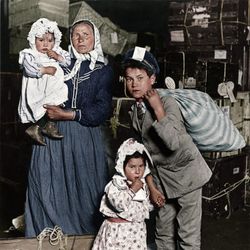
Thresholds Part 2: Becoming White
29:10|Over the last century, tens of millions of people quit Eastern Europe for the United States. The push-pull factors were many—war, poverty, instability, persecution at home and opportunity, refuge, and liberty abroad. But manna didn’t simply fall from the sky in America. Immigrants from Eastern Europe confronted many of the same challenges migrants do everywhere—exploitation, hardship, and discrimination.Thresholds is a REEES podcast series that will grapple with these histories through interviews with scholars and immigrants’ personal profiles. What pushed them to leave? What did they discover when they arrived? How did they change and be changed by American society? What opportunities and challenges did they face to become “American”? And what can we learn about immigration today?Guest:David Roediger is the Foundation Distinguished Professor of American Studies and History at the University of Kansas. He is the author of Working Toward Whiteness: How America's Immigrants Became White: The Strange Journey from Ellis Island to the Suburbs published by Basic Books.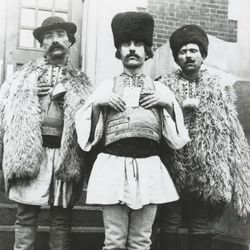
Thresholds Part 1: Leaving the Old Country
38:50|Over the last century, tens of millions of people quit Eastern Europe for the United States. The push-pull factors were many—war, poverty, instability, persecution at home and opportunity, refuge, and liberty abroad. But manna didn’t simply fall from the sky in America. Immigrants from Eastern Europe confronted many of the same challenges migrants do everywhere—exploitation, hardship, and discrimination.Thresholds is a REEES podcast series that will grapple with these histories through interviews with scholars and immigrants’ personal profiles. What pushed them to leave? What did they discover when they arrived? How did they change and be changed by American society? What opportunities and challenges did they face to become “American”? And what can we learn about immigration today?Guest:Tara Zahra is the Hanna Holborn Gray Professor of East European History at the University of Chicago. She’s the author of The Great Departure: Mass Migration and the Making of the Free World published by W. W. Norton & Company.Thresholds was edited and produced by Jojo Ellis and Sean Guillory.Music by Blue Dot Sessions.Theme song: "Immigration Rose" by James Doherty, 1924.