Share
The Eurasian Knot
Introducing: The Eurasian Climate Brief
The 2024 UN Climate Change Conference (COP29) ended in late November in Baku. Two weeks of intense climate negotiations unveiled deep divides—particularly between the Global North and South over climate finance and contentious debates on the right wording of transitioning away from fossil fuels.
In this episode Angelina Davydova and Boris Schneider dissect the outcomes of the conference, offering insights into the broader implications for climate action, both globally and in Central Asia. Joining the conversation is Kyrgyz journalist Anastasia Bengard, who attended COP29 as a fellow of the Climate Change Media Partnership (CCMP) programme. She shares her firsthand observations from the conference, shedding light on the positions and statements of her home country and Central Asia at large, as detailed in her reporting for 24.kg.
Tune in as we delve into the complex narratives and challenges that will define the future of climate action across Central Asia - and beyond.
The Eurasian Climate Brief is a podcast dedicated to climate issues in the region stretching from Eastern Europe to Russia down to the Caucasus and Central Asia.
This episode is supported by n-ost & eurasianet and made by:
- Angelina Davydova, environmental/climate journalist. Editor of the magazine "Environment and Rights", co-host of the podcast The Day After Tomorrow ("Posle Zavtra"). Environmental projects coordinator with the Dialogue for Understanding e. V (Berlin). Fellow with the Institute for Global Reconstitution (Berlin). Observer of the UN climate negotiations (UNFCCC) since 2008. Expert/editor of the Ukraine War Environmental Consequences Work Group.
- Boris Schneider, political economist. European Programme Manager at Clean Energy Wire CLEW (Berlin). Has worked as a specialist on Eastern European climate and energy topics, amongst others for n-ost and the German Economic Team.
Reports cited in the episode:
- Open Letter on COP reform
- After a disappointing COP29, here’s how to design global climate talks that might actually work
- We are not so naive anymore (Anastasia Bengard's interview with Edil Baisalov, Deputy Chairman of the Cabinet of Ministers of Kyrgyzstan)
Jingle: Natallia Kunitskaya alias Mustelide
Sound editing & mixing: Angelo Tripkovsky
More episodes
View all episodes
The Long History of American-Russian Relations
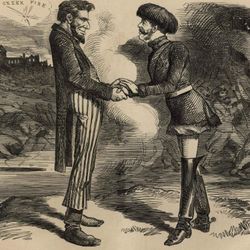
01:07:11|A quick scan of the hundreds of books on US-Russia relations gives the impression that the two countries only met in the 20th century. But relations go back to the early days of the American republic. And, surprisingly, throughout most of the 19th century, the United States and Russia were amicable powers joined in their mutual suspicion of Britain. Relations only began to deteriorate as the US increasingly entered global politics beyond the western hemisphere. What was the historical nature of American and Russian encounters? How did the relationship ebb and slow between distant friends and initiate enemies? And how did this dynamic shape self and bilateral perceptions? The Eurasian Knot turned to three of the best historians on the subject, Victoria Zhuraleva, Ivan Kurilla, and David Foglesong to talk about their new book, Distant Friends and Intimate Enemies: A History of American–Russian Relations about long history of the US-Russia dance.Guest:David Foglesong is a professor of history at Rutgers University. Ivan Kurilla is a visiting professor at Ohio State University. In 2024, he left Russia after being dismissed from the European University at St. Petersburg for opposing the war in Ukraine.Victoria Zhuravleva is Professor of American History and International Relations and Chair of the Department of American Studies at Russian State University for the Humanities.Together they are the authors of Distant Friends and Intimate Enemies: A History of American–Russian Relations published by Cambridge University Press.
REEES Faculty Spotlight: Gregor Thum
40:57|The history of borders and nations in Eastern Europe is fraught. What we even call the region is a site of contestation. Is it “Eastern Europe,” “Central Europe,” or “East Central Europe”? For Pitt historian Gregor Thum, space and how it’s delineated matters. This is especially the case for Germany and its eastern borderlands and people. Empire, war, ethnic cleansing, and shifting borders have left their marks on regional identity and memory. To the point, as Thum explains, a simple photograph he took in Poland can be interpreted with suspicion. How did the German empire regard its east? How do its shifting borders continue to live with us today? And how do we wrestle with the fractured memories that inhabit the national bricolage of Eastern Europe? The Eurasian Knot spoke to Gregor Thum to highlight his scholarship for a Pitt REEES Faculty Spotlight.Guest:Gregor Thum is an Associate Professor in the History Department at the University of Pittsburgh. He specializes in the history of empire, forced migration and memory in Central Eastern Europe. He’s the author of Uprooted: How Breslau became Wrocław during the Century of Expulsions published by Princeton University Press.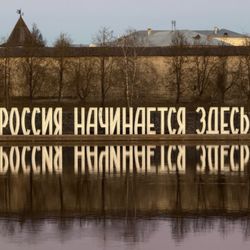
Russia Starts Here
55:07|What is Russia? There’s no easy answer. Travelers, scholars, philosophers, and journalists have pondered the question for centuries. And though answers vary, there is one point of consensus–whatever Russia is, you won’t find it in large cities. “Russia” exists out there, deep in the countryside, in the small towns and villages. For journalist Howard Amos, Russia begins in the provincial city of Pskov. “Russia Starts Here” is its slogan, and Amos uses it to pry open the lives of the region's citizens in his first book, Russia Starts Here: Real Lives in the Ruins of Empire. Amos conducted over 30 interviews during his decade stint in Russia until he left after its full-scale invasion of Ukraine. There’s the elderly couple who are the last of their village. The shattered young family whose’ father was killed in Ukraine. The oppositionist politician that risks it all to push back against Putin. And the priest, Father Tikhon Shevkunov, Putin’s supposed “spiritual father.” The Eurasian Knot spoke to Amos about his reporting and being a reporter in Russia, what people told him about daily life, the war in Ukraine, and where the country’s been and where it's going. Did Amos find Russia? Maybe just a snapshot. The country is just too big and too complex for anything more.Guest:Howard Amos is a writer and journalist who spent a decade as a correspondent in Moscow. He left Russia in the days after the full-scale invasion of Ukraine, and, based out of Armenia, did a year-long stint as editor-in-chief of The Moscow Times in exile. His first book is Russia Starts Here: Real Lives in the Ruins of Empire published by Bloomsbury Continuum.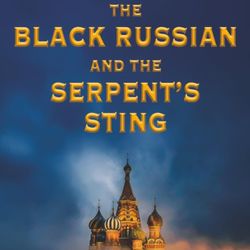
The Further Adventures of the Black Russian
44:36|A decade ago, Vladimir Alexandrov published an excellent biography, The Black Russian, about an unknown historical figure–Fredrick Bruce Thomas. Thomas was a Black Mississippian who moved to Imperial Russia and became a successful Moscow nightclub owner until Revolution forced him to flee. Thomas’ life is a window into post-emancipation Black American aspiration, struggle and cosmopolitanism. Alexandrov found Thomas such an intriguing character, he couldn’t let him go. So now, Thomas is the principle in a suspense novel set in Russia’s Silver Age. The Eurasian Knot spoke to Alexandrov about Thomas’ new adventure, the challenges of writing a novel, and where can we expect Fredrick Bruce Thomas to go from here. Guest:Vladimir Alexandrov, B. E. Bensinger Professor Emeritus in the Slavic Department at Yale, is the author most recently of The Black Russian, and To Break Russia's Chains: Boris Savinkov and His Wars against the Tsar and the Bolsheviks. He is currently completing a history of Russian involvement in the American Civil War, and the second novel in The Black Russian series. His first novel is The Black Russian and the Serpents Sting published by NIMCA Press.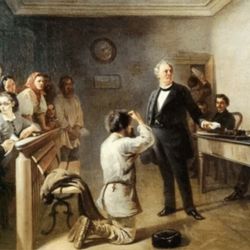
The Great Reforms
52:39|Alexander II’s Great Reforms were sweeping. They freed over 22 million serfs, overhauled the judicial, university, and municipal systems, and loosened censorship, among others. It was one of those pivot points in Russian history. If successful, Russia would have charted a more liberal path or stay on the autocratic road if a failure. Most historians have ruled them a failure. But what were the reforms trying to accomplish? What kind of Empire did it seek to create? Could they turn subjects of an autocracy into citizens of a nation? To discuss such a “big topic,” the Eurasian Knot spoke to Tatiana Borisova about her research into Alexander’s judicial reforms and their historical consequences. Can Russia’s attempt at reform in the mid-19th century provide some hope for a different Russia in the future?Guest:Tatiana Borisova is an Associate Professor of History at the Higher School of Economics St. Petersburg. Her most recent articles in English include: “Imperial legality through ‘Exception’: Gun control in the Russian Empire” and, with Jane Burbank, “Russia’s Legal Trajectories.” She co-edited, The Legal Dimension in Cold-War Interactions: Some Notes from the Field. Her newest book, in Russian, is Когда велит совесть: Культурные истоки Судебной реформы 1864 года в России published by Новое литературное обозрение.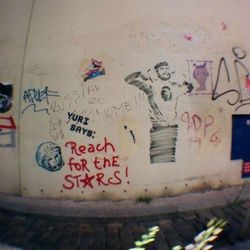
Post-Soviet Graffiti
54:59|I love street art. And I don’t care in what form. Beautifully crafted murals. Spraypainted gang tags. Scrawls on bathroom stalls. Even guerilla sticker mosaics on streetlights. I especially like how street art alters the narrative of a space. So, I was excited when I received a copy of Alexis Lerner’s book, Post-Soviet Graffiti. Post-Soviet street art has gotten little scholarly attention making the topic ripe for exploration and discussion. Post-Soviet graffiti shares a lot with its global counterparts–similar aesthetics, themes, culture, and political edginess. It also shares attempts at its co-optation by governments and corporations. But what makes political street art different in authoritarian countries like Russia? Is its power to circumvent media censorship and political control? What is street art, anyway? Who are the artists? And does graffiti have a political impact? The Eurasian Knot spoke to Alexis to get her thoughts and discuss the content and form of some of the graffiti she’s encountered over the last decade.Guest:Alexis Lerner is an Assistant Professor of Political Science at the United States Naval Academy. She’s the author of Post-Soviet Graffiti: Free Speech in Authoritarian States, published by University of Toronto Press. You can see the Alexis’ gallery of graffiti at https://postsovietgraffiti.com/
The Stiliagi
01:02:52|A new youth subculture emerged in the Soviet Union in the late 1940s and early 1950s–the Stiliagi. Roughly translated as “the stylish,” these youths, the majority of whom were men, wore flashy hairstyles and bright colored clothes, danced to jazz, and were obsessed with Western aesthetics. And of course, this style broke Soviet conventions, challenged social norms, and expanded gender performance. Though the exact origin of the Stiliagi is murky, it arose alongside other Western youth subcultures–the beatniks, the mods, the rockers–of the immediate post-WWII libertinism. The Stiliagi put the Soviet Union squarely within the history of a more globalized youth culture. But, what did it mean to be a “stiliagi”? Who were they? How did the style offer alternative forms of Soviet masculinity? How did the Soviet authorities react to these youths? And how did this subculture differ from its Western counterparts? The Eurasian Knot spoke to Alla Myzelev about her new book on the subculture, Stiliagi and Soviet Masculinities, 1945–2010: Fashion as Dissent, to get some answers.Guest:Alla Myzelev is a Professor and Chair of the Department of Art History and Museum Studies at SUNY Geneseo. She is currently editing a book titled Challenging Imperial Narratives Through Visual Art and Material Culture in Eastern Europe and Central Asia. Her new book, Stiliagi and Soviet Masculinities, 1945–2010: Fashion as Dissent, is published by Manchester University Press.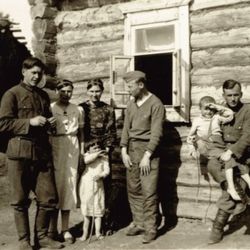
Fraternization and Survival During WWII
39:36|Soviet ideology called for the emancipation of women. Soviet women would be active participants in public life, unburdened by the home, children, and husbands, and serve equally in the building and defense of the Soviet state. Reality, however, was different, especially during WWII. Soviet women did serve in the Red Army and partisans. But life at war was more than the heroic tales we know today. Soviet women were often abused by their commanders and fellow soldiers or viewed as suspicious, weak, and even dangerous. Life under occupation was even worse. Many women turned to “survival prostitution” and fraternized with German soldiers to escape abuse, forced labor, and death. What strategies did Soviet women adopt to survive the war? How were they looked upon by the enemy, their neighbors, and compatriots? And what happened after the war to those who formed sexual relations with German soldiers? The Eurasian Knot spoke to Regina Kazyulina about gender, sex, and survival to get a window into this contentious and understudied chapter of WWII in the Soviet Union. Guest:Regina Kazyulina is a visiting assistant professor of history and the assistant director of the Center for Holocaust and Genocide Studies at Salem State University. Her book, Women Under Suspicion: Fraternization, Espionage, and Punishment in the Soviet Union During World War II published by University of Wisconsin Press.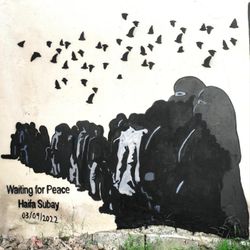
The Art of War
39:57|About two years ago, I was brought on to a podcast project started by the Global Studies Center at the University of Pittsburgh. The initial pitch was to produce a student-led podcast featuring two threatened artists that are part of the Pittsburgh Network for Threatened Scholars (PiNTS). I’m proud to feature the end result, The Art of War. It features two artists, the Yemeni street artist, Haifa Subay, and the Ukrainian poet, filmmaker, and musician, Oleksandr Fraze-Frazenko, about exile, art, war, and adjusting to life in Pittsburgh. I hope Eurasian Knot listeners enjoy it because I’m really proud of having been a part of it. And especially, seeing how our students, Jojo Ellis, Kyla Parker, and Lily Acharya proved to be naturals in the audio craft.Art of WarProduced by Lily Acharya, Jojo Ellis, Kyla Parker, David Greene, Shannon Reed, and Sean Guillory.Editing and sound design: Sean GuilloryMixed and mastered; Daniel Cooper, Podcuts EditingMusic: Blue Dot Sessions