Share
The Eurasian Knot
Everyday Politics in Russia
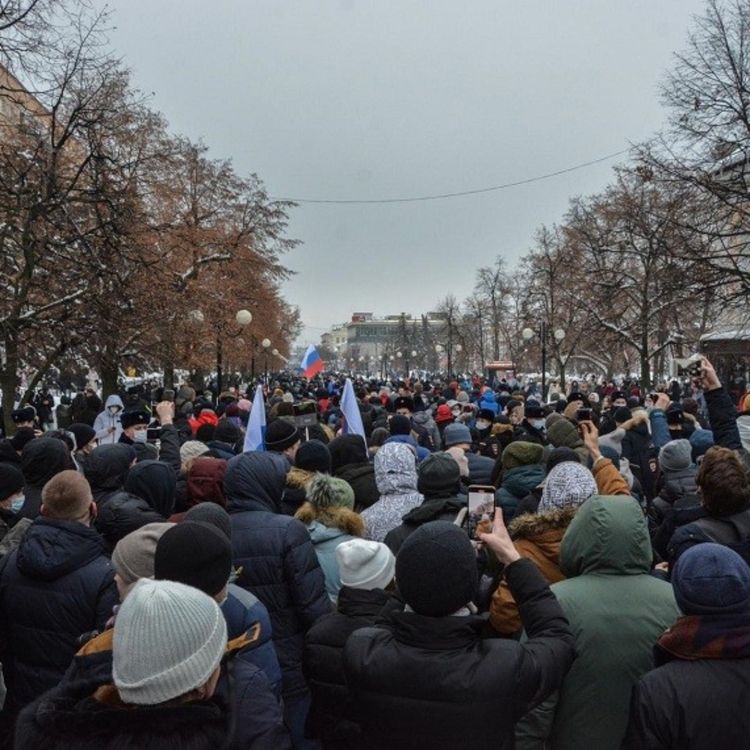
What do Russians really think? The question is old and elusive. It is also somewhat of a tell–to pose it is to suggest there’s a coherent answer, and more so, that Russians’ collective opinions matter. For the most part, scholars have turned to history, media, opinion polls, and assumptions to untie this knot. Jeremy Morris is no different in this regard, except that he approaches his subjects with ethnography–long, multi-year conversations of residents of provincial Russia to gauge their engagement with politics locally and nationally. A kind of political biography that records the ebbs and flows of Russian provincial life. How have Russians responded to their government’s invasion of Ukraine? How do they regard the past, present, and possible future of Russia? What issues concern and motivate them to political action? The Eurasian Knot spoke to Jeremy about his new book, Everyday Politics in Russia: From Resentment to Resistance to get an on-the-ground view of Russian political life.
Guest:
Jeremy Morris is Professor of Global Studies at Aarhus University, Denmark. He’s the author of Everyday Politics in Russia: From Resentment to Resistance published by Bloomsbury Academic.
More episodes
View all episodes
Marriage and Family in Chechnya
47:47|The history of Chechens, or Nokhchi, is defined by war, occupation, and ethnic cleansing. Yet despite these repeated traumas, the Nokhchi have persisted, resisted and survived. But how? Chechens comprise such a relatively small population, almost 2 million today. This is the question Marat Iliyasov asked himself as he entered adulthood. Given this history of violence, and uncertain future, what has inspired Chechens to continue getting married and raising families? Marat set out to find answers, which eventually became a book, Reproducing Resistance: Chechen Demography in Times of War. Chechen survival, he argues, was the result of the collective identities born from their traumatic history. Knowing little about Chechnya, the Eurasian Knot spoke to Marat about his book, how he dealt with questions of marriage, family and sex, and Nokhchi identity in Chechnya and in the Chechen diaspora.Guest:Marat Iliyasov is a Visiting Assistant Professor at the College of the Holy Cross. He’s the author of Reproducing Resistance: Chechen Demography in Times of War published by Bloomsbury.
A Novel of Modern Russia
38:45|Maya, the heroine of Svetlana Satchkova’s The Undead: A Novel of Modern Russia, is an aspiring Russian filmmaker. And after fits and starts she finally gets a break when the producer Belov greenlights her project. Maya’s film is an art-house horror flick about a resurrected Lenin who seeks to take control of Moscow with an army of zombies at his back. Maya has no political intent with the movie. To her, it’s just a horror film. She’s also naive to what Russia has become. All art is politically infused. The artist’s intent is meaningless. Maya is eventually denounced to the authorities, who, in turn, see zombie Lenin as a political satire of Putin’s Russia. To her shock and distress, Maya’s life is quickly turned upside down. The plot of The Undead unfortunately has a long tradition. Think of Lydia Chukovskaya’s Sofia Petrovna or Milan Kundera's The Joke. It’s when ordinary, innocent people get sucked into the oppressive machine of the state. The Eurasian Knot spoke to Satchkova about The Undead, her English debut, and how Maya’s fate speaks not just to the realities of artists and art in Russia, but also, to art in other authoritarian states past and present. It’s a tale of shifting political sands, the meaning of collaboration, and how the system grinds up even the most unassuming people.Guest:Svetlana Satchkova is a Russian-born journalist and novelist. She’s the author of three novels in Russian. Her latest novel is The Undead: A Novel of Modern Russia, her English-language debut, published by Melville House.
Latvian Soldiers in WWII
53:32|World War II casts a long, dark shadow over eastern Europe. Especially in those nations caught between the Wehrmacht and Red Army. Some locals joined the Nazis, others served in the Red Army, and some others fought against both. Many more simply fled or hunkered down hoping just to survive. Regardless, the memory of the war doesn’t tolerate nuance. If you fought, you were either on the Nazi or Soviet side, even if the goal was to liberate yourself. Reality was much more complicated, says Harry Merritt in Latvian Soldiers of World War II: Fighting for the Homeland in Nazi and Soviet Service. Both Soviet and Nazis created special Latvian regiments to fight for their side. Why? What did it mean to Latvian in the service of the occupiers? And how does the experience of these Latvian soldiers complicate the war, its meaning, and memory then and now? The Eurasian Knot hasn’t given the Baltics its due, so we jumped at the opportunity to talk to Harry Merritt to learn more about this complex and controversial aspect of war on the eastern front.Guest:Harry C. Merritt teaches in the Department of History at Rhode Island College. He’s the author of Latvian Soldiers of World War II: Fighting for the Homeland in Nazi and Soviet Service published by Oxford University Press.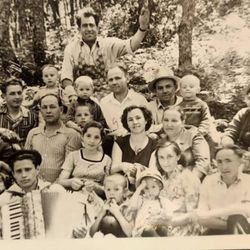
Los Rusos
49:35|An overlooked destination for thousands immigrating out of the Russian Empire and Soviet Union was Mexico. The reasons were many. Jews fled anti-semitic violence. Religious groups like the Molokans left because of persecution. Many more left in the wake of war, revolution, famine, and political repression. Regardless, Mexico was a viable alternative with the US borders closed to immigration in the interwar period. Collectively known as Los Rusos, these “Russians” built new lives, integrated into Mexican society, or eventually ended up in Los Angeles with the help of some dubious “ethnopolitical entrepreneurs.” Who were the Los Rusos? What was their immigrant experience like? How did the weather during the years of anti-communist hysteria, spy mania, and xenophobia? And why has Mexico eluded our attention as a destination for refugees from the Russian empire? The Eurasian Knot spoke to Andrew Jenks about his new book, Los Rusos: The Russian Departure to Mexico and Southern California, 1900-1965, to learn more.Guest:Andrew Jenks is a professor of history at California State University Long Beach. He has published books on the history of space exploration, folk art, the environment, and migration. He’s the author of Los Rusos: The Russian Departure to Mexico and Southern California, 1900–1965 published by Cornell University Press.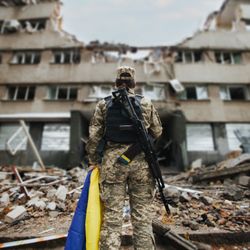
The Origins of the Ukraine War
54:47|When did Putin decide to invade Ukraine? Was it shortly after 2012 when he returned as President? In 2014, after the seizure of Crimea and clashes in the Donbas? Or was it when Russian forces began massing at the Ukraine-Russia-Belarus borders for a full-scale assault? The answer to when, Michael Kimmage says, is important because that would tell us what drove Putin and what might be necessary to bring a diplomatic solution. The Ukraine War has been raging longer than WWI and WWII with no end in sight. And Kimmage argues that the global context and ramifications need analysis. The Ukraine War is the most documented war in history and we might not have all the information to answer “why?” for years, maybe decades. Kimmage recently gave a talk at the University of Michigan's Center for Russian, East European, & Eurasian Studies on the origins of the Ukraine War, and Rusana, the Eurasian Knot’s Midwest correspondent, sat down with him for a wide ranging interview.In the interview, Rusana and Michael discussed the Kennan Institute’s project on the origins of the Ukraine war. You can watch the available videos here. Also, check out the Kennan’s Dispatches for reports from Ukraine.Guest:Michael Kimmage is the Director of Kennan Institute. He’s also a professor of history at the Catholic University of America. He publishes widely on international affairs and on U.S. policy toward Russia. His latest book is Collisions: The War in Ukraine and the Origins of the New Global Instability published by Oxford University Press.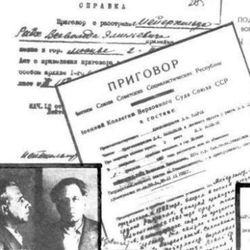
The Soviet Death Penalty
46:06|The fact that the USSR executed its citizens with little jurisprudence is well known. The word “troika” is synonymous with Stalinist repressions of the 1930s. What is less known is that the Soviet Union’s death penalty regime changed significantly in the postwar period. After a brief moratorium adopted by Stalin(!) in 1947, Khrushchev revived capital punishment in 1954 as part of his war on crime. Homicide became a capital offense. The application of the death penalty became professionalized with lawyers, forensics, psychologists, and an appeals process. The narrative of appeals for clemency also changed. Whereas those from the prewar generation often cited a convict’s service to the Soviet state, supplicants after the 1960s portrayed themselves as abandoned by the welfare state. In Fate in My Hands, Yana Skorobogatov looked at about a hundred of these death penalty cases and clemency appeals from 1954-1991 to understand this new regime. What were the circumstances of the crimes and their adjudication? How did those on death row make their appeals? And how did the Soviet system correspond with the death penalty in, say, the United States? Knowing nothing about the Soviet death penalty, the Eurasian Knot spoke to Skorobogatov about her book, Fate in My Hand: The Death Penalty in the Soviet Union, and what it means for the postwar USSR and for us as the death penalty once again appears on the political agenda.Guest:Yana Skorobogatov is the Gladys and Roland Harriman Assistant Professor of Russian and Soviet History in the Department of History at Columbia University. She’s the author of Fate in My Hands: The Death Penalty in the Soviet Union published by the University of Chicago Press.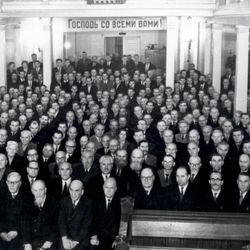
Soviet Protestants
51:25|We tend to think of the 1990s when it comes to Protestantism in Russia. It was then that evangelicals descended on Russia to shine Jesus’ light into the post-Soviet void. Yet, the Soviet Union, despite its best efforts, was a multiconfessional state. And though officially atheist, religious belief persisted, including among the Union’s small pockets of Protestants. Like with other faiths, the state’s relations with Protestants vacillated between repression, accommodation, and control. As Miriam Dobson says in her new book, The Unorthodox, things shifted after Stalin’s death. By the 1960s, regulating religious life fell under the purview of the Council of Religious Affairs. Sure, the state still emphasized atheism, closed churches, and prosecuted Protestants. But its methods were more surgical and the Council relied more on policing the margins over mass repression. So what was life like for the USSR’s Protestant minority? How did they practice their faith and maintain community despite pressures of family, society, and the state? And how did all of this connect to the larger Cold War context where the USSR’s archenemy was a Protestant majority country? The Eurasian Knot talked to Miriam about The Unorthodox to learn more about Protestant faith and community during the Cold War. Guest:Miriam Dobson is a Reader in Modern History at the University of Sheffield. She is the author of Khrushchev's Cold Summer: Gulag Returnees, Crime, and the Fate of Reform after Stalin and The Unorthodox: Soviet Protestants in Cold-War Ukraine and Russia published by Cornell University Press.
Thresholds Part 7: Olga
17:23|Over the last century, tens of millions of people quit Eastern Europe for the United States. The push-pull factors were many—war, poverty, instability, persecution at home and opportunity, refuge, and liberty abroad. But manna didn’t simply fall from the sky in America. Immigrants from Eastern Europe confronted many of the same challenges migrants do everywhere—exploitation, hardship, and discrimination.Thresholds is a REEES podcast series that will grapple with these histories through interviews with scholars and immigrants’ personal profiles. What pushed them to leave? What did they discover when they arrived? How did they change and be changed by American society? What opportunities and challenges did they face to become “American”? And what can we learn about immigration today?Guest:Olga immigrated to the United States from Moscow, Russia in 1990 as a child. She’s a high school teacher and lives in Pittsburgh, Pennsylvania.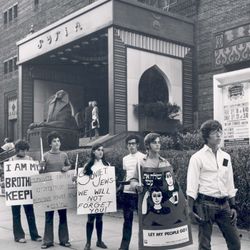
Thresholds Part 6: Yelena
15:05|Over the last century, tens of millions of people quit Eastern Europe for the United States. The push-pull factors were many—war, poverty, instability, persecution at home and opportunity, refuge, and liberty abroad. But manna didn’t simply fall from the sky in America. Immigrants from Eastern Europe confronted many of the same challenges migrants do everywhere—exploitation, hardship, and discrimination.Thresholds is a REEES podcast series that will grapple with these histories through interviews with scholars and immigrants’ personal profiles. What pushed them to leave? What did they discover when they arrived? How did they change and be changed by American society? What opportunities and challenges did they face to become “American”? And what can we learn about immigration today?Guest:Yelena immigrated to the United States in 1979 as part of the wave of Soviet Jewish emigration. She’s a retired engineer and lives in Reading, Pennsylvania.