Share

Ethically Questionable
EQ News: Fashion, Porn, Sports, Music
This week's news cycle had it all, and Jamila and Jenn are not holding back. First up: CFDA CEO Steve Kolb's shocking physical altercation with PETA protesters at a COS runway show, caught on camera and now under investigation. Then, adult content creator Lily Phillips teams up with Yellow Dot Studios (the team behind Don't Look Up) on a provocative climate change campaign that's turning heads for all the right reasons. Next, Sydney Sweeney's baffling ad for sports betting company Novig has the internet asking who is advising her, and what it means for women's sports at a moment when female athletes are finally getting their due. Finally, the Ed Sheeran and Macklemore tour fallout: a timeline of what actually happened when Macklemore said "free Palestine" onstage, and why staying silent might be its own kind of statement.
Four stories, one big question: when you have a platform, what do you do with it?
Electrified by Polestar
More episodes
View all episodes
Are Paper Straws Actually Better than Plastic?
27:00|Ethically Questionable, Electrified by Polestar.A South Korean government study says paper straws are worse for the environment than plastic ones, and the New York Post could not contain its joy. Jamila and Jenn dig into what the study measured, what it left out (litter, ocean pollution, microplastics), and why the best straw might be no straw at all.Plus, H&M’s investment arm hosted an event called the Sustainable Fashion Forum. That’s also the name of Brittany Sierra’s 10-year-old company, which H&M had been in talks with for years. H&M says the name was a mistake. We’re not convinced. We get into what this says about how big brands treat Black women founders, and whether you should ever take money from brands you don’t trust.Plus, we have thoughts on Obama saying the White House looks like “Saddam Hussein opened a Cheesecake Factory.” Barack, if you’re listening, our DMs are open.Find EQ everywhere Watch on YouTube: https://www.youtube.com/@EthicallyQuestionablePod Follow on Instagram: https://www.instagram.com/ethicallyquestionable/ Follow on TikTok: https://www.tiktok.com/@ethicallyquestionablepodFollow your hosts Jamila: https://www.instagram.com/jamilafaye/ Jenn: https://www.instagram.com/jennmcgarrigle/Ethically Questionable is Electrified by Polestar https://www.instagram.com/polestarcars/
Pure Dictator Aesthetic Core
30:05|Ethically Questionable, Electrified by Polestar.Jenn hosts this week. Our theme is governments letting us down, and the bar is on the floor. Trump’s new press secretary Katie Zacharia held a 14 minute briefing, took three questions, admitted she never passed the bar, and was out after five days. That’s half a mooch. We get into how she got the job in the first place, and why Jamila’s sarcastic comment on The Cut was too British for America.Then Trump wants to evict the White House press corps so he can bring back FDR’s old indoor pool. He posted a gilded mock-up to prove it. Moving reporters across the street is about control, not swimming, and it turns out he’s not the first to want the pool back. Over in the UK, Andy Burnham’s government has approved the Jackdaw gas field. Dale Vince calls it a tiny gas field. Jamila calls it strike two. We ask whether any of this gets us closer to solar panels on every roof.Grab your goggles. Leave your press pass at the door.Find EQ everywhere Watch on YouTube: https://www.youtube.com/@EthicallyQuestionablePod Follow on Instagram: https://www.instagram.com/ethicallyquestionable/ Follow on TikTok: https://www.tiktok.com/@ethicallyquestionablepodFollow your hosts Jamila: https://www.instagram.com/jamilafaye/ Jenn: https://www.instagram.com/jennmcgarrigle/Ethically Questionable is Electrified by Polestar https://www.instagram.com/polestarcars/
Sh*t's Creek: WTF is Happening to the Water?
21:59|Sh*t’s Creek: WTF Is Happening to Our Water?Ethically Questionable, Electrified by Polestar.This week, Danny Dyer floated a giant poo sculpture down the Thames and delivered a petition to Downing Street calling for the water industry to be nationalised. Nearly 350,000 people have signed it. So how did we get here?Jamila and Jenn dig into the story behind the stunt: the 1989 privatisation of England’s water, the billions paid out to shareholders while debt piled up, sewage spilling into our rivers and seas, and bosses moving between the companies and the regulator meant to hold them to account. Plus, the campaigners refusing to pay the sewage part of their bills, why renationalising is harder than it sounds, and what Paris and Copenhagen did to make their rivers swimmable again.Funny, fired up, and a little bit gross. Grab a tea (maybe skip the tap water though).Find EQ everywhere Watch on YouTube: https://www.youtube.com/@EthicallyQuestionablePod Follow on Instagram: https://www.instagram.com/ethicallyquestionable/ Follow on TikTok: https://www.tiktok.com/@ethicallyquestionablepodFollow your hosts Jamila: https://www.instagram.com/jamilafaye/ Jenn:https://www.instagram.com/jennmcgarrigle/Ethically Questionable is Electrified by Polestarhttps://www.instagram.com/polestarcars/
People Don't Really Like Starbucks Anymore
27:55|Starbucks wants to get “Back to Starbucks.” So why has it just dropped or scaled back most of the sustainability goals it set in 2020, including its targets to halve water use and landfill waste, while CEO Brian Niccol pushes through $2 billion in cost cuts?This week on EQ News, Jamila Brown and Jenn McGarrigle get into the Financial Times report on Starbucks’ retreat from its green goals. Jamila confesses to walking into a Climate Week event in New York holding a single-use Starbucks cup. Jenn, a former Starbucks barista and coffee master, remembers the company it used to be: compost bags made from coffee grounds, pastries donated to local shelters, and a “third place” people actually wanted to spend time in.They talk about why watered-down goals worry them more than missed ones, how a change in what gets counted turned 500 billion litres of water into 53 billion, why a coffee company should treat climate change as one of its biggest business risks, and the citywide reusable cup trial in California that worked and then quietly disappeared. Plus, the private jet commute.Is it greenwashing to set a goal you might miss? Who should a sustainability team really report to? And can “Back to Starbucks” work while cutting the people who made it Starbucks?Stories mentioned: Financial Times, “Starbucks retreats from green goals amid $2bn cost drive” (29 September 2026). Bloomberg, “Hot Potatoes Mean Higher Prices and Shorter Fries in Europe” (16 September 2026).Ethically Questionable is Electrified by Polestar, the Swedish electric performance brand created to accelerate the shift to zero tailpipe emissions.
We're Creating a Culture Where Sexual Assault is an Opinion
34:30|Trigger warning: this episode discusses sexual assault.A former Cornell student alleges she was drugged and sexually assaulted by seven fraternity members in 2024. Messages about it were reportedly shared in a group chat with dozens of other men, and no one stepped in. The district attorney didn't bring charges, and Cornell handed out sanctions that included essays and workshops. Two years on, the case is everywhere. Online, people are arguing about whether it counts as assault at all.Jamila and Jenn talk about how we got here. Why do men in groups stay silent? Why do universities, prosecutors and TV hosts keep landing on the side of the accused? And what would actually change things: education at home, in schools and in the media, or real consequences?The men named in the case deny the allegations, and none of them has been charged.Hating AI Whilst Using AI
46:41|Artificial intelligence is becoming impossible to ignore. It is changing how businesses operate, how people work, how students learn, and even how we think about productivity.But behind the excitement is a much harder question: What happens when we adopt AI faster than we understand its consequences?In this episode of Ethically Questionable, Jamila Brown and Susan Allen Augustin explore the uncomfortable side of AI, from the pressure to use it at work to the environmental cost of the infrastructure behind it.They discuss AI regulation, workplace productivity, education, sustainability, AI ethics, corporate responsibility, and the growing influence of the companies and individuals building these systems.The conversation also explores a particularly uncomfortable contradiction: AI can help people work more efficiently while simultaneously increasing the amount of work expected from them.EQ News: Live from Climate Week NYC w Plant Kween
39:16|Recorded live at DUMBO House for Climate Week NYC, Jamila welcomes back her first ever repeat guest, Christopher Griffin, aka Plant Kween, educator, storyteller and author of You Grow Girl.Between them they've been to a lot of events this week, and they've pulled out the three conversations they kept hearing everywhere.Nature as infrastructure, not decoration. Street trees placed where they'll cool treeless neighbourhoods, Staten Island's Bluebelt wetlands soaking up stormwater, beavers stopping floods near Greenford station in London, and the Billion Oyster Project cleaning up the Hudson. Plus a detour into why Mamdani's comms team is the envy of London.The trust gap. Big corporate pledges for 2030, and not much to show for them right now. Spotify's Nature as an Artist programme, ChatGPT taking influencers beekeeping, and why groups like ClientEarth and Earthjustice might be what finally makes regulation mean something.Climate comms getting personal. Climate change isn't coming, it's here. So the messages that land now are about the people we love, our health and our money: insurance letters, food prices after a summer of heatwaves, and people ditching polyester for reasons that have nothing to do with the planet.They finish with small things anyone can do: eat your leftovers, rewear your clothes, eat more plants, and say no to the plastic straw.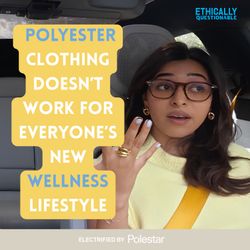
The Clothes Are Not Alright
44:44|Why "Polyester" Became an Insult (And Why Brands Are Still Making More of It)Shayeza Walid, sustainability journalist at The Business of FashionPolyester turned into a slur online this year. Teenagers use it to mean cheap, plastic, fake, and people now read clothing labels the way they read ingredients lists. So the obvious question is whether any of that hatred has changed what the industry actually makes. It has not. Shayeza Walid, who covers sustainability at The Business of Fashion, brings Jamila the numbers: fashion's carbon emissions rose 14 percent in a single year, and rising polyester production was one of the reasons why. From there the conversation goes somewhere more uncomfortable than material swaps, into why a brand can print organic cotton on every label while hiding the only figure that matters, why the $800 sustainable sweater wrecked the whole movement, and why a working journalist says she does not trust certifications 80 percent of the time. If you have ever stood in a shop trying to work out whether you are the problem, this one is for you.About the guestShayeza Walid is Senior Editorial Associate covering sustainability at The Business of Fashion, based in London, where she reports on fashion's environmental impact, climate accountability, supply chains and labour. She writes BoF's sustainability newsletter, The Frayed Edge. Before BoF she was a contributing reporter at The New York Times covering South Asia, and contributed to Variety, Esquire and Screen International. She holds a masters from Columbia Journalism School.What you will learnWhy fashion's carbon emissions rose 14 percent from 2023 to 2024 while every brand was announcing climate targetsWhy hating polyester online has not reduced how much of it gets produced, and what actually wouldThe reason a sustainability journalist does not trust certifications about 80 percent of the timeWhy scale is the one number a brand can hide behind a conscious collection, and what to look at insteadHow the $800 regenerative sweater narrative made sustainability feel like a class marker and pushed people away from itWhy durability is a better metric than material makeup, using Patagonia's heavy polyester use as the exampleWhat the new French anti fast fashion levy and the incoming EU green claims rule will and will not fixWhy recycled polyester is a genuinely good idea that still fails the Global SouthNotable quotes"Scale is the one thing that's very easy to kind of hide when you're marketing your brand." Shayeza Walid"One polyester sweater that lasts 15 years is better than somebody buying 15 organic cotton sweaters every season." Jamila Brown"The average person can't afford the $800 sweater." Shayeza Walid"I don't trust certifications about 80 percent of the time." Shayeza Walid"Regulation doesn't change the motivation or the incentive of why corporations work, which is profit." Shayeza WalidResources mentionedThe Business of Fashion, and Shayeza's sustainability newsletter The Frayed EdgeThe Apparel Impact Institute, whose 2024 data showed the 14 percent emissions riseFrance's anti fast fashion law, in force from 1 September, levying Shein and TemuThe incoming EU green claims regulation on misleading sustainability marketingOshadi, the South India brand that owns its own farms, and Kotn, the Canadian Egyptian cotton brand working directly with Egyptian farmsBrands discussed: Shein, Temu, H&M, Zara, Mango, Primark, Patagonia, Stella McCartney, Another Tomorrow, Everlane, Abercrombie & Fitch, American Apparel, Gap, MadewellCollaborations discussed: Stella McCartney x H&M, H&M x Elie Saab, Coach x Penguin book charms, Jonathan Anderson's Dior book totesConnect with Shayeza WalidInstagram: https://www.instagram.com/shayeza_/Newsletter: The Frayed Edge at The Business of FashionConnect with Ethically QuestionableYouTube: https://www.youtube.com/@EthicallyQuestionablePodInstagram: https://www.instagram.com/ethicallyquestionable/