Oil & Gas Energy Investing
All Episodes
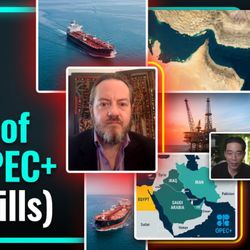
6. Oil & Gas Investing: Iran, the Strait of Hormuz, OPEC+, and the Shale Revolution (w/ Robin Mills)
45:19||Ep. 6Join our community and get the newsletter and AI Cheatsheet: thewealthelevator.com/oilThe host interviews Robin Mills (founder/CEO of Qamar Energy, Columbia Global Energy Policy fellow, former Shell executive, author of The Myth of the Oil Crisis) about oil and gas investing amid the Iran conflict and Strait of Hormuz disruptions. Mills argues the world has ample oil resources and explains how the US shale boom—enabled by horizontal drilling, fracking, and crude-by-rail—reversed decades of US production decline, initially led by smaller firms before major consolidation. He discusses early-2010s fracking environmental controversy, the collapse and partial revival of Venezuela’s oil sector after US action and sanctions changes, and how Iran’s drone/missile attacks have slashed Hormuz flows from ~20 million bpd to far lower levels, affecting global prices. The conversation covers OPEC vs OPEC+ influence, spare capacity limits during the blockade, China’s strategic stockpiling and import cuts, and long-term demand shifts from EVs toward petrochemicals and aviation, plus nuclear’s prospects via small modular reactors.00:00 Oil Investing Setup01:03 Myth of Oil Scarcity02:44 Shale Boom Origins04:31 How Fracking Took Off06:26 Majors vs Independents08:14 Fracking Environmental Backlash09:32 Venezuela Collapse and Comeback13:06 US Oil Policy Tightrope15:09 Iran War and Hormuz Blockade20:12 Pipelines and Price Paradox22:42 Stalemate and What Next23:47 OPEC Price Myth24:16 OPEC Plus Power26:43 Spare Capacity Explained28:25 US vs Saudi Flexibility30:37 China Oil Wildcard32:51 Energy Transition Risks37:16 Future Oil Demand38:41 Nuclear Comeback43:00 Oil Investing Outlook44:38 Wrap Up Contacts
5. Where U.S. Oil Production Really Comes From: Permian Basin, PADDs
11:37||Ep. 5Join our community and get the newsletter and AI Cheatsheet: thewealthelevator.com/oilThe episode breaks down a Visual Capitalist map of U.S. crude oil production using 2025 context, highlighting that the U.S. averaged about 13.6 million barrels per day, up roughly 3% and a national record. Production is highly concentrated: Texas produced about 5.75 million barrels per day (42%) and New Mexico 2.24 million (16.5%), with the Permian Basin alone accounting for 48% and Texas+New Mexico nearly 60%. Offshore Gulf of Mexico (~1.9 million, 14%) and North Dakota’s Bakken help bring the top four areas to roughly 80% of output, while PADD 3 (Gulf Coast region) produced about 10 million barrels per day (73%). The host frames these geographic “building blocks,” tax incentives like intangible drilling costs, and the impact of horizontal drilling/fracking since 2008 as key context for passive investors, while emphasizing operator track record and risk-adjusted pricing over simply chasing the biggest basin.00:00 US Oil Record High00:34 Why Investors Should Care01:26 Map Data And Tax Perks02:55 Texas New Mexico Permian03:37 Brand Name Basin Pricing05:18 Other Major Producing Areas06:13 Small Basins Big Advantages07:33 PADD Regions Explained08:48 Alaska Then Fracking Boom10:38 Key Takeaways And Wrap4. UAE Leaves OPEC: What OPEC (and OPEC+) Really Do to Oil Prices
13:56||Ep. 4Join our community and get the newsletter and AI Cheatsheet: thewealthelevator.com/oilThe episode discusses the UAE’s withdrawal from OPEC after 58 years to pursue independent oil production, using the headline to explain what OPEC is and how it influences oil prices. It clarifies that OPEC doesn’t directly set gasoline prices or control global demand, but coordinates member production targets to affect global crude supply, with real-world delays and constraints that make quotas partly symbolic. The host distinguishes OPEC from OPEC+, noting the broader alliance (including Russia) draws greater market attention because it can shift supply-demand expectations. The podcast reviews supply and demand, deliverability, spare capacity, geopolitical disruptions like Strait of Hormuz issues, and argues demand is more durable and supply harder to ramp than many assume, while stressing that oil prices affect many parts of investors’ portfolios.00:00 UAE Exits OPEC00:49 Why OPEC Matters01:56 OPEC Basics Explained02:52 How Supply Moves Prices04:06 Targets vs Real Barrels04:45 OPEC Plus and Russia05:45 Symbolic Quotas and Delays07:33 Demand Supply and Delivery08:12 Renewables vs Reality09:34 Spare Capacity and War Risk10:54 Investor Takeaways Today12:17 UAE Motives and Impact13:03 Wrap Up and Next Steps3. Global Crude Oil Trade Explained: Net Exporters, Importers, and Why Prices Move Everywhere
06:28||Ep. 3Join our community and get the newsletter and AI Cheatsheet: thewealthelevator.com/oilThis episode breaks down global crude oil trade by region and explains why investors in U.S. oil and gas still need to understand global supply. Using a Visual Capitalist map, it highlights export volumes led by the Persian Gulf (16.4M bpd), North America (9.2M), Russia/Northern Asia (6.4M), Africa (4.9M), and South America (4.0M), then focuses on net exports—showing the Persian Gulf’s net exports are nearly the same (15.7M) while North America’s net exports are much lower (2.1M) due to domestic consumption. It also covers major Asian demand centers, the Strait of Hormuz disruption example, North America and the Gulf both sending ~2M bpd to Europe, and why the U.S. exports and imports crude due to light vs heavy crude and refinery needs.00:00 Global Oil Trade Overview00:36 Key Producing Regions01:29 Exports by Region Breakdown02:47 Net Exports Explained03:42 Asia Demand and Geopolitics04:42 Europe Flows and Trade Routes05:04 Crude Types and Refining Needs06:06 Why Global Prices Move Together2. 5 Oil Investing Lessons Most Passive Investors Miss (Refineries, Crude Types, Macro & Geopolitics)
16:46||Ep. 2Join our community and get the newsletter and AI Cheatsheet: thewealthelevator.com/oilThe host shares five oil and gas investing lessons passive accredited investors often miss, based on experience investing since 2019. He explains why the U.S. can produce large amounts of oil yet still face high gas prices because oil is globally priced and vulnerable to supply shocks that also feed inflation. He breaks down why “oil isn’t just oil,” emphasizing light sweet vs. heavy sour crude and how refinery configurations (including reliance on heavy crude from regions like Venezuela or the Middle East) can create bottlenecks and price sensitivity. He outlines how oil shocks can ripple into interest rates, real estate, and private markets, and why geopolitical risk (wars, sanctions, tanker routes like the Strait of Hormuz) must be part of underwriting. Finally, he argues energy can be attractive when fear creates dips, but investors should scrutinize underwriting assumptions, break-even prices, timing of production, and tradeoffs between cash flow and tax benefits like intangible drilling costs.00:00 Five Oil Lessons Intro01:06 Why Gas Stays High01:48 Global Commodity Reality02:59 Heavy vs Light Crude05:57 Oil Shocks Hit Markets07:03 Portfolio Exposure Talk09:37 Geopolitics In Underwriting11:52 Buy Fear With Discipline13:47 Underwriting Deal Assumptions15:08 Breakeven And Key Questions15:49 Cashflow Vs Tax Benefits16:16 Wrap Up And Connect1. Introduction: What to Expect
04:19||Ep. 1Join our community and get the newsletter and AI Cheatsheet: thewealthelevator.com/oil
loading...