Share
ECFR ON AIR
Europe Listens: Exploring the deep seabed with Pradeep Singh
To achieve the ambitions of the European Green Deal, the European Commission insists that healthy oceans and a sustainable maritime economy are crucial. With rising demand for minerals from various sectors, including to advance the green transformation, many expect we are on the brink of the biggest gold rush in history – deep beneath the ocean surface.
In this episode of Europe Listens, ECFR’s Rafael Loss and Jana Puglierin welcome Pradeep Singh, environmental lawyer and fellow at the Research Institute for Sustainability in Potsdam. What are the key resources in the seabed? Is deep seabed mining more of an opportunity or a risk? How can the European Union and its global partners help to guard against the known and unknown dangers of deep seabed mining?
This podcast was recorded on 4 March 2024.
Other episodes of this season:
Episode 1: Protecting the high seas with Essam Yassin Mohammed
Further reading:
The European Union and seabed mining by Pradeep A. Singh, Virginie Tassin Campanella, and Frank Maes
A “deadline” expires: Quo Vadis, International Seabed Authority? By Pradeep Singh
The country with nothing left to lose by Christina Lu
Resolution on Norway’s recent decision to advance seabed mining in the Arctic by the European Parliament
More episodes
View all episodes

Eastern Europe’s breaking point: When crises collide and the EU hesitates
42:52|Jessica Hendrick welcomes Sophie Gueudet, research fellow at the Sant’Anna School of Advanced Studies working on the RE-ENGAGE project, and Ivanna Klympush-Tsintsadze, Ukrainian member of parliament and chair of the Parliamentary Committee on EU Integration to explore how external crises and internal fractures—from oil price surges triggered by the Iran conflict to Hungary’s veto politics inside the EU—are testing paths to accession.Drawing on RE-ENGAGE’s four-scenario framework, the conversation examines whether Georgia, Moldova and Ukraine are moving toward deeper integration, or drifting into fragmentation and uncertainty.Jessica, Sophie and Ms. Klympush-Tsintsadze explore how energy shocks, political divisions and stalled EU decision-making are reshaping regional trust, resilience and strategic direction. As pressures mount, the credibility of the enlargement process—and the EU’s role as a geopolitical anchor—is being called into question.What signals should Europe be watching for to understand where the region is heading? At what point do repeated crises stop being temporary disruptions and start reshaping the system itself? And if trust in the EU’s enlargement process erodes, who—or what—steps in to fill that gap?Further reading:RE-ENGAGE Eastern Europe Strategic ForecastRE-ENGAGE country case study on GeorgiaRE-ENGAGE country case study on MoldovaThis podcast was recorded on March 30th 2026.
Yemen: Between Gulf tensions and Iran war clouds
36:31|Yemen is once again in a shifting geopolitical landscape: amid the increasing risk of military conflict between the US and Iran, rising tensions between the UAE and Saudi Arabia, and mounting instability across the Red Sea. In this episode of the WOMENP podcast, ECFR visiting fellow Cinzia Bianco welcomes Yasmeen Al-Eryani, co-executive director, knowledge production at the Sana’a Center for Strategic Studies and Maysaa Shuja al-Deen, senior researcher at the Sana’a Center for Strategic Studies. Together, they unpack what these developments mean for Yemen’s fragile political trajectory and wider regional security, and their key implications for Europe. The discussion explores how mounting instability can be contained and what the international community can do to strengthen legitimate governance structures in Yemen—thereby reviving a credible political process. Listen to all past episodes of the WOMENP series. This podcast was recorded on February 25th 2026.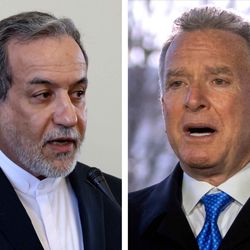
Trump's Iran choice: Regional takes
47:17|In this episode of ECFR’s WOMENP podcast, Ellie Geranmayeh welcomes Aslı Aydıntaşbaş, associate senior policy follow at ECFR, Dina Esfandiary, Middle East geoeconomics lead at Bloomberg Economics and Yasmine Farouk, Gulf and Arabian Peninsula project director at International Crisis Group, to discuss regional perspectives around the current turmoil in Iran, following deadly protests and growing calls for US military intervention. What can be expected from the US military build up in the Middle East and the revival of Iran-US talks in Oman? What is Turkey’s position? And how likely is it that Arab Gulf powers can prevent a new war in the region? Listen to all past episodes of the WOMENP series.This podcast was recorded on February 9th 2026. Must-read and must-see items suggested by experts: “What Iran’s Dead Loved and Fought For” by Arash AziziIran protests coverage (Washington Post) by Nilo Tabrizy, Yeganeh Torbati, Meg Kelly, Imogen Piper, Asal Abasian“The Fall of the House of Assad” by Robert F. WorthThe Loneliness of Sonia and Sunny by Kiran DesaiTaraneh: A Documentary by Directed by Pegah Ahangarani
Trust, anger and the limits of EU democracy promotion
35:50|In the EU’s enlargement debate, attention usually centres on Brussels—legal benchmarks, progress reports and diplomatic bargaining. But in countries hoping to join the bloc, politics is often decided via informal power networks, fragile institutions and the everyday effort of navigating uncertainty. This week, The Neighbourhood shifts from the top-down to the ground level as Jessica Hendrick speaks with Morten Bøås, research professor at the Norwegian Institute of International Affairs (NUPI), who is leading RE-ENGAGE’s comparative fieldwork across Albania, Bosnia and Herzegovina, Georgia, Moldova, Serbia and Ukraine. Together, they take listeners behind the scenes of how the project gathers original data in places shaped by war, protest and political pressure. Methods range from training local university students to conduct trust surveys to vignette experiments that test how citizens respond to crises and competing external “relief packages” from China, the EU, Russia and Turkey. What do early findings reveal? What does “trust” really look like in a hybrid regime? How can the EU design programmes that people actually feel, rather than reforms they never see? And what should Brussels learn about democracy promotion to avoid repeating past mistakes?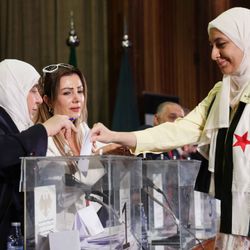
One year after Assad: Syria’s struggle for security, recovery and reform
15:31|Ellie Geranmayeh speaks with Syrian minister Hind Kabawat about the country’s turbulent first year after Assad, the challenges ahead, and her push to bring more women into leadership during Syria’s reconstruction.In the latest episode of the WOMENP podcast series, Ellie Geranmayeh welcomes Hind Kabawat, Syria’s minister of social affairs and labour. Almost a year after the fall of Bashar al-Assad, the new government faces both transformational opportunities and serious challenges. Syria’s once-notorious political prisons have been shut down, a preliminary national dialogue has begun, elections have been held, and the country has secured unprecedented sanctions relief. Yet major setbacks remain: the economy is under severe strain, and violent clashes have erupted between armed groups and government forces, as well as with Israel.In this episode, we discuss where Syria stands after the turbulent events of the past year. What are the country’s most urgent priorities for achieving meaningful stability? How are regional and global powers shaping Syria’s immediate future, and what does the new government expect from Europe? As the only female minister in the current cabinet, Kabawat also reflects on her drive to bring more women into positions of power as Syria rebuilds.Listen to all past episodes of the WOMENP series here: WOMENP special websiteBookshelf:The Enemy Syrians by Fawaz HaddadMa' Yarweeha (No Water to quench their Thirst), by Najat Abdul Samad
The diplomatic minefield: What now for Ukraine?
43:20|Donald Trump’s controversial 28-point plan to end the war in Ukraine has rattled Western capitals and could jeopardise Ukraine’s sovereignty. In this episode of Ukraine inside out, Leo Litra and Lesia Ogryzko are joined by Eric Ciaramella, senior fellow in the Russia and Eurasia programme at the Carnegie Endowment for International Peace and Jana Kobzova, co-director of ECFR’s European Security programme, to discuss the development and its implications.What are the potential consequences of the proposed plan, and do Ukraine and Europe still hold any leverage? What are the risks of considering European security as a mere transactional deal? And how might credible security guarantees for Ukraine look like if NATO membership is off the table?Tune in for an insightful conversation that uncovers the intricate balance of power, explores potential avenues to prevent a bad deal, and explains what it all means for the future of Ukraine and Europe.
The EU’s enlargement reality check
36:58|This week, The Neighbourhood shifts from the “why” of enlargement to the “how”—specifically, how reforms are unfolding on the ground and what drives progress or stagnation. The 2025 Enlargement Package presents a mixed picture: Ukraine and Moldova are racing ahead, while Serbia and Georgia are lagging. The EU itself is struggling with internal divisions and reform fatigue.Jessica is joined by Tiago Antunes, senior policy fellow with ECFR’s European Power programme, Leo Litra, visiting fellow at ECFR and senior fellow at Kyiv’s New Europe Center and Engjellushe Morina, senior policy fellow with ECFR’s European Security programme. Together, they discuss what this year’s enlargement report says about political will, institutional resilience and the everyday impact of enlargement.How can the EU make conditionality more credible? Are EU reforms changing behaviour in governments, institutions and people’s lives? And how can Brussels keep the reform energy alive?This episode was recorded on November 12th 2025
Lessons for Europe: Inside Ukraine’s drone war
37:45|Ukraine’s battlefield has transformed since the Russian full-scale invasion of Ukraine in 2022: from hobby quadcopters to drone and robot units in almost every brigade. In this episode, Lesia Ogryzko and Leo Litra speak with Lyuba Shupovich, CEO and co-founder of Dignitas Fund, and Gustav Gressel, a former ECFR senior policy fellow. Together, they discuss how technology, like drone and electronic warfare, is redefining military tactics—and what Europe can learn, having faced several Russian drone incursions into NATO airspace.What would a multi-layered, cost-effective air defence against drones look like? How quickly can Ukraine train NATO countries? And how can both Europe and Ukraine fix their financing gaps to reduce their dependency on Chinese components?This episode was recorded on September 24th 2025
The European pillar of security
46:43|This week, Leo Litra and Lesia Ogryzko welcome Élie Tenenbaum, director of the Security Studies Center at the French Institute for International Relations, and Oleksandr Sushko, executive director of the International Renaissance Foundation in Kyiv and long-time observer of Ukraine’s Euro-Atlantic integration, to explore if—and what—the recent NATO summit delivered for Ukraine. The gathering in The Hague reignited debates about the alliance’s future—and whether its European pillar is finally stepping into a leadership role. And, with Ukraine’s full NATO membership still out of reach, the country continues to seek strong security guarantees and deeper integration with Western defence structures.Can a “coalition of the willing” can fill the gap? How can Kyiv position itself in a rapidly evolving transatlantic landscape? And what does Europe assuming more responsibility for its own security mean for Ukraine?