Share
Dysfunctional
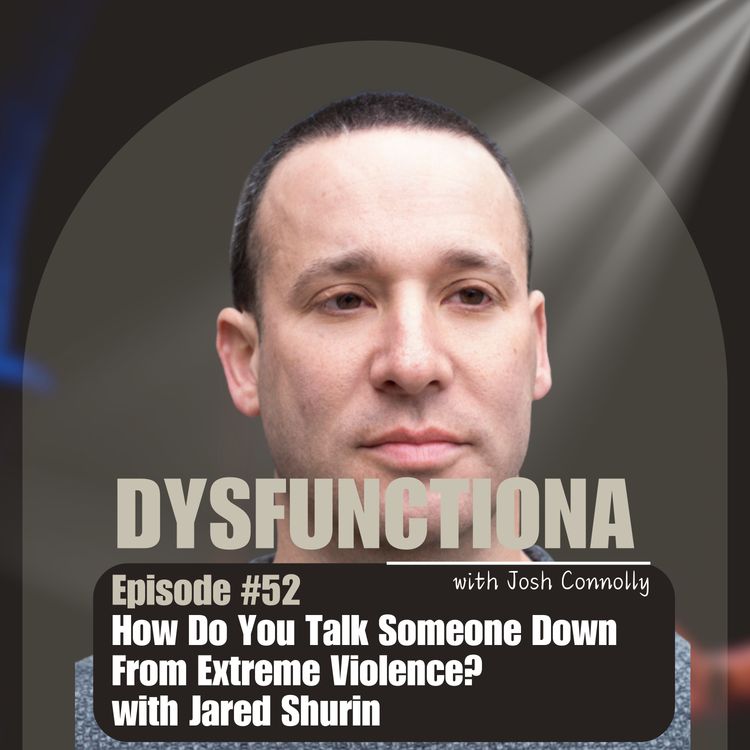
How Do You Talk Someone Down From Extreme Violence? with Jared Shurin
In this episode I’m joined by Jared Shurin, a strategic communications specialist who works in counter extremism, violent radicalisation, misinformation, and social cohesion. We dig into the psychology of people who reach the point of extreme violence, why it often starts with the loss of trust, hope and faith, and how communication can pull people back from the edge.
We talk about:
How people become vulnerable to radicalisation
The link between extremism, suicidality, and hopelessness
Why most people sit in the exhausted moderate middle
The role of belonging, community, and agency in prevention
How governments, NGOs and everyday people can reduce social harm
What actually works when trying to talk someone down from violent thinking
This episode explores the real human drivers behind extremism, how isolation fuels dangerous behaviour, and why rebuilding local community may be our best defence.
Find Jared -
https://extra-fox.com/
newsletter - https://raptorvelocity.beehiiv.com/
https://www.instagram.com/straycarnivore/
More episodes
View all episodes
81. The Burnout That Changed Everything: When Success Was Just Survival with Nick Whitnell
01:19:45||Season 1, Ep. 81On paper, Nick Whitnell had everything.A successful corporate career. Financial security. A family. The life many people spend years working towards.But underneath it all, he was surviving.In this deeply honest conversation, Nick shares how the death of his mum at just 17 years old shaped the course of his entire life, pushing him towards achievement, responsibility and safety, whilst disconnecting him from himself.Together we explore what burnout really is, why so many high achievers are driven by unresolved trauma, and why healing isn't about becoming someone new, but finally coming home to yourself.We also dive into the dangers of blindly trusting qualifications, why lived experience matters, the healing power of nature, and the courage it takes to walk away from a life that looks successful but no longer feels like your own.This is a conversation about grief, identity, burnout, childhood trauma and learning that the strongest thing you can sometimes do is stop surviving.In this episode we discuss:Why burnout is often the body's final attempt to get your attention.Losing a parent young and the hidden trauma that follows.The burden of always being "the strong one."How childhood survival strategies become adult success.Why corporate achievement can become the perfect hiding place.The difference between surviving and truly living.The role of breathwork and somatic healing in processing trauma.Why qualifications don't always equal safety or wisdom.Nature, community and reconnecting with what really matters.Letting go of the life you thought you were supposed to live.If this conversation resonated with you, please consider following the podcast and leaving a review. It really does help more people find these conversations.Find Nick Website - www.daring.worksInstagram - https://www.instagram.com/nick.whitnell/LinkedIn - https://www.linkedin.com/in/nickwhitnell/
80. The Truth About Healing That Nobody Wants To Hear
29:40||Season 1, Ep. 80Join Breathing Space here:https://www.joshconnolly.co.uk/breathing-spaceThis week is a little different.No guest. No script. Just me sitting down to answer some of the biggest questions about healing, toxic family systems, misogyny, masculinity, forgiveness, grief, social media, and everything in between.I talk about why I no longer believe healing works the way I once thought it did, why toxic systems protect the people causing harm, why forgiveness isn't always necessary, and the question I wish we all asked each other more often.If you've ever wondered whether you're doing healing "wrong" because you're still struggling, this episode is for you.In this episode we explore:Why healing doesn't mean you'll never struggle again.Why we keep chasing love from parents who couldn't give it.Why families protect the person causing harm.Toxic relationships and the systems that enable them.Patriarchy, misogyny, and why people become defensive.What I'm still learning to accept about myself.The grief nobody talks about.Masculinity and why I think we're asking the wrong questions.Therapy language, social media, and when words lose their meaning.Forgiveness versus simply letting go.The one question I wish people asked more often.If this episode resonated with you, I'd really appreciate it if you left a review, shared it with someone who needs to hear it, or posted it on social media and tagged me.You can find me on Instagram at @josh_ffw.
79. Nobody Prepares You For Becoming a Mother with Rebecca Barnes
01:07:28||Season 1, Ep. 79What if becoming a mother is one of the biggest transformations you'll ever go through… and nobody prepares you for it?In this powerful and deeply honest conversation, Josh is joined by Rebecca Barnes, founder of Becoming The Mother, to explore the hidden realities of motherhood that so many women experience but rarely talk about.Together they discuss matrescence – the profound physical, emotional and psychological transition into motherhood – and why so many mothers feel lost, overwhelmed and unsupported.Rebecca also shares her own journey through addiction, recovery, divorce and healing, and how those experiences led her to create spaces where mothers can finally feel seen, heard and understood.This episode is for mothers, fathers, partners, and anyone who wants to better understand the pressures facing modern parents and why supporting mothers matters so much.In this episode:What matrescence is and why every mother experiences itWhy motherhood changes you foreverThe myth of "Supermum"Why modern motherhood feels so hardThe importance of community and having a villageRecovery, addiction and codependencyThe need to feel seen, heard and understoodWhy mothers carry so much guilt and shameThe power of repair when we get parenting wrongWhy supporting parents creates healthier children and healthier societiesAbout Rebecca BarnesRebecca Barnes is the founder of Becoming The Mother, a matrescence educator, breathwork facilitator and guide for mothers navigating the transition into motherhood. Through her work, she helps women understand the emotional and identity shifts that come with becoming a mother and creates spaces where they can reconnect with themselves and find support in community.Find Rebecca - https://www.instagram.com/becomingthemother/
78. Too Conscious For This World with Candace Van Dell
01:01:24||Season 1, Ep. 78What if the child who was labelled "too sensitive", "too emotional", "too much", or "the problem" was never the problem at all?In this episode of Dysfunctional, I sit down with author and master coach Candace Van Dell to explore the idea that some people aren't broken, they're simply seeing things that others can't.We dive into family scapegoating, highly sensitive versus highly perceptive people, ADHD, spirituality, toxic systems, emotional truth, and what happens when the person who sees the dysfunction gets blamed for it.Candace shares her own journey from being labelled as a child with "something wrong" to becoming a leading voice helping people heal the original wound of believing they are the problem.This is a conversation about reclaiming your perception, trusting yourself, and discovering that perhaps the thing you've spent your whole life trying to fix is actually your greatest gift.In this episode we discuss:Why the scapegoat is often the cycle breakerThe difference between being highly sensitive and highly perceptiveGrowing up feeling misunderstood and out of placeADHD, labels, and the medicalisation of differenceWhy truth-tellers are often punished in dysfunctional systemsThe relationship between spirituality and healingCandace's powerful spiritual awakening at 16Family dysfunction and the "problem child" mythLearning to trust your own perceptionEmotional honesty as a path to healingThe loneliness of seeing things others don't seeWhy fitting in can come at the cost of authenticityMoving from self-abandonment to self-trustWhat it means to be "too conscious for this world"About Candace Van DellCandace Van Dell is an international bestselling author, master coach, and speaker who helps highly perceptive people heal and thrive in unconscious systems. Her work focuses on healing the original wound of believing there is something wrong with you so you can step into your authentic power, purpose, and potential.Her new book, Too Conscious For This World: You're Not Wrong. You're Early, is available now.Connect with CandaceInstagram: @candacevandellWebsite: candacevandell.com
77. Click, Stalk, Destroy with Dr Jessica Taylor.
01:19:22||Season 1, Ep. 77In this episode of *Dysfunctional*, Josh welcomes back bestselling author Dr Jessica Taylor for a powerful conversation about one of the most misunderstood forms of abuse in modern society: stalking.Drawing on her new book, *Click, Stalk, Destroy*, Jessica explains how stalking has evolved far beyond the traditional image of someone hiding outside your house. In the digital age, stalking can be relentless, anonymous, and devastatingly effective, all without the perpetrator ever meeting their victim face-to-face.Together, Josh and Jessica explore the psychology of stalking, why victims are so often dismissed or labelled as "crazy," and how power, control, obsession, and grievance fuel much of this behaviour. They discuss the overlap between stalking, coercive control, domestic abuse, online harassment, and cancel culture, as well as the profound impact stalking can have on a person's mental health, relationships, identity, and sense of safety.Jessica also shares her own experiences as a stalking victim and reflects on the failures of current systems to adequately recognise, investigate, and respond to these crimes.**In this episode, we discuss:**• What stalking really looks like in the digital age• Why online stalking is now more common than physical stalking• The concept of "grievance stalking" and what drives perpetrators• How coercive control can continue long after a relationship ends• Why victims are often dismissed, disbelieved, or pathologised• The psychological impact of constant monitoring and surveillance• The role of social media in modern stalking behaviour• Why gathering evidence can become traumatic for victims• DARVO, victim-blaming, and the reversal of victim and offender• What to do if you think you are being stalked• What needs to change in policing, mental health services, and societyThis is an essential conversation about power, abuse, technology, and the hidden ways people can be controlled long after they think they've escaped.UK orders of the book here:https://amzn.eu/d/0bu9sg6eUS and international orders of the book:https://victimfocus-resources.com/products/click-stalk-destroy-international-orders-only-pre-order?_pos=1&_psq=click&_ss=e&_v=1.0My website for all info and mentoring: www.drjessicataylor.com
76. Midlife Crisis Saved My Life With Wyndham James
01:12:14||Season 1, Ep. 76What if the life you've spent decades building no longer feels like yours?In this episode of Dysfunctional, Josh sits down with coach, mediator, yoga teacher and author Wyndham James to explore what really happens when success stops feeling successful.After spending twenty years in a corporate career he knew wasn't right for him, Wyndham eventually found himself unable to ignore the growing disconnect between the life he was living and the life he wanted. What followed wasn't just a career change. It was a complete re-evaluation of identity, purpose and what it means to live authentically.Together, Josh and Wyndham discuss:Why midlife crisis might actually be a giftThe fear of success versus the fear of failureHow people become trapped in lives that look good on paperThe hidden cost of people-pleasing and performanceWhy certainty can kill curiosity and growthThe danger of putting teachers, experts and influencers on pedestalsHow breakdowns often become the foundation for breakthroughsThe challenge of living your values when it costs you somethingLearning to let go of old identities and write a new storyThis is a conversation about self-discovery, courage and what happens when you stop asking "What should I be?" and start asking "Who am I really?"Wyndham - @blueprintcoach_wyndham (Instagram)
75. I Didn’t Know I Was a Childhood Abuse Survivor with Chanel Duffy
01:16:25||Season 1, Ep. 75In this episode of Dysfunctional, Josh sits down with Chanel Duffy for a raw and deeply honest conversation about childhood abuse, narcissistic parents, coercive control, survival mode, and what happens when you finally stop minimising what you went through.Chanel shares how she spent years believing her childhood was “normal” before realising she was living in deep denial and survival. Together, they explore betrayal blindness, emotional suppression, domestic abuse, addiction in the home, parenting after trauma, and the long journey of learning softness, safety, and self-trust.A powerful conversation for anyone healing from toxic family systems.Find Chanel - https://www.chanelduffy.com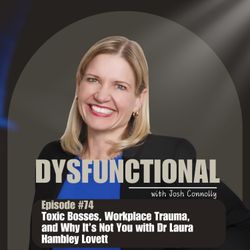
74. Toxic Bosses, Workplace Trauma, and Why It’s Not You with Dr Laura Hambley Lovett
44:36||Season 1, Ep. 74In this episode, Josh sits down with workplace psychologist and author Dr Laura Hambley Lovett to explore the reality of toxic bosses, workplace trauma, and dysfunctional leadership.Together, they unpack the overlap between toxic workplaces and toxic family systems, including gaslighting, manipulation, smear campaigns, control, and covert abuse. Laura shares why toxic bosses are often so difficult to spot, how they slowly erode confidence and wellbeing, and why leaving isn’t always as simple as people think.The conversation also explores resilience culture, profit-driven systems, healing after workplace trauma, and the importance of purpose, humanity, and psychological safety in leadership.A powerful conversation for anyone who has ever questioned themselves while working under toxic leadership.Find Dr Laura - https://www.drlaura.live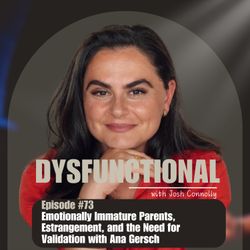
73. Emotionally Immature Parents, Estrangement, and the Need for Validation with Ana Gersch
01:08:04||Season 1, Ep. 73In this episode, Josh sits down with trauma coach Ana Gersch to explore emotionally immature parents, estrangement, and the role of validation in family relationships.Ana shares her journey into trauma work, blending somatic practices, spirituality, and modern coaching. Together, they unpack how trauma lives in the body, why emotional immaturity shows up in parents, and what actually defines emotional maturity.They also dive into the rise of estrangement, whether no contact is a trend, and how social media is shaping these conversations.A key theme throughout is the difference between validation and agreement, and why this misunderstanding often keeps families stuck.This episode offers a grounded, honest look at healing, boundaries, and what it really takes to have a relationship with someone as they are, not who you wish they could be.Find Ana - https://www.instagram.com/ana_traumacoach/