Share
Drum Tower
Village people: China’s efforts to lure people back to the land
For years China’s answer to rural poverty was to encourage people to pack up and move to the cities. That prompted the biggest migration in human history as hundreds of millions left the land for factories and service jobs. Extreme poverty was eradicated but China’s villages became left-behind places, home to the elderly and the very young.
But that’s changing. The government is ploughing money into model villages, replete with coffee shops and galleries. And rural live-streaming, where farm folks sell their wares direct to wealthy urbanites, has become a profitable industry.
Rob Gifford, The Economist’s acting China editor, and Gabriel Crossley, our China correspondent ask: what are some of the ways in which China is trying to revitalise its rural areas? And how effective are these efforts going to be? Plus Don Weinland, our China business editor, visits a blueprint for a new kind of Chinese village.
Transcripts of our podcasts are available via economist.com/podcasts.
Listen to what matters most, from global politics and business to science and technology—subscribe to Economist Podcasts+.
For more information about how to access Economist Podcasts+, please visit our FAQs page or watch our video explaining how to link your account.
More episodes
View all episodes

Inside the world’s most important exam (part two)
33:03|Study hard, score well, and you’ll get a good job. For decades that was the promise of the gaokao, China’s university-entrance exam. But as China’s job market stagnates and youth unemployment soars, that social contract is beginning to fray. In the second of two episodes, Drum Tower explores whether taking the gaokao is still the best way for China’s young people to get ahead. Guests and hosts:Jiehao Chen, co-host of “Drum Tower” Mark Johnson, senior editor at The Economist Topics:GaokaoChinese education system China’s economy Transcripts of our podcasts are available via economist.com/podcasts.Listen to what matters most, from global politics and business to science and technology—subscribe to The Economist.
Inside the world’s most important exam (part one)
35:22|China’s university-entrance exam is notoriously difficult. Admired for its meritocratic ideals, the gaokao is also criticised for its pressures and inequalities. But for millions of teens, it is still their gateway to better education, career opportunities and social mobility. In the first of two episodes, Drum Tower speaks to students about what it’s like to prepare for and take the gaokao.Guests and hosts:Jiehao Chen, co-host of “Drum Tower” Mark Johnson, senior editor at The Economist Topics:GaokaoChinese education system School exams Transcripts of our podcasts are available via economist.com/podcasts.Listen to what matters most, from global politics and business to science and technology—subscribe to The Economist.
South China Seaside: a highlight from our archive
29:54|Selfies are in, bikinis are out and swimming is optional. For centuries, the Chinese turned their backs to the sea, but now millions are embracing it. In this episode from the Drum Tower archive, our correspondent hits the sand in Shenzhen and meets a microcosm of Chinese society. Guests and hosts:Rosie Blau, co-host of “The Intelligence” Topics:Dameisha Beach in Shenzhen, ChinaDomestic tourism in China Chinese beach culture Transcripts of our podcasts are available via economist.com/podcasts.Listen to what matters most, from global politics and business to science and technology—subscribe to The Economist.
Why China still sucks at football
35:48|A record 48 teams qualified for this year’s World Cup, but not China. In fact, the country's most prominent representative is Ma Ning, a referee. So why, despite lavish spending and a leader who's reportedly a fan of the sport, is China so bad at football? Guests and hosts:Jiehao Chen, co-host of “Drum Tower” Jeremy Page, co-host of “Drum Tower” Topics:The World Cup Chinese football Xi Jinping Transcripts of our podcasts are available via economist.com/podcasts.Listen to what matters most, from global politics and business to science and technology—subscribe to Economist Podcasts+.For more information about how to access Economist Podcasts+, please visit our FAQs page or watch our video explaining how to link your account.
The Californication of Chinese diets
31:00|As China's middle class gets richer, it's also getting choosier. Alongside pork and noodles the urban elite are now tucking into salmon, avocados and blueberries. The Chinese Communist Party, which is keen to promote healthier lifestyles and food security, sees an opportunity. But first, it must reckon with a food system that millions of its own citizens don't trust.Guests and hosts:Sarah Wu, co-host of “Drum Tower” Jeremy Page, co-host of “Drum Tower” Topics:Chinese dietsFood securityChina’s middle-classTranscripts of our podcasts are available via economist.com/podcasts.Listen to what matters most, from global politics and business to science and technology—subscribe to Economist Podcasts+.For more information about how to access Economist Podcasts+, please visit our FAQs page or watch our video explaining how to link your account.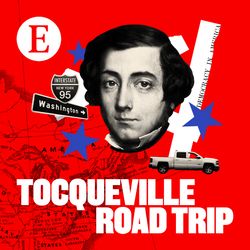
Trailer: Tocqueville Road Trip
03:27|When Alexis de Tocqueville visited America from France in 1831 he saw a new kind of society. Not just a country, but an idea that would change the world. His book “Democracy in America” was a big influence on later generations of writers and thinkers, including The Economist’s US Editor John Prideaux. Now, 250 years after its birth, the vitality of that democracy is under question. In this series, John retraces the route Tocqueville took to find out how much of what inspired Tocqueville about America remains—and how worried we should be about what’s changed.Out nowFind the show on The Economist app | On Spotify | On other appsOn Apple Podcasts: https://podcasts.apple.com/be/podcast/tocqueville-road-trip-from-the-economist/id1896918330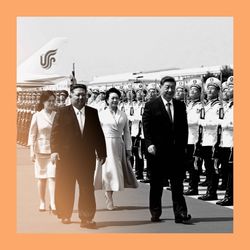
Why has China gone quiet on North Korea's nukes?
39:01|Xi Jinping first visited North Korea in 2019. At the time, China backed international efforts aimed at curbing Kim Jong Un’s atomic ambitions. Since then North Korea is thought to have doubled its number of nuclear warheads. But when China’s leader returned to Pyongyang earlier this month, denuclearisation was off the agenda. What’s behind China’s silence? And what does it mean for regional security? Guests and hosts:Jeremy Page, co-host of “Drum Tower” Noah Sneider, The Economist’s East Asia bureau chief Topics:Xi Jinping China-North Korea relationsNuclear weapons Transcripts of our podcasts are available via economist.com/podcasts.Listen to what matters most, from global politics and business to science and technology—subscribe to Economist Podcasts+.For more information about how to access Economist Podcasts+, please visit our FAQs page or watch our video explaining how to link your account.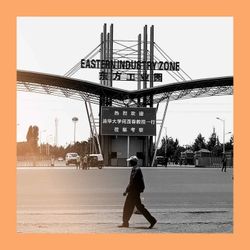
Inside Ethiopia’s Chinese megafactory
31:09|As China’s economy slows, many investors are looking abroad. For some, Ethiopia—with its low labour costs, young workforce, and sympathetic politics—seemed like the ideal place to spend. For the return of Drum Tower’s film club, we head inside a Chinese-owned factory in Ethiopia to explore the realities.Guests and hosts:Jiehao Chen, co-host of “Drum Tower” Tom Gardner, The Economist’s Africa correspondent Topics:Chinese overseas investmentEthiopia Chinese factoriesFind more information on how to watch “Made in Ethiopia” here. Transcripts of our podcasts are available via economist.com/podcasts.Listen to what matters most, from global politics and business to science and technology—subscribe to Economist Podcasts+.For more information about how to access Economist Podcasts+, please visit our FAQs page or watch our video explaining how to link your account.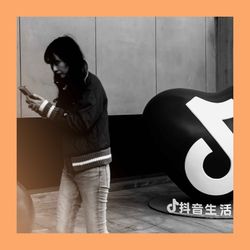
Can anything stop ByteDance?
32:31|More than a third of the world’s population have used a ByteDance app. But following a deal to sell 80% of the US arm of its most famous creation, TikTok, regulators abroad have continued to hamper the company’s international growth. At home, competitors are challenging its dominance in a cut-throat domestic market. Can China’s tech behemoth still be everything, everywhere, all at once?Guests and hosts:Sarah Wu, co-host of “Drum Tower” Don Weinland, The Economist’s China business and finance editor Topics:ByteDanceChina’s tech industryAmerica’s TikTok dealTranscripts of our podcasts are available via economist.com/podcasts.Listen to what matters most, from global politics and business to science and technology—subscribe to Economist Podcasts+.For more information about how to access Economist Podcasts+, please visit our FAQs page or watch our video explaining how to link your account.