Share
Drum Tower
Drum Tower: Riding an express train of China’s development
Ten years ago Xi Jinping announced the “project of the century”, China’s Belt and Road Initiative (BRI). Over the last decade, more than 150 countries have signed up to Mr Xi’s global infrastructure project.
In this first episode of a two-part look at the BRI, Alice Su, The Economist’s senior China correspondent, travels to Laos to assess the impact of the project. She rides a train from Luang Prabang to the Chinese border, on a railway built by China. She and David Rennie, our Beijing bureau chief, ask who gains more from the Belt and Road Initiative: a host country like Laos; or Beijing? Runtime: 43 min
Sign up for Economist Podcasts+ now and get 50% off your subscription with our limited time offer. You will not be charged until Economist Podcasts+ launches.
If you’re already a subscriber to The Economist, you’ll have full access to all our shows as part of your subscription.
For more information about Economist Podcasts+, including how to get access, please visit our FAQs page.
More episodes
View all episodes
China’s rising political stars
30:51|A new generation of leaders is ascending the ranks of the Chinese Communist Party. The so-called seventh generation of party leaders are better-educated and better-travelled than their elders, and the first cohort in powerful positions with little or no memory of the Mao era. Xi Jinping has torn up the rules for retirement and may remain China’s supreme leader until he dies. But when he finally goes, could China's next leader be from the seventh generation–– and what might that mean for the country? Guests and hosts:Jeremy Page, co-host of “Drum Tower”James Miles, The Economist’s China writer-at-largeTopics covered:Succession of power in ChinaSeventh generation of CCP leaders in China Xi JinpingTranscripts of our podcasts are available via economist.com/podcasts.Listen to what matters most, from global politics and business to science and technology—subscribe to The Economist.
China’s obsession with safety
30:36|Metal detectors, X-ray machines for bags and guards wielding scanners. Anyone who has entered a metro station in China knows that the country takes public safety seriously. China spends roughly the same on domestic security and “stability maintenance” as it does on its military budget. But what happens when the pursuit of safety becomes performative––and the cost becomes unbearable? Guests and hosts:Jiehao Chen, co-host of “Drum Tower”Simon Rabinovitch, The Economist’s Beijing bureau chief and Chaguan columnistMinxin Pei, professor of government at Claremont McKenna College in CaliforniaTopics covered:Domestic security in ChinaChina as a security state Surveillance in ChinaTranscripts of our podcasts are available via economist.com/podcasts.Listen to what matters most, from global politics and business to science and technology—subscribe to The Economist.
The rise of therapy in China
38:40|Life in China is competitive and stressful. A recent study found some 191m people have a mental-health disorder. While still a taboo subject for many older Chinese, a growing number of their children are seeking therapy. How do China’s changing attitudes towards mental health sit with the Communist Party's efforts to promote a happier, stable society? Guests and hosts:Sarah Wu, co-host of “Drum Tower”Jeremy Page, co-host of “Drum Tower” Barclay Bram, staff writer for 1843 at The Economist Topics covered:Mental health in ChinaOnline therapy in ChinaHealthy China 2030Transcripts of our podcasts are available via economist.com/podcasts.Listen to what matters most, from global politics and business to science and technology—subscribe to The Economist.
Mr Xi goes to DC
44:49|The honour guard has rehearsed and the flyover has been scheduled. Beyond the pageantry and pomp, a lot is at stake as Xi Jinping heads to America for his first state visit since 2015. What will be on the agenda when the Chinese and American presidents sit down for their second meeting this year––and is the relationship between the two superpower rivals about to see a lasting change? Guests and hosts:Simon Rabinovitch, The Economist’s Beijing bureau chief and Chaguan columnistJeremy Page, co-host of “Drum Tower” Jing Qian, co-founder and managing director of the Asia Society Policy Institute’s Centre for China Analysis Topics covered:2026 state visit by Xi Jinping to AmericaChinese investment in AmericaAI safetyTranscripts of our podcasts are available via economist.com/podcasts.Listen to what matters most, from global politics and business to science and technology—subscribe to The Economist.
China’s shrinking space for expression
40:11|China’s internet used to be a rambunctious place. But over the past 10 years the country’s leaders have sought to tame it. A recent natural disaster and a comedy mishap reveal an online world where the flow of information is narrowing and the list of “safe topics” changes constantly. How did China’s censors gain such decisive control—and what might it cost the Communist Party? Guests and hosts:Simon Rabinovitch, The Economist’s Beijing bureau chief and Chaguan columnistSarah Wu, co-host of “Drum Tower” Xiao Qiang, founder of China Digital Times Topics covered:Censorship in ChinaSpeech under Xi JinpingAI and censorship Transcripts of our podcasts are available via economist.com/podcasts.Listen to what matters most, from global politics and business to science and technology—subscribe to The Economist.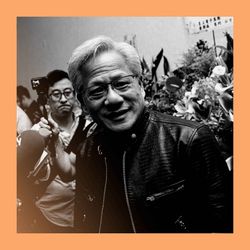
A week with Nvidia’s Jensen Huang
31:30|Call it Jensanity. When Jensen Huang, boss of the chip giant Nvidia, visits his native Taiwan he is greeted like a rock star. Our correspondent spent a week with the man at the centre of the geopolitical battle for AI dominance. We examine how Mr Huang cultivated his nice-guy image, and ask how much longer he can keep China, America and Taiwan on side. Guests and hosts:Jensen Huang, CEO of NvidiaShailesh Chitnis, The Economist’s global business writerJeremy Page, co-host of “Drum Tower” Topics covered:Jensen HuangNvidiaAI raceTranscripts of our podcasts are available via economist.com/podcasts.Listen to what matters most, from global politics and business to science and technology—subscribe to The Economist.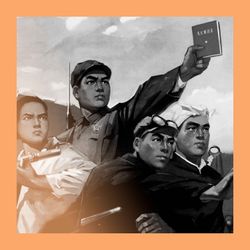
The Cultural Revolution’s long shadow
38:59|China’s Cultural Revolution was hard on Xi Jinping. His father was purged, and at age 15, he was sent down to the countryside, where he spent years living and working as a peasant. Yet Mr Xi particularly dislikes public-handwringing about the decade-long period of violence and upheaval when more than a million people died. Fifty years after the Cultural Revolution ended, why do China’s leaders want to play down its horrors? Guests and hosts:Jiehao Chen, co-host of “Drum Tower”James Miles, The Economist’s China writer-at-large Topics:China’s Cultural RevolutionXi Jinping and Mao ZedongChinese Communist Party historyTranscripts of our podcasts are available via economist.com/podcasts.Listen to what matters most, from global politics and business to science and technology—subscribe to The Economist.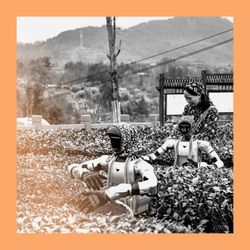
China's AI jobs threat
39:26|China is rushing ahead on AI integration. The Communist Party wants every industry to adopt the technology in the hope it will boost growth. But behind the enthusiasm, the country’s leaders worry about workers being displaced by the tech they are promoting. Guests and hosts:Sarah Wu, co-host of “Drum Tower”Jeremy Page, co-host of “Drum Tower” Topics:Chinese AI China’s economyChina’s jobs market Transcripts of our podcasts are available via economist.com/podcasts.Listen to what matters most, from global politics and business to science and technology—subscribe to The Economist.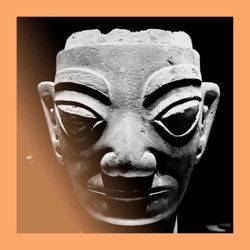
Hong Kong’s looted Chinese antiquities
31:04|China has strict laws protecting its cultural artefacts. Even so, they pop up all over the world. Hong Kong serves as a major gateway for the illicit trade of smuggled Chinese antiquities. Why does the territory still have an ancient English legal principle that gives dodgy goods a clean bill of health?Guests and hosts:Emma Irving, news editor at The EconomistJiehao Chen, co-host of “Drum Tower” Topics:Chinese antiquitiesHong Kong’s black marketRepatriation of cultural relicsTranscripts of our podcasts are available via economist.com/podcasts.Listen to what matters most, from global politics and business to science and technology—subscribe to The Economist.