Share

Drum Tower
How to read an increasingly secretive China
•
Under Xi Jinping, China’s media environment has become steadily more restrictive. Journalists face surveillance and intimidation and some foreign media have been expelled from the country. Recorded live at the Asia Society, this episode examines the challenges faced by those reporting on China today, and how journalists inside and outside the country are responding.
Guests and hosts:
- Sarah Wu, co-host of “Drum Tower”
- Jeremy Page, co-host of “Drum Tower”
- Li Yuan, New York Times columnist and host of the Bumingbai podcast
Topics:
- Reporting on China
- Chinese censorship
- Chinese politics
Transcripts of our podcasts are available via economist.com/podcasts.
Listen to what matters most, from global politics and business to science and technology—subscribe to Economist Podcasts+.
For more information about how to access Economist Podcasts+, please visit our FAQs page or watch our video explaining how to link your account.
More episodes
View all episodes

The Californication of Chinese diets
31:00|As China's middle class gets richer, it's also getting choosier. Alongside pork and noodles the urban elite are now tucking into salmon, avocados and blueberries. The Chinese Communist Party, which is keen to promote healthier lifestyles and food security, sees an opportunity. But first, it must reckon with a food system that millions of its own citizens don't trust.Guests and hosts:Sarah Wu, co-host of “Drum Tower” Jeremy Page, co-host of “Drum Tower” Topics:Chinese dietsFood securityChina’s middle-classTranscripts of our podcasts are available via economist.com/podcasts.Listen to what matters most, from global politics and business to science and technology—subscribe to Economist Podcasts+.For more information about how to access Economist Podcasts+, please visit our FAQs page or watch our video explaining how to link your account.
Trailer: Tocqueville Road Trip
03:27|When Alexis de Tocqueville visited America from France in 1831 he saw a new kind of society. Not just a country, but an idea that would change the world. His book “Democracy in America” was a big influence on later generations of writers and thinkers, including The Economist’s US Editor John Prideaux. Now, 250 years after its birth, the vitality of that democracy is under question. In this series, John retraces the route Tocqueville took to find out how much of what inspired Tocqueville about America remains—and how worried we should be about what’s changed.Out nowFind the show here: https://econ.st/4esGGXw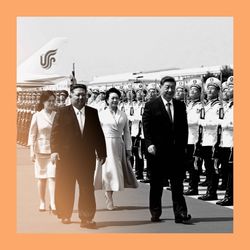
Why has China gone quiet on North Korea's nukes?
39:01|Xi Jinping first visited North Korea in 2019. At the time, China backed international efforts aimed at curbing Kim Jong Un’s atomic ambitions. Since then North Korea is thought to have doubled its number of nuclear warheads. But when China’s leader returned to Pyongyang earlier this month, denuclearisation was off the agenda. What’s behind China’s silence? And what does it mean for regional security? Guests and hosts:Jeremy Page, co-host of “Drum Tower” Noah Sneider, The Economist’s East Asia bureau chief Topics:Xi Jinping China-North Korea relationsNuclear weapons Transcripts of our podcasts are available via economist.com/podcasts.Listen to what matters most, from global politics and business to science and technology—subscribe to Economist Podcasts+.For more information about how to access Economist Podcasts+, please visit our FAQs page or watch our video explaining how to link your account.
Inside Ethiopia’s Chinese megafactory
31:09|As China’s economy slows, many investors are looking abroad. For some, Ethiopia—with its low labour costs, young workforce, and sympathetic politics—seemed like the ideal place to spend. For the return of Drum Tower’s film club, we head inside a Chinese-owned factory in Ethiopia to explore the realities.Guests and hosts:Jiehao Chen, co-host of “Drum Tower” Tom Gardner, The Economist’s Africa correspondent Topics:Chinese overseas investmentEthiopia Chinese factoriesFind more information on how to watch “Made in Ethiopia” here. Transcripts of our podcasts are available via economist.com/podcasts.Listen to what matters most, from global politics and business to science and technology—subscribe to Economist Podcasts+.For more information about how to access Economist Podcasts+, please visit our FAQs page or watch our video explaining how to link your account.
Can anything stop ByteDance?
32:31|More than a third of the world’s population have used a ByteDance app. But following a deal to sell 80% of the US arm of its most famous creation, TikTok, regulators abroad have continued to hamper the company’s international growth. At home, competitors are challenging its dominance in a cut-throat domestic market. Can China’s tech behemoth still be everything, everywhere, all at once?Guests and hosts:Sarah Wu, co-host of “Drum Tower” Don Weinland, The Economist’s China business and finance editor Topics:ByteDanceChina’s tech industryAmerica’s TikTok dealTranscripts of our podcasts are available via economist.com/podcasts.Listen to what matters most, from global politics and business to science and technology—subscribe to Economist Podcasts+.For more information about how to access Economist Podcasts+, please visit our FAQs page or watch our video explaining how to link your account.
China’s surprising sporting success
31:49|Snooker is more often associated with Sheffield than Shenzhen. But at the start of May, Wu Yize became the second consecutive Chinese player to win the sport’s World Championships. Why are so many Chinese players rising through the ranks of this quintessentially British pastime? Guests and hosts:Jiehao Chen, co-host of “Drum Tower” Duncan Robinson, The Economist’s Britain political editor and Bagehot columnist Topics:SnookerSport in ChinaWu Yize Transcripts of our podcasts are available via economist.com/podcasts.Listen to what matters most, from global politics and business to science and technology—subscribe to Economist Podcasts+.For more information about how to access Economist Podcasts+, please visit our FAQs page or watch our video explaining how to link your account.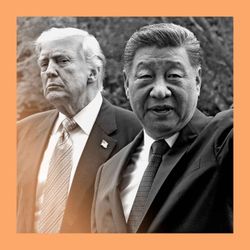
What did Trump and Xi agree on?
43:02|Presidents Trump and Xi talked of friendship and stability in Beijing. But beyond the headlines, the announcements that followed the long-awaited summit were scant on detail. What does the meeting reveal about the balance of power between America and China?Guest and hosts:Wu Xinbo, professor and dean of the Institute of International Studies at Fudan University in ShanghaiJeremy Page, co-host of “Drum Tower” John Prideaux, co-host of “Checks and Balance“ Topics:Trump-Xi summitUS-China trade warTaiwan Transcripts of our podcasts are available via economist.com/podcasts.Listen to what matters most, from global politics and business to science and technology—subscribe to Economist Podcasts+.For more information about how to access Economist Podcasts+, please visit our FAQs page or watch our video explaining how to link your account.
The Chinese EV company betting big on robots
31:59|Chinese tech firm Xpeng is known for its high-tech EVs. Now its CEO He Xiaopeng is betting it all on “physical AI”—from humanoid robots to robotaxis and flying cars. Will his gamble pay off?Guests and hosts:He Xiaopeng, CEO of XpengSarah Wu, co-host of “Drum Tower”Jeremy Page, co-host of “Drum Tower” Topics:He XiaopengPhysical AI China’s tech industry Join us for a live recording of Drum Tower at The Asia Society in New York City on 8th May 2026. Ticket information here.Transcripts of our podcasts are available via economist.com/podcasts.Listen to what matters most, from global politics and business to science and technology—subscribe to Economist Podcasts+. For more information about how to access Economist Podcasts+, please visit our FAQs page or watch our video explaining how to link your account.