Share
Drivetime
How MICHELIN Mobility Intelligence Helps Governments Turn Data Into Safer Roads
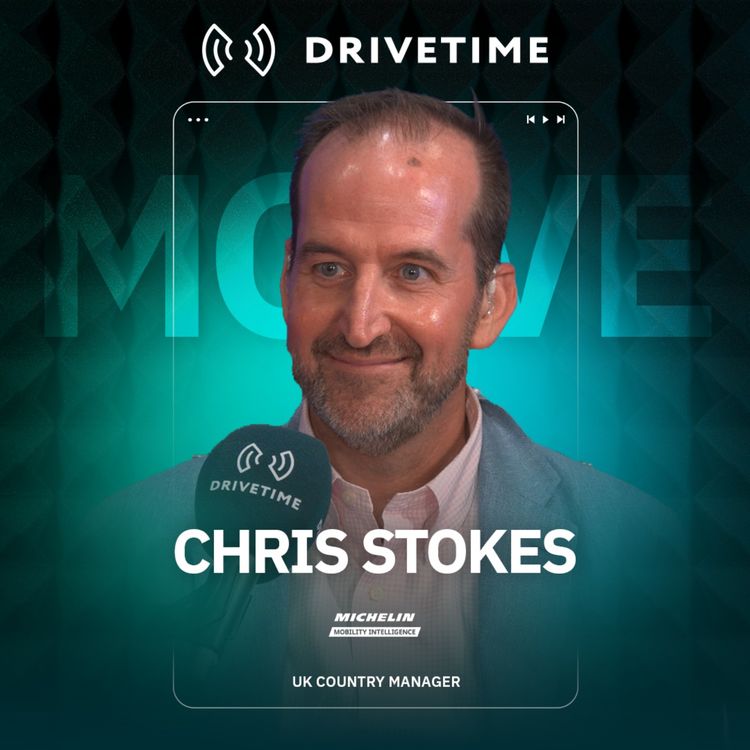
This final episode in our MOVE Monday series features Chris Stokes, UK Country Manager at MICHELIN Mobility Intelligence, whose purpose is to provide customers, fleets and governments with actionable data that helps them make the right decisions. While many people associate MICHELIN with tyres, Chris explains how MICHELIN Mobility Intelligence is helping organisations understand how road users interact with the built environment. By analysing events such as harsh braking, rapid acceleration and corrective manoeuvres, the team can identify high-risk locations, highlight potential safety issues and support evidence-based decision making.
The conversation explores one of the biggest challenges facing mobility today: turning data into action. Chris argues that collecting information is only the first step. The real value comes from making data both actionable and defendable, enabling governments, fleets and transport providers to invest in the right interventions with confidence. The discussion also looks at the future of road safety, connected mobility and navigation services, including a compelling vision where drivers can choose not only the fastest or most economical route, but the safest route as well.
Drivetime is the global auto tech podcast powered by Keyloop
More episodes
View all episodes
22.5. Why AI still needs a human in the loop
25:46||Season 2, Ep. 22.5In this gear change episode of Drivetime, Jacqui continues her conversation with Siddharth Kashyap, Consulting Partner at Tata Consultancy Services, exploring how technology, data and empathy can reshape automotive experiences for retailers and customers.The discussion explores how businesses can simplify customer journeys by challenging existing processes, repeatedly asking why each step is required and designing technology around the people who will use it. For Siddharth, empathy must sit at the heart of that work because the success of a solution depends on whether it makes users’ lives easier. They also discuss a single digital gateway developed to bring multiple OEM applications into one interface for retailer users. Rather than replacing the underlying systems, the approach presents relevant information according to the user’s role, helping sales and service teams navigate fewer separate applications. The conversation then turns to AI and personalisation. Connected vehicle and customer data can help brands create more contextual experiences, but Siddharth Kashyap stresses that this must be done with the customer’s consent. The goal is to act like a helpful concierge, not make the customer feel watched.Siddharth Kashyap also shares how AI is reducing parts of the software development lifecycle and helping businesses analyse volumes of data that would be difficult for people to process manually. However, every potential use case must still solve a genuine business problem by increasing revenue, reducing costs or improving efficiency.Drivetime is the global auto tech podcast powered by Keyloop.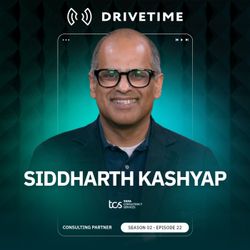
22. Why technology can’t fix a broken process
49:54||Season 2, Ep. 22In this episode of Drivetime, Jacqui is joined by Siddharth Kashyap, Consulting Partner at Tata Consultancy Services, to explore the systems, processes and data behind the modern automotive customer journey. Drawing on 15 years in the automotive industry, Siddharth explains why transformation should begin by identifying where the journey breaks, rather than immediately blaming the technology. They discuss the growing problem of “system spaghetti”, including retailer groups navigating around 27 applications across OEM and retail environments. Siddharth stresses that poor processes can’t be fixed by sophisticated technology alone, and why businesses need to address process first, then data, and finally architecture. The conversation also explores why change management is often the greatest hurdle in a transformation programme. Going live is only the beginning. For technology to deliver value, the people using it every day must be involved early, understand what it offers them and see how it removes administrative friction from their roles.He also introduces his filed patent for an autonomous EV charging solution, designed to combine vehicle data with charger availability, pricing, booking and navigation. Finally, he discusses work to create an orchestration layer that allows OEM and retailer systems to exchange information seamlessly, removing duplicate data entry and simplifying the experience for users.Drivetime is the global auto tech podcast powered by Keyloop.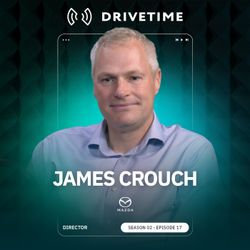
21.5. How Mazda Is Navigating AI
22:11||Season 2, Ep. 21.5In this Gear Change episode of Drivetime, Jacqui continues the conversation with James Crouch, Marketing Communications Director at Mazda UK. They dive deeper into his experience helping drive digital adoption across Mazda Europe and what marketers can learn from the industry's ongoing transformation. James reflects on his time as part of a specialist European team tasked with shaping Mazda's digital future, from building data infrastructure and defining use cases to creating the foundations that support modern customer journeys today. The conversation also explores the growing importance of influencer marketing, why retailers shouldn't overcomplicate creator partnerships, and how data is becoming the engine behind every marketing decision. Plus, James shares the technology he can't live without, the innovation he's most excited about, and his dream automotive road trip.Drivetime is the global auto tech podcast powered by Keyloop.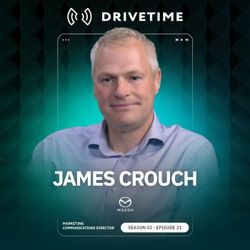
21. Mazda’s James Crouch On The Secret Behind Successful Digital Transformation
49:38||Season 2, Ep. 21What does it take to evolve a heritage automotive brand through 15 years of digital disruption? In this episode of Drivetime, Jacqui sits down with James Crouch, Marketing Communications Director at Mazda UK, to explore how automotive marketing has transformed from dealer magazines and TV campaigns to influencers, AI, streaming partnerships and digital customer journeys.Together, they discuss the enduring appeal of the Mazda brand, the importance of Japanese craftsmanship, and how Mazda is balancing innovation with authenticity. The conversation explores the rise of influencer marketing, the changing role of TV advertising, Mazda's partnership with HBO Max, and how AI is forcing marketers to rethink everything from content discovery to customer attribution.They also unpack Mazda's approach to electrification, why the brand describes itself as "distinctively Japanese", and how retailers can navigate the rapid pace of technological change without getting left behind.Drivetime is the global auto tech podcast powered by Keyloop.
20.5. AI at its Best: Practical Strategies for AI Success
23:26||Season 2, Ep. 20.5What does successful AI adoption actually look like in practice? In this week’s gear change episode of Drivetime, Jacqui Barker is joined once again by Caz Moore, AI Centre of Excellence Director at Keyloop, for a fast-paced conversation packed with practical advice, leadership insights and actionable AI tips.Caz breaks down the three pillars of Keyloop's AI Centre of Excellence, explains why governance and ROI are critical to every initiative, and shares what she's learned from helping teams embrace AI across the business. The discussion also explores data quality, AI adoption, change management and why starting small is often the best way to unlock long-term value. From AI evangelists and workshop strategies to robotic hoovers, and healthy AI boundaries, this episode offers a refreshing and practical perspective on how organisations can make AI work for people rather than simply chasing the latest trend.Drivetime is the global auto tech podcast powered by Keyloop.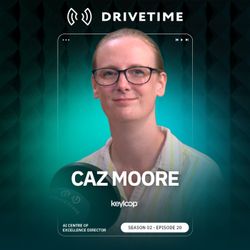
20. AI Isn't Magic: How to Build a Strategy That Actually Works
50:30||Season 2, Ep. 20AI is everywhere, but how do you move beyond the hype and start using it in a way that delivers real value? In this episode of Drivetime, Jacqui sits down with Caz Moore, AI Centre of Excellence Director at Keyloop, to explore what it takes to build a practical, people-focused AI strategy. From creating AI evangelist networks and measuring ROI to managing governance, change and adoption, Caz shares the lessons she's learned from helping embed AI across the business.The conversation tackles some of the biggest questions facing organisations today: Will AI replace jobs? How do you use it responsibly? And where should you start if you're feeling overwhelmed by the pace of change? Along the way, Caz shares her favourite AI use cases, explains & discusses the importance of AI literacy, and offers practical advice for leaders looking to drive innovation without losing sight of the human element.Drivetime is the global auto tech podcast powered by Keyloop.
19.5. Why Dealers Can't Just Sell Cars Anymore
25:46||Season 2, Ep. 19.5It’s time for a gear change as Thomas Møller Sørensen, Director of DI Automotive, Denmark's dealer association, returns to reflect on some of the biggest themes shaping automotive retail. Thomas explains why the pace of change facing dealers today is unlike anything the industry has experienced before. From electrification and connected vehicles to changing customer expectations and new forms of competition, retailers are being challenged to rethink business models that have remained largely unchanged for decades. The conversation explores why the automotive sector is shifting from being product-focused to service-focused, how dealers can unlock new opportunities through data, technology and aftersales, and why total cost of ownership is becoming more important than sticker price when discussing EVs with customers. Thomas also shares lessons from industry study trips to the US and China, discusses emerging opportunities around batteries, vehicle-to-grid technology and circularity, and explains why dealer groups must prepare for a future where efficiency and productivity are more important than ever. Plus, Thomas reveals the American road trip that never happened, his dream Cadillac Escalade rental, and why Britpop classics from Pulp, Suede and Radiohead would be on the playlist. Drivetime is the global auto tech podcast powered by Keyloop
Inside Toyota's AI Transformation
17:33|This bonus episode of Drivetime — MOVE Monday — features Raúl Gómez Garrido, Digital Transformation and AI leader at Toyota Motor Europe, discussing how AI, data and software-defined vehicles are reshaping the way cars are designed, developed and improved. Drawing on his background in performance engineering, Raúl explains how traditional vehicle development is evolving from a long, hardware-led process into a faster, more iterative model powered by software. As vehicles become increasingly connected, manufacturers can respond more quickly to customer feedback, deploy over-the-air updates, and continuously improve the ownership experience long after a vehicle leaves the factory.The conversation explores one of the biggest challenges facing the automotive industry: how to balance speed and innovation with the safety and quality standards customers expect. He also offers a refreshing perspective on AI's role in automotive development, arguing that the technology should support experts rather than replace them, helping engineers focus on creativity, problem-solving and delivering greater value to customers.Drivetime is the global auto tech podcast powered by Keyloop.