Share
Drivetime
Why Connected Cars Need Global Standards
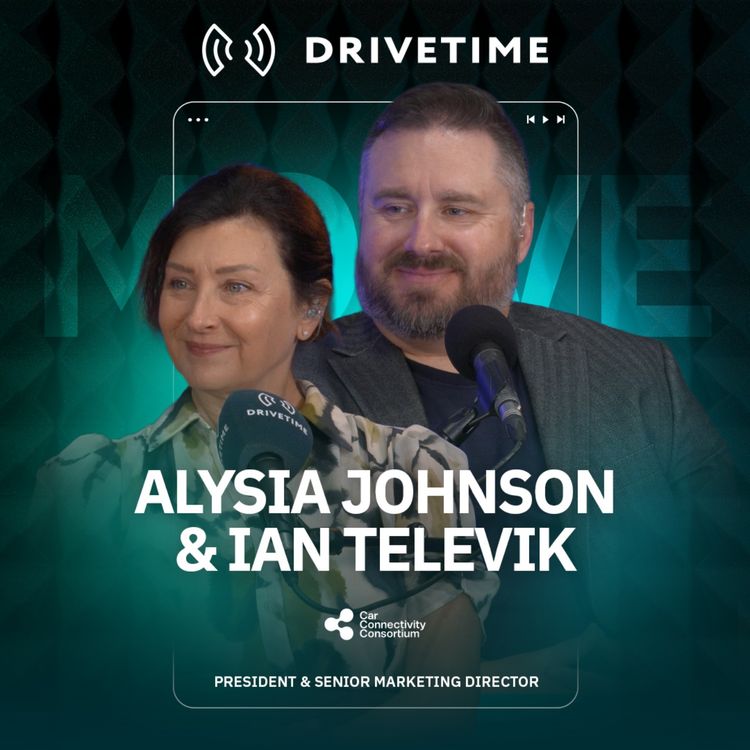
This bonus episode of Drivetime — MOVE Monday — features Alysia Johnson, President of the Car Connectivity Consortium (CCC), and Ian Televik, Senior Marketing Director at the organisation. They discuss the role global standards play in making connected vehicle technology simpler, safer and more scalable. The conversation focuses on CCC Digital Key, a technology standard that allows drivers to access and start vehicles using a smartphone. Alysia and Ian explain why collaboration between automakers, device manufacturers, technology companies and suppliers is essential if connected vehicle experiences are going to work seamlessly across brands, devices and markets.
They also explore the growing opportunities for fleets, car rental operators and shared mobility providers, where digital keys can transform everything from vehicle handovers to customer journeys. With more than 300 member companies and millions of vehicles already deployed, CCC is helping create a future where digital vehicle access becomes as familiar and trusted as mobile payments. The discussion looks beyond passenger vehicles too, covering software-defined fleets, micromobility, two-wheelers and the broader challenge of creating technology that simply works, regardless of the vehicle, device or location.
Drivetime is the global auto tech podcast powered by Keyloop.
More episodes
View all episodes
19.5. Why Dealers Can't Just Sell Cars Anymore
25:46||Season 2, Ep. 19.5It’s time for a gear change as Thomas Møller Sørensen, Director of DI Automotive, Denmark's dealer association, returns to reflect on some of the biggest themes shaping automotive retail. Thomas explains why the pace of change facing dealers today is unlike anything the industry has experienced before. From electrification and connected vehicles to changing customer expectations and new forms of competition, retailers are being challenged to rethink business models that have remained largely unchanged for decades. The conversation explores why the automotive sector is shifting from being product-focused to service-focused, how dealers can unlock new opportunities through data, technology and aftersales, and why total cost of ownership is becoming more important than sticker price when discussing EVs with customers. Thomas also shares lessons from industry study trips to the US and China, discusses emerging opportunities around batteries, vehicle-to-grid technology and circularity, and explains why dealer groups must prepare for a future where efficiency and productivity are more important than ever. Plus, Thomas reveals the American road trip that never happened, his dream Cadillac Escalade rental, and why Britpop classics from Pulp, Suede and Radiohead would be on the playlist. Drivetime is the global auto tech podcast powered by Keyloop
How MICHELIN Mobility Intelligence Helps Governments Turn Data Into Safer Roads
17:07|This final episode in our MOVE Monday series features Chris Stokes, UK Country Manager at MICHELIN Mobility Intelligence, whose purpose is to provide customers, fleets and governments with actionable data that helps them make the right decisions. While many people associate MICHELIN with tyres, Chris explains how MICHELIN Mobility Intelligence is helping organisations understand how road users interact with the built environment. By analysing events such as harsh braking, rapid acceleration and corrective manoeuvres, the team can identify high-risk locations, highlight potential safety issues and support evidence-based decision making.The conversation explores one of the biggest challenges facing mobility today: turning data into action. Chris argues that collecting information is only the first step. The real value comes from making data both actionable and defendable, enabling governments, fleets and transport providers to invest in the right interventions with confidence. The discussion also looks at the future of road safety, connected mobility and navigation services, including a compelling vision where drivers can choose not only the fastest or most economical route, but the safest route as well.Drivetime is the global auto tech podcast powered by Keyloop
Inside Toyota's AI Transformation
17:33|This bonus episode of Drivetime — MOVE Monday — features Raúl Gómez Garrido, Digital Transformation and AI leader at Toyota Motor Europe, discussing how AI, data and software-defined vehicles are reshaping the way cars are designed, developed and improved. Drawing on his background in performance engineering, Raúl explains how traditional vehicle development is evolving from a long, hardware-led process into a faster, more iterative model powered by software. As vehicles become increasingly connected, manufacturers can respond more quickly to customer feedback, deploy over-the-air updates, and continuously improve the ownership experience long after a vehicle leaves the factory.The conversation explores one of the biggest challenges facing the automotive industry: how to balance speed and innovation with the safety and quality standards customers expect. He also offers a refreshing perspective on AI's role in automotive development, arguing that the technology should support experts rather than replace them, helping engineers focus on creativity, problem-solving and delivering greater value to customers.Drivetime is the global auto tech podcast powered by Keyloop.
19. What 90% EV Adoption Looks Like: Lessons from Denmark
47:38||Season 2, Ep. 19Denmark has become one of the world's leading EV markets, with more than 90% of private new car sales now electric. But what happens when the transition becomes reality?In this episode of Drivetime, Jacqui travels to Denmark to speak with Thomas Møller Sørensen, Director of DI Automotive, the organisation representing Denmark's automotive retailers. Together they explore what dealers can learn from one of the most advanced EV markets in Europe. Thomas explains why Denmark and Norway have become the "canaries in the mine" for the EV transition, how dealers are adapting to shrinking new car margins, and why aftersales, data and customer retention will define the next era of automotive retail.They discuss:- How dealers are using used EV imports to create new revenue streams- The growing opportunity in crash repair and battery services- How AI and data can help retailers unlock missed revenue opportunities- Why dealers need access to their own data- Why Thomas believes dealer networks are here to stayAnd much more.If you're trying to understand where automotive retail is heading next, Denmark offers a glimpse into the future.Drivetime is the global auto tech podcast powered by Keyloop.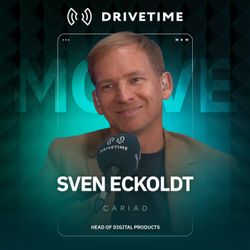
How your car is becoming a device on wheels
16:24|This bonus episode of Drivetime — MOVE Monday — features Sven Eckoldt, Head of Global Partnerships at CARIAD, the software company behind the Volkswagen Group's software-defined vehicle strategy. Sven explains how CARIAD is helping transform some of the world's best-known automotive brands by centralising software development across the group. From intelligent navigation and AI-powered voice assistants to app stores and connected services, he shares how software is becoming as important as hardware in defining the ownership experience.The conversation explores what software-defined vehicles actually mean for drivers, why connected cars are creating entirely new partnership opportunities, and how automotive brands can create experiences that continue to evolve long after the vehicle leaves the showroom. Sven also discusses the growing role of AI, over-the-air updates, and the challenge of building customer-centric digital ecosystems inside the vehicle. Looking ahead, he shares lessons learned from launching connected services across multiple brands, explains why partnership ecosystems are critical to future vehicle experiences, and offers a glimpse into how cars are becoming personalised digital platforms that can grow throughout their lifetime.Drivetime is the global auto tech podcast powered by Keyloop.
Turning fleet data into action
19:47|This special MOVE Monday episode of Drivetime features Matt Walters and Amélie De Valroger from Arval, the world's largest fleet leasing provider. They discuss the evolving role of fleet management, the challenges of electrification, and why the future of mobility will be built on data, insight and automation. With Arval managing more than 3 million vehicles globally, Matt and Amélie share their perspective on helping businesses navigate an increasingly complex landscape. From fleet electrification and total cost of ownership to connected vehicles and software-defined mobility, they explain why today's fleet leaders need long-term strategies ratherthan short-term vehicle decisions.The conversation explores one of the event's biggest themes: connected vehicle data. Both guests argue that collecting data is no longer enough. The real opportunity lies in turning information into actionable insight and ultimately automating decisions that improve efficiency, reduce costs and simplify fleet operations. They also discuss the second wave of EV adoption, the difficulties of electrifying commercial vehicles, the role of AI in fleet management, and why advances in battery technology could unlock the next stage of the electric transition.Drivetime is the global auto tech podcast powered by Keyloop.
18.5. AI, Consumer Law and Why Human Connection Still Matters
17:11||Season 2, Ep. 18.5In this gear change episode of Drivetime, Jacqui is joined once again by legal experts Peter Jaari and Mikko Koskinen from Lexia Attorneys to explore the practical realities of consumer law and AI regulation in automotive retail. Peter shares advice for retailers selling used vehicles, highlighting the importance of transparency, managing customer expectations, and responding quickly when issues arise. Good customer service, he argues, can prevent small complaints from becoming major disputes.Mikko demystifies the EU AI Act, explaining the difference between high-risk and low-risk AI systems, and why organisations must maintain human oversight in areas such as recruitment and credit assessments. The discussion also tackles common misconceptions around AI and consumer protection, before turning to a topic both guests believe will remain critical in the future: human connection. As technology continues to evolve, trust, relationships and personal service may become the biggest differentiators of all.Drivetime is the global auto tech podcast powered by Keyloop.
The Human Side of Autonomous Driving
14:28|This bonus episode of Drivetime — MOVE Monday — features Avinash Balachandran, VP of Human Interactive Driving at the Toyota Research Institute, discussing what comes next for autonomy and why the future may be less about replacing drivers and more about empowering them.Drawing on more than a decade in autonomous vehicles, including time spent working on early self-driving programmes, Avinash shares how Toyota is rethinking the relationship between humans and intelligent machines. Rather than focusing solely on fully autonomous vehicles, the company is exploring how AI can work alongside drivers, helping them become safer, more confident and more capable behind the wheel.The conversation explores Toyota's philosophy of human-centred automation, where technology is designed to amplify rather than replace people. From helping teenagers become better drivers to supporting motorists in difficult conditions such as ice and heavy rain, Avinash explains how AI could deliver the benefits of autonomy without taking humans out of the equation. The discussion also looks beyond vehicles into robotics, micro-mobility and physical AI, examining why the future is likely to involve humans and machines working together rather than competing for the same role.Drivetime is the global auto tech podcast powered by Keyloop.