Share
The Marvyn Harrison Podcast: Culture, Identity & Fatherhood
Changes In Romantic Relationships After The First Child
In this episode, Marcus delves into the fascinating topic of how romantic relationships undergo transformative shifts after the arrival of the first child. He touches on the various ways in which couples navigate the challenges and joys of raising a child together.
Dope Black Dads is a place where we are changing the narrative and having progressive conversations about black fathers to create a safe digital space within the community.
Join the conversation and the community online through our social channels:
Twitter: @DopeBlackDads
Instagram: @DopeBlackDads
Facebook Page: @DopeBlackDads
If you want to get in touch with us, email us at hello@dopeblackdads.org or follow our conversations in-depth on our Facebook Group by searching 'Dope Black Dads'.
The Marvyn Harrison Podcast: culture, identity and fatherhood, hosted by the founder of Dope Black Dads.
Watch on YouTube: https://www.youtube.com/@MarvynHarrison
Listen on Apple Podcasts: https://podcasts.apple.com/gb/podcast/the-marvyn-harrison-podcast/id1456522027
Listen on Spotify: https://open.spotify.com/show/3cIh6ejnk3lUUVhqSKzPUS
Instagram: https://www.instagram.com/marvynharrisonpodcast
Partnerships and sponsorship: marvyn@belovd.agency
More episodes
View all episodes
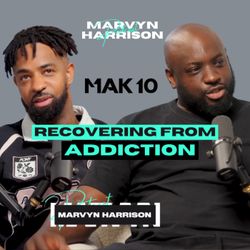
Mak 10: The DJ Who Built Grime Then Nearly Lost Everything
49:48|He built the sound of a genre from pirate radio. Then addiction almost took all of it. Mak 10 — the DJ behind Nasty Crew — on the rise, the fall, and coming up to three years clean.He talks about why "I had to be a bit delusional" to make it, the ADHD he's still waiting 18 months to have diagnosed, what fatherhood taught him about himself, and the night Wiley and Dizzee Rascal stood on the same stage for the first time in 20 years.Chapters:0:00 The Power of an Iconic Voice0:57 Finding Inspiration in Grime Roots2:22 The Legacy of Nasty Crew4:43 Ranking the Greatest Crews5:48 Navigating Life Without a Map8:26 Does Marcus Nasty Get His Flowers?11:10 The Evolution of a Solo Career14:33 Neurodivergence and ADHD23:39 The Beautiful Complexity of Fatherhood38:11 The Long Road to RecoveryListen on Acast wherever you get your podcasts.#grime #podcast #recovery
The Guilt of Black progression w/ Amy Jephta, Playwright & Romantha Botha
37:08|Marvyn Harrison and Samantha Porter sit down with South African playwright and screenwriter Amy Jephta to unpack her acclaimed play "A Good House." The conversation covers gentrification, class mobility, colonial language, the psychological cost of being "the first" in predominantly white spaces, and the tension between political blackness and coloured cultural identity in post-apartheid South Africa. Jephta discusses the personal experiences behind writing "A Good House," her London run's reception versus South Africa's, comedy as a tool for dissecting race, and her two upcoming plays — one set against a Kenyan genocide backdrop, the other a Caribbean period piece about a Black slave owner.Show Notes / Topics Covered:"A Good House" premise: a Black couple navigating a gated community dispute in JohannesburgBuying property in a gentrifying, historically coloured neighbourhoodReconciling capitalism with Black identity and community obligationLondon audience reception vs. South African audience reception"Politically Black, culturally coloured" — navigating identity terminology across contextsComedy and satire as vehicles for examining raceSurvivor's guilt and the psychology of upward mobilityReflections on South African xenophobia and the Zimbabwean embassy queuesUpcoming work: a play on inherited trauma tied to the Kenyan genocide; a Caribbean musical about a Black slave-owning entrepreneurGuest: Amy Jephta — South African playwright, screenwriter, and filmmaker. Writer of "A Good House" and "Barakat." and Romantha Botha — Cultural Archivist and Filmaker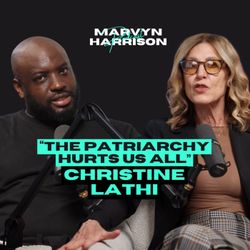
Oscar Nominee Christine Lahti on Surviving Hollywood's Misogyny
48:08|Christine Lahti the Academy Award nominee, Golden Globe and Emmy winner sits down to unpack the autobiographical solo play that's been packing out London's Marylebone Theatre this summer: The Smile of Her. Known for Chicago Hope, Swing Shift, Running on Empty, Law & Order: SVU, and CBS's Evil and Fire Country, Lahti traces her journey from a repressive 1950s Michigan household to becoming one of second-wave feminism's most vocal torchbearers.In this conversation: growing up under a father who treated emotion as weakness, watching her mother silenced for decades, the internalized patriarchy she still fights at 76, why she believes love and dominance cannot coexist, the backlash she sees driving today's manosphere, and the night Robin Williams saved her Golden Globes win with an improvised stand-up routine while she was in the bathroom.\The Smile of Her ran at Marylebone Theatre, London, 10 July – 29 August 2026, directed by Mêlisa Annis, produced by Nina Tassler, Jenny Warburg and Wild Yak in association with Gloria Steinem.https://www.youtube.com/@MarvynHarrisonhttps://podcasts.apple.com/gb/podcast/the-marvyn-harrison-podcast/id1456522027https://open.spotify.com/show/3cIh6ejnk3lUUVhqSKzPUS
DO YOU KNOW BALL? ⚽ Margz (Filthy Fellas) Takes the Football Quiz Hot Seat
39:11|Margz (No Behaviour Podcast, Filthy Fellas) sits in the hot seat for a rapid-fire football quiz — Premier League trivia on Bolton Wanderers, Sunderland, West Brom, Derby County, Portsmouth, Wigan and Blackburn, played under a 10-second clock across two escalating rounds. The episode closes with a wide-ranging World Cup conversation covering predictions, underdog nations, the Argentina/Messi legacy narrative, and watching tournament football from different parts of the world.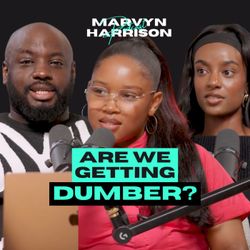
Anti-Intellectualism, Trump and Andrew Tate with Romantha Botha and Kaira Ahmed
48:59|Andrew Tate is trending again, but the bigger story isn't him, it's what made him possible. In this episode we break down anti-intellectualism: why comprehension is collapsing, why people trust vibes over evidence, and who actually benefits from keeping populations uncritical. We go back to Hofstadter's three strands of anti-intellectualism, cover South Africa's Bantu education system as intellectualism weaponised as policy, unpack the difference between academia and intellect, and ask whether you can be an intellectual without empathy.Are Young People Mollycoddled?
09:08|Every generation gets called soft by the one before it. But is this time different? We dig into the case that young people have lost resilience — less unsupervised play, more helicopter parenting, safe-space culture — against the case that the real story is economic: unaffordable housing, insecure work, and a mental health crisis that's more visibility than fragility. No easy verdict. Just the argument, both sides.Should Benefit Claimants Be Forced to Pick Up Litter?
14:39|A UK campaign group wants Universal Credit claimants to do four hours of litter picking a month or risk losing their benefit. Supporters call it fair contribution. Critics call it workfare — a policy with a documented history of failure, unpaid labour, and exemption gaps for disabled claimants. We break down the proposal, the precedent, and who gets left out of the conversation.So you fell in love with someone who is Neurodivergent?
23:35|Your partner isn't ignoring you, isn't cold, isn't careless — they might just be wired differently. This episode breaks down 7 neurodivergent traits (ASD/Asperger's, ADHD, ADD, OCD, NVLD, sensory processing differences, alexithymia) with plain-language explanations, phonetic pronunciations, and what each one actually looks like inside a relationship. Not a diagnosis. Not an excuse. A map.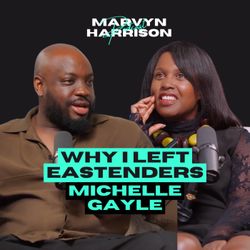
Michelle Gayle: Why I Quit EastEnders At The Peak Of My Career
47:00|Michelle Gayle actress, singer, and one of the most recognisable black British faces of the 90s, joins Marvyn for a conversation spanning her Harlesden childhood, her friendship with a young Naomi Campbell, the Jodeci vs Boyz II Men debate that defined 90s R&B fandom, and the real story behind why she walked away from EastEnders at the height of her fame. Along the way: grandmother wisdom, cod liver oil, hygiene rituals, and rebuilding her dream black British TV family.Channel LinksTikTok: https://www.tiktok.com/@marvynharrisonpodcast TikTok (Dope Black Dads): https://www.tiktok.com/@dopeblackdads Instagram: https://www.instagram.com/marvynharrisonpodcast Instagram (Dope Black Dads): https://www.instagram.com/dopeblackdads Instagram (Marvyn personal): https://www.instagram.com/marvynharrison YouTube: https://www.youtube.com/@marvynharrisonpodcast Substack: https://marvynharrison.substack.com LinkedIn: https://www.linkedin.com/in/marvynharrison