
Latest episode
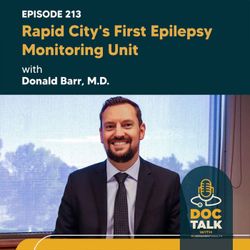
213. Episode 213: Rapid City's First Epilepsy Monitoring Unit with Donald Barr, M.D.
32:08||Ep. 213Until this year, families in western South Dakota had to drive to Minnesota or Colorado for epilepsy monitoring. Now Monument Health has opened the region's first epilepsy monitoring unit, right here in Rapid City. Epileptologist and neurology section chief Dr. Donald Barr talks about what happens during a five-day stay and why doctors sometimes want to trigger a seizure on purpose. He also covers the surgery that can actually cure epilepsy, and how watching his own father live with the disease shaped his career.
More episodes
View all episodes
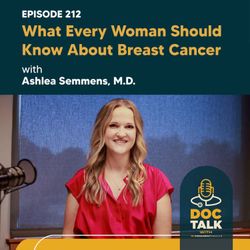
212. BEST OF DOC TALK Episode 160: What Every Woman Should Know About Breast Cancer with Ashlea Semmens, M.D.
26:37||Ep. 212This is a repeat episode. Dr. Ashlea Semmens, M.D., medical director of the Breast Center at Monument Health, joins Doc Talk to walk through what every woman should know about breast cancer, risk factors you can and can't control, how to do a real at-home self-check, when mammograms actually start and what they can and can't catch, and what treatment looks like once a diagnosis comes back.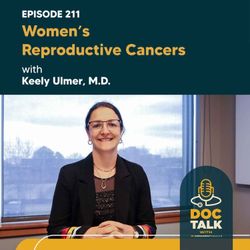
211. BEST OF DOC TALK Episode 189: Women’s Reproductive Cancers with Keely Ulmer, M.D.
24:53||Ep. 211This is a repeat of one of our most compelling Doc Talk conversations. Dr. Keely Ulmer, gynecologic oncologist at the Cancer Care Institute at Monument Health, shares her remarkable path from the Pine Ridge Reservation to the operating room. She walks through the four main gynecologic cancers, the symptoms women too often brush aside, and why the HPV vaccine is the closest thing we have to a cancer eraser. If you or someone you love has ever put off a screening, this one's worth a second listen.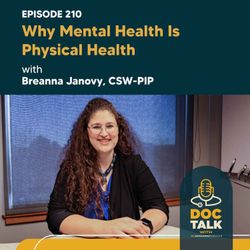
210. BEST OF DOC TALK Episode 121: Why Mental Health Is Physical Health, with Breanna Janovy, CSW-PIP
17:20||Ep. 210This is a repeat episode. Mark sits down with Breanna Janovy, CSW-PIP, a certified social worker at Monument Health, to talk about something that doesn't get said enough: your mental health and your physical health are the same thing, really. Breanna breaks down why so many of us will run to urgent care for a stomach ache but won't say a word about feeling anxious or depressed, and she shares what it actually looks like to ask for help, why the first visit isn't as scary as you think, and how Monument Health is making mental health support available right in the Sturgis clinic.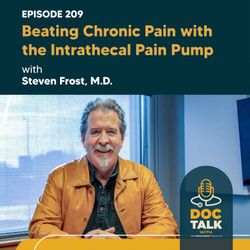
209. BEST OF DOC TALK Episode 140: Beating Chronic Pain with the Intrathecal Pain Pump, Dr. Steven Frost
27:02||Ep. 209This is a repeat airing of Doc Talk with Monument Health. Anesthesiologist and pain medicine specialist Dr. Steven Frost, Rapid City's first pain management doctor, joins Mark Houston to talk about the intrathecal pain pump, a device that delivers pain relief straight to the spinal cord at a fraction of the dose needed with oral medication. They cover how it works, who's a candidate, and why getting ahead of chronic and cancer pain can lead to a better quality of life and better outcomes.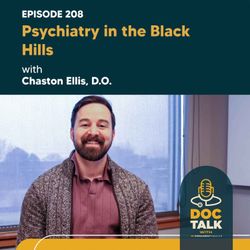
208. BEST OF DOC TALK Episode 187: Psychiatry in the Black Hills with Chaston Ellis, D.O.
26:39||Ep. 208In this repeat episode of Doc Talk, Chaston Ellis, D.O., Psychiatrist at Behavioral Health in Rapid City, speaks on Monument Health’s efforts to increase access to psychiatric treatment and mental health care in the Black Hills. Dr. Ellis shares a bit about his background and motivations for pursuing psychiatry and gives perspective on how social media might be complicating anxiety disorders, while simultaneously helping to destigmatize mental health care. The most important message Dr. Ellis would like to share is that mental health care is now more accessible in the area than it has ever been before and that simply showing up and staying optimistic is one of the biggest steps you can take toward improvement.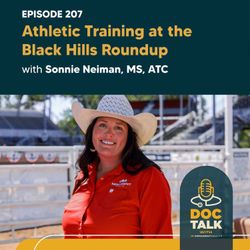
207. Episode 207: Athletic Training at the Black Hills Roundup with Sonnie Neiman, ATC
13:30||Ep. 207Description: Athletic trainer Sonnie Neiman spends her school year taping ankles and covering games in Hulett Wyoming, but the Fourth of July finds her behind the chutes at the Black Hills Roundup. She explains what athletic trainers actually do, how Monument Health places her in the community as a contracted trainer and why rodeo athletes will take gobs of tape just to get through eight seconds. Sonnie walks through the injuries that surprise people, from rope burns to ACL tears, and the ones that look like any other sport. It's a close-up on the crew keeping cowboys and cowgirls in the arena.