Share
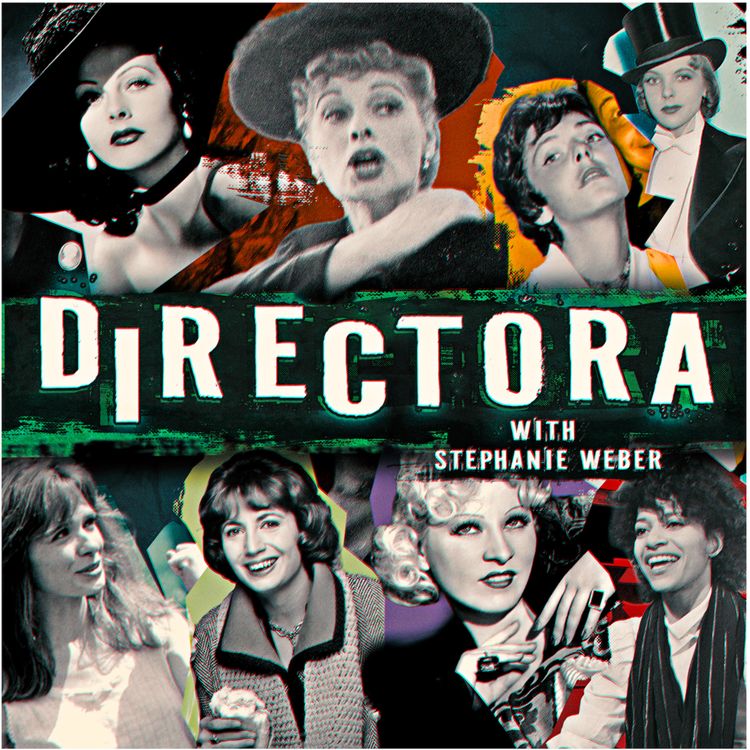
Directora
The Trailblazing Ida Lupino
Welcome to season two of Directora: Actresses Who Became Power Players!
This is a great season. Yes, we have directors, but we also have writers, producers, studio executives, and even inventors. This season will feature some heavy hitters like Lucille Ball, Elaine May, Debbie Allen, Mae West, and Barbra Streisand, and some lesser-known actresses like Adrienne Shelly who made a big impact. And an inventor, Hedy Lamarr. But first? We have to start with one of the most important female directors of the 20th century.
I can’t kick off my season on actresses who became power players without talking about Ida Lupino. The petite British actress with the femme fatale voice became one of the ONLY directors working in the 1940s and 50s. She made a lot of historic firsts, including being the first woman to direct film noir. She directed boundary-breaking independent films and then went on to direct some of the most legendary episodes of early television. This is why she often comes up in discussions of women directors or women in film history, and that’s exactly what our podcast is about. Her film The Hitch-Hiker is part of the National Film Registry, and her films Outrage and The Bigamist are considered important works of 20th-century art. Learn about her life, career, and triumphs in today's episode!
This episode originally aired earlier in 2026 on Grab Bag Collab. Directora was created by Stephanie Weber, who researches, writes, records, edits, and hosts all episodes. Episode art by Brock Alter. Please visit Directora on Instagram or TikTok for clips of things discussed in the episode. Email directorapodcast@gmail.com for questions, concerns, and compliments. And, kindly rate and review!
Sources:
Donati, William J. Ida Lupino: A Biography. University Press of Kentucky. April, 1996.
Kuperberg, Clara and Julia. Ida Lupino: Gentlemen and Miss Lupino. (2021)
Longworth, Karina. “The Many Loves of Ida Lupino”. You Must Remember This. July 10, 2014.
Lupino, Ida. “Outrage.” 1950.
Lupino, Ida. “The Bigamist.” 1953.
Lupino, Ida. “The Hitch-Hiker.” 1955.
Ida Lupino- Documentary. Film Historian. Oct 12, 2016. https://www.youtube.com/watch?v=1XCu7O9sw-Q
This is your life https://www.youtube.com/watch?v=2UgbgrLve7A
Walsh, Raoul. “They Drive By Night.” 1940.
Wellman, William. “The Light That Failed.” 1939.
More episodes
View all episodes
Doris Wishman's A Night to Dismember with Elizabeth Pauker
46:17|The 7th film for our 31-for-31 challenge this month, in which we watch a horror film directed by a woman for every day in October, is 1983's A Night to Dismember directed by Doris Wishman. It's a fascinating, low-budget, indie film for a lot of reasons: there are multiple versions, she did everything herself, and Wishman was best known for directing nudie films. While some might dismiss Wishman as being just a sexploitation director, she was actually the most prolific female director in the 20th century. There is so much to know about Wishman, so we were very lucky to chat with producer and director Elizabeth Pauker. Pauker is currently working on a documentary about Doris Wishman, so she sat down to tell us more about Wishman's story and her approach to filmmaking. Listen to this special interview episode. Follow us on social media to watch recaps and reviews of our 31-for-31 films. Directora is brought to you by Stephanie Weber, with artwork by Brock Alter.
Bonus: Interview with Director of The Musical, Giselle Bonilla
40:07|The Musical is a hilarious dark comedy in theaters now. The film stars Will Brill, Rob Lowe, and Gillian Jacobs. When middle school drama teacher Doug (Brill) gets his heart broken by fellow teacher Abigail (Jacobs), he gets petty revenge by writing and directing his students in an outrageous musical. Director Giselle Bonilla talks about the wild making of the film. This is a must-listen for any indie filmmaker out there! Bonilla's movie went through the ringer to get made, and it was well worth it. This film is hilarious!
What Is Horror?
16:35|What IS horror? How do we define what scares us? That's what we aim to explore this month on the podcast. Welcome to Directora's Women and Horror Mini-Series. Throughout October, we will release episodes every Wednesday about horror themes. And guess what? We'll have special guests! Not only that, but we will do a horror movie challenge: 31 horror films directed by women! Every day in October, I’ll post recaps, reviews, and fun facts about the film of the day until Halloween. This year’s list offers a wide range of films: gory, slasher, psychological, folk horror, domestic horror, creatures, vampires, ghosts, low budget, indie, remakes, sequels, franchise, anthology, and even a documentary! I’m thrilled to watch these with you.This is the second time we are doing this here at Directora. Last year was an absolute blast, so please join Directora Podcast this year as we watch a horror film a day directed by a woman. Follow on Instagram and TikTok to watch recaps and reviews of the films. Listen every Wednesday to hear special guest interviews and deep-dives into themes like body horror, lesbian vampires, urban legends, and more! New episodes every Wednesday.Get spooky with me this Halloween season. Join us for 31 horror films directed by women.Directora is researched, written, edited, and hosted by Stephanie Weber. Artwork by Brock Alter.
9. Hedy Lamarr: Actress, Spy, Inventor of WiFi
44:32||Season 2, Ep. 9This season closes on one of the wildest true Hollywood stories: the life and inventions of Hedy Lamarr. The actress was always smarter than everyone else in the room. Her intelligence is how she escaped Europe during the war, spied for the Allies, and eventually invented the technology that would become the foundation for WiFi.This episode initially aired on Grab Bag Collab as part of their network. Thank you to Daisy Eagan, Amanda Rossman, and Amber Hunt for their help on this. Thank you to Brock Alter for his art. Directora is researched, written, recorded, and edited by Stephanie Weber. Email directorapodcast@gmail.com for questions and suggestions. Follow Directora on Instagram and TikTok. Sources:You Must Remember ThisBombshell: The Hedy Lamarr Storyhttps://www.youtube.com/watch?v=ghc6uab1EX4Women in Historyhttps://www.womenshistory.org/education-resources/biographies/hedy-lamarr
8. Barbra Streisand: Singer, Actress, Director, Legend
01:02:50||Season 2, Ep. 8It’s easy to take Barbra Streisand for granted because she really is good at everything. From singer and actress to director and producer, Barbra is a perfectionist who fought against discrimination and stereotypes in order to make unapologetic work that made her a star. She has been labeled difficult, while also fighting through a lot to make it to the top. Is she difficult? Does it matter when you're as talented as she is? This episode initially aired on the Grab Bag Collab network. Thank you to Amber Hunt, Daisy Eagan, and Amanda Rossman. Thank you to Brock Alter for Directora's artwork. Directora is researched, written, recorded, edited, and hosted by Stephanie Weber. Email directorapodcast@gmail.com and follow Directora on Instagram and TikTok. Sources: Mojo https://www.youtube.com/watch?v=gzv1DlQU8KUHow Barbra Streisand Fought Hollywood to Make Yentlhttps://www.youtube.com/watch?v=0r1FhIT8efwA Star is Born - You Must Remember ThisPierson, John. My Battles with Barbra and John. New West Magazine. November 20, 1976.https://web.archive.org/web/20150716005847/http://barbra-archives.com/bjs_library/70s/new_west_battles_barbra_jon.htmlhttps://www.youtube.com/watch?v=PoNdQxkI-0w1991 Barbra Streisand on 60 Minuteshttps://www.youtube.com/watch?v=Xw5dQBZavUwMann, William J. Hello Gorgeous. Houghton Mifflin Harcourt. October 2012. Streisand, Barbra. My Name is Barbra. Viking. November 7, 2023.
7. Debbie Allen: From Fame to Famous Director & Producer
56:44||Season 2, Ep. 7Debbie Allen wears a thousand hats. The actress and dancer might be best known for starring in Fame, but she has directed and produced incredibly important television shows for nearly 40 years.This episode initially aired on Grab Bag Collab as part of their network. Thank you to Daisy Eagan, Amanda Rossman, and Amber Hunt for their help on this. Thank you to Brock Alter for his art. Directora is researched, written, recorded, and edited by Stephanie Weber. Email directorapodcast@gmail.com for suggestions and questions. Follow Directora on Instagram and TikTok for stills and clips from the episode.Sources:Debbie Allen, Maven of the ArtsDebbie Allen and Lena Waithe interview, via Hillman Grad YouTube. Playbill's My Life in Theater with Debbie AllenSmith, David. Paying in Sweat! How Debbie Allen Went from Stardom in Fame to Conquer Hollywood. https://www.theguardian.com/stage/2026/may/12/how-debbie-allen-went-from-stardom-in-fame-to-conquer-hollywood
6. TV Actress to Hitmaker: Penny Marshall
57:57||Season 2, Ep. 6Penny Marshall and her brother Garry were mainstays of 1970s and 80s sitcoms. Garry's little sister became a big star when she starred in the Happy Days spinoff, Laverne and Shirley. However, Penny observed her brother and all of the other creative writers and directors around her. She realized that she had an eye for directing, and she was especially good with actors. Penny Marshall's films are very underrated for how successful they are. Her second film was Big, which launched Tom Hanks into stardom, and it became the first film directed by a woman to gross over $100 million at the box office. Her follow-up to Big was Awakenings, which was nominated for an Academy Award. Her next film, A League of Their Own, grossed over $100 million again, and it remains popular and quotable to this day. Penny Marshall made legitimate, bona fide hits - and she doesn't get nearly as much credit as she deserves. Let's change that! This episode originally aired on Grab Bag Collab. Brock Alter does the artwork for Directora. Directora is researched, written, recorded, and edited by Stephanie Weber.
5. Comedy Queen and Studio Executive: Lucille Ball
01:03:28||Season 2, Ep. 5Lucille Ball is everyone's favorite funny redhead! Decades after her hit sitcom I Love Lucy, there are still references to the gags she performed on her hit show. People might not realize how influential I Love Lucy was to American sitcoms - and how much she and Desi Arnaz did for television as a whole. From an actress and dancer in New York City to a bit player in Hollywood, Lucille Ball learned how to stand out, and she quickly learned that making a fool of herself was a good way to do it. She cultivated her physical comedy skills, while never once thinking of herself as a comedian. She and her husband worked very hard throughout their lives to entertain American audiences for years, overcoming substance abuse, divorce, and Communist accusations. Listen to this episode to hear all that and more! This episode originally aired on Grab Bag Collab. Thank you to Daisy Eagan, Amber Hunt, and Amanda Rossman for their hard work. Thank you to Brock Alter for the art. Directora is researched, written, recorded, and edited by Stephanie Weber.SOURCES:Arnaz, Desi. A Book. William Morrow and Company. 1976. Kanfer, Stefan. Ball of Fire: The Tumultuous Life and Comic Art of Lucille Ball. Knopf. January 1, 2003. American Masters: Finding Lucy.The Plot Thickens, by Turner Classic Movies. Lucille Ball podcast series.
4. Adrienne Shelly: From Muse to Acclaimed Director
56:49||Season 2, Ep. 4The musical Waitress is a modern success, a smash hit that has people around the world singing along to its soundtrack. Fans of the musical might not realize that it was based on a hit 2007 indie film written and directed by Adrienne Shelly. Sadly, Shelly never saw her own film's success. Shelly wrote and directed three original feature films and was director Hal Hartley's muse early in her career. She had big plans for more, but her life was cut tragically short when she was murdered. Hear about her inspiring life, amazing films, and the legacy she has left behind. This episode initially aired on Grab Bag Collab as part of their network. Thank you to Daisy Eagan, Amanda Rossman, and Amber Hunt for their help on this. Thank you to Brock Alter for his art. Directora is researched, written, recorded, and edited by Stephanie Weber.Click here to learn more about the Adrienne Shelly Foundation. SOURCES: Horton, Adrian. “The Life and Death of Filmmaker Adrienne Shelly.” The Guardian. December 1, 2021. Ostoy, Andy. Adrienne (2021). Special features on the DVD’s for Sudden Manhattan and Waitress. Director’s Commentary on Sudden Manhattan. Zimmer, Vanessa. “Who Was…Adrienne Shelly?”. Sundance.com. November 11, 2022.