Share
The Digital Trust Podcast
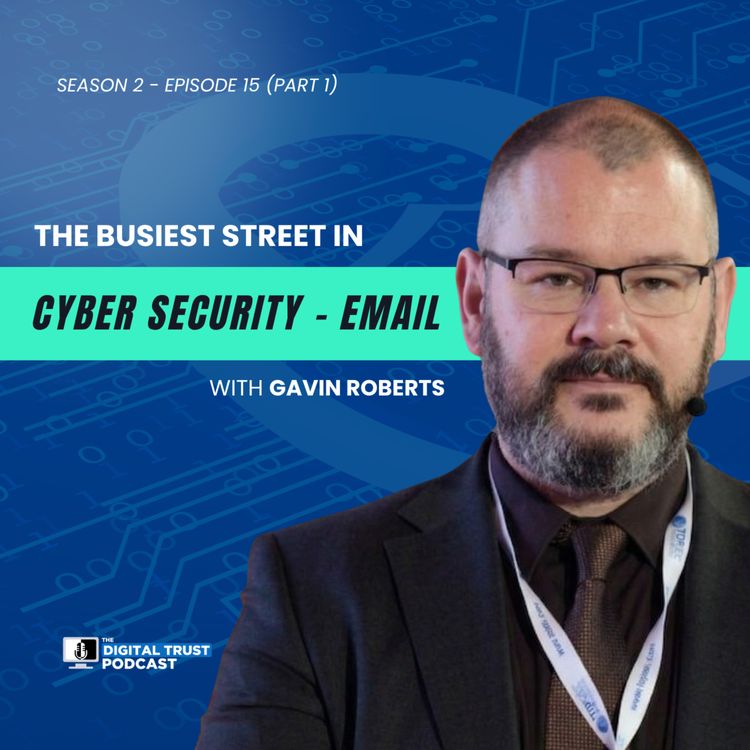
The Busiest Street in Cyber Security - Email | Gavin Roberts
90% of cyberattacks still start with email yet most organizations are still underestimating it.
On Season 2 Episode 15 of the Digital Trust podcast, host Christian Redshaw and co-host Zach(ary) Eikenberry sit down with Gavin Roberts, CTO of Topsec Cloud Solutions, to unpack why email security remains one of the biggest and most misunderstood risks in cybersecurity.
With over 25 years of experience across fraud detection, financial systems, and email security, Roberts shares why AI is making phishing attacks more convincing than ever, while also warning against over-reliance on automation without maintaining strong technical fundamentals.
The conversation dives into:
• Why email continues to be the #1 attack vector
• The real impact of AI on both attackers and defenders
• Why layered security beats “all-in-one” solutions
• The growing risk of skill gaps in security teams
If you're relying on default email security alone… this episode is a must-watch.
#DigitalTrustPodcast #CyberSecurity #EmailSecurity #AI
#Phishing #ITLeadership #RiskManagement #DigitalTrust
#GavinRoberts #ChristianRedshaw #ZackEikenberry #PeopleProcessTechnology
More episodes
View all episodes
23. The Microsoft Security Knowledge Gap | Joshua Sitta
13:47||Season 2, Ep. 23Microsoft offers a powerful and constantly evolving security ecosystem, but knowing how to use it effectively can be a challenge, especially for small and mid-sized businesses.In Season 2 Episode 23 of the Digital Trust Podcast, host Christian Redshaw and co-host Zach(ary) Eikenberry sit down with Joshua Sitta, Co-Founder and CEO of Sittadel, to explore the Microsoft security knowledge gap and how enterprise-level cybersecurity can become more accessible.Drawing from his experience defending a major financial institution against sophisticated cyber threats, Joshua shares why he chose to bring that knowledge to smaller organizations with fewer resources.The conversation dives into:Joshua's self-taught journey into technology and cybersecurityLessons from defending a major bank against a sophisticated threatWhy SMBs struggle to access enterprise-level securityThe growing Microsoft security knowledge gapHow Citadel makes security knowledge publicly accessibleFrom Microsoft security and Zero Trust to incident response and security best practices, this episode explores how organizations can close knowledge gaps and build stronger security programs.
22. Find Weaknesses Before Someone Else Exploits Them | Rob Stewart & Laura Payne
13:35||Season 2, Ep. 22Find Weaknesses Before Someone Else Exploits Them | Season 2 Episode 22How do you strengthen your cybersecurity posture before attackers find the gaps?In Part Two of this proactive cybersecurity series, Christian Redshaw and Zach(ary) Eikenberry are joined once again by Laura Payne, CEO of White Tuque and Robert D Stewart, Founder, Chairman, and Head of Strategic Threat Intelligence at White Tuque.This episode explores the proactive practices that help organizations reduce cyber risk before an attack happens. From penetration testing and vulnerability management to security awareness training, Laura and Rob explain how security leaders can prioritize the right risks, empower their people, and build stronger, more resilient organizations.In this episode, you'll learn about:1. The biggest myths surrounding penetration testing2. Why security testing improves more than just security3. Prioritizing vulnerabilities based on real business risk4. Common mistakes organizations make with vulnerability management5. Building a security-aware culture without blame6. Why continuous awareness training delivers better resultsWhether you're an MSP, IT leader, cybersecurity professional, or business executive, this episode provides practical guidance on proactive cybersecurity, penetration testing, vulnerability management, security awareness, and cyber resilience.
21. Flex Your Incident Response Muscles Before You Need Them | Rob Stewart & Laura Payne
13:06||Season 2, Ep. 21Flex Your Incident Response Muscles Before You Need Them | Season 2 Episode 21How prepared is your organization for a cyber incident?In this episode of the Digital Trust Podcast, Christian Redshaw and Zach(ary) Eikenberry are joined by Laura Payne, CEO of White Tuque, and Rob Stewart, Founder, Chairman, and Head of Strategic Threat Intelligence at White Tuque, for Part One of a two-part series on proactive cybersecurity and cyber incident response.Together, they discuss why effective incident response starts long before a ransomware attack or security breach occurs. From defining decision-makers and communication plans to testing response procedures through tabletop exercises, they share practical strategies that help organizations strengthen cyber resilience and respond with confidence when an incident happens.In this episode, you'll learn about:Preparing for the response—not just the attackThe building blocks of an effective incident response planIdentifying decision-makers before a crisisWhy incident response is a business-wide responsibilityKeeping your response plan current and testedKey lessons from real-world incident responseWhether you're an MSP, IT leader, cybersecurity professional, business executive, or part of an incident response team, this episode offers practical advice to help you improve cyber preparedness, strengthen business continuity, and build a more resilient security program.Subscribe to the Digital Trust Podcast for more conversations on cybersecurity, digital trust, risk management, security leadership, and practical strategies for building resilient organizations.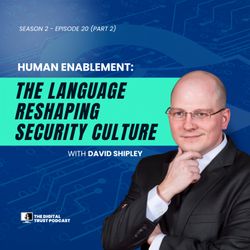
20. Human Enablement: The Language Reshaping Security Culture | David Shipley
13:55||Season 2, Ep. 20Calling employees a "human risk" is costing your security program before training even starts. David Shipley, CEO of Beauceron Security, makes the case for reframing the whole category on the Digital Trust podcast."Human Risk Management" signals to employees they're liabilities, not assets — it's demotivating by designThe goal is helping people make good choices with technology, not minimising the humanNew employees are higher risk than any specific role; target behaviour, not job titleSecurity Awareness data shows over-training suppresses reporting ratesThe answer is frequency, not volume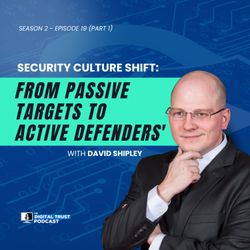
19. Security Culture Shift: From Passive Targets to Active Defenders | David Shipley
13:54||Season 2, Ep. 19Shame-based security training only hides incidents. So, what's the real solution here?David Shipley, CEO of Beauceron Security, makes that case on the Digital Trust Podcast and explains what actually builds a security culture that works. • Why walls of shame silence the reporting you need most. • Why "we care, you matter" is the most important security message leadership can send. • How knowledge and vigilance are both required, and why most programs only develop one.If your security strategy focuses more on controlling people than empowering them, this episode is a must-watch.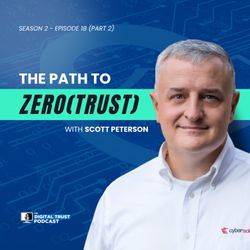
18. The Path to Zero (Trust) | Scott Peterson
14:58||Season 2, Ep. 18Zero trust gives you the ability to know what and who to trust.On Season 2 Episode 18 of the Digital Trust Podcast, host Christian Redshaw and co-host Zach(ary) Eikenberry sit down with Scott Peterson, CSO of Cyber Solutions, CTDO at Lyra Recovery, and CSO of a managed zero trust environment, to unpack why organizations struggle with proactive security and what it really takes to build a mature zero trust strategy.Drawing from years of experience in cybersecurity leadership, incident recovery, and managed services, Peterson shares practical lessons from real-world recovery cases, including the overlooked gaps that continue to leave organizations exposed.The conversation dives into:• Why Zero Trust starts with mindset, not tools• The most common security gaps organizations still ignore• Why reactive security creates long-term risk• Practical first steps toward a mature security posture• The importance of executive buy-in for cybersecurity successIf your security strategy only starts after something breaks… this episode is a must-watch.#DigitalTrustPodcast #CyberSecurity #ZeroTrust #MSP#RiskManagement #ITLeadership #DigitalTrust#CyberResilience #ScottPeterson #ChristianRedshaw#ZackEikenberry #PeopleProcessTechnology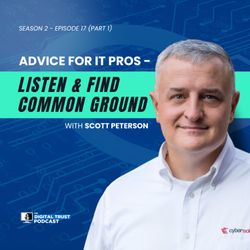
17. Advice for IT Pros - Listen & Find Common Ground | Scott Peterson
13:29||Season 2, Ep. 17We want to have all the answers. But have you ever thought if it would be better to ask the right questions, instead?On Season 2 Episode 17 of the Digital Trust Podcast, host Christian Redshaw and co-host Zach(ary) Eikenberry sit down with Scott Peterson, CSO of Cyber Solutions, CTDO at Lyra Recovery, and CSO of Managed Zero Trust, to unpack what truly separates effective security leaders and mature MSPs from the rest.With experience spanning multiple leadership roles across security, recovery, and managed services, Peterson shares why listening—not tooling—is the most underrated skill in cybersecurity, and how over-reliance on reactive solutions is holding organizations back.The conversation dives into:• Why listening skills are a security leader’s biggest advantage• The hidden impact of imposter syndrome in cybersecurity teams• Reactive vs. proactive security and why most MSPs get stuck• What an unhealthy vs. mature MSP actually looks like• Why security needs a seat at the executive tableIf your security strategy starts after something breaks… this episode will challenge how you think.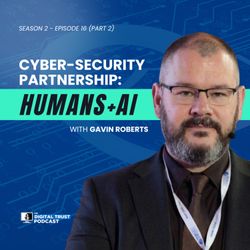
16. Cyber-Security Partnership: Humans + AI | Gavin Roberts
14:43||Season 2, Ep. 16AI is making phishing smarter… are we becoming weaker? On Season 2 Episode 16 of the Digital Trust podcast, host Christian Redshaw and co-host Zach(ary) Eikenberry sit down once again with Gavin Roberts, CTO of Topsec Cloud Solutions, to continue the conversation on the evolving realities of email security. Drawing from decades of experience in fraud detection and cybersecurity, Roberts offers a grounded perspective on the industry’s growing reliance on AI, emphasizing the importance of maintaining strong technical foundations alongside emerging tools. The discussion highlights how email continues to dominate as the primary attack vector, why improved phishing quality hasn’t necessarily translated to better detection outcomes, and how overdependence on automation can introduce new risks within security teams. Roberts also reinforces the need for layered security approaches, ensuring organizations aren’t relying solely on default protections. If your organization is leaning heavily on AI without reinforcing fundamentals, this is a conversation worth tuning into. #DigitalTrustPodcast #CyberSecurity #EmailSecurity #AI#Phishing #ITLeadership #RiskManagement #DigitalTrust#GavinRoberts #ChristianRedshaw #ZackEikenberry #PeopleProcessTechnology