Share
Digital HR Leaders with David Green
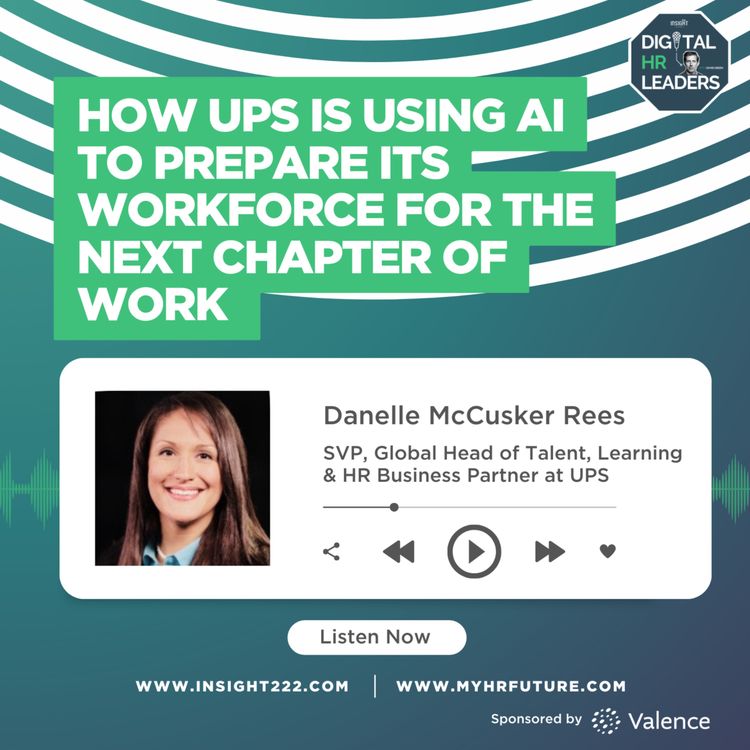
How UPS Is Using AI to Prepare Its Workforce for the Next Chapter of Work
Can AI fuel a people-first transformation at global scale? At UPS, the answer is a resounding yes.
While many companies view AI through the lens of automation and efficiency, UPS is taking a radically different approach: treating AI as an enabler of human growth, not a replacement for it.
In this episode of the Digital HR Leaders podcast, host David Green is joined by Danelle McCusker, Senior Vice President and Global Head of Talent, Learning and Culture at UPS, to explore how the company is redefining what workforce transformation looks like in the age of AI.
With over half a million employees and a deeply rooted culture of promotion from within, UPS faces a unique challenge: how to prepare its people for a future defined by emerging technologies - while preserving trust, purpose, and opportunity.
Join them as Danelle and David explore:
- Why UPS is designing AI implementations to relieve frontline burdens and elevate the value of human work - not eliminate it.
- How a pilot with Valence’s AI coach Nadia is creating access to consistent, personalised development for employees well beyond the executive tier.
- The role of psychological safety and experimentation in successful AI adoption
- How HR and technology teams are partnering to drive cultural and capability transformation
- What other HR leaders can learn from UPS’s intentional, business-first approach to AI
Whether you're in the early stages of your AI journey or looking for practical ways to align tech with talent strategy, this conversation offers both inspiration and actionable insights from the front lines of change.
This episode is sponsored by Valence.
Imagine if every employee had a world-class coach in their pocket. That’s exactly what Valence has created with Nadia - the AI-powered coach helping Fortune 500 companies scale development, boost performance, and support leaders at every level.
Learn more at valence.co/insight222
More episodes
View all episodes
286. How Snowflake Is Using People Analytics to Lead AI Transformation
54:53||Season 57, Ep. 286As AI reshapes work, the people function has an opportunity to play a much bigger role in how organisations navigate the transformation. At Snowflake, that starts with trusted data, strong people analytics and a clear view of what technology should automate, where it should augment human capability, and what should remain human. In this episode, David Green is joined by Arnnon Geshuri, Chief People Officer at Snowflake. Drawing on a career that includes senior roles at Google, Tesla and Teladoc Health, Arnnon explains why data has become a common language between HR and the business, and how Snowflake is putting that philosophy into practice. In this conversation, David and Arnnon discuss: Why people analytics gives HR greater credibility and influence with senior business leaders Snowflake’s model for deciding what to automate, what to augment and what should remain human How Snowflake’s talent acquisition team is building its own tools, including an application that reduced hours of work on job descriptions to minutes Why AI is changing jobs, career paths and the skills people will need as work is redesigned Why trusted data is essential to workforce transformation, and how Snowflake puts interactive organisational insights directly into managers’ hands How Snowflake’s talent acquisition team achieved a 20% productivity improvement, and why Arnnon focuses on business outcomes rather than tool usage Why analytics, systems thinking and change management are becoming essential capabilities for current and aspiring Chief People Officers For HR and people analytics leaders, this conversation provides a practical look at how a data-led people function can help shape work, strengthen decision-making and lead organisational transformation. This episode is sponsored by HiBob. HiBob is the people platform built for the AI era, helping organizations replace fragmented HR systems with a unified foundation for workforce management. That's why Brandon Hall Group says unified workforce platforms are becoming the foundation for organizations looking to scale AI with confidence.The report also includes a practical business case template with ROI modeling and executive evaluation criteria to help build your transformation strategy. Download the Brandon Hall Group HCMS Platforms Report Resources: Snowflake Careers at Snowflake Snowflake Education and Training
285. Inside Salesforce’s $166M Bet on HiBob’s Organisational Intelligence
44:45||Season 57, Ep. 285A year ago, the challenge was getting people to use AI. Now, the harder task is turning widespread experimentation into redesigned work, stronger productivity and measurable business impact. In this episode, David Green is joined by Ronni Zehavi, Co-Founder and CEO of HiBob, to explore what the company has learned from its own award-winning AI transformation. Ronni also shares an early, inside perspective on Salesforce’s $166 million investment in HiBob and why it represents an important next chapter in the company’s evolution towards an Organisational Intelligence platform, built on trusted workforce context to help organisations redesign work and make better decisions as people and AI increasingly work side by side. Join them, as David and Ronni discuss:Why HiBob shifted its focus from experimentation and adoption to measuring productivity, impact and business value Why managers are the critical change agents in workforce transformation, and what HiBob learned from its Leading with AI programme Why skills are becoming increasingly important to work redesign, and how this is reshaping job architecture, hiring and development How Ronni has changed his own behaviour as CEO, including building a digital twin that has become part of how he works every day Why trusted people and organisational data is central to HiBob’s vision for Organisational Intelligence, and what the Salesforce investment could mean for the company’s next chapter Why HR needs to take a leading role in redesigning work, while simultaneously transforming its own capabilities, processes and ways of working For HR and business leaders navigating the same transition, this is a candid look behind the curtain at what it takes to move from promising adoption numbers to meaningful changes in how work gets done and measurable business impact. This episode is sponsored by HiBob. HiBob is the people platform built for the AI era, helping organizations replace fragmented HR systems with a unified foundation for workforce management. That's why Brandon Hall Group says unified workforce platforms are becoming the foundation for organizations looking to scale AI with confidence. The report also includes a practical business case template with ROI modeling and executive evaluation criteria to help build your transformation strategy.Download the Brandon Hall Group HCMS Platforms Report Resources: HiBob resources hub HiBob's 2026 Josh Bersin HR Pacesetter Award for AI TransformationThe $166 million investment round led by Salesforce
284. How People Intelligence Is Helping Shape Cisco’s AI Workforce Transformation
55:23||Season 57, Ep. 284Your AI adoption numbers might be climbing. But what do they tell you about your people? Kelly Jones, Chief People Officer at Cisco, and her team set out to answer that question, and the findings are reshaping how Cisco thinks about engagement, performance, leadership, and the future of HR itself. In this conversation, David and Kelly discuss:What prompted Cisco's People Intelligence team to ask a bigger question about AI than most organisations are asking The connection between AI use, employee engagement, and career growth at Cisco Why leaders who use AI themselves are so critical to driving adoption across their teams The confidence gap Cisco is seeing between director-level leaders and mid-level employees, and what to do about it How this transformation is reshaping the HR function itself, and the skills needed to build HR for an "intelligence era" The wellbeing cost of change at this pace, and where to start if you don't know where to begin This episode is sponsored by HiBob.HiBob brings HR, Payroll, and Finance together into a single platform that employees actually use. With AI throughout, you move faster, work smarter, and empower your people to power your business. Sapient Insights recognises HiBob’s AI vision, citing the Bob AI Companion for making everyday work faster and easier. Fosway Group also names HiBob a 2025 9-Grid™ Core Leader, recognising the strongest AI vision among Core Leaders. HiBob. All-in-one HCM for HR, Payroll, and Finance. Learn all about HiBob’s modern HR platform hereResources: Cisco's Journey in AI Workforce Transformation
283. The 100-Year Life: Rethinking Careers for a Longer Working Life
56:22||Season 57, Ep. 283If you knew you might live to 100, how differently would you think about the career you are building today? Lynda Gratton is Professor of Management Practice in Organisational Behaviour at London Business School, where she's taught for more than thirty years and leads the world's number one ranked programme in human resources. Lynda is also the bestselling co-author of the million selling The 100-Year Life. Ahead of the publication of her new book, Living the 100-Year Life: How to build a career that lasts and a life you love, Lynda joins David to explore why longer lives are stretching the traditional education, work and retirement model to breaking point, and what this means for individuals and organisations. In this episode, David and Lynda discuss: The eight threads Lynda believes can help us build resilient and fulfilling working lives, and why calm is becoming increasingly important Why “amplification”, our relationship with technology and AI, is one of the eight threads we need to manage deliberately How AI is reshaping work at the level of tasks, and what that means for the careers we build Why career architectures, mobility and development models designed for shorter, more predictable working lives need to evolve How organisations can help people navigate repeated transitions across careers that could span 50 or 60 years Ultimately, this is a conversation about longevity, technology and human agency, and how individuals and organisations can make the extra years we have been given count. This episode is sponsored by HiBob. HiBob brings HR, Payroll, and Finance together into a single platform that employees actually use. With AI throughout, you move faster, work smarter, and empower your people to power your business. Sapient Insights recognises HiBob’s AI vision, citing the Bob AI Companion for making everyday work faster and easier. Fosway Group also names HiBob a 2025 9-Grid™ Core Leader, recognising the strongest AI vision among Core Leaders. HiBob. All-in-one HCM for HR, Payroll, and Finance. Learn all about HiBob’s modern HR platform hereResources: Living the 100-year old Life: How to build a career that lasts and a life you love
How Allianz Is Building a Workforce Ready for Constant Change
56:55||Season 56Should workforce transformation belong to HR? Bettina Dietsche, Group Chief People and Culture Officer at Allianz, doesn't think so. Bettina leads the people agenda for around 156,000 employees at Allianz. She came to HR after 25 years in IT and digital transformation, picking up the people function while serving as COO of Allianz Commercial during a company turnaround. That background shapes her view that HR's job is to challenge and push transformation onto the business agenda - not to own it.In this episode, David and Bettina discuss: Why she believes HR should challenge and nudge workforce transformation, while ownership sits with the businessHow 25 years leading IT and digital transformation, including a COO turnaround, shaped her approach to the CPO roleWhy she runs regular sessions with more than 60 CEOs across Allianz, and what that partnership actually looks like in practiceHer test for a healthy culture - what people do when no one's watching - and why she calls culture "the hardest currency"How Allianz builds daily AI habits into leadership, from "AI gem sessions" to asking each morning what AI can help with firstWhy she sees AI creating as many new early-career roles as it displaces, and how Allianz is reshaping graduate hiring around that This episode is sponsored by Valence. Nadia, Valence's AI coaching platform, connects talent strategy to the work employees are actually doing — offering coaching from the frontline to the boardroom, and surfacing organisational insights that weren't visible before.As the most widely deployed coach in the Fortune 500, Nadia is already helping global leaders like Nestlé, Delta, CVS, and Kraft Heinz transform talent at scale.Learn more at valence.co/insight222
281. Your Team's AI Instincts: Why AI Adoption Succeeds or Fails on How You're Wired
49:09||Season 56, Ep. 281Do you know which of your people are wired to thrive in chaos, and which ones need certainty to do their best work? In this episode, David is joined by Mike Flannagan, Corporate Vice President, Customer & Commercial Success at Microsoft, and Paul Burgess, founder of Instinctive Drives, to explore Microsoft's recent partnership with Instinctive Drives and what it reveals about the human side of AI transformation. Together they unpack why the biggest barrier to AI adoption isn't the technology itself, but the mismatch between people's natural instincts and the roles they're being asked to play. Join the dynamic trio as they discuss: Why AI adoption is a people transformation How the Instinctive Drives framework explains why people react so differently to change What happens when the wrong people get pushed into high-experimentation, high-failure roles Why psychological safety is the real prerequisite for AI adoption at scale How a shared language around instincts can rebuild trust and speed up team performance Listeners can try their own Instinctive Drives assessment for free for a limited time (expires 31st of October 2026) - the link is in the show notes below. This episode is sponsored by Instinctive Drives. As organisations invest heavily in AI, the people expected to deliver are often overwhelmed and working against their own natural wiring. Instinctive Drives' science-backed methodology reveals how each person is wired to work - which is why Microsoft chose them as their strategic partner for enterprise AI adoption worldwide. Try your own Instinctive Drives assessment for free at instinctivedrives.com/digitalhrleaders - available until 31 October 2026. Resources: Instinctive Drives assessment - available until 31 October 2026
282. Your Team's AI Instincts: Why AI Adoption Succeeds or Fails on How You're Wired
49:09||Season 56, Ep. 282Do you know which of your people are wired to thrive in chaos, and which ones need certainty to do their best work? In this episode, David is joined by Mike Flannagan, Corporate Vice President, Customer & Commercial Success at Microsoft, and Paul Burgess, founder of Instinctive Drives, to explore Microsoft's recent partnership with Instinctive Drives and what it reveals about the human side of AI transformation. Together they unpack why the biggest barrier to AI adoption isn't the technology itself, but the mismatch between people's natural instincts and the roles they're being asked to play.Join the dynamic trio as they discuss:Why AI adoption is a people transformation How the Instinctive Drives framework explains why people react so differently to change What happens when the wrong people get pushed into high-experimentation, high-failure roles Why psychological safety is the real prerequisite for AI adoption at scale How a shared language around instincts can rebuild trust and speed up team performance Listeners can try their own Instinctive Drives assessment for free for a limited time (expires 31st of October 2026) - the link is in the show notes below. This episode is sponsored by Instinctive Drives.As organisations invest heavily in AI, the people expected to deliver are often overwhelmed and working against their own natural wiring. Instinctive Drives' science-backed methodology reveals how each person is wired to work — which is why Microsoft chose them as their strategic partner for enterprise AI adoption worldwide.Try your own Instinctive Drives assessment for free at instinctivedrives.com/digitalhrleaders - available until 31 October 2026.Resources: Instinctive Drives assessment - available until 31 October 2026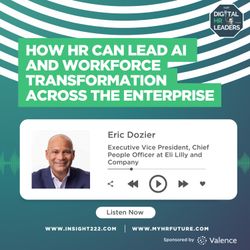
280. How HR Can Lead AI and Workforce Transformation Across the Enterprise
46:21||Season 56, Ep. 280How do you bring AI into an organisation without losing what's made it work for 150 years? In this episode of the Digital HR Leaders podcast, David Green is joined by Eric Dozier, Executive Vice President and Chief People Officer at Eli Lilly, to explore what it takes for HR to lead AI and workforce transformation at enterprise scale. Join them, as they discuss: Why HR has to transform twice over in the AI era, first as a function, then as an organisation What prompted Lilly's AI journey, and how the friction points that came up shaped the approach going forward How the role of the manager is changing as AI becomes part of everyday work What separates AI capability from simply increased AI usage The principles guiding Lilly's approach to responsible AI, including where it supports leadership judgement and where it shouldn't How employee feedback has reshaped Lilly's AI strategy, and what Eric believes HR leaders should prioritise as they lead their own transformations This episode is sponsored by Valence. Nadia, Valence's AI coaching platform, connects talent strategy to the work employees are actually doing — offering coaching from the frontline to the boardroom, and surfacing organisational insights that weren't visible before. As the most widely deployed coach in the Fortune 500, Nadia is already helping global leaders like Nestlé, Delta, CVS, and Kraft Heinz transform talent at scale. Learn more at valence.co/insight222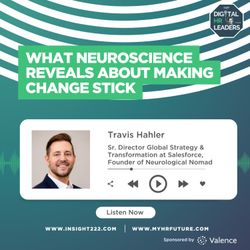
279. What Neuroscience Reveals About Making Change Stick
51:08||Season 56, Ep. 279What if the resistance you're seeing from your team isn't opposition at all? David Green is joined by Travis Hahler, who leads global strategy and transformation at Salesforce and is also the founder of Neurological Nomad, where he applies neuroscience and neuropsychology to how leaders manage change. Travis is the author of the new book Rethink Resistance, and his central argument reframes almost everything: resistance isn't personal, it's protective. Why resistance to change should be read as information, not opposition: The six neurological barriers to change, and why leaders need to understand each one How routine and old habits quietly pull people back toward what made them successful before, even when they're not against the future Why cognitive load and pacing determine whether people actually learn through a transformation, or just survive it What employees are really losing in change that's genuinely good for them, and why leaders often miss it How to apply these insights practically to workforce transformation and AI adoption Whether you're leading a transformation right now or preparing for one, this conversation will change how you think about the resistance you're seeing. This episode is sponsored by Valence. Nadia, Valence's AI coaching platform, connects talent strategy to the work employees are actually doing — offering coaching from the frontline to the boardroom, and surfacing organisational insights that weren't visible before. As the most widely deployed coach in the Fortune 500, Nadia is already helping global leaders like Nestlé, Delta, CVS, and Kraft Heinz transform talent at scale. Learn more at valence.co/insight222 Additional resources: Rethink Resistance: Embracing Neuroscience to Lead Transformational Change