Latest episode
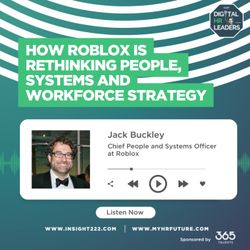
288. How Roblox Is Rethinking People, Systems and Workforce Strategy
51:35||Season 58, Ep. 288What changes when the people function is designed not as a collection of separate HR processes, but as part of the operating system of the company?In this episode of the Digital HR Leaders podcast, David Green is joined by Jack Buckley, Chief People and Systems Officer at Roblox, to explore how measurement, people analytics, technology and workforce strategy come together inside one of the world’s best-known technology companies. Jack’s career spans the US Navy, academia, applied statistics, large-scale assessment and game-based hiring before leading people and systems at Roblox. That background has shaped a clear philosophy: before organisations make better people decisions, they need to be confident they are measuring the right things, with data they can trust.Join them, as they discuss:Why data quality and measurement should come before advanced analytics Lessons from building a people science and analytics function during hypergrowth Why People and Finance need a shared view of workforce data and planning How the Roblox operating system brings people processes, technology and internal products together When organisations should buy technology, customise it or build their own How AI is reshaping recruiting, assessment, performance, retraining and workforce planning at Roblox Why skills atrophy could become a significant challenge as employees rely more heavily on AI tools How to balance rapid experimentation with rigorous evaluation and governance Why measuring the work and skills people actually use is essential to redesigning work and creating business valueThis episode is sponsored by 365Talents, a Docebo company.Every organisation approaches skills in its own way, so 365Talents designs its talent intelligence solutions to adapt to how each business works. HR teams use them to put skills-based strategies into action more quickly and to see the impact across the whole organisation. Find out more about 365TalentsBuilding or refining your skills strategy? The 2026 Skills Toolkit brings together 14 free HR templates covering every stage of the journey. It includes a business case built for your CFO, a structured framework for comparing vendors, a strategy you can take to the board, and practical tools for day-to-day HR operations and rollout. Get free access to the 2026 Skills Toolkit Resources:Roblox Insight222 People Analytics Trends 2025/26 HR Operating Model for the AI Era Try Roblox's Coding Cookies practice assessment
More episodes
View all episodes
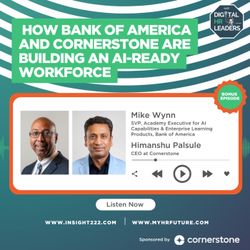
How Bank of America and Cornerstone Are Building an AI-Ready Workforce
53:52||Season 57Your organisation has committed to an AI strategy. But what does that commitment mean for the people who have to work differently because of it?AI adoption is moving into a more demanding phase. The challenge for HR and learning leaders is translating technology investment into new capabilities, different ways of working and measurable business outcomes.In this special episode of the Digital HR Leaders podcast, David Green is joined by Mike Wynn, SVP, Academy Executive for AI Capabilities & Enterprise Learning Products at Bank of America, and Himanshu Palsule, CEO of Cornerstone. Together, they explore what it takes to build an AI-ready workforce, combining the practical experience of capability building at scale with a broader perspective on workforce intelligence, skills and work redesign.Join them as they explore:How Bank of America is building AI confidence and capability across every career stage, from self-paced learning to collaborative, experiential workshopsWhy every AI capability the bank teaches is anchored to human skills such as judgement, critical thinking and strategic thinkingWhy organisations need to connect AI strategy with workforce strategy by understanding how work, tasks and skills are changingHow workforce intelligence can help organisations connect signals about people and work with outcomes such as productivity, mobility and workforce transformationWhy learning increasingly needs to happen in the flow of work, as technology makes development more continuous and contextualWhy course completions and attendance are insufficient measures of success, and why leaders should instead look for changes in behaviour, work and business outcomesWhat HR and learning leaders should prioritise when ambitious AI plans have yet to translate into a clear people strategy For CHROs, CLOs and workforce leaders, this conversation offers a practical roadmap for moving beyond AI experimentation and building the workforce capability needed to turn ambition into business value.This episode is sponsored by Cornerstone.Industries, organisations and workforces are all changing at once, and most people leaders are trying to respond with fragmented data and processes that move too slowly to keep up. Cornerstone brings together the insights leaders need, the learning and skills that move people forward, and AI agents that turn intelligence into action, helping organisations build a workforce that’s ready for what’s next.Explore Cornerstone Workforce AI™ and the wider platform here. And if you are building the case internally, Cornerstone's CHRO Mandate eBook on workforce readiness is a useful place to start: CHRO Mandate eBook Find out more about Cornerstone here. Resources:Cornerstone Connect, Chicago Bank of America Careers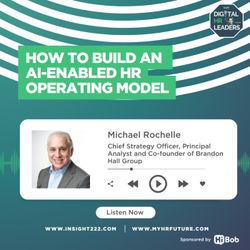
287. How to Build an AI-Enabled HR Operating Model
01:02:30||Season 57, Ep. 287What if the thing slowing down AI in HR isn't the technology at all, but the way the function is set up to deliver it?Most HR organisations already have access to AI. The bigger challenge is whether the way HR is structured, governed and measured is ready to turn that technology into sustainable business value. In this episode of the Digital HR Leaders podcast, David Green is joined by Michael Rochelle, Chief Strategy Officer, principal analyst and co-founder of Brandon Hall Group, to explore new research identifying six structural moves for building an AI-enabled HR operating model.Join them, as they discuss:Why the operating model can become the constraint on AI transformation, even when the technology is ready What changes when HR manages recruiting, learning, employee experience and workforce planning as continuously evolving products rather than finite programmes Why great people and well-designed processes need to come before technology, and the risks of automating processes that already need redesigning How talent pods, workforce product teams and centres of excellence can combine business proximity with scalable solutions and enterprise standards Why HR business partners need deeper business acumen and a stronger performance consulting mindset Why governance works best when it is embedded into design and delivery, helping create the trust required for innovation Why HR needs to strengthen capabilities in judgement, critical thinking, business acumen and data and analytics as work changes How leaders can measure business, workforce, system and future impact rather than simply tracking implementation activityFor CHROs and HR leaders rethinking how their function operates, this conversation provides a practical framework for creating an HR model that can continuously adapt, scale and deliver measurable value.This episode is sponsored by HiBob. HiBob is the people platform built for the AI era, helping organisations replace fragmented HR systems with a unified foundation for workforce management.That's why Brandon Hall Group says unified workforce platforms are becoming the foundation for organisations looking to scale AI with confidence. The report also includes a practical business case template with ROI modelling and executive evaluation criteria to help build your transformation strategy. Download the Brandon Hall Group HCMS Platforms Report Resources: Brandon Hall Group The AI-Enabled HR Operating Model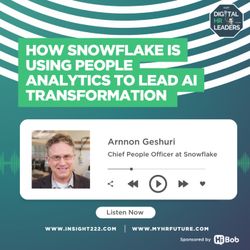
286. How Snowflake Is Using People Analytics to Lead AI Transformation
54:53||Season 57, Ep. 286As AI reshapes work, the people function has an opportunity to play a much bigger role in how organisations navigate the transformation. At Snowflake, that starts with trusted data, strong people analytics and a clear view of what technology should automate, where it should augment human capability, and what should remain human. In this episode, David Green is joined by Arnnon Geshuri, Chief People Officer at Snowflake. Drawing on a career that includes senior roles at Google, Tesla and Teladoc Health, Arnnon explains why data has become a common language between HR and the business, and how Snowflake is putting that philosophy into practice. In this conversation, David and Arnnon discuss: Why people analytics gives HR greater credibility and influence with senior business leaders Snowflake’s model for deciding what to automate, what to augment and what should remain human How Snowflake’s talent acquisition team is building its own tools, including an application that reduced hours of work on job descriptions to minutes Why AI is changing jobs, career paths and the skills people will need as work is redesigned Why trusted data is essential to workforce transformation, and how Snowflake puts interactive organisational insights directly into managers’ hands How Snowflake’s talent acquisition team achieved a 20% productivity improvement, and why Arnnon focuses on business outcomes rather than tool usage Why analytics, systems thinking and change management are becoming essential capabilities for current and aspiring Chief People Officers For HR and people analytics leaders, this conversation provides a practical look at how a data-led people function can help shape work, strengthen decision-making and lead organisational transformation. This episode is sponsored by HiBob. HiBob is the people platform built for the AI era, helping organizations replace fragmented HR systems with a unified foundation for workforce management. That's why Brandon Hall Group says unified workforce platforms are becoming the foundation for organizations looking to scale AI with confidence.The report also includes a practical business case template with ROI modeling and executive evaluation criteria to help build your transformation strategy. Download the Brandon Hall Group HCMS Platforms Report Resources: Snowflake Careers at Snowflake Snowflake Education and Training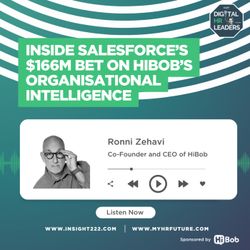
285. Inside Salesforce’s $166M Bet on HiBob’s Organisational Intelligence
44:45||Season 57, Ep. 285A year ago, the challenge was getting people to use AI. Now, the harder task is turning widespread experimentation into redesigned work, stronger productivity and measurable business impact. In this episode, David Green is joined by Ronni Zehavi, Co-Founder and CEO of HiBob, to explore what the company has learned from its own award-winning AI transformation. Ronni also shares an early, inside perspective on Salesforce’s $166 million investment in HiBob and why it represents an important next chapter in the company’s evolution towards an Organisational Intelligence platform, built on trusted workforce context to help organisations redesign work and make better decisions as people and AI increasingly work side by side. Join them, as David and Ronni discuss:Why HiBob shifted its focus from experimentation and adoption to measuring productivity, impact and business value Why managers are the critical change agents in workforce transformation, and what HiBob learned from its Leading with AI programme Why skills are becoming increasingly important to work redesign, and how this is reshaping job architecture, hiring and development How Ronni has changed his own behaviour as CEO, including building a digital twin that has become part of how he works every day Why trusted people and organisational data is central to HiBob’s vision for Organisational Intelligence, and what the Salesforce investment could mean for the company’s next chapter Why HR needs to take a leading role in redesigning work, while simultaneously transforming its own capabilities, processes and ways of working For HR and business leaders navigating the same transition, this is a candid look behind the curtain at what it takes to move from promising adoption numbers to meaningful changes in how work gets done and measurable business impact. This episode is sponsored by HiBob. HiBob is the people platform built for the AI era, helping organizations replace fragmented HR systems with a unified foundation for workforce management. That's why Brandon Hall Group says unified workforce platforms are becoming the foundation for organizations looking to scale AI with confidence. The report also includes a practical business case template with ROI modeling and executive evaluation criteria to help build your transformation strategy.Download the Brandon Hall Group HCMS Platforms Report Resources: HiBob resources hub HiBob's 2026 Josh Bersin HR Pacesetter Award for AI TransformationThe $166 million investment round led by Salesforce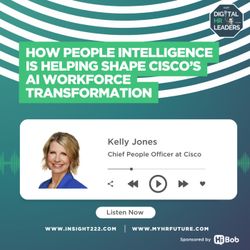
284. How People Intelligence Is Helping Shape Cisco’s AI Workforce Transformation
55:23||Season 57, Ep. 284Your AI adoption numbers might be climbing. But what do they tell you about your people? Kelly Jones, Chief People Officer at Cisco, and her team set out to answer that question, and the findings are reshaping how Cisco thinks about engagement, performance, leadership, and the future of HR itself. In this conversation, David and Kelly discuss:What prompted Cisco's People Intelligence team to ask a bigger question about AI than most organisations are asking The connection between AI use, employee engagement, and career growth at Cisco Why leaders who use AI themselves are so critical to driving adoption across their teams The confidence gap Cisco is seeing between director-level leaders and mid-level employees, and what to do about it How this transformation is reshaping the HR function itself, and the skills needed to build HR for an "intelligence era" The wellbeing cost of change at this pace, and where to start if you don't know where to begin This episode is sponsored by HiBob.HiBob brings HR, Payroll, and Finance together into a single platform that employees actually use. With AI throughout, you move faster, work smarter, and empower your people to power your business. Sapient Insights recognises HiBob’s AI vision, citing the Bob AI Companion for making everyday work faster and easier. Fosway Group also names HiBob a 2025 9-Grid™ Core Leader, recognising the strongest AI vision among Core Leaders. HiBob. All-in-one HCM for HR, Payroll, and Finance. Learn all about HiBob’s modern HR platform hereResources: Cisco's Journey in AI Workforce Transformation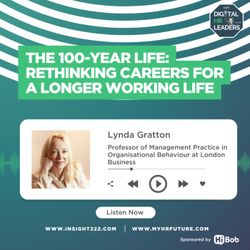
283. The 100-Year Life: Rethinking Careers for a Longer Working Life
56:22||Season 57, Ep. 283If you knew you might live to 100, how differently would you think about the career you are building today? Lynda Gratton is Professor of Management Practice in Organisational Behaviour at London Business School, where she's taught for more than thirty years and leads the world's number one ranked programme in human resources. Lynda is also the bestselling co-author of the million selling The 100-Year Life. Ahead of the publication of her new book, Living the 100-Year Life: How to build a career that lasts and a life you love, Lynda joins David to explore why longer lives are stretching the traditional education, work and retirement model to breaking point, and what this means for individuals and organisations. In this episode, David and Lynda discuss: The eight threads Lynda believes can help us build resilient and fulfilling working lives, and why calm is becoming increasingly important Why “amplification”, our relationship with technology and AI, is one of the eight threads we need to manage deliberately How AI is reshaping work at the level of tasks, and what that means for the careers we build Why career architectures, mobility and development models designed for shorter, more predictable working lives need to evolve How organisations can help people navigate repeated transitions across careers that could span 50 or 60 years Ultimately, this is a conversation about longevity, technology and human agency, and how individuals and organisations can make the extra years we have been given count. This episode is sponsored by HiBob. HiBob brings HR, Payroll, and Finance together into a single platform that employees actually use. With AI throughout, you move faster, work smarter, and empower your people to power your business. Sapient Insights recognises HiBob’s AI vision, citing the Bob AI Companion for making everyday work faster and easier. Fosway Group also names HiBob a 2025 9-Grid™ Core Leader, recognising the strongest AI vision among Core Leaders. HiBob. All-in-one HCM for HR, Payroll, and Finance. Learn all about HiBob’s modern HR platform hereResources: Living the 100-year old Life: How to build a career that lasts and a life you love