Share
Dialogue Works
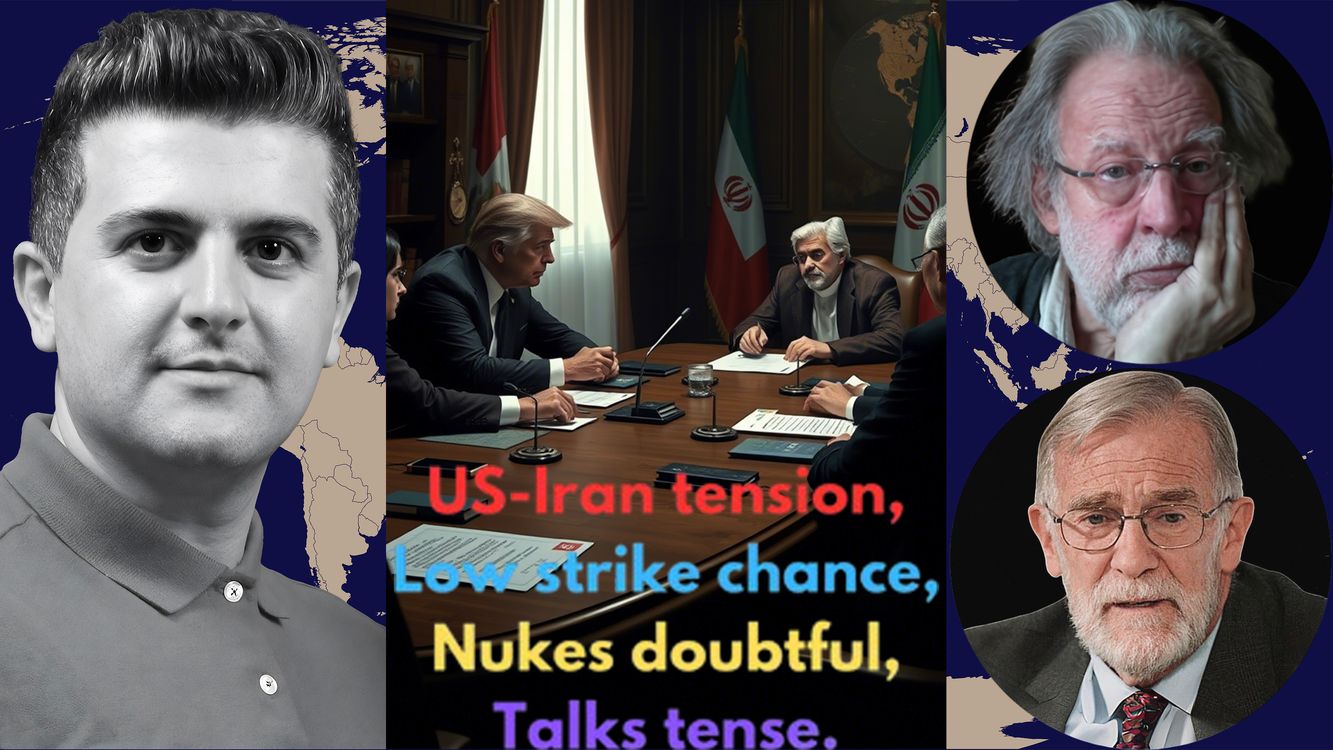
Ray McGovern & John Helmer: The Death of an Empire, Iran Could Finish What Others Started
•
US unlikely to strike Iran; nuclear threat overstated; diplomacy limits prevail.
Nima Rostami Alkhorshid:
- What is the likelihood of the U.S. launching a direct strike on Iran's nuclear facilities?
- How credible are reports that Iran is developing nuclear weapons?
- Can Russia effectively mediate between Israel and Iran to de-escalate tensions?
- Is the Trump administration likely to prioritize regional stability over regime change in Iran?
- How significant is China’s role in countering U.S. influence in the Persian Gulf?
John Helmer:
- The U.S. is unlikely to launch a direct strike due to risks of escalation and lack of international support.
- Reports about Iran developing nukes are largely unfounded; intelligence confirms no active weapon program since 2003.
- Russia could mediate, but its public stance avoids direct confrontation with the U.S., limiting effectiveness.
- Trump appears more focused on projecting strength than long-term stability, increasing unpredictability.
- China’s role is strategic but limited by reluctance to deploy military force in the region.
Ray McGovern:
- Direct strikes remain possible under Trump, but internal and global pushback makes it unlikely.
- Claims about Iran’s nuclear ambitions are often exaggerated or politicized to justify aggression.
- Russia has mediation potential but must balance ties with both sides without triggering conflict.
- Regime change remains a covert priority despite short-term rhetoric favoring diplomacy.
- China prefers economic leverage over military action, making its role supportive but not decisive in the Gulf.
More episodes
View all episodes

BREAKING: U.S. & ISRAEL WEIGH DECAPITATION AND ENERGY STRIKES ON IRAN - w/ Fmr. CIA Larry Johnson
48:06|Tensions are boiling as a massive US and Israeli strike on Iran appears imminent, targeting leadership and energy infrastructure. With Russian forces evacuating Iranian nuclear sites and Tehran activating its decentralized "Death Hand" missile doctrine, the region braces for devastating retaliation. We analyze leaked reports revealing severe damage to US military bases across the Middle East from recent Iranian counter-strikes. Plus, we break down the global economic fallout: soaring oil and diesel prices are crippling US farmers and pushing Europe toward recession. Finally, we discuss shifting Starlink policies and Ukraine that threaten to escalate the conflict with Russia. Will economic consequences force a last-minute reversal? Tune in for the full geopolitical breakdown.
Robert Barnes: BREAKING: West Asia on the Brink of a New Massive War
48:02|With reports of impending strikes on Iran, the political fallout for the upcoming midterm elections is reaching a boiling point. This interview breaks down the historic voter betrayal over broken "no new wars" promises, predicting a devastating political bloodbath for the ruling party.We explore the drastic shift in American public opinion against endless foreign conflicts and the declining influence of foreign lobbies. Plus, an inside look at the sudden shift in Ukraine policy, driven by the tech and AI sectors' desperate need for lower energy costs.Discover how the massive disconnect between the political elite and everyday Americans is reshaping US foreign policy.
BREAKING: U.S. & ISRAELI FIGHTER JETS SIMULATE ATTACK ON IRAN OVER IRAQ - w/ Andrei Martyanov
56:30|Tensions in the Middle East are escalating with reports of joint military maneuvers and potential strikes on Iran. This analysis exposes the severe limitations of Western military logistics, air defense vulnerabilities, and the strategic miscalculations driving current foreign policy. With the Strait of Hormuz at risk and global oil markets on the brink, we examine the shifting global balance of power, the decline of Western military dominance, and the consequences of an empire in overreach. What happens when superpowers bluff? Tune in for an unfiltered look at the modern military-industrial complex and the inevitable shift toward a multipolar reality.
BREAKING: Ansarallah Strikes Saudi Defense Ministry HQ & ARAMCO - w/ Richard Wolff & Michael Hudson
01:04:59|This episode analyzes the escalating Middle East crisis as Yemeni forces strike Saudi oil and defense infrastructure, signaling long-term global energy disruptions. With oil prices surging, US policy scrambles to redraw global spheres of influence. Meanwhile, Europe faces severe economic decline, losing its historical pillars and resorting to extreme militarization. We also explore the West's suffocating financialized economy and recent European left-wing proposals to cancel sovereign debt. Is this a mere accounting trick or a vital step toward addressing the crushing burden of private debt? Ultimately, we discuss how the Global Majority continues to challenge the declining Western empire amid a historic geopolitical and economic shift.
BREAKING: Ansarullah Strikes Saudi Oil Field as U.S. Reportedly Bombs Iran-w/ Fmr. CIA Larry Johnson
53:03|Middle East tensions are reaching a boiling point. In this interview, we break down alarming reports of U.S. and Israeli military strikes and the immediate evacuation of embassies and bases across the Gulf. With jets in Iraqi airspace and oil prices spiking, experts warn of massive retaliation from Iran. We analyze the vulnerabilities of regional air defenses, the fallout of a prolonged conflict, and the political motivations driving this escalation. Will diplomacy hold, or is the region on the brink of all-out war? Tune in for a deep dive into the military realities and economic impacts on the Strait of Hormuz.
Matthew Hoh: BREAKING: U.S. Strike Reportedly Targets Iranian Anti-Ship Missile Launcher
43:26|Tensions in the Middle East are boiling over amid reports of imminent US and Israeli strikes on Iran. With embassy evacuations ordered across the Gulf, this episode breaks down the reality of Israel's military capabilities, the vulnerabilities of Western air defenses against Iranian missiles, and the political calculations driving a potential war restart. We also explore the devastating global economic fallout: soaring oil prices, disrupted shipping in the Strait of Hormuz, and an impending winter energy crisis. Finally, we analyze the broader geopolitical chessboard, including Russia's evolving role and the domestic political motivations behind escalating conflicts. Tune in for an unfiltered look at the realities of a regional war and its worldwide consequences.
Patrick Henningsen: BREAKING: WSJ: 23 Million Barrels of Oil Flow Through Hormuz Every Day
01:10:25|Discover the hidden geopolitical and economic realities shaping the Middle East. We expose the disinformation surrounding the Strait of Hormuz, revealing how manipulated oil futures hide a devastating global energy crisis and severe fuel shortages. The discussion unpacks the true drivers of regional conflicts, highlighting how Western and Israeli agendas use false pretexts to justify endless wars. We also analyze the reliance of Gulf states on paid mercenaries to fight resilient resistance movements like Ansar Allah in Yemen. Finally, we explore the shifting balance of power, the decline of US hegemony in West Asia, and the enduring spirit of regional resistance. Tune in for an unfiltered look at the hard facts of global geopolitics!
BREAKING: NETANYAHU SAYS ISRAEL IS READY TO "FINISH THE JOB" IN IRAN - w/ Lt. Col. Anthony Aguilar
59:07|With Israeli and US elections looming, the threat of renewed kinetic war between Israel, the US, and Iran is rapidly escalating. Despite rhetoric about deploying massive bombs like the MOAB and GBU-57 against Iran's nuclear sites, analysis reveals these weapons are ineffective against deeply buried targets and pose severe delivery risks. Meanwhile, Iran's advanced, maneuverable missiles threaten to overwhelm critically depleted US and Israeli air defenses, including THAAD and the Iron Dome. Furthermore, claims that Persian Gulf oil exports have surpassed pre-war levels mask an unsustainable reality; Iran still holds strategic leverage over the Strait of Hormuz. As leaders face upcoming elections, the region braces for devastating escalation driven by political survival.
Laith Marouf: BREAKING: Ansarallah Forces Cross Into Saudi Arabia's Jizan Province
46:02|The Middle East is on the brink of massive escalation. This analysis breaks down collapsing Saudi military capabilities as Yemeni forces advance toward the borders of Jizan and Najran, exposing the regime's reliance on foreign troops. We explore the severe risks for Egypt if it enters the conflict, including devastating threats to the Suez Canal. Plus, the illusion of GCC divisions shatters as regional powers unite, while Hezbollah takes a confrontational stance against the Lebanese government. Will a full-out regional war erupt?