Share
Dialogue Works
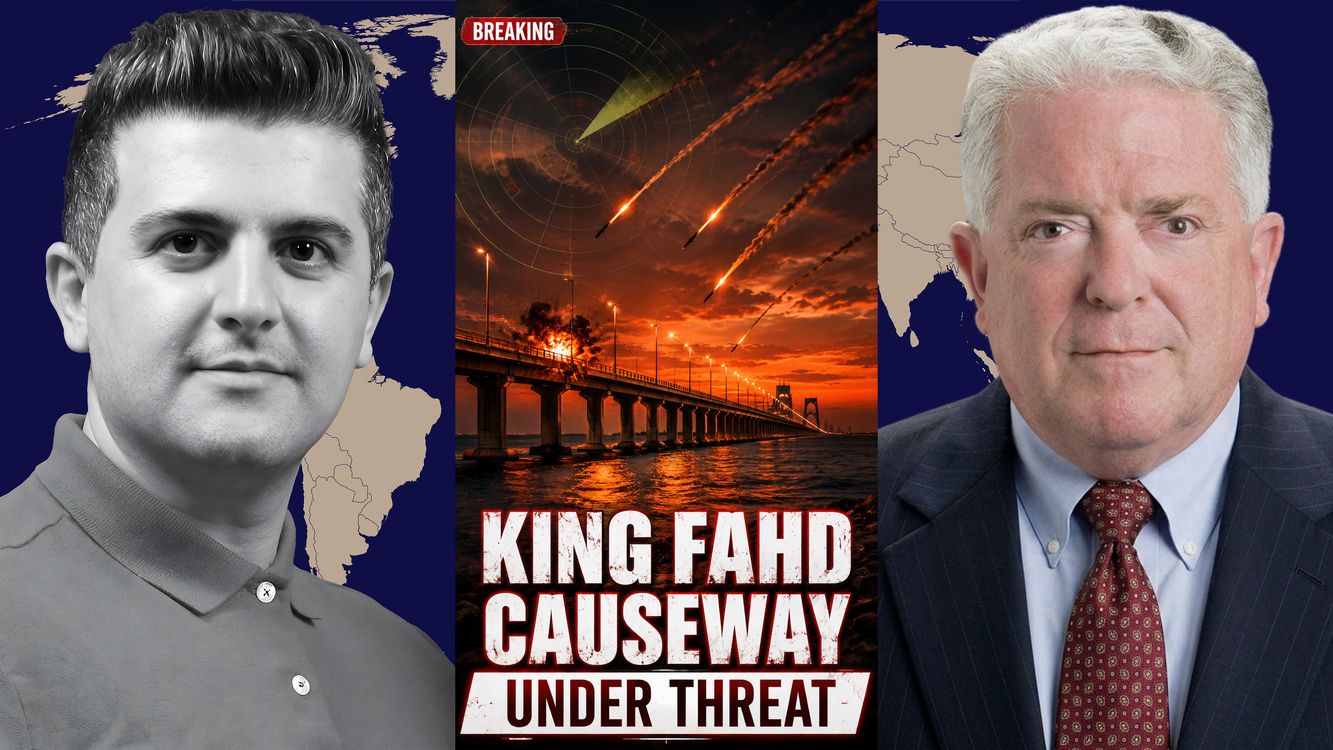
Amb. Chas Freeman: Iran Targets Key Saudi-Bahrain Bridge After U.S. Attacks on it's infrastructures
•
This interview analyzes the escalating military conflict between the US and Iran, and its dangerous spillover into Gulf nations. With diplomacy collapsed, US strikes on Iranian infrastructure have prompted retaliation against US bases and critical civilian facilities, like oil and desalination plants, in host countries. The discussion highlights the unsustainable nature of this escalation, the looming global energy crisis from blockades in the Strait of Hormuz and Red Sea, and the severe risks of targeting civilian infrastructure. Ultimately, the conversation explores how this war of attrition may force a US military withdrawal from the region, paving the way for a new, independent West Asian security and economic architecture.
More episodes
View all episodes
Nima R. Alkhorshid: Iran Torpedoes Trump-Backed Deal Brokered by Pakistan
30:01|Dive into the latest geopolitical tensions in West Asia! This video breaks down renewed US economic pressure aimed at isolating Iran and the coordinated diplomatic moves in the region. We explore Iran’s firm stance: no negotiations without preconditions like lifting sanctions, releasing frozen assets, and halting regional conflicts. Discover Iran’s strategic leverage over the Strait of Hormuz, the shifting dynamics among GCC nations, and why a diplomatic stalemate persists. Will maximum pressure work, or is the region heading for further escalation? Watch now to understand the complex reality of Middle East security.
Larry Johnson: US Targets Iran’s Oil Network as Tehran Sets Sights on American Regional Assets
39:34|In this eye-opening interview, we break down why US sanctions on Iran are failing. Discover how Iran’s strong economic ties with China and Russia have neutralized Washington's pressure campaigns. We explore Iran's rejection of a US-backed peace proposal, Pakistan’s historic visit to Tehran to propose a new regional security alliance, and the crumbling of US strategic influence. Learn why secondary sanctions are ineffective, the hidden limitations of the US military-industrial complex, and how the Middle East is reshaping its own security architecture without Western interference.
Col. Larry Wilkerson: Iran Abandons Defense Strategy as US Unleashes Economic Blitzkrieg
01:06:25|Discover a deep dive into the failures of US economic warfare and sanctions against Iran, drawing stark historical parallels to past geopolitical miscalculations. This discussion reveals how punitive measures often harm civilians while pushing targeted nations closer to China and Russia. We explore the shifting dynamics in West Asia, where regional powers are increasingly seeking unity and new alliances in response to current US and Israeli policies. The conversation also critiques the state of the US military, the financial motives driving foreign policy, and the global pivot toward China’s developmental model over American sanctions. A must-watch for understanding the rise of a multipolar world.
Paul Craig Roberts: The US Decline Is Accelerating: Trump Just Trapped America In A New Quagmire
57:10|Explore the shifting geopolitical landscape in West Asia. This interview analyzes the US transition from military to economic warfare against Iran as an exit strategy from failing conflicts. We discuss the potential emergence of a powerful regional alliance involving Iran, Turkey, Saudi Arabia, and Pakistan, which could counter Israeli expansion and end US hegemony in the Middle East.The conversation also covers the declining influence of the Israel lobby in US politics, the unsustainable $40T US national debt driven by the military-industrial complex, and the risk of de-dollarization due to aggressive sanctions. Finally, we touch on rising US-Canada tensions and erratic diplomatic behavior stemming from foreign policy frustrations.
Col. Jacques Baud: US Declares "Largest Ever" Financial War as Tehran Vows Full Retaliation
53:40|This interview analyzes the escalating US-Iran tensions and the broader collapse of Western diplomacy. It argues that the US has abandoned traditional negotiation for "gunboat diplomacy," relying on sanctions and threats without clear strategic goals. The discussion highlights how the Middle East conflict is driven by a security doctrine that depends on regional instability. It also examines the complex dynamics involving Turkey, Syria, the Kurds, and emerging regional alliances. Ultimately, the conversation concludes that lasting peace and security can only be achieved by returning to genuine diplomatic processes, respecting international law, and establishing recognized borders rather than pursuing endless confrontation.
Larry Johnson: Iran’s Parliament Agency DROPS BOMBSHELL: “We Were Invited to Join the Mecca Pact”
49:28|This interview examines the escalating economic and geopolitical confrontation surrounding Iran, including reports of a potential Muslim defense alliance and Iran’s possible role in it. The discussion explores U.S. pressure on Iran and neighboring Gulf states, China’s support for Tehran, and Pakistan’s strategic dependence on Iranian oil and gas. It also covers growing tensions between the U.S. and its allies, rising American debt, Germany’s energy crisis, the Ukraine conflict and Starlink, and worsening tensions between Turkey and Israel. The conversation ultimately questions whether U.S. foreign policy is weakening Washington’s global influence while pushing other countries closer together.
Stanislav Krapivnik: Putin Vows to Target Ukraine’s 'Vulnerable' Food Exports
49:12|In this eye-opening interview, we break down the harsh geopolitical and economic realities of ongoing global conflicts. Discover how the targeting of Ukraine’s agriculture and ports is triggering a severe backup plan failure for Europe, risking mass starvation and economic collapse. We also expose the illusion of US economic revival, detailing how unpredictable tariffs and a $40 trillion national debt are actively crippling American manufacturing. Finally, we examine why Western sanctions are failing against the rising Eurasian bloc and how Europe’s flawed energy policies are setting the continent up for a devastating winter. A must-watch for unfiltered global analysis!
Ray McGovern: Israel’s Clash With Two Major Armies Signals Its Worst Defeat Yet
53:06|In this revealing interview, we dive into the escalating conflicts in West Asia, including Israel's recent strikes near the Turkish border and expanding tensions with Iran. We analyze the current US administration's ineffective economic sanctions, deep-state influences on foreign policy, and the alarming risks of nuclear escalation.The discussion also covers the Russia-Ukraine war, highlighting the failure of recent peace summits and Russia's strategic battlefield advances. Finally, we examine the Vatican's potential role in global diplomacy and the urgent need to broaden presidential advisors to avert catastrophic wars.
Nima R. Alkhorshid: Iran’s Top General Reveals Retaliation Plan for Trump’s D-Day
51:06|Discover how West Asia is reshaping its security architecture amid escalating US economic warfare against Iran. As financial pressure mounts, Iran is actively securing neutrality agreements with neighboring nations, including GCC states, Pakistan, and Afghanistan. This video breaks down the emergence of a new regional defense pact involving Saudi Arabia, Turkey, and Pakistan, heavily influenced by the expanding BRICS framework. Just as BRICS helped Russia withstand Western sanctions, this multipolar alliance aims to build an alternative to US-dominated financial and security systems. We also analyze the roots of endless regional conflict, arguing that true peace and prosperity in West Asia depend on ending occupation and fostering independent, cooperative regional alliances.