Share
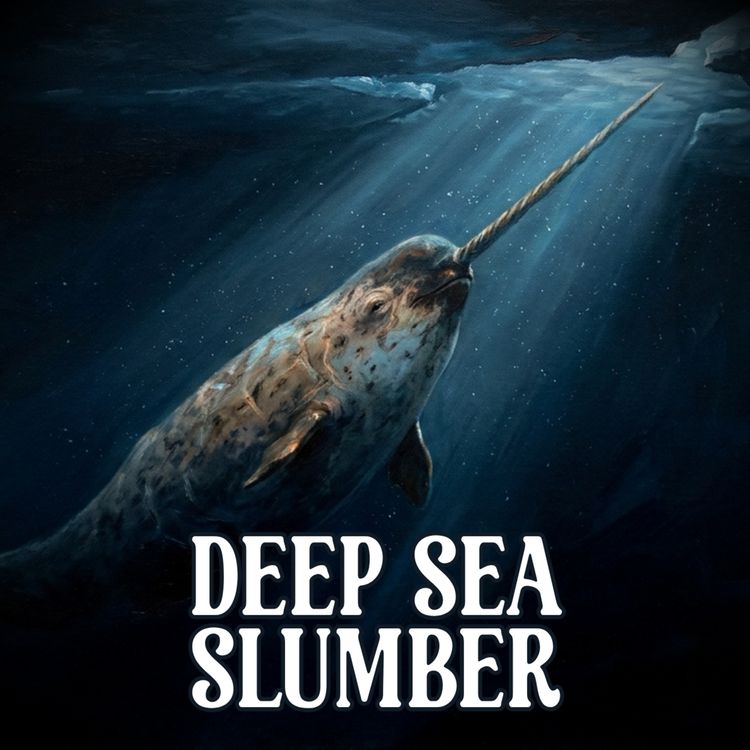
Deep Sea Slumber
Narwhal Facts for Sleep | The Whale That Made the World Believe in Unicorns
Somewhere in the high Arctic, beneath a ceiling of ice that shifts without warning, a pale whale moves through water so cold and so dark it would end a human life in minutes. It has lived here for millions of years. It carries a single spiral tooth through its face, reaching two meters ahead of it into the cold, and the world once called this tooth a unicorn horn and paid gold for it. The animal kept swimming, entirely unaware it had become a legend.
🌊 In this episode:
• The narwhal's spiral tusk: its structure, sensory function, and centuries of trade as supposed unicorn horn
• A body built for cold and depth: blubber architecture, dive physiology, and how narwhals survive pressure other mammals cannot
• Life beneath ice: reading breathing holes, navigating leads, and what the ceiling looks like from below
• Sound in total darkness: how narwhals use echolocation to navigate and hunt in water with no light at all
• Migration along invisible roads: the seasonal routes narwhals learn from their mothers and carry for life
• A Day in the Life: one full Arctic day, from the first surface breath to rest in the quiet dark beneath the ice
Let the cold water carry you north tonight. The narwhal does not hurry through its world. Neither will you.
Perfect for falling asleep, unwinding, or anyone curious about ocean life.
🔔 Subscribe for more: @DeepSeaSlumber
#narwhal #sleepdocumentary #arcticanimals #deepsea
More episodes
View all episodes
The Mariana Trench Explained | The Creatures That Live Eleven Kilometers Down
03:59:27|Eleven kilometers below the surface of the Pacific Ocean, the seafloor drops away into the deepest known place on the planet. No sunlight has ever reached it. The pressure there would collapse most structures humans have ever built. And yet life continues in that darkness, not by hardening against the weight, but by softening into it.🌊 In this episode:• How the hadal snailfish survives crushing pressure by becoming soft, flexible, and chemically tuned to the abyss• The amphipods that arrive in crowds where marine snow lands, turning scarcity into a brief abundance• Xenophyophores: single cells that grow large enough to build architecture, raising fragile houses from gathered sediment• The molecular chemistry inside hadal shrimp that keeps proteins folded where most bodies would fail• A full Day in the Life of a dumbo octopus drifting on slow fin-beats above the abyssal plainThe trench has been here for millions of years. It is patient in a way that most things are not. You can let it carry your attention somewhere very deep, very still, and very far from anything that needs to be solved tonight.Perfect for falling asleep, unwinding, or anyone curious about ocean life.🔔 Subscribe for more: @DeepSeaSlumber#MarianaTrench #SleepDocumentary #DeepSea #OceanDocumentary
Blue Whale Facts for Sleep | The Largest Animal to Have Ever Lived on Earth
03:09:45|The blue whale is the largest animal to have ever lived on Earth. Larger than any dinosaur, heavier than anything most minds reach for when trying to picture a living creature, it moves through cold open water with the kind of patience that belongs to something built not for speed but for distance. It breathes air, nurses its young, and crosses entire ocean basins guided by sound, season, and the slow certainty of a body that has been doing this for a very long time.🌊 In this episode:• The biology of a body scaled beyond ordinary imagination, including a heart weighing hundreds of pounds and a tongue as heavy as an elephant• How the blue whale feeds, lunging into dense swarms of krill and filtering the ocean through long curtains of baleen• The science of blue whale migration, the seasonal routes connecting polar feeding grounds to warm calving waters across entire ocean basins• How blue whales communicate through low, slow calls that can carry through vast stretches of dark water• A Day in the Life, following a blue whale from its first breath at dawn through a full day of feeding, travel, and rest in the deepSomewhere far below any surface you can see, the largest life on Earth is moving through the dark with a patience that has no need for hurry. Let it carry you down.Perfect for falling asleep, unwinding, or anyone curious about ocean life.🔔 Subscribe for more: @DeepSeaSlumber#BlueWhale #SleepDocumentary #OceanDocumentary #WhaleDocumentary
Gulper Eel Facts for Sleep | The Deep Sea Fish That Became a Mouth
02:27:00|Somewhere between a thousand and three thousand meters below the surface, in water that has never seen the sun, a long and patient creature drifts. Its most notable feature arrives first: a mouth that opens wider than the body behind it, hinged loose and vast, built for a world where meals arrive without warning and may not come again for days.The gulper eel is not trying to look strange. It is trying to survive. And everything about it, the jaw, the elastic body, the faint red light trailing at the end of an improbably long tail, is the answer to the same question: how do you live in a place that gives you almost nothing?🌊 In this episode:• The mechanics of the gulper eel's hinged jaw: why it opens wider than the body it belongs to, and how loose articulation replaced precision as the dominant feeding strategy• The elastic body and expandable stomach, capable of accommodating prey nearly the size of the eel itself, and what this reveals about survival in conditions of extreme scarcity• Life in the deep: pressure, perpetual cold, near-total darkness, and how the gulper eel's every adaptation is a direct answer to those conditions• The bioluminescent tail organ: why it glows red in a world where red light is functionally invisible, what it may lure, and what it may signal• A Day in the Life: drift alongside the gulper eel through black water, feeling the cold and the pressure, the long patient intervals and the rare moment when the jaw falls openLet your body settle into the dark tonight. Something thin and ancient is drifting just ahead, trailing its small red light through water that has held its kind for longer than there are words for. You don't need to go anywhere. Just let the current carry you.Perfect for falling asleep, unwinding, or anyone curious about ocean life.🔔 Subscribe for more: @DeepSeaSlumber#GulperEel #DeepSea #SleepDocumentary #Bioluminescence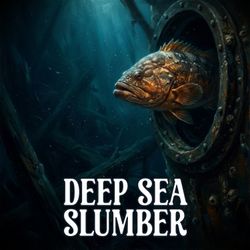
Shipwreck Reef Facts for Sleep | How the Ocean Turns Sunken Ships Into Living Worlds
02:19:30|A ship stops being a ship long before anyone notices. The water moves through the hatches. The hull settles into the sand. And the ocean, without any ceremony, begins to consider what it has been given.🌊 In this episode:• How a sunken vessel transforms into one of the sea's most productive ecosystems• The physics of sinking, settlement, and how a ship's angle shapes the entire reef• The first arrivals: the bacteria, larvae, and early colonizers that build the foundation• Who hides in the corridors, who grazes the outer hull, and who circles in the open blue• A Day in the Life drifting through the living interior of a mature shipwreck reefLet the wreck carry you down. The corridor goes somewhere quiet, and the sediment on the floor has not been disturbed in years.Perfect for falling asleep, unwinding, or anyone curious about ocean life.🔔 Subscribe for more: @DeepSeaSlumber#SleepDocumentary #OceanDocumentary #DeepSeaSleep #ShipwreckDocumentary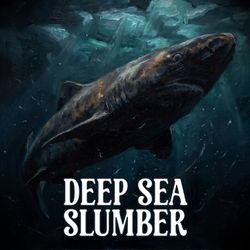
Greenland Shark Facts for Sleep | The Vertebrate That Has Lived for 500 Years
02:29:58|In the deep fjords of the Arctic and the cold basins of the North Atlantic, there is a shark that does not hurry. It moves at roughly the pace of a slow walk, in water near freezing, at depths where most animals would fail. Some of the individuals alive in these waters today entered the ocean before certain nations existed. They are the longest-lived vertebrates known to science.🌊 In this episode:• The body built for cold: how TMAO antifreeze chemistry, an oil-rich liver, and small fins make this shark perfectly suited to near-freezing water and enormous pressure• A lifespan measured in centuries: the radiocarbon dating method that revealed some individuals may be 400 years old or more• The slowest giant: why one kilometer per hour is not a flaw but a precise answer to life in the Arctic deep• Life beneath the ice: the vertical migrations, fjord habitats, and sub-ice passages that define this shark's range across the North Atlantic and Arctic• The food web role: how this ancient opportunist processes deep-sea carrion, finds fish in total darkness, and quietly shapes the northern ecosystem• Day in the Life: a slow passage through the Arctic dark, following the shark through cold water, along the seafloor, and into restLet your thoughts slow the way deep water slows everything. The cold holds this shark without asking anything of it, and tonight, it holds you too.Perfect for falling asleep, unwinding, or anyone curious about ocean life.🔔 Subscribe for more: @DeepSeaSlumber#GreenlandShark #SleepDocumentary #DeepSeaSleep #SharkFacts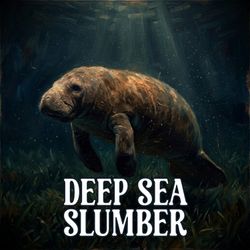
Manatee Facts for Sleep | The Mammal That Went Back to the Sea 50 Million Years Ago
02:25:17|Somewhere in a shallow, sun-warmed bay, a creature the size of a small car drifts over a bed of seagrass, its heavy bones holding it perfectly still in the water column without effort. The manatee has persisted in warm coastal water for over fifty million years. In all that time, its answer to nearly every challenge has stayed the same: find warmth, find plants, and continue.🌊 In this episode:• How the manatee's dense bones and horizontal lungs create effortless neutral buoyancy in the water column• A 150-pound-a-day diet: how a herbivore the size of a small car sustains itself on aquatic plants alone• Breathing while sleeping: the mechanics of a 20-minute dive and how the body manages air without waking• Polyphyodont dentition: the manatee's jaw continuously grows and replaces its own molars throughout its lifetime• Evolutionary kinship with the elephant and 50 million years of sirenian history• A full Day in the Life: one manatee from dawn grazing through warm-spring rest at nightfallTonight you drift in shallow, warm water. The seagrass sways below you. The surface is always there when you need it. Let your body settle into the warmth, and let the water hold the rest.Perfect for falling asleep, unwinding, or anyone curious about ocean life.🔔 Subscribe for more: @DeepSeaSlumber#manatee #sleepDocumentary #oceanDocumentary #deepsea #factsForSleep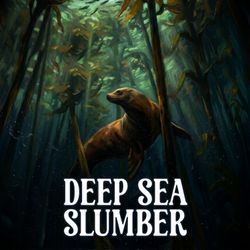
The Kelp Forest Explained | Built From Algae, Taller Than Buildings, Home to Thousands
02:05:19|Off cold and rocky coastlines, just beneath the surf, a forest rises. Not from wood or roots — from algae, gripping bare stone, inflating itself upward on pockets of air, building a thirty-meter canopy in water so cold and rich it belongs to a different world than the calm sea at the surface. This is where some of the most productive life on Earth has been quietly running, hidden beneath ordinary-looking water.🌊 In this episode:• How giant kelp builds a forest without wood, roots, or soil — and grows two feet in a single day• The cold water upwellings that feed the forest from depth• Life in the vertical city: the holdfast zone, the midwater corridors, and the sunlit canopy• Sea otters, sea urchins, and the trophic cascade that quietly holds it all together• A full drift through the kelp forest from first light to darkLet yourself settle into it now. The stipes are bending in the current, the canopy is filtering everything green, and somewhere in the quiet holdfast zone below, something has been waiting in exactly this kind of dark for a very long time.Perfect for falling asleep, unwinding, or anyone curious about ocean life.🔔 Subscribe for more: @DeepSeaSlumber#KelpForest #OceanDocumentary #ScienceForSleep #DocumentaryForSleep #MarineBiology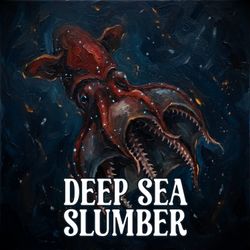
Vampire Squid Facts for Sleep | Neither Squid Nor Octopus and Older Than Both
02:25:25|The vampire squid is not actually a squid. It isn't an octopus either. It belongs to its own order entirely, drifting alone in the oxygen minimum zone at depths where the water holds so little dissolved oxygen that most animals would simply fail. It has been doing this, in some form, for hundreds of millions of years.🌊 In this episode:• The oxygen minimum zone and how the vampire squid's blood is built to live there• Its place in the cephalopod family tree, older than the split between squids and octopuses• The largest eyes relative to body size of any animal on Earth, and what they look for in near-total darkness• Bioluminescent photophores, the pineapple posture, and glowing mucus as a living decoy• How the vampire squid feeds on marine snow rather than hunting, using retractile filaments to gather what the ocean lets fall• A Day in the Life: drifting as a vampire squid through the midnight waterLet the cold and the dark hold you for a while. Somewhere below the sunlit ocean, something ancient and soft moves through water with almost no breath, gathering what falls, carrying a body no other animal has ever had.Perfect for falling asleep, unwinding, or anyone curious about ocean life.🔔 Subscribe for more: @DeepSeaSlumber#VampireSquid #DeepSea #DeepSeaCreatures #OceanFacts #MarineBiology