Share
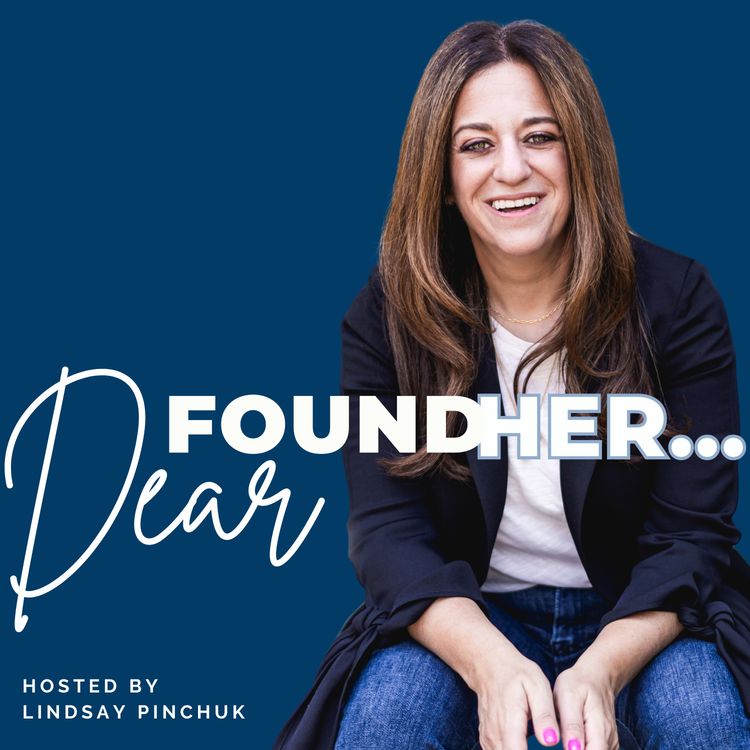
Dear FoundHer...
Partnership Marketing Part 2: 30+ Ideas for Simple Partnerships to Ignite Your Brand
Today Award-Winning Entrepreneur and Host of Dear FoundHer...Lindsay Pinchuk shares 30+ ideas for partnerships that you can apply to your own business for growth and success.
Lindsay built her first company on the foundation of partnership marketing, and is now building her second the same way. Use her exact ideas and strategies and apply them to ignite your own brand.
Grab the full list of 30+ Ideas for Simple Partnerships here.
IGNITE YOUR BRAND THROUGH EASY TO EXECUTE, COST-EFFECTIVE COLLABORATIONS
If you want to join Lindsay at any of her live and in-person FoundHer Fridays events, make sure you sign up here to get first dibs on registration.
SPACE IS LIMITED.
Please don't forget to leave a rating or review wherever you podcast: http://www.ratethepodcast.com/dearfoundher.
You can now work with Lindsay 1:1 to ignite your brand. Fill out the form here and set up a FREE 30-minute consultation.
Don't forget to follow Lindsay on Instagram: https://www.instagram.com/lindsaypinchuk and Dear FoundHer... on Instagram: http://www.instagram.com/dearfoundher/
More episodes
View all episodes

374. My Breast Cancer Wasn’t Found on a Mammogram: Dense Breasts, a Breast MRI, and Advocating for Yourself
26:19||Season 6, Ep. 374Her mammogram ended with “see you in a year.” She felt nothing. Yet a few months later, Lindsay Pinchuk was diagnosed with stage 0 breast cancer. The cancer wasn't detected by a mammogram or an ultrasound. It was a breast MRI, ordered because of her dense breast tissue, that led to the diagnosis. On this solo episode of Dear FoundHer, Lindsay, an award-winning entrepreneur and host of the show, answers the questions she's received since sharing her diagnosis.Lindsay has category D breast density, the highest classification, which can make cancer harder to detect on a mammogram. At a routine annual visit, her OB-GYN ordered a baseline breast MRI, even though there was no immediate concern. That MRI found something her mammogram hadn't. Lindsay shares how easily her diagnosis could have been missed. A test no one required. Results that still weren’t in her chart on the date they were due. An ultrasound that couldn’t find the spot and a doctor who said it was probably nothing but still recommended an MRI-guided biopsy.This is a real lesson in advocating for yourself at the doctor. Lindsay shares the moment she stopped being polite with a scheduler and pushed for a sooner biopsy. She also talks through why she chose a double mastectomy and what her follow-up care looks like now.For women in business who routinely put their own health on the back burner for a launch or a busy month, Lindsay shares four things she wants every woman to do. Press play to hear them and learn the one question to ask your doctor before you assume a mammogram is enough.Episode Breakdown:00:00 Lindsay’s Stage 0 Breast Cancer Diagnosis Recap02:21 Dense Breast Tissue and a Clean Mammogram04:37 Ordering a Breast MRI for Dense Breasts06:58 The MRI Appointment She Almost Pushed Back09:22 The MRI Results She Never Received Directly11:48 Federal Law and an Ultrasound That Missed It14:06 “It’s Probably Nothing” and Pushing for a Biopsy16:28 The Diagnosis Call and Every Near Miss18:48 Why She Chose a Double Mastectomy21:00 Four Steps to Protect Your Own HealthConnect with Lindsay:Follow Lindsay on InstagramFollow Dear FoundHer on InstagramPodcast production and show notes provided by HiveCast.fm373. My Breast Cancer Story, Part 1: Stage 0 (DCIS), a Double Mastectomy, and Cancer-Free
26:13||Season 5, Ep. 373You never think it's going to be you until it is. On September 1st, 2026, award-winning entrepreneur Lindsay Pinchuk got the call that started her own stage 0 breast cancer story. The DCIS diagnosis came five days before her daughter's bat mitzvah, and within a day she had a surgery date before she even had a surgery plan.In this episode of Dear FoundHer, Lindsay opens with the ending. She is cancer-free and needs no further treatment. Then she takes you back through the three options her surgeons put on the table, the decision-making that led her to one surgery over two, and the four words she whispered the moment she woke up. She is clear that her choice was right for her and that it's a decision each woman makes with her own doctors. Her double mastectomy recovery update is honest, and she does not sugarcoat it.Motherhood and entrepreneurship collided the week of her surgery, when she flew to Philadelphia for a speaking engagement before she told her girls. If you have ever wondered how to tell your kids you have cancer, Lindsay shares exactly what she said, word for word, and how she answered the question every parent dreads. It is the most personal part of her stage 0 breast cancer story.Women entrepreneurs will also get a simple three-part framework for how to share hard news, whether it's a diagnosis, a client you have to let go, or a change your team needs to hear. Press play, then send this episode to one woman in your life. It might be the nudge she needs to book the appointment she keeps putting off.Episode Breakdown:00:00 Lindsay Opens Her Stage 0 Breast Cancer Story03:50 The Breast MRI and the Phone Call08:25 A Surgery Date Before a Surgery Plan10:39 Three Surgical Options and One Silver Lining12:22 Why She Chose a Double Mastectomy14:16 How to Tell Your Kids You Have Cancer18:11 Waking Up to Plan A and Pathology20:25 An Honest Recovery Update Three Weeks Out22:41 Fact, Plan, Outcome for Sharing Hard News24:15 One Ask Before Next Week's EpisodeConnect with Lindsay:Follow Lindsay on InstagramFollow Dear FoundHer on InstagramRead more of Lindsay's story on her Substack, The FoundHer Files: http://foundherfiles.substack.comPodcast production and show notes provided by HiveCast.fm372. How This Founder’s Visibility Held Up After She Paused Ads
45:41||Season 5, Ep. 372Join host, Lindsay Pinchuk, LIVE for our 21-day Partnership Sprint starting October 12th. You'll build the exact partnership strategy she used to grow and sell her first company. No hacks, no algorithms, just the relationships that actually move a business forward. Founder visibility does not always come from doing more. For artist Erin Rothstein, it came from doing less herself and letting her team carry more of the work.On this episode of Dear FoundHer, host Lindsay Pinchuk talks with Erin Rothstein, founder of her namesake art company and an artist whose work now sells several thousand pieces a year. Erin built her business without a publicist or a strategy deck. She trusted instinct, kept a small, dedicated team, and changed direction whenever something stopped working. Her path offers real founder stories for anyone growing a business without a traditional roadmap.Erin explains why leaving the gallery system became a turning point rather than a loss, and what changed once she stopped answering to someone else's curation. She also walks through how prints entered her business, why she was initially hesitant, and what helped her finally move forward.The conversation covers social media strategy in a way that goes beyond posting advice. Erin describes her decision to pause ad spend entirely this year, and what that choice revealed about her customer base. She also talks about scaling responsibly with a team of about seven people who each have ownership over their own corner of the business. It’s a structure that allows Erin to step back from running every detail while still protecting the creativity and integrity behind her work.Press play to hear how Erin turned an art career into a business built on trust and knowing when to step back.Episode Breakdown:00:00 Erin Rothstein's Backstory in Art06:36 Leaving the Gallery System Behind10:39 Selling Her First Paintings and Early Sales13:49 Investing in Her Art Business Before COVID17:04 Adding Prints and Scaling Production21:42 Growth Numbers and Redefining Happiness28:53 Social Media, Ads, and Founder Visibility36:16 Building a Self-Directed Team40:02 Three Tips for Women Starting a BusinessConnect with Erin Rothstein:Follow Erin on InstagramVisit Erin’s websiteSubscribe to The FoundHer Files Follow Dear FoundHer on Instagram Podcast production and show notes provided by HiveCast.fm371. Simple Marketing Strategies That Built a Jewelry Brand Without Paid Influencers
46:16||Season 5, Ep. 371Join host, Lindsay Pinchuk, LIVE for our 21-day Partnership Sprint starting October 12th. You'll build the exact partnership strategy she used to grow and sell her first company. No hacks, no algorithms, just the relationships that actually move a business forward. Amy Goin and Laura Laing spent twelve years building Thatch Jewelry before growing to roughly 300 specialty stores and launching with Nordstrom, and they never paid a single influencer to get there. Their simple marketing strategies prove that real founder stories rarely follow a straight line, and that visibility can come from something as ordinary as sending the right gift to the right person.On this episode of Dear FoundHer, host Lindsay Pinchuk talks with Amy and Laura, co-founders of the jewelry brand Thatch, about growing a company that looks effortless from the outside.They explain how they used to slide into the DMs of women whose style they admired and offer them jewelry with no strings attached, a tactic they still credits for early brand awareness.They talk through the pressure of scaling a business during COVID, when a primarily wholesale business suddenly saw online demand explode and had to rethink production to keep up. They open up about watching cheap dupes of their hand-carved gemstones flood the market, and how they’re deciding which battles are worth fighting. For female founders whose businesses are growing more slowly than they hoped, Amy and Laura offer a clear reminder that patience and consistency still work.Listen to hear how two artists turned a struggling small operation into a brand carried in hundreds of stores, and why they still believe the best marketing costs nothing but a little generosity.Episode Breakdown:00:00 Meet Thatch Jewelry's co-founders03:46 How a jeweler and consultant became co-founders08:31 Building their first signature collection12:00 COVID turns into their growth moment16:39 What Thatch jewelry actually stands for20:21 Facing knockoffs and cheap dupes24:50 Breaking down wholesale versus Nordstrom27:27 Simple marketing strategies without paid influencers33:11 Building a small, loyal team36:20 Advice for founders stuck in the middleConnect with Amy Goin and Laura Laing:Visit the Thatch websiteFollow Thatch on InstagramSubscribe to The FoundHer Files Follow Dear FoundHer on Instagram Podcast production and show notes provided by HiveCast.fm370. She Bootstrapped Her First Bag at a Dry Cleaner Before Getting Press
42:44||Season 5, Ep. 370Getting press rarely starts with a pitch. For Irene Chen, co-founder of Parker Thatch, it started years earlier with relationships she built long before she had a bag to sell.On this episode of Dear FoundHer, host Lindsay Pinchuk talks with Irene Chen about turning a stationery line called Iomoi into Parker Thatch, a founder story rooted in scrappy beginnings. Irene shares how she cut her first pattern with the woman who hemmed her pants and bought canvas at Joann's with a 50% off coupon.Bootstrapping forced Irene and her husband to figure out bag production from the ground up, despite Irene’s background in fashion and finance. She also explains how her friendship with Kate and Andy Spade helped shape two major turning points for the company, with Kate encouraging the move into leather and Kate and Andy pushing them to rethink the Iomoi name.Getting press came easier once those relationships were already in place. Earned media and word of mouth remain one of her biggest drivers of growth today, proof that building relationships in business and networking for women pay off years later. Publicity followed the story, not the other way around. Listen to hear how one friendship changed the direction of an entire company.Episode Breakdown:00:00 Meet Irene Chen, Co-Founder of Parker Thatch02:30 The Original Idea: E-Stationery Before the Web05:15 From Paper Goods to Home Products07:00 Cutting the First Bag Pattern at a Dry Cleaner09:30 Sourcing Fabric and Leather on a Shoestring Budget11:00 Getting Press Through Editor Relationships, Not Pitches12:26 How Kate Spade Sparked the Leather Pivot13:03 Renaming the Brand From Iomoi to Parker Thatch17:00 Keeping Customization Alive at Scale26:19 The Friendship With Kate Spade Beyond Business39:50 Three Pieces of Advice for New FoundersConnect with Irene Chen: Follow Parker Thatch on Instagram Follow Dear FoundHer on InstagramJoin the Dear FoundHer... ForumPodcast production and show notes provided by HiveCast.fm369. Getting Eyes on Your Small Business without a Publicist
15:55||Season 5, Ep. 369RSVP and join us on Thursday, September 10 for: Your Next Chapter on LinkedIn: Turn Your Experience, Expertise and Network Into OpportunityHost, Lindsay Pinchuk shares her personal journey with public relations, gaining visibility and the challenges small business owners face. She emphasizes that entrepreneurs can achieve visibility without a publicist by mastering the art of pitching and leveraging local and niche media. She provides a four-part framework for effective pitching, strategies for post-press engagement, and real-life examples of success.In this episode you'll find: The importance of owning your visibility foundationFour-part framework for effective pitchingStrategies for post-press engagement and leverageReal-life success stories of entrepreneurs landing press independentlyThe difference between earned and owned mediaHow to identify and target the right media outlets and contactsFor more follow us on Instagram @dearfoundher.Subscribe to The Foundher Files, our Substack, for more tips straight to your inbox every week.Join our networking community, The Dear FoundHer... Forum368. Bootstrapping a Business on a Car Loan and $2,000 From Mom
40:34||Season 5, Ep. 368Join the only networking community for women business owners 40+ now through September 3rd with the code SUMMER and save $200 Rachel Berliner built Amy's Kitchen for nearly 40 years without taking on a single outside investor. No outside investors, just a loan against her car, $2,000 from her mother, and a $10,000 bank loan. That is bootstrapping in its truest form, and it turned into a company whose products are sold in 57,000 stores today.On this episode of Dear FoundHer, host Lindsay Pinchuk talks with Rachel Berliner, co-founder of Amy's Kitchen, about what real founder stories look like once the funding rounds are stripped away. Rachel explains the decision-making behind her very first product and why she chose the best ingredients over the cheapest ones, even when it meant slower profit for the company.Rachel also walks through scaling responsibly, from the moment Publix came on board to the years spent building new plants and working with farmers to expand organic production enough to keep up with Amy's growth. She shares how the company approached sustainable business growth without ever taking on outside investors, and why her advice speaks directly to women business owners building at any stage of their journey.Press play to hear how a bootstrapping mindset turned a kitchen experiment into a private company still owned by her family, and the advice Rachel has for any founder who refuses to give up.Episode Breakdown:00:00 Community update and today's guest introduction03:58 Pregnant, bedridden, and craving real food12:30 First trade show and instant customer demand13:07 Losing their production partner and taking production in-house14:18 Bootstrapping the pot pie machine themselves17:55 The Publix meeting that changed everything22:20 Building new plants and scaling with farmers28:03 Letting go and building a leadership team34:10 57,000 stores and Walmart entry37:11 Advice for women founders just starting outConnect with Rachel Berliner:Follow Amy's Kitchen on Instagram Subscribe to The FoundHer Files Follow Dear FoundHer on Instagram Podcast production and show notes provided by HiveCast.fm367. From $8K to 100 Stores: Scaling a Business as a Female Founder
33:09||Season 5, Ep. 367Join the only networking community for women business owners 40+ now through September 3rd with the code SUMMER and save $200 Michele Henry turned an $8,000 investment into a $25 million clothing business, then walked away and started over with skincare. Her second company shows what scaling a business really looks like when you build it franchise by franchise, growing from a single facial bar in Edina to nearly 80 locations nationwide. On this episode of Dear FoundHer, host Lindsay Pinchuk talks with Michele Henry, founder and CEO of FACE FOUNDRIÉ, about the decisions that got her there.Michele explains how a five minute decision led her to sign a lease for her first facial bar just five minutes after selling her shares in her previous company. She breaks down the real estate approach that drove her expansion, and why she believes your first ten franchisees will define your brand.Michele and Lindsay get into managing rapid growth during COVID, why patience matters more than most founders expect, and the years it took Michele to find the right CFO, bookkeepers, and financial team. She speaks candidly about her goal of reaching 100 locations by the end of the year, and joining what she says is a small percentage of female founders who have reached that milestone.Press play to hear how Michele Henry built two businesses from the ground up and what she wishes she knew about scaling a business the first time around.Episode Breakdown:00:00 Meet Michele Henry, FACE FOUNDRIÉ Founder00:40 From Fashion Boutique to a $25 Million Business02:55 The Five Minute Leap to Face Foundrié05:23 Inside the Face Foundrié Facial Bar Concept07:44 Building Brand Awareness for a New Concept09:54 Real Estate Strategy Behind Rapid Expansion11:06 Deciding to Franchise the Business Model13:14 Pivoting Face Foundrié Through COVID Shutdowns19:32 Scaling a Business Toward 100 Stores23:10 Hurdles Behind the Business Growth Stories25:16 Three Actionable Steps for New Founders26:22 Why Your Numbers Matter More Than IdeasConnect with Michele Henry:Follow Michele on Instagram Get actionable tips to move your business forward sent straight to your inbox every week. Subscribe to The FoundHer Files: http://foundherfiles.substack.comFollow @dearfoundher on Instagram. http://www.instagram.com/dearfoundherPodcast production and show notes provided by HiveCast.fm366. Bootstrapping ESW Beauty: Bad Hires, Late Shipments, and Financial Turning Points
32:09||Season 5, Ep. 366RSVP and Join us for the Dear FoundHer... Virtual Open House and Networking event on August 20th! Bootstrapping a beauty brand to eight figures before bringing on outside investors sounds impossible until you hear the two financial tools that made it work.Elina Wang, co-founder and CEO of ESW Beauty, joins Lindsay Pinchuk on Dear FoundHer to break down exactly how she built a skincare brand now sold in more than 19,000 retail locations across North America, including Target, Walgreens, Whole Foods, and CVS. Factoring and PO financing kept her cash moving while retailers paid on their own terms, and those two tools became the real financial turning points behind the brand.Elina shares the bad hires that slowed her down, the late shipments from overseas suppliers that forced her to rethink timelines, and the moment she overbought inventory out of fear and what that did to her cash flow.Elina shares her decision-making behind scaling a business while bootstrapping the business, including why she waited years before spending on D2C marketing and what made Whole Foods her first true anchor retailer. Managing rapid growth meant learning these lessons in real time, not reading about them first.Press play to hear Elina's three actionable tips for any founder trying to grow without a safety net.Episode Breakdown:00:00 Elina Wang's K-Beauty Family Business Roots03:47 Launching ESW Beauty From Scratch05:13 Landing Kohl's and Her First Retail Win06:58 Building Community Before Chasing Sales09:53 Finding the White Space in Skincare14:19 Target, Whole Foods, and Anchor Retailers16:14 Bootstrapping With Factoring and PO Financing19:36 Bad Hires, Late Shipments, and Cash Flow20:39 Turning Personal Brand Into Business Growth29:34 Three Tips for Founders Starting OutConnect with Elina Wang:Follow Elina on InstagramFollow ESW Beauty on InstagramSubscribe to The FoundHer Files Follow Dear FoundHer on Instagram Podcast production and show notes provided by HiveCast.fm