Share
Data Unchained
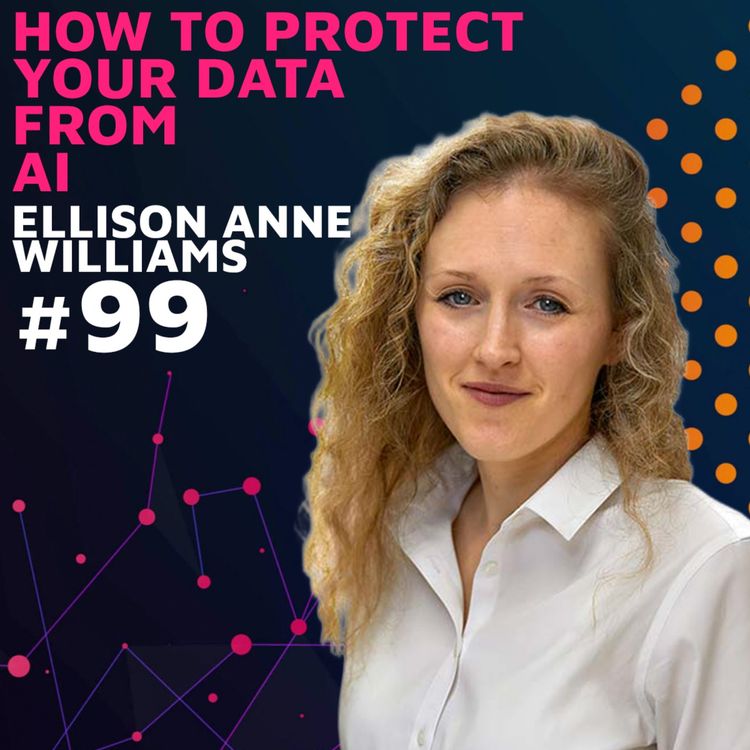
How To Protect Your Data From AI w/ Ellison Anne Williams
In this episode of Data Unchained we sit down with Ellison Anne Williams, Founder and CEO of Enveil, to explore one of the most important questions in modern technology: how do you protect your data from AI. In this conversation, Ellison Anne breaks down how data can be used securely across environments you do not own, trust, or control, why AI models silently leak sensitive information, and how encrypted computation is transforming the future of AI, cybersecurity, finance, and national security. Learn how privacy enhancing technologies are reshaping enterprise data protection, how secure AI evaluation works, and what technologies organizations must adopt to stay ahead of the next wave of cyber risk.
Cyberpunk by jiglr | https://soundcloud.com/jiglrmusic
Music promoted by https://www.free-stock-music.com
Creative Commons Attribution 3.0 Unported License
https://creativecommons.org/licenses/by/3.0/deed.en_US
More episodes
View all episodes
114. From Compute to Data: The Next Phase of AI Infrastructure w/ Wendell Wenjen
41:19||Ep. 114Enterprise AI is moving from experimentation to production, forcing organizations to reconsider how they store, access and manage their data. Wendell Wenjen, Senior Director of Storage Market Development at Supermicro, joins Molly Presley on Data Unchained to discuss the infrastructure demands behind enterprise AI. They examine the shift from training to inference, the growing role of storage in AI budgets, KV cache, on-premises AI and the challenge of preparing distributed enterprise data for production workloads. Wendell also explains why many AI proofs of concept never reach production, how power demands could influence infrastructure decisions and what businesses must address before deploying AI at scale.Learn more and register for the Supermicro Open Storage Summit, airing August 11 through September 3, 2026: https://thecube.net/Learn more about Hammerspace: https://hammerspace.com/
113. Is the Data Migration Nightmare Finally Over? w/ Pradnesh Patil
40:12||Ep. 113What is really slowing down enterprise AI? According to Pradnesh Patil, Founder and CEO of Altimate AI, the answer is not always the model. It is the data work behind it. In this episode of Data Unchained, host Molly Presley talks with Pradnesh Patil about the pressure facing modern data teams as AI adoption accelerates. They discuss why data engineers are buried in pipeline backlogs, how token costs can spiral out of control, and why enterprises need more open, vendor-agnostic ways to manage AI-driven data work. Pradnesh explains how AI agents can help with data pipeline creation, infrastructure optimization, governance, context management, and the painful migration projects most teams try to avoid. He also breaks down why walled-garden AI tools can limit flexibility, why context graphs matter, and how enterprises can reduce cost without sacrificing control.https://www.altimate.ai/Cyberpunk by jiglr | https://soundcloud.com/jiglrmusicMusic promoted by https://www.free-stock-music.comCreative Commons Attribution 3.0 Unported Licensehttps://creativecommons.org/licenses/by/3.0/deed.en_US
112. Is Science Next in the AI Disruption Cycle? w/ Kevin Moore
40:45||Ep. 112In this episode of Data Unchained, Molly Presley talks with Kevin Moore, CEO of Quilt Data, about what it takes to make scientific and enterprise data ready for AI, collaboration, and discovery at scale. Kevin explains how life sciences teams are managing massive multimodal data sets across AWS, S3, sequencing workflows, lab notebooks, metadata systems, governance requirements, and regulatory demands. The conversation explores how bench scientists, computational scientists, data engineers, and IT teams can work from the same versioned, contextualized data sets without losing control of access, compliance, or intellectual property. Kevin also shares why metadata, object storage, version control, and flexible data set constructs are becoming essential as organizations move from isolated data silos toward human and AI-assisted research workflows.Cyberpunk by jiglr | https://soundcloud.com/jiglrmusicMusic promoted by https://www.free-stock-music.comCreative Commons Attribution 3.0 Unported Licensehttps://creativecommons.org/licenses/by/3.0/deed.en_US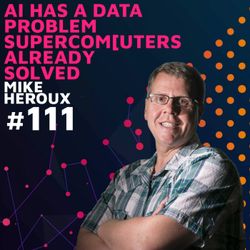
111. AI Has Data Problem Supercomputers Already Solved w/ Mike Heroux
39:24||Ep. 111In this episode of Data Unchained, Molly Presley talks with Mike Heroux, Senior Research Scientist at ParaTools and Scientist in Residence at Saint John’s University, about what the future of AI can learn from decades of high performance computing. Mike shares lessons from open source scientific software, the Exascale Computing Project, national lab collaboration, world models, AI for science, and the growing connection between modeling, simulation, and modern AI infrastructure. The conversation also looks at why data, software, and compute must work together, how open source became essential to scientific progress, and where quantum computing may fit into the next generation of research and engineering.Cyberpunk by jiglr | https://soundcloud.com/jiglrmusicMusic promoted by https://www.free-stock-music.comCreative Commons Attribution 3.0 Unported Licensehttps://creativecommons.org/licenses/by/3.0/deed.en_US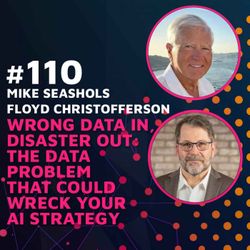
110. Wrong Data In, Disaster Out: The Data Problem That Could Wreck Your AI Strategy w/ Mike Seashols & Floyd Christofferson
49:03||Ep. 110Molly Presley sits down with Mike Seashols, CEO of Secuvy, and Floyd Christofferson of Hammerspace to discuss one of the biggest enterprise AI challenges today: governance. This episode explores why enterprise AI is really a data problem, how the wrong data creates risk, and what it takes to make live enterprise data AI-ready without massive migrations or added complexity.Demo: https://hammerspace.com/hammerspace-aidp-demo/Cyberpunk by jiglr | https://soundcloud.com/jiglrmusicMusic promoted by https://www.free-stock-music.comCreative Commons Attribution 3.0 Unported Licensehttps://creativecommons.org/licenses/by/3.0/deed.en_US
109. The Future of AI Will Belong to Companies That Make Data AI-Ready Now w/ Jack Hogan
45:31||Ep. 109In this episode of Data Unchained, Molly Presley talks with Jack Hogan of SHI about why enterprise AI success depends on more than just powerful models or infrastructure. Their conversation explores what it really takes to make data usable for AI, from governance and security to discoverability, context, and operational readiness. They also dig into why so many enterprise AI projects stall, what business leaders often get wrong, and how organizations can better prepare for long-term success. If you are trying to understand the real barriers between AI ambition and business value, this episode offers a practical and timely look at the challenge.Find out more at: https://www.shi.com/Cyberpunk by jiglr | https://soundcloud.com/jiglrmusicMusic promoted by https://www.free-stock-music.comCreative Commons Attribution 3.0 Unported Licensehttps://creativecommons.org/licenses/by/3.0/deed.en_US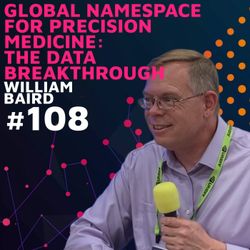
108. Global Namespace for Precision Medicine: The Data Breakthrough w/ William Baird
12:01||Ep. 108Global namespace is becoming a critical strategy for cancer genomics, precision medicine, and life sciences data infrastructure. In this episode of Data Unchained, Molly Presley speaks with William Baird from Guardant Health about managing 160PB of genomic data across HPC, on prem systems, and multi-cloud environments. They break down why 80% of this data is still active, how researchers need faster access without worrying about where data lives, and why global namespace could become a major solution for decentralized data at scale. The conversation also explores vendor flexibility, continuity, standards development, and what it takes to support life sciences workflows when the stakes are incredibly high.Cyberpunk by jiglr | https://soundcloud.com/jiglrmusicMusic promoted by https://www.free-stock-music.comCreative Commons Attribution 3.0 Unported Licensehttps://creativecommons.org/licenses/by/3.0/deed.en_US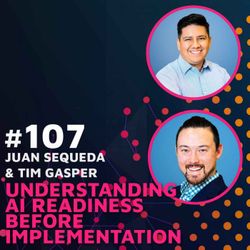
107. Understanding AI Readiness Before Implementation w/ Tim Gasper & Juan Sequeda
44:16||Ep. 107Enterprise AI adoption is accelerating across industries, but many organizations are discovering that the real challenge is not the technology. It is the data behind it. In this episode of Data Unchained, host Molly Presley speaks with Juan Sequeda and Tim Gasper from ServiceNow about what it truly means for enterprises to become AI ready. The conversation explores why metadata, governance, and context are becoming critical foundations for AI strategy, how companies are moving from experimentation to production, and why successful AI initiatives must connect directly to real business workflows and decisions.Find Juan & Tim's podcast 'Catalog and Cocktails,' here: https://www.linkedin.com/showcase/catalog-and-cocktails/about/You can find more information on service now here:https://www.servicenow.com/Cyberpunk by jiglr | https://soundcloud.com/jiglrmusicMusic promoted by https://www.free-stock-music.comCreative Commons Attribution 3.0 Unported Licensehttps://creativecommons.org/licenses/by/3.0/deed.en_US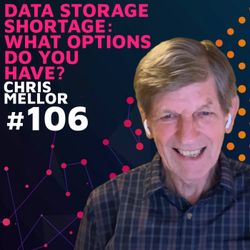
106. Data Storage Shortage: What Options Do You Have? w/ Chris Mellor
35:18||Ep. 106The global SSD shortage is reshaping data infrastructure, storage planning, and enterprise scale workloads. In this episode of Data Unchained, we talk with storage journalist Chris Mellor of Blocks and Files about the causes behind the NAND supply crisis, the pressure on GPU pipelines, the rise in flash pricing, and the limited fab capacity that will continue into 2027. We explore the future of disk technology, the growth of vector driven data, the increasing demand for high bandwidth memory, and the expanding role of hybrid cloud strategies as organizations struggle to secure fast storage. Chris explains how metadata rich automation, smarter tiering, high bandwidth flash, and new caching approaches can help enterprises navigate shortages, optimize existing resources, and prepare for the next twelve months of accelerated change across the storage and compute ecosystem.Follow Chris on his website: https://www.blocksandfiles.com/Cyberpunk by jiglr | https://soundcloud.com/jiglrmusicMusic promoted by https://www.free-stock-music.comCreative Commons Attribution 3.0 Unported Licensehttps://creativecommons.org/licenses/by/3.0/deed.en_US