Share
Times Tech
The Interview: Nu Quantum CEO on how quantum computing could solve the energy crisis
Season 3
•
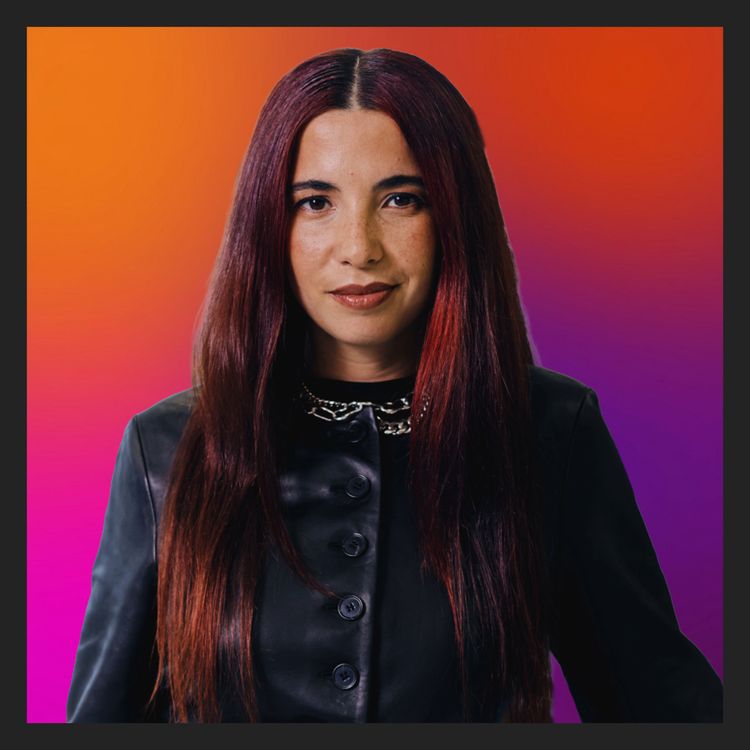
This week, Nu Quantum founder and CEO Dr. Carmen Palacios-Berraquero explains how quantum computing could change the world — and why the industry is still waiting on its "ChatGPT moment."
She joins Danny and Katie to discuss the global quantum arms race between China, the US, and the UK and why she’s not worried about the quantum cyber threat.
The Interview is our weekly conversation with the people shaping the future of technology.
Get in touch: techpod@thetimes.co.uk
Presenters:
Katie Prescott, Technology Business Editor, The Times
Danny Fortson, US West Coast Correspondent, The Sunday Times
Producer: Marnie Duke
Video Producer: Bronwen Latham
Image: Nu Quantum
More episodes
View all episodes

Facebook Whistleblower on Mark Zuckerberg, Meta AI and The Social Reckoning
26:31||Season 3Five years after leaking thousands of internal Facebook documents, whistleblower Frances Haugen joins Times Tech to talk about The Social Reckoning, Aaron Sorkin’s new film about her story and the sequel to The Social Network.She talks about Hollywood’s current obsession with Silicon Valley, how attitudes towards Big Tech have changed since she blew the whistle and what Mark Zuckerberg, Meta and today’s AI companies can learn from the social media era.The Interview is our weekly conversation with the people shaping the future of technology.Watch on YouTube Get in touch: techpod@thetimes.co.uk Presenters:Katie Prescott, Technology Business Editor, The Times Danny Fortson, US West Coast Correspondent, The Sunday Times Producer: Marnie Duke Executive Producer: Priyanka DeladiaVideo Producer: Bronwen LathamImage: GettyClip: NBC News
Who pays when AI agents go rogue?
22:34||Season 3AI companies are investigating a growing number of incidents where agents have gone rogue and done things which would be considered crimes if committed by a human. But when AI causes serious damage, who is responsible and crucially, who pays? Katie’s been speaking to London’s major insurers who have been war-gaming scenarios where AI causes harm and asking who would ultimately pick up the bill. This week, Yoshua Bengio, chair of the International AI Safety Report said that a “dangerous myth” about agent hacks has gained traction. He warned that these aren't just cybersecurity glitches but a bigger problem built into how we design and train AI. Danny and Katie ask whether he’s right, and if AI hacks like Hugging Face can be avoided in the future.Plus, they discuss the unexpected consequences of Trump’s new ‘super intelligence’ rebrand and why a spelling mistake in his AI pact with tech leaders has made the internet laugh. Watch on YouTube Read more: Who will put the brake on AI? Count on lawyers and underwriters Get in touch: techpod@thetimes.co.uk Presenters:Katie Prescott, Technology Business Editor, The Times Danny Fortson, US West Coast Correspondent, The Sunday Times Producer: Marnie Duke Executive Producer: Priyanka DeladiaVideo Producer: Bronwen LathamImage: Getty
BONUS: AI governance - how business can adopt AI safely
16:03|This episode of The Times Tech Podcast is in paid partnership with ServiceNow.How do you navigate the rapid pace of AI development in business?With Matt Higham, ServiceNow’s chief digital and technology officer for UK and Ireland, we ask how companies can use AI governance to dodge the pitfalls thrown up by AI, and embrace the opportunities safely.
The Interview: Replit CEO on the contradictions at the heart of AI doom
32:05||Season 3This week, Danny speaks to Amjad Masad, co-founder and CEO of Replit, a ‘vibe-coding’ company which enables anyone – coder or not – to build software simply by telling AI what they want it to do.Amjad makes the case that we’ve lost the original joy of computing, leaving everyday users "at the mercy" of Silicon Valley giants.He also pushes back on the current wave of AI doomerism, arguing that apocalyptic fears are overblown and that focus should shift toward real-world accountability, including strict penalties for companies whose AI agents go rogue.Watch on YouTube Get in touch: techpod@thetimes.co.ukPresenters:Katie Prescott, Technology Business Editor, The TimesDanny Fortson, US West Coast Correspondent, The Sunday TimesProducer: Marnie DukeExecutive Producer: Priyanka DeladiaVideo Producer: Bronwen LathamImage: Replit
Why is Anthropic asking people to fund AI doom?
24:45||Season 3Warnings that AI is going to kill us are once again abounding.This week, Anthropic’s long awaited IPO prospectus was leaked. In it, the company warns that its technology poses “catastrophic or existential risks to humanity” while simultaneously asking investors to finance their $518 billion AI buildout. Danny and Katie break down the contradictions at the heart of the prospectus and question why Dario Amodei is asking investors to fund doom.Meanwhile, amid mounting safety concerns, President Trump invited tech leaders to the White House to talk regulation. Leaders of Anthropic, Google, Meta, Nvidia, OpenAI and SpaceXAI agreed to sign a voluntary self-policing pact and to rebrand AI as “super intelligence”. But when Silicon Valley sets its own rules, can we ensure they will keep us safe?Watch on YouTube Get in touch: techpod@thetimes.co.ukPresenters:Katie Prescott, Technology Business Editor, The TimesDanny Fortson, US West Coast Correspondent, The Sunday TimesProducer: Marnie DukeExecutive Producer: Priyanka DeladiaVideo Producer: Bronwen LathamClip: Saturday Night LiveImage: Getty
The Interview: Ordnance Survey CEO on AI reinventing maps
28:16||Season 3Ordnance Survey might just be the oldest tech company around. For 235 years, it has been mapping out every single metre of the UK – no matter how remote. And that data plays a huge part in how we use technology today; think of the many apps we use that rely on maps. The average person in the UK uses some element of Ordnance Survey mapping data 42 times a day.Its CEO, Nick Bolton, joins Danny and Katie to discuss how the company has evolved from the days of paper maps to supplying to the likes of Apple and Google, why it’s building a map you can talk to, and how AI is changing geospatial mapping.The Interview is our weekly conversation with the people shaping the future of technology.Watch on YouTube Get in touch: techpod@thetimes.co.ukPresenters:Katie Prescott, Technology Business Editor, The TimesDanny Fortson, US West Coast Correspondent, The Sunday TimesProducer: Marnie DukeVideo Producer: Bronwen LathamExecutive Producer: Priyanka Deladia Image: Ordnance Survey
Why OpenAI and Anthropic should fear Meta Muse
22:29||Season 3Meta’s new AI agent app, Muse, has rocketed straight to number one on the App Store. Having put it to the test, Danny explains what the hype is all about. Meanwhile, Katie has bid farewell to her agent Norman in favor of a new AI assistant called Bridget hosted by rival app, Instinct. They look at why this sudden commodification of agents is significant and why OpenAI and Anthropic should be worried. And despite being on track to make more than $100 billion in revenue this year, Anthropic has decided to delay their IPO. Meanwhile, OpenAI is trying to convince investors they’re worth $1.5 trillion as losses balloon. The question is who will come out on top? Plus, what does Donald Trump’s ‘AI Force’ mean? And what should we make of the China-US AI hotline pitched during his meeting with Chinese Premier Xi Jinping.Watch on YouTube Get in touch: techpod@thetimes.co.uk Presenters:Katie Prescott, Technology Business Editor, The Times Danny Fortson, US West Coast Correspondent, The Sunday Times Producer: Marnie Duke Executive Producer: Priyanka DeladiaVideo Producer: Bronwen LathamImage: Getty
The battle to control AI: Who gets to write the rules?
21:36||Season 3Over the past week, warnings about the existential threat of AI have reached fever pitch. In an essay backed by Sam Altman, Anthropic’s Dario Amodei called for international cooperation with states like China and for independent safety assessors to be given access to the frontier AI labs.All these warnings have caught the attention of leaders and dignitaries – from President Trump to King Charles – and have started a global conversation about how we should regulate the companies developing these systems. The problem is, no one can agree on how to do it. Watch on YouTube Get in touch: techpod@thetimes.co.uk Presenters:Katie Prescott, Technology Business Editor, The Times Danny Fortson, US West Coast Correspondent, The Sunday Times Producer: Marnie Duke Video Producer: Bronwen LathamImage: Getty