Share
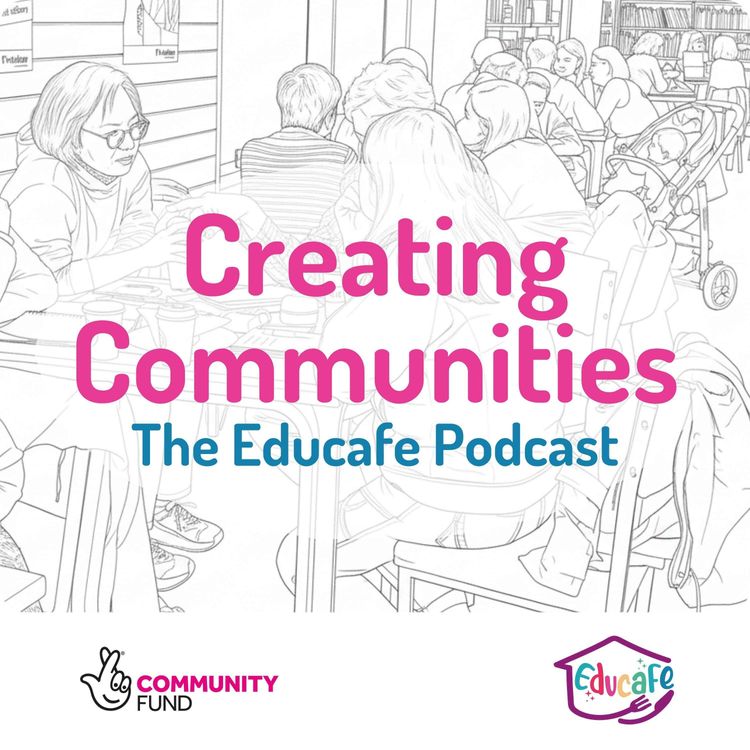
Creating Communities: The Educafe Podcast
4. Stepping Stones
Can simple grassroots social interactions - like sharing a cup of tea or joining a craft group - genuinely transform lives and drive mental health recovery? This episode explores how EduCafe’s community projects in West Berkshire serve as vital stepping stones, helping individuals overcome isolation, build confidence, and discover accessible pathways back into employment and social wellbeing.
The episode begins with a moving interview with Ginette, a long-standing participant who describes how discovering the Knit & Natter group supported her through serious mental health challenges, helping her rebuild routine, forge lasting friendships, and regain a deep sense of purpose and belonging.
To discuss the wider systemic impact of these safe spaces, host Jamie Adam is joined by volunteers Magdalene Wind-Mozley and Penny Locke, alongside Employment Coach and Community Support leader Isabel King. Together, they explore:
- How community-based social interactions support mental health and emotional wellbeing
- The role of volunteering and practical activities in building confidence
- How Educafe welcomes people facing anxiety, bereavement, disability, autism, ADHD, or long periods out of employment
- Why flexible, people centred support is vital for helping people return to work
- How Educafe connects diverse groups, refugees, parents, older adults, young people - to create a sense of belonging and community cohesion
- The ripple effect of kindness, inclusion, and trust-building
- How local partnerships and nonprofit collaboration strengthen community resources
Educafe’s unique approach - open, accessible, and rooted in local community needs - creates a supportive environment where people can safely practice social skills, explore volunteering, build confidence, and gently take steps toward employment, education, or renewed independence.
If you’re interested in community wellbeing, grassroots support networks, mental health recovery, social connection, nonprofit work, flexible volunteering, or inclusive community spaces tune in to this episode of Creating Communities: The Educafe Podcast.
If you are inspired by what you hear you can find out more about Educafe and how you can set one up in your area using our Toolkit or How to Support Us. If you’re feeling generous, you can buy us a coffee.
This is a Research Podcasts production.
Credits:
Presenter: Jamie Adam, Research Podcasts
Guests: Magdalene Wind-Mozley and Penny Locke, Educafe and Isabel King, Ways Into Work
Producer: Jamie Adam, Research Podcasts
You can read a transcript of this conversation here.
More episodes
View all episodes
5. 5. The Educafe Recipe
34:14||Season 1, Ep. 5How can a grassroots community project expand its scale and impact without losing its human soul? This final episode unpacks "The EduCafe Recipe" - the precise mix of dedicated volunteers, local partnerships, strategic planning, and funding that allows the hub to run a weekly community event for over 150 people while remaining deeply inclusive, warm, and responsive to human need.To explore this blueprint for long-term sustainability, host Jamie Adam is joined by Janine Ford, Co-Director of EduCafe, Chris Bond from the Aster Foundation, and volunteer Alison. Together, they discuss the transition from day-to-day delivery to place-based strategy, exploring:The vital role of volunteers in creating welcoming, supportive community spaces How place-based community work and free access to public spaces enable impact Why partnerships with libraries, charities, councils, and funders matter What it takes to plan and deliver a large-scale weekly community event How the Aster Foundation social incubator helped Educafe think sustainably Turning community activities into replicable, fundable models The importance of impact measurement, structure, and mindset How National Lottery funding created headspace for growth and reflection Preventing burnout while protecting warmth, care, and connection The vision behind the Togetherness Project and future collaboration Alison shares how her volunteer role allows her to support people through practical signposting, emotional connection, and local knowledge; often helping individuals access housing, mental health support, and other vital services. Janine and Chris reflect on the turning point that came from stepping out of day-to-day delivery to work on the organisation; breaking Educafe into sustainable components, understanding its true impact, and exploring how its model could be replicated in other communities. This episode offers an honest and inspiring look at how community projects can grow without losing their soul, and why care, collaboration, and long-term thinking are essential for lasting social change. If you are inspired by what you hear you can find out more about Educafe and how you can set one up in your area using our Toolkit or How to Support Us. If you’re feeling generous, you can buy us a coffee. This is a Research Podcasts production. Credits: Presenter: Jamie Adam, Research Podcasts Guests: Janine Ford, Educafe and Chris Bond, Aster Foundation Producer: Jamie Adam, Research Podcasts You can read a transcript of this conversation here.3. 3. Chatty Corner
28:00||Season 1, Ep. 3How can a simple conversation over coffee help refugees, asylum seekers, and migrants overcome isolation and navigate life in a completely new country? This episode explores Chatty Corner - one of EduCafe’s most established projects - examining how informal language practice and trusted grassroots spaces build English skills, restore confidence, and foster a deep sense of belonging across West Berkshire.To understand the profound impact of this initiative, host Jamie Adam is joined by Margaret Neville, Chatty Corner Manager, Samera Abdas-Majid, Lead Caseworker at Reading Refugees, and service user turned volunteer, Ning. Together, they discuss the vital role of informal learning environments, exploring:How Chatty Corner provides free, informal English conversation practice for non-native speakers Why spoken English and listening skills are key to confidence and community navigation The role of volunteers in creating welcoming, flexible, and supportive learning environments How refugee families and asylum seekers benefit from safe community spaces The importance of social integration alongside formal ESOL classes How community groups help people understand UK systems, culture, and everyday life Volunteering pathways that allow service users to give back and share their skills How spaces like Educafe help counter negative public narratives around refugees Ning shares how discovering Educafe through the local library helped her improve her English, understand life in the UK, and rebuild her confidence after moving from China to Newbury. With support from volunteers, she went on to use her experience as a yoga instructor to lead seated wellbeing sessions - illustrating how community support can nurture talent and provide purpose. Margaret reflects on the dedication of its volunteers, while Samera explains why Educafe is often the first place newly arrived families are referred; offering immediate connection, accurate information, and reassurance during a difficult transition. Together, they show how conversation, kindness, and consistency can transform lives and strengthen communities. If you are inspired by what you hear you can find out more about Educafe and how you can set one up in your area using our Toolkit or How to Support Us. If you’re feeling generous, you can buy us a coffee. This is a Research Podcasts production. Credits: Presenter: Jamie Adam, Research Podcasts Guests: Margaret Neville, Educafe and Samera Abdas-Majid from Reading Refugees Producer: Jamie Adam, Research Podcasts You can read a transcript of this conversation here.2. 2. Parent Village
31:27||Season 1, Ep. 2During what can be one of the most joyful yet isolating periods of life, how can community-led spaces transform the experience of early parenthood? This episode explores Parent Village - a free, welcoming drop-in space in West Berkshire designed to tackle loneliness, improve postpartum mental health, and help new parents and carers build confidence and lasting connections.To unpack the vital role of this project, host Jamie Adam is joined by Subia Azmat, Parent Village Project Manager, Dr Wenjin Dai, Senior Lecturer at the Open University, and service user Patricia. Together, they share personal and professional insights into the power of grassroots family support. In this episode, we explore: How Parent Village provides free, flexible practical and emotional support for new parents Why accessible community spaces are vital in tackling loneliness and isolation after birth The value of peer support and expert-led sessions, from breastfeeding to sleep advice How volunteering and skill-sharing strengthen nonprofit organisations and local communities The financial pressures of early parenthood and how free community projects reduce barriers How Parent Village inspired academic research into motherhood, work, and inequality The development of toolkits for parents and employers supporting return-to-work transitions Service user Patricia shares how discovering Parent Village shortly after giving birth helped her feel calm, reassured, and welcomed, leading her to give back by volunteering her research and data analysis skills to support Educafe’s funding and impact evaluation. Subia and Wenjin reflect on what makes Parent Village unique: its warmth, inclusivity, flexibility, and the simple power of creating a space where parents can walk in, ask questions, build friendships, and feel part of a community. If you are inspired by what you hear you can find out more about Educafe and how you can set one up in your area using our Toolkit or How to Support Us. If you’re feeling generous, you can buy us a coffee. This is a Research Podcasts production. Credits: Presenter: Jamie Adam, Research Podcasts Guests: Subia Azmat, Educafe and Dr Wenjin Dai, Open University Producer: Jamie Adam, Research Podcasts You can read a transcript of this conversation here.1. 1. Origin Story
33:26||Season 1, Ep. 1How can a small English conversation meetup transform into a thriving weekly hub supporting up to 200 people every single week? This opening episode tells the inspiring story of EduCafe CIC, exploring how a simple idea grew into a lively, volunteer-powered gathering that offers social connection, language learning, community advice, and crucial wellbeing support.To unpack this journey of local impact and integration, host Jamie speaks with Clare Middleton, Founder and Co-Director of EduCafe CIC, and Mark Brown, West Berkshire Council’s Lead for Adult & Community Learning.Together, they share the inspiring story of how EduCafe grew from a small English-conversation meet up into a thriving weekly community hub supporting up to 200 people every Wednesday. Clare reflects on her journey from running the Berkshire School of English to creating a warm, informal space where people of all ages and backgrounds could practise English, meet new people, and access friendly support. What began as a simple idea quickly developed into a lively, volunteer-powered gathering offering social connection, language learning support, community advice, family activities, and wellbeing sessions. Mark brings the council perspective, explaining how local partnerships helped EduCafe scale during key moments of change - particularly as the community welcomed Syrian, Afghan, Hong Kong, and Ukrainian families. He highlights how hubs like EduCafe play a vital role in building confidence, fostering belonging, and strengthening community cohesion across West Berkshire. Together, Clare and Mark explore: The impact of community hubs in reducing isolation and boosting wellbeing The importance of English conversation spaces for confidence and integration How strong partnerships between councils, libraries, and charities create lasting change Why volunteers are at the heart of EduCafe’s success The unique atmosphere inside Newbury Library every Wednesday How flexible, responsive community support can adapt to fast-changing needs Clare also introduces the Togetherness Programme, a new initiative designed to help other areas set up their own version of EduCafe, whether a full weekly hub or smaller elements like Parent Village or Chatty Corner, to meet local needs. The episode closes with thoughtful advice for anyone wanting to start their own community project: listen closely, start before you feel ready, choose partners who share your values, and build slowly but consistently. A warm, insightful conversation about how connection, kindness, and collaboration can transform a whole community. If you are inspired by what you hear you can find out more about Educafe and how you can set one up in your area using our Toolkit or How to Support Us. If you’re feeling generous, you can buy us a coffee. This is a Research Podcasts production. Credits: Presenter: Jamie Adam, Research Podcasts Guests: Clare Middleton, Educafe and Mark Brown, West Berkshire Council Producer: Jamie Adam, Research Podcasts You can read a transcript of this conversation here.Creating Communities Trailer
01:51||Season 1, Ep. 0Introducing Creating Communities: The Educafe Podcast. Over the course of the series, we will be shining a light on the amazing work being done by Educafe, a non-profit organization based in West Berkshire that delivers people centred projects that strengthens communities.You'll hear from the founders, the volunteers, partners that work with Educafe, as well as the service users. Alongside heartfelt stories and insightful conversation there will also be practical advice for anyone who is running a community group or thinking about starting one.If you are interested in hearing firsthand about the power of community, this is the podcast for you.If you are inspired by what you hear you can find out more about Educafe and how you can set one up in your area using our Toolkit or How to Support Us. If you’re feeling generous, you can buy us a coffee. This is a Research Podcasts production.