Share
Crashed
Does AI need a “kill switch”?
Sarah Breeden, the Bank of England’s deputy governor for financial stability, has talked about the potential need ot a “kill switch” for markets because agentic AI may force regulators to rethink how the financial system is governed.
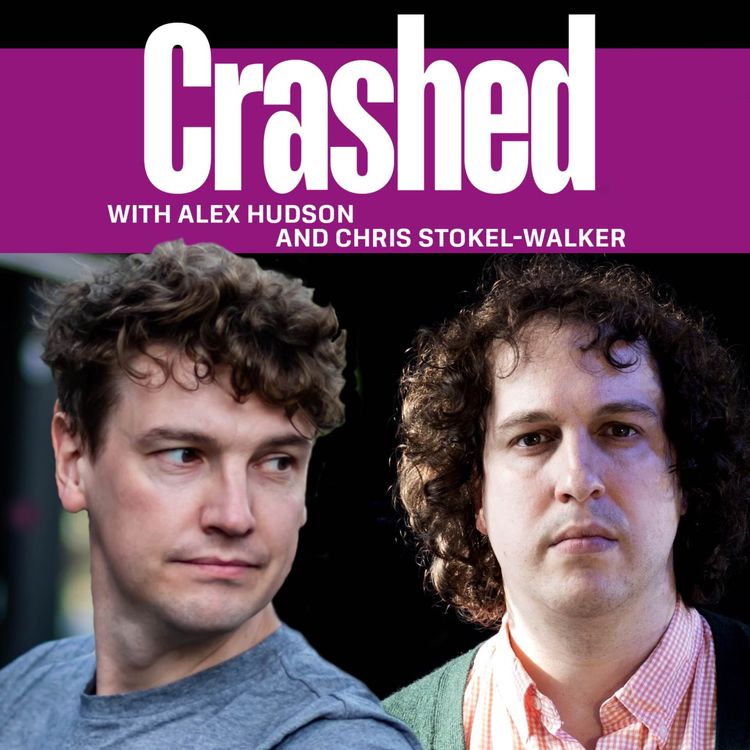
Presenters Alex Hudson and Christ Stokel-Walker try to unpick the detail from the fantastic tabloid headlines.
Also, could we be facing the end of the need for websites?
Now that AI and search changes are leaving some news publishers with traffic drops of up to 90%, and online brands are seeing their traffic fall, is this really the end?
And will we all just stare at LLMs, social networks and forums?
Performance marketing pioneer Neil Patel, of NP Digital, discusses the future of search, AI's impact on SEO, and how businesses can adapt to the evolving digital landscape. This episode offers insights into how AI and LLMs are transforming marketing, content creation, and consumer behaviour.
Keywords: Neil Patel, AI Search, SEO, LLMs, Digital Marketing, Future of Websites, Content Strategy, AI in Business
Key topics
- The shift from traditional search to AI-driven search
- The impact of LLMs like ChatGPT and Gemini on SEO
- Strategies for optimising for AI and LLMs
- The importance of product quality over marketing in AI era
- The future of websites and in-platform transactions
- The role of digital PR and content in AI search
- The changing landscape of journalism and content creation
- Neil Patel's insights on product-led growth and innovation
To support, go to https://bit.ly/CrashedPodcast or search Crashed podcast
Follow:
Alex: www.instagram.com/alexhuds / www.tiktok.com/@alexhuds
Chris: www.instagram.com/cstokelwalker / www.tiktok.com/@st0kel
Spotify: https://bit.ly/CrashedSpotify
Apple Podcasts: https://apple.co/4qkgmmV
More episodes
View all episodes

47. The influencers won. Now what? (a Taylor Lorenz's Power User v Crashed collab)
50:40||Season 1, Ep. 47In this episode, Alex Hudson and Taylor Lorenz explore the evolving landscape of influence, AI, and digital regulation, discussing the impact of technology on society, politics, and media. They delve into the future of AI, the role of influencers, and the challenges of regulation in a rapidly changing digital world.Follow Taylor Lorenz's Power User on Apple Podcasts: https://podcasts.apple.com/gb/podcast/taylor-lorenzs-power-user/id1733535260 On Spotify: https://open.spotify.com/show/5iganPXXEoTDB9lIQzY7Fh?si=85fed5daa4ad42e9 Or YouTube: https://www.youtube.com/taylorlorenz keywordsAI, influencers, digital regulation, social media, technology, politics, media, privacy, future of AI, influence economykey topicsThe influence economy and its evolutionThe role of AI in everyday life and workChallenges of regulation and liability in AI systemsThe changing landscape of social media and influenceThe impact of legislation on free speech and digital contentThe rise of agentic AI and its implicationsThe concept of fame in the digital eraThe intersection of technology, privacy, and ethics46. Getting paid to train AI to replace you
56:04||Season 1, Ep. 46In this episode, Alex Hudson and Chris Stokel-Walker explore the latest developments in AI, social media trends, and the future of warfare, delving into the ethical, societal, and technological implications of these rapid changes.KeywordsAI, social media, warfare, technology, ethics, future of work, TikTok, Vine, Ukraine, autonomous weaponsKey topicsAI in warfare and defenseThe resurgence of short-form video platforms like Vine and DivineSocial media responsibility and offline consequencesThe development and risks of autonomous weaponsThe impact of AI training on jobs and societyTakeawaysUkraine has become a key AI battlefield, with data shaping modern warfare.Vine's return signals a shift towards less algorithm-driven, more authentic content.Social media platforms face complex responsibilities for offline actions.AI's role in training and replacing jobs raises ethical and economic questions.The development of autonomous weapons presents profound moral and strategic challenges.45. The death of the computer keyboard
58:00||Season 1, Ep. 45In this episode, Bloomberg columnist Dave Lee joins hosts Alex Hudson and Chris Stokel-Walker to discuss if the computer keyboard is on its last legs. Only around half of users see it as a primary device and 20% don't use it at all. What's the future of interfaces, and will typing be entirely unnecessary?We explore the future of interfaces, the role of writing and AI, and the cultural implications of technological change. They debate the significance of the keyboard, voice interfaces, and the enduring value of human storytelling.Find Dave's vibe-coded website: https://www.davelee.me/keywordsfuture of interfaces, AI and writing, voice technology, keyboard vs voice, storytelling, tech culture, AI tools, communication evolutionkey topicsThe evolution of internet access and device usageThe potential decline of the keyboard in favour of voice and AR interfacesThe importance of writing as a thinking tool and its cultural valueThe role of AI in writing, communication, and creative processesThe social and ethical considerations of relying on AI and voice techThe significance of human character and storytelling in a digital ageThe impact of AI on journalism, music, and other creative fieldsFuture trends in human-computer interaction and interface design44. Quantum technology will change everything
50:18||Season 1, Ep. 44Quantum is about to change the world, so we’re told. It will make computers exponentially faster. It will challenge the cryptographic foundations that underpin security. It has the potential to fundamentally reshape the world, similar to the shift from before the web to after. According to Austrian physicist Erwin Schrödinger of cat-owning/not-owning fame, quantum mechanics requires an entire departure from classical lines of thought:In this episode, Dr Jess Wade, of Imperial College London, joins presenters Alex Hudson and Chris Stokel-Walker to explain the fundamentals of quantum mechanics, its potential to revolutionise technology, and how the UK is positioning itself in the global quantum race. She demystifies complex concepts like quantum entanglement and discusses the societal impact of quantum innovations.Also in the programme, why is the cloud seemingly moving to Slough? And what happens now lovebots are banned?43. Is Andy Burnham really the TikTok prime minister?
54:15||Season 1, Ep. 43Presenters Alex Hudson and Chris Stokel-Walker discuss "The UK’s first TikTok prime minister", and if Andy Burnham really is channelling New York Mayor Zohran Mamdani as he hit social media. Other ministers, including Home Secretary Shabana Mahmood talking about small boat crossings, or AI minister Kanishka Narayan talking about Backing British while eating a strawberry, are following suit. Even Chancellor John Healey was reviewing pork scratchings with Burnham in a pub in a social video. Why? What's the grand plan here? And what are the 13 new social media hires going to do?Alongside that in this episode, we explore the latest social media trends, political strategies, and bizarre news stories that highlight how digital culture is shaping society. From TikTok's integration with Disney to political social media tactics, we cover it all.keywordssocial media, TikTok, politics, social media trends, viral stories, digital culture, political strategy, social media influence, bizarre news, online activismkey topicsTikTok's partnership with Disney and major brandsThe use of social media by politicians for direct engagementThe impact of viral stories and bizarre news on public discourseReddit's role in AI training data and search resultsControversies involving political figures and social media abuse42. Lampposts could be spying on you... really!
59:17||Season 1, Ep. 42A lampost with facial-recognition capability has been announced. Why? We don't know. But we'll try and find out. In this episode, presenters Alex Hudson and Chris Stokel-Walker explore the latest developments in surveillance technology, AI mishaps, and the implications for privacy and civil liberties. Our guest, Professor Pete Fussey, shares insights from his extensive research on surveillance systems, facial recognition, and the societal impacts of these technologies.Also, the tech angle on the Clicky Ponting cricket cheating scandal, OpenAI admits to more hacking, and former eBay employees have to pay millions for a campaign of abuse and intimidation against a couple who wrote less-than-complimentary things about them.Follow Pete on LinkedIn: https://www.linkedin.com/in/pete-fussey Key topics: The expansion of surveillance infrastructure like CCTV and lamp postsAI errors and privacy leaks in chatbots like Claude and ChatGPTDemographic biases in facial recognition technologyThe impact of surveillance on marginalized communitiesRegulatory challenges and the need for transparency in surveillance techThe societal effects of surveillance and privacy erosionThe role of human rights law in regulating surveillanceThe influence of political ideologies on surveillance policies41. The death of British science, innovation and technology (department)
01:02:21||Season 1, Ep. 41In a week of a new prime minister, an OpenAI agentic “hack” and France banning social media for under-15s, presenters Alex Hudson and Chris Stokel-Walker have a lot to get through.They’re joined by investigative journalist Ben Smoke, who has spent the last 18 months investigating alleged corruption in AI policy and the Labour government. This episode delves into the transparency, conflicts of interest, and societal impact of current AI strategies. And talks about Fast and the Furious as an academic pursuit.Subscribe to Ben's Substack: https://wefightthegoodfight.substack.com/Or follow them on Instagram: https://www.instagram.com/bencsmoke/?hl=en Keywords: AI policy, UK government, industry influence, transparency, AI growth zones, AI minister, political accountability, tech industry, public interest, AI regulationKey topics: UK AI policy and government restructuring; Influence of tech industry and vested interests; transparency and conflicts of interest in AI policymaking; AI growth zones and local economic impact; Role of the AI minister and cabinet dynamics40. The Meta narrative: Instagram, shadowbanning, Meta Glasses, and AI redundancies
01:08:27||Season 1, Ep. 40Meta is having a moment, laying off 10% of its staff with the help, it's alleged, of AI while maintaining a 40% profit margin. In this episode, we explore the latest developments in Instagram shadowbanning, how Kylie Jenner's Meta Glasses partnership could cause problems, what the Muse Image and NameTag controversies say about Zuckerberg's mindset. social media, and does what copyright is left in the age of AI.Presenters Alex Hudson and Chris Stokel-Walker are joined by academic, campaigner and activist Dr Carolina Are.We discuss shadow banning, AI-generated content, Meta's controversial features, and the future of digital rights.Also, why is Netflix trying to become YouTube? And why did IBM's share price tank?Read Dr Carolina's work: https://bloggeronpole.com/39. What does Burnhamism mean in practice? And is the answer just AI everything?
01:02:25||Season 1, Ep. 39The next prime minister is probably Andy Burnham. And this means Burnhamism, Manchesterism and devolution are all hot topics. But what does that mean for economic growth? Technological innovation? And the UK’s second cities catching up. In this episode, presenters Alex Hudson and Chris Stokel-Walker talk to Tom Forth about regional economic disparities in the UK, the impact of devolution, and the potential to transform cities like Leeds and Manchester. We explore how to reduce the North-South divide.Go to Tom Forth’s website: https://tomforth.co.uk/ Follow him on X: https://x.com/thomasforth?lang=en Keywords: UK economy, devolution, regional development, infrastructure, Manchester, Leeds, North-South divide, economic growth, public investment, city regenerationkey topicsImpact of devolution on regional economiesCase studies of Manchester and LeedsRole of infrastructure projects like tram systemsStrategies for regional growth and prosperityChallenges and opportunities in UK regional development