Share
Curious Canadian History
S12E1 Lake Ontario (not Lake America)
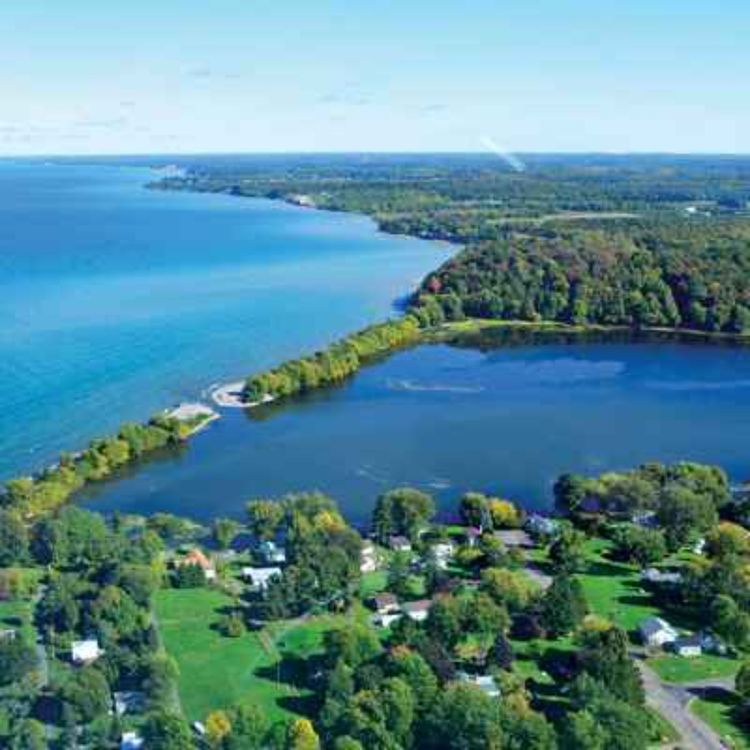
Today, Lake Ontario has surged into headlines after President Donald Trump ordered it renamed "Lake America" for U.S. federal use, igniting outrage across Canada. The centuries-old name—shared by a lake that's more than half Canadian—has become the latest flashpoint in an escalating cross-border political and cultural dispute. To kick off our 12th season we are diving deep into the history of Lake Ontario.
Daniel Macfarlane is a Professor in the School of Environment, Geography, and Sustainability at Western Michigan University. His most recent book is "The Lives of Lake Ontario: An Environmental History" (September 2024).
Check out Canyon Entertainment’s newest podcast Hostile History!
Don’t forget! You can purchase a copy of Punching Above Our Weight: The Canadian Military at War Since 1867 right now at the below links:
More episodes
View all episodes
S12E4 Afghanistan: New Perspectives - The Longest War
56:06|In the aftermath of 9/11, Canada went to war in Afghanistan. What began as a mission to dismantle al-Qaeda and topple the Taliban became a grinding, thirteen-year campaign of combat, counterinsurgency, and nation-building. More than 40,000 Canadians served. 158 soldiers and a diplomat died, and more than 1,500 Canadians were wounded. Yet, in August 2021, the Taliban returned to power, leaving difficult questions about the war’s costs, consequences, and legacy. For the next several weeks we here at Curious Canadian History are going to look at this war from some rather unique perspectives: this will include first-hand accounts, the controversy surrounding an official history of the war, a campaign to earn one Canadian soldier a Victoria Cross, and spotlights on key events that have come to shape the experience. To start with, we are doing an historical overview of the conflict itself. How did it start? What were objectives? How did these objectives change? And what is the lasting legacy of the war? The wonderful people at the Canadian War Museum are also exploring this defining conflict in its just finished eight-episode series, The Long War. For this episode I am joined by Museum historian Andrew Burtch to examine Canada’s experience in Afghanistan and the lessons that remain. Andrew has been a historian at the CWM since 2006 and has written extensively on Canada’s military history with particular focus on Afghanistan. He is also the co-creator of the CWM’s podcast on Afghanistan.Check out Canyon Entertainment’s newest podcast Hostile History!Hostile History on SpotifyHostile History on AppleHostile History on Amazon Don’t forget! You can purchase a copy of Punching Above Our Weight: The Canadian Military at War Since 1867 right now at the below links:AmazonIndigoDundurnGoodreadsIndiebookstores.ca
CCH Spotlight - The Air India Bombing
26:23|This week’s CCH spotlight episode looks at the Air India bombing in June 1985, when a bomb planted by Sikh extremists exploded aboard Air India Flight 182, a Boeing 747 travelling from Montreal to London and onward to India. The aircraft crashed into the Atlantic Ocean off the coast of Ireland, killing all 329 people aboard, including 280 Canadian citizens. The attack was linked to extremists associated with the movement for an independent Sikh homeland, Khalistan, and was motivated by anger over the Indian government’s 1984 military operation against the Golden Temple in Amritsar. It remains the deadliest terrorist attack in Canadian history and one of the deadliest acts of aviation terrorism worldwide.Check out Canyon Entertainment’s newest podcast Hostile History!Hostile History on SpotifyHostile History on AppleHostile History on Amazon Don’t forget! You can purchase a copy of Punching Above Our Weight: The Canadian Military at War Since 1867 right now at the below links:AmazonIndigoDundurnGoodreadsIndiebookstores.caS12E3 Lone-Actor Terrorism in Canada
45:22|What happens when terrorism is no longer driven by an organized group, a formal hierarchy, or a clearly defined ideology—but by a single individual acting alone? In Canada, so-called “lone wolf” terrorism has become one of the most difficult and misunderstood forms of political violence to define and confront. Today we are going to explore the history of lone actor terrorism in Canada, tracing its roots through the twentieth century and examining how its motivations and characteristics have evolved in the twenty-first. What drives an individual to commit an act of terrorism? How important are religion, ideology, and gender? And what can some of Canada’s most significant lone-actor attacks tell us about the changing nature of terrorism? But perhaps the most troubling question is what happens when there is no organization to infiltrate, no leader to identify, and no conspiracy to uncover. How do you stop someone who may have no accomplices, no obvious network, and no warning that they are about to act? And as we look at the history of lone actor terrorism in Canada, we may discover that the greatest challenge isn't understanding what happened—but recognizing what might happen next.Joining us today is Professor Steven Hewitt. Steve Hewitt is Associate Professor of North American history at the University of Birmingham in the United Kingdom. He has published extensively around topics related to security and intelligence, including terrorism and counter-terrorism in the past and present. His new book, A History of Terrorism in Canada, will be published by McGill-Queen’s University Press in October. Check out Canyon Entertainment’s newest podcast Hostile History!Hostile History on SpotifyHostile History on AppleHostile History on Amazon Don’t forget! You can purchase a copy of Punching Above Our Weight: The Canadian Military at War Since 1867 right now at the below links:AmazonIndigoDundurnGoodreadsIndiebookstores.caCCH Spotlight - Gassy Jack and the Woman that Outlived the Legend
16:00|Step into the turbulent birth of Vancouver through the story of Gassy Jack and Quahail-ya. This episode explores ambition, colonial power, and a deeply controversial marriage, while tracing how Quahail-ya outlived Deighton to become a respected matriarch, reshaping the legacy of a woman long overshadowed by the city's founder's myth.Check out Canyon Entertainment’s newest podcast Hostile History!Hostile History on SpotifyHostile History on AppleHostile History on Amazon Don’t forget! You can purchase a copy of Punching Above Our Weight: The Canadian Military at War Since 1867 right now at the below links:AmazonIndigoDundurnGoodreadsIndiebookstores.ca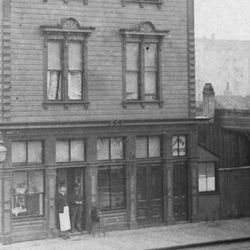
S12E2 How to Get Drunk In Prohibition Vancouver
57:25|In Prohibition-era Vancouver, getting drunk meant slipping through hidden doors into smoky backrooms, whispering passwords, and drinking bootleg whiskey poured from unmarked bottles. Police raids were always possible, yet jazz, laughter, and clinking glasses filled the night as speakeasies (blind pigs) thrived, proving that banning alcohol never stopped Vancouverites from raising a glass.To explore this incredible history we went on an incredible walking tour with Will Woods from Forbidden Vancouver. Will started this coming many years ago and has refined it into one of Vancouver’s favorite historic attractions.For any of those in Vancouver or visiting Vancouver soon make sure to check out all the tours offered by Forbidden Vancouver at forbiddenvancouver.caCheck out Canyon Entertainment’s newest podcast Hostile History!Hostile History on SpotifyHostile History on AppleHostile History on AmazonDon’t forget! You can purchase a copy of Punching Above Our Weight: The Canadian Military at War Since 1867 right now at the below links: AmazonIndigoDundurnGoodreadsIndiebookstores.caCCH Spotlight - The Welland Canal
15:20|For this CCH spotlight episode we 'dive' into the history of the Welland Canal, or really, the Canals. A major infrastructure project that shaped the economic future of the Niagara Peninsula, Ontario and Canada.Summer Reboot - The Fall of Hong Kong
17:09|This summer reboot looks at the fall of Hong Kong in December 1941.**Announcement** - Season 12 kicks off next week! First episode of the new season drops September 8th!Summer Reboot - Trumps First Tariff War
48:35|This is a reboot from an episode we did back in season 10 when President Donal Trump was first elected and completely upended the economic relationship with Canada in a shocking application of across the board tariffs. Sadly, it seems that history is repeating!