Share
Curious Canadian History
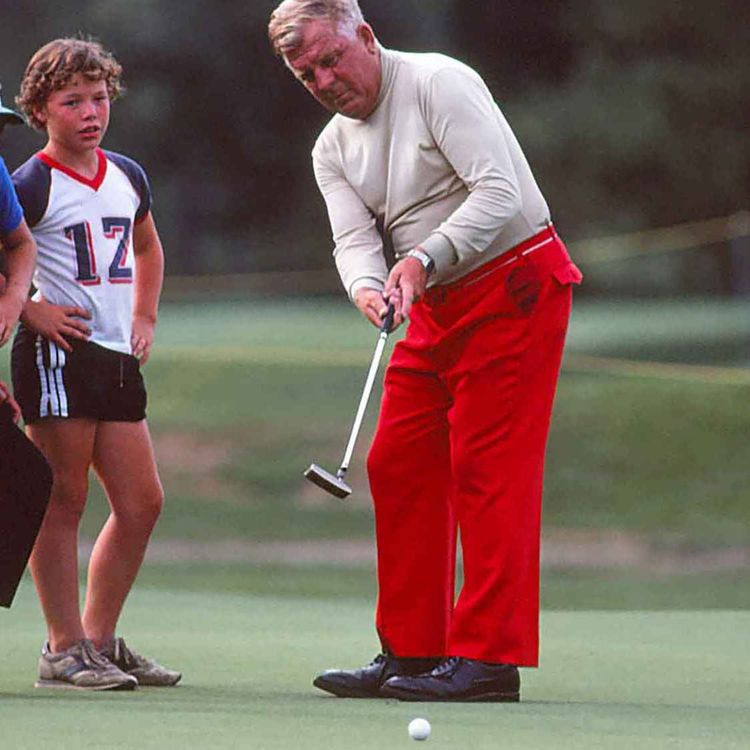
S11E19 Moe Norman: A Canadian Golf Legend
Moe Norman was a Canadian golf legend widely regarded as one of the greatest ball strikers in golf history. Born in Kitchener, Ontario, in 1929, Norman became famous for his remarkable accuracy, consistency, and unique single-plane swing technique. During his career he won more than 50 Canadian tournaments, including several Canadian PGA Championships. Although he struggled to adapt socially to the pressure and culture of the PGA Tour, many professional golfers, including Tiger Woods and Lee Trevino, praised his extraordinary talent. Moe Norman died in 2004 but remains an iconic figure in Canadian golf history.
Lorne Rubenstein is a Canadian writer, broadcaster, and journalist best known for his work covering golf. He has written extensively for major newspapers and magazines, authored several books on golf (including two on Moe Norman), and earned respect for his thoughtful commentary on the sport, its players, history, and culture in Canada and internationally. He is a member of the Canadian golf hall of fame for his work and in 2018 received the PGA Lifetime Achievement Award.
Check out Canyon Entertainment’s newest podcast Hostile History!
Don’t forget! You can purchase a copy of Punching Above Our Weight: The Canadian Military at War Since 1867 right now at the below links:
More episodes
View all episodes
CCH Spotlight - The Welland Canal
15:20|For this CCH spotlight episode we 'dive' into the history of the Welland Canal, or really, the Canals. A major infrastructure project that shaped the economic future of the Niagara Peninsula, Ontario and Canada.
S12E1 Lake Ontario (not Lake America)
34:38|Today, Lake Ontario has surged into headlines after President Donald Trump ordered it renamed "Lake America" for U.S. federal use, igniting outrage across Canada. The centuries-old name—shared by a lake that's more than half Canadian—has become the latest flashpoint in an escalating cross-border political and cultural dispute. To kick off our 12th season we are diving deep into the history of Lake Ontario. Daniel Macfarlane is a Professor in the School of Environment, Geography, and Sustainability at Western Michigan University. His most recent book is "The Lives of Lake Ontario: An Environmental History" (September 2024).Check out Canyon Entertainment’s newest podcast Hostile History!Hostile History on SpotifyHostile History on AppleHostile History on AmazonDon’t forget! You can purchase a copy of Punching Above Our Weight: The Canadian Military at War Since 1867 right now at the below links: AmazonIndigoDundurnGoodreadsIndiebookstores.caSummer Reboot - The Fall of Hong Kong
17:09|This summer reboot looks at the fall of Hong Kong in December 1941.**Announcement** - Season 12 kicks off next week! First episode of the new season drops September 8th!Summer Reboot - Trumps First Tariff War
48:35|This is a reboot from an episode we did back in season 10 when President Donal Trump was first elected and completely upended the economic relationship with Canada in a shocking application of across the board tariffs. Sadly, it seems that history is repeating!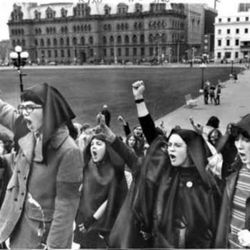
Summer Reboot - The VWC and the 1970 Abortion Caravan
17:25|Our summer reboot takes us to 1970 when the Vancouver Women's Caucus heads to Ottawa to protest Canada's changing but still restricted laws on abortion.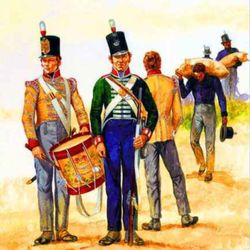
Summer Reboot - The Upper Canadian Militia and the Defence of Canada
16:52|A summer reboot series looking at the challenges of mustering the militia in Upper Canada when British North America was threatened by American invasions.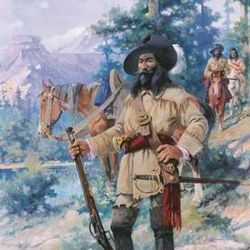
Summer Reboot - La Famille Verendrye and the Exploration of the North American Continent
15:43|The Verendrye family played a crucial role in expanding French knowledge of western North America during the eighteenth century. Led by Pierre Gaultier de Varennes, Sieur de La Vérendrye, and later assisted by his sons, they established a network of trading posts stretching from Lake Superior to present-day Manitoba and Saskatchewan. Their expeditions strengthened the French fur trade, forged alliances with many Indigenous nations, and greatly improved European maps of the interior. Although they never found the long-sought route to the Pacific Ocean, their journeys opened the Canadian Prairies to further exploration and laid the groundwork for later western expansion.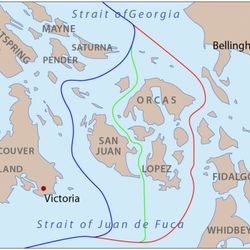
Summer Reboot - The Pig War of 1859
14:57|Even though Season 11 has officially ended we still have a few summer gems for you listeners. For this episode of our Summer Reboot series we go back to the 1850s and look at the Pig War of 1859 in an episode we did back in Season 4. The Pig War was a bloodless border dispute between Britain and the United States on the San Juan Islands. Triggered when an American settler shot a British-owned pig, both nations deployed troops. Diplomacy prevailed, and international arbitration in 1872 awarded the islands to the United States. Enjoy!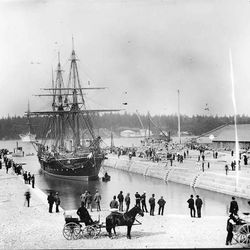
S11E22 Canada's Pacific Station - A History of Esquimalt Naval Harbour Part 2
30:28|Picture a quiet harbour on the southern tip of Vancouver Island. Calm waters. Towering forests. It seems peaceful enough—but beneath that surface lies a story that helped shape Canada's Pacific coast. Long before warships lined the docks, Indigenous peoples lived and thrived here. Then came explorers, empires, sailors, and soldiers, each leaving their mark on what would become Esquimalt Harbour. How was this natural harbour connected to broader British imperial interests in Latin America? And how did it allow the British to project imperial power over the First Nations of the Pacific Northwest? Was this the final key in completing the Canadian project? "Scott Stephen is a historian and educator based in North Vancouver, British Columbia. He is currently working in education policy and as a consultant for Trailmark Systems. Scott’s research areas include British imperial history, British Columbia’s history and naval history. His work on the Esquimalt naval base began during his graduate studies at UBC, and he won the Jacques Cartier MA prize for 2024 from the Canadian Nautical Research Society for his thesis.His recent article “Esquimalt and its Latin American Connection: Linking British Concerns in Pacific Latin America to the Establishment of a Naval Base on Vancouver Island”, published in the Canadian Historical Review, repositions Pacific Latin America as an essential component to the navy’s interest in Esquimalt Harbour circa 1858 and details the larger imperial context within which that interest arose.Check out Canyon Entertainment’s newest podcast Hostile History!Hostile History on SpotifyHostile History on AppleHostile History on AmazonDon’t forget! You can purchase a copy of Punching Above Our Weight: The Canadian Military at War Since 1867 right now at the below links: AmazonIndigoDundurnGoodreadsIndiebookstores.ca