Share

Conversations Live with Stuart McNish
Energy & The Environment
In December the BC Utilities Commission (BCUC) quashed FortisBC’s plans to build a natural gas pipeline in the Okanagan – a $327 million project that would have seen a 30-kilometer line and two related power stations built to meet growing demand for gas in BC’s southern interior.
FortisBC is warning that without additional natural gas transport capacity the region could start experience natural gas shortages in the winter of 2026/27, less than three years from now.
The reason? The BCUC found the plan did not account for a downturn in demand for natural gas as the province moves away from generating energy from fossil fuels and adopting more clean energy. The regulator found the forecast demand “is highly unlikely to occur.”
BCUC’s chair & CEO and the President & CEO of Fortis BC are part of our panel for a conversation about Energy & The Environment April 2. The panel:
- Mark Jaccard, Chair and CEO of the BC Utilities Commission
- Roger Dall’Antonia, President & CEO, FortisBC
- Karen Tam Wu, Climate action advocate & policy advisor
- Barry Penner, Chair of the Energy Futures Initiative
- Andras Vlaszak, Director, Energy Transition Project Development & Finance, Global Infrastructure Advisory, KPMG
There’s no question the climate is changing and urgent action is needed. But is increasing electricity use the answer for BC?
Shortly after the BCUC decision BC Hydro revealed it imported about 20 per cent of the electricity British Columbians consumed last year – due both to constrained generation as drought reduced the water available at hydro dams and increasing demand as our population grows and we drive more electric vehicles and install more heat pumps in our homes.
Most of that imported power came from Washington State, California, and Alberta. According to the California Energy Commission and the US Energy Information Administration California and Washington State produce environmentally sound power from sources including hydro, solar, nuclear, and geothermal – but also from burning natural gas, biomass, and even coal. As for Alberta, according to the Canada Energy Regulator that province generates 89 per cent of its power from burning coal and natural gas.
The Site C Dam is set to come online this year and will help increase our available supply of hydro power, but the amount BC Hydro imported in 2023 is twice that facility’s predicted annual production.
Water levels are low due to drought again this year, and a recent report is warning the combination of increasing demand and generation constraints will only get worse in coming years, even with Site C.
What’s the answer to this very complex challenge?
We hope you can join us for the conversation – on webcast 7 p.m. April 2.
More episodes
View all episodes
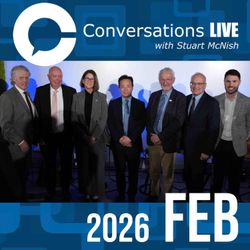
7. The Mayors
01:29:16||Season 4, Ep. 7Are BC mayors actually equipped to handle the biggest issues facing our province in 2026?In this special edition of Conversations Live, we sit down with a powerhouse panel of British Columbia mayors to discuss the "nuts and bolts" of running local jurisdictions during a period of unprecedented change. From the provincial government’s aggressive new housing mandates to the "street disorder" crisis fueled by mental health and addiction, these leaders pull no punches about what is and isn't working.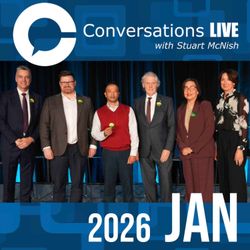
6. Minerals for a Changing World: Exploration, Economic Resilience & Enablement
01:02:52||Season 4, Ep. 6In this special episode of Conversations Live, recorded at AME Roundup 2026, industry leaders come together to examine the future of mineral exploration and development in British Columbia and across Canada.As global demand for critical minerals accelerates, driven by the clean energy transition, geopolitical tensions, and supply chain security, panelists warn that declining exploration activity, regulatory uncertainty and lengthy permitting timelines could cost Canada a once-in-a-generation opportunity. The conversation explores why exploration and discovery are foundational to Canada’s economic prosperity, national sovereignty, and industrial strategy. This episode highlights both the risks of inaction and the path forward emphasizing the need for certainty, collaboration, and alignment with global market demand.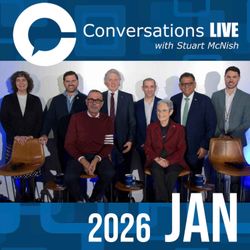
5. Canada’s Immigration System: Where to from here?
01:08:21||Season 4, Ep. 5Canada’s immigration system is at a critical turning point. In this episode of Conversations Live, an expert panel examines how record levels of permanent and non-permanent immigration have impacted housing affordability, health care, education, infrastructure, labour markets, and community planning and what recent policy shifts mean for Canada’s future.The discussion explores whether immigration targets have been aligned with community capacity, how governments can better coordinate policy and what a sustainable, transparent immigration system should look like. We brought together perspectives from government, academia, business, housing, and immigrant services to better understand where Canada’s immigration system is headed and what needs to change.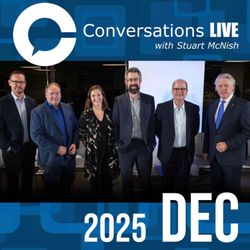
4. Cybersecurity
01:14:17||Season 4, Ep. 4Conversations Live took a deep dive into one of the most urgent issues of our time: Cybersecurity.From AI-powered deepfakes to the rising cost of cybercrime in Canada, our expert panel broke down the threats and the opportunities shaping our digital future. Vancouver’s growing role as a cybersecurity hub was a standout theme.A big thank-you to our panel: Milos Stojadinovic (RBC), Erik Berg (KPMG), Bijan Sanii (INETCO), Dominic Vogel (Vogel Cybersecurity Leadership), Michael Argast (Kobalt.io) and Katie Fitzmaurice (Invest Vancouver).
3. Unlocking BC's Economy: Innovative First Nations Partnerships
01:01:36||Season 4, Ep. 3The B.C. economy continues to shrink but we are looking for creative ways to turn the tide! Conversations Live is partnering with the Indigenous Partnership Success Showcase to spotlight the innovative collaborations that are bringing growth back to the province.Our panel will bring together leaders driving progress through partnership and entrepreneurial thinking. Featuring:Chief Derek Epp, Ch’íyáqtel First NationCatherine Pennington, KPMGStephen Lee, Musqueam Capital CorpJeff Mycock, West FraserBob Rennie, rennie IntelligenceHosted by Stuart McNish Be part of the conversation that’s shaping B.C.’s economic future and celebrate the partnerships and ideas unlocking growth in British Columbia!
2. BC's Innovation Economy - Can we Train, Retain and Attract the Best & Brightest?
01:15:27||Season 4, Ep. 2With British Columbia’s economy on a slow downward trajectory, one question stands out:Can the innovation economy boost the province’s performance?The answer might be yes if we can train, retain, and attract the best and brightest minds. But that’s no easy task in a world competing fiercely for talent.Recent U.S. policy changes, including a $100,000 H-1B visa fee, could give BC an unexpected advantage. But can our strengths outweigh our challenges?Join Stuart McNish and an exceptional panel of leaders as they unpack what it will take for BC to lead in innovation and talent attraction:Allen Eaves, STEMCELL TechnologiesSue Paish, DigitalMarc Low, KPMGLisa Sparrow, CorixWendy Hurlburt, Life Sciences BCKarn Manhas, Terramera
1. Investing in BC in Partnership with First Nations
01:01:19||Season 4, Ep. 1Canada and BC are introducing legislation to fast-track major projects in energy, mining, forestry, and infrastructure. On the surface, it signals that investment is welcome in our nation again.But here’s the reality: without meaningful consultation and partnership with First Nations, these projects risk delays or outright failure.That’s why projects developed with Indigenous communities move faster, gain approvals more smoothly, and succeed more often.Join Stuart McNish for the season premiere of Conversations Live as he speaks with a remarkable panel of leaders about how Indigenous partnerships are reshaping Canada’s development landscape:Crystal Smith - Former Chief Councillor, Haisla NationMark Magnacca - Co-Chair, Canadian Indigenous Investment SummitJP Gladu - Principal, MokwatehGlen Clark - Chair, BC HydroDallas Smith - President, Nanwakolas CouncilMike McPhee - Executive Chairman, Falkirk Consulting Ltd.
21. Canada - US Relations?: One on One with Ambassador Hoekstra
34:23||Season 3, Ep. 21On Thursday, July 24 at 5 p.m., Conversations Live welcomes Pete Hoekstra, the newly appointed U.S. Ambassador to Canada, for an exclusive and timely discussion on the evolving relationship between our two nations.From long-standing trade partnerships to moments of political tension, the Canada-U.S. relationship has been described as both special and complicated. In this live episode, Ambassador Hoekstra joins host Stuart McNish to explore the economic, diplomatic, and security issues that continue to define our cross-border ties.
20. The Energy Trilemma: Accessibility, Sustainability, Affordability
01:08:24||Season 3, Ep. 20Energy access and sustainability are at the heart of Canada's economy and British Columbia is facing a pivotal moment.How can we ensure energy security, equitable access, and environmental responsibility in a rapidly evolving landscape?Join us on Conversations Live for a timely and thought-provoking panel on June 17 at 5:30 PM. We’ll explore BC’s current energy mix, still dominated by electricity and fossil fuels, and the practical realities of transitioning to alternatives.