Share

Reality Check
The white working class ceiling, private schools & why Britain's failing – with Joanna Marchong
A report has suggested that white working class children are being failed by the education system that is 'not serving in [their] interests'. Burnham blames a lack of aspiration – but does this issue, like many others in Britain really stem from an overbearing state? Michael Simmons is joined by the Head of Communications and External Affairs at Onward, Joanna Marchong to discuss educational outcomes between ethnicities and the private school VAT charge.
This episode is brought to you by Alliance Witan investment trust. To learn more about the trust and how we’re helping investors find their comfort zone, please visit Alliance Witan (ALW) | Investment Trust.
This episode is brought to you by Raymond James. Combining deep insights into who you are with our financial expertise, that’s the power of personal. Investment involves risk.
Become a Spectator subscriber today to access this podcast without adverts. Go to spectator.co.uk/adfree to find out more.
For more Spectator podcasts, go to spectator.co.uk/podcasts
Contact us: podcast@spectator.co.uk
More episodes
View all episodes

Can Alan Milburn get Britain’s young back to work?
14:57|Alan Milburn wants to scrap Pip for under-25s and replace the Universal Credit health element with a new youth allowance. He says the plan could get 440,000 young people into work within a decade and eventually save £3.6 billion a year. With 981,000 young people not in education, employment or training, nobody disputes the scale of the problem. They disagree about its cause.Milburn insists this is not a generation lacking resilience. Yet his own report finds that benefit claims have outpaced any rise in ill health, and it warns of overdiagnosis of ADHD and autism. Michael Simmons puts that contradiction to Milburn directly. He also asks whether the National Insurance and minimum wage rises are pricing young people out of the jobs they need most.Can welfare reform get a generation back to work – or is the deeper problem a loss of resilience that no policy can fix?This episode is brought to you by Raymond James. Combining deep insights into who you are with our financial expertise, that’s the power of personal. Investment involves risk. raymondjames.uk.com
Why we are not in an AI bubble – yet
32:18|Is the AI bubble about to burst or is the boom only just beginning? As investors pile into AI stocks, tech valuations soar and central banks raise interest rates, comparisons with the dotcom crash are growing. But are we really heading for another market meltdown?To make sense of it all, Michael Simmons speaks to Giulio Bertini, a former European Central Bank employee and hedge fund trader – author of Ten Moments That Defined Markets – about the extraordinary rise and collapse of the dotcom bubble. They discuss the similarities with today's AI boom, why he actually believes the market still has further to run – and what there is to be positive about the British approach to AI. You can find Giulio’s book Ten Moments That Defined Markets here.Produced by Patrick Gibbons and Henry Lloyd.
Dan Neidle on Britain's most hated tax
20:40|Inheritance tax is one of Britain's most unpopular taxes – but why, when so few people actually pay it? Michael Simmons is joined by tax expert Dan Neidle, founder of Tax Policy Associates, to explore why the tax hits the middle classes while the super-rich often escape it. They discuss the Conservatives' plans to exempt family homes, the unintended consequences for the housing market, and Neidle's radical proposal to overhaul the system. Plus, why are Britain's politicians so reluctant to pursue meaningful tax reform?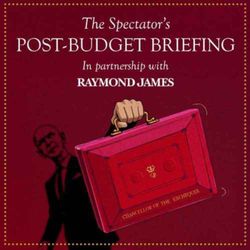
The Spectator's post-budget briefing – with Tim Shipman & Michael Gove
29:24|The Spectator’s editor Michael Gove, political editor Tim Shipman, economics editor Michael Simmons, economist and CEO of the Great British Business Council Catherine McBride and Harry Bell, director of financial planning at Raymond James, will give their insights into the autumn Budget, just hours after it is announced.
LIVE: Healey's Budget – trick or treat?
33:28|Chancellor John Healey has just delivered his first Budget of the Andy Burnham premiership – but has he done enough to turn the economy around?In this special live edition of Reality Check, economics editor Michael Simmons is joined by deputy political editor James Heale, former Treasury adviser – and Managing Director of Forefront Advisors – James Nation and pollster Scarlett Maguire – founder of Merlin Strategy, to unpack the Budget. From £100 energy payments and downgraded growth forecasts to what this means for Britain’s banks – is the Chancellor offering households genuine 'breathing space'?Plus: has this first Burnham-Healey Budget stoked the flames, or dampened expectations, of an early general election?Produced by Patrick Gibbons.
‘Devolution is not a growth plan’: Andy Haldane on Burnham, Badenoch & the Budget
43:00|Andy Burnham’s first Budget as Prime Minister is approaching – but higher borrowing costs have already made the sums more difficult. Former Bank of England chief economist Andy Haldane joins Michael Simmons to warn that Britain has little room left to borrow more.For this episode of Reality Check, Andy tells Michael what could be in next week’s Budget, why devolution alone is not a growth strategy and why he appears to have praised Kemi Badenoch’s economic policies this week. Plus: they discuss the Bank of England’s record on inflation – with Haldane arguing the Bank has not 'learnt its lesson’. What would he have done differently?Produced by Patrick Gibbons and Henry Lloyd.
Fraser Nelson exposes Britain's welfare pipeline
47:59|Is Britain’s welfare state still a safety net or has it become a pipeline for long-term dependency? Almost one in ten six-year-olds are now categorised as disabled through the benefits system and, on current trends, that figure would rise to one in four 16-year-olds.Reality Check’s Michael Simmons speaks to The Times's Fraser Nelson – former editor of this parish – about his investigation into Britain’s welfare system: why mental health and behavioural claims among children have surged, how disability benefits can follow young people into adulthood and why the system can leave people financially worse off for working. Can Britain break the welfare ‘pipeline’ and what would real reform look like?This episode is brought to you by Artemis Fund Managers, for more information on our fund range please click here: https://www.artemisfunds.com/Produced by Patrick Gibbons.
LIVE: Why aren't Britain's young people working? | with Laura Trott
39:02|For this special edition of Reality Check, economics editor Michael Simmons hosts a panel from Conservative Party conference on Britain’s growing NEETs crisis: the hundreds of thousands of young people not in education, employment or training. He is joined by shadow education secretary Laura Trott, the CBI’s Megan Bulford, Spectator commissioning editor Lara Brown and the CPS's Daniel Herring.Why are so many young people struggling to enter the labour market, and is the problem education, welfare, the cost of hiring or something deeper? The panel debate the value of university compared with apprenticeships, whether tax and employment regulation are shutting younger workers out, and whether Britain’s welfare system is making it too easy for young people to fall out of work altogether. Plus: are rising anxiety and poor mental health driving the crisis or are they symptoms of a labour market that is failing the young?Produced by Patrick Gibbons and Oscar Edmondson.
A history of the bond markets – with Robin Wigglesworth
36:29|Will the next debt crisis arrive as a sudden market rout – or is Britain already in the foothills of a slower one? Bond markets are back in the headlines, with every move in gilt yields read as a verdict on Westminster. Michael Simmons speaks to the editor of FT Alphaville Robin Wigglesworth, author of A Fabulous Debt, about where bonds came from, who the 'bond vigilantes' really are, whether Liz Truss has a point about the Bank of England and why Britain's index-linked gilts have become so expensive. This episode is brought to you by Artemis Fund Managers, for more information on our fund range please click here https://www.artemisfunds.com/ Produced by Oscar Edmondson and Henry Lloyd