Share

Reality Check
Reality Check – Trailer
•
Introducing... Reality Check – the new podcast from The Spectator – that cuts through the spin and explains the numbers behind the noise. In each episode, The Spectator’s economics editor Michael Simmons and in-the-know guests will make a data-driven case on a story hogging the headlines. Follow to never miss an episode.
Become a Spectator subscriber today to access this podcast without adverts. Go to spectator.co.uk/adfree to find out more.
For more Spectator podcasts, go to spectator.co.uk/podcasts
Contact us: podcast@spectator.co.uk
More episodes
View all episodes
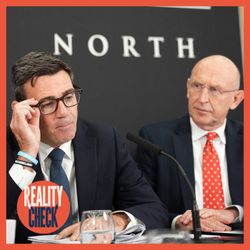
Budget 2026: who is left to tax?
08:55|With two months to go until Andy Burnham and John Healey’s first Budget, speculation about tax rises is already beginning. But how much should we believe?Michael Simmons looks at five facts about Britain’s tax system that should shape the debate – from a tax burden heading towards post-war highs to the surprising reality that taxes on the average worker remain relatively low. And with the wealthy already heavily squeezed, is there really anyone left to tax?This episode is brought to you by Artemis Fund Managers, for more information on our fund range please click here https://www.artemisfunds.com/
The ADHD boom: are we medicalising normal behaviour?
14:56|The backlash to Channel 4’s The Great ADHD Myth has reignited a fierce debate over how we diagnose ADHD – and whether that debate itself is becoming impossible to have.Michael Simmons looks at the extraordinary rise in diagnoses, the gap between recorded cases and underlying prevalence, and asks whether we are increasingly medicalising normal variations in behaviour.Is Britain finally recognising a vast amount of unmet need – or has diagnosis begun to serve a social as well as a medical function?This episode is brought to you by Artemis Fund Managers, for more information on our fund range please click here https://www.artemisfunds.com/
Heatwave: the truth about Britain’s water crisis – and what it means for net zero
17:00|Britain is in the grip of another hot, dry summer, with hosepipe bans in force and fears growing about the country’s water supply. But are we really running out of water?Michael Simmons is joined by Reality Check reporter John Power to explain what is actually behind the shortages, whether Britain needs more reservoirs and why nationalising the water companies may not be the answer. They also ask what the drought tells us about the future of net zero – and how Britain should adapt to a changing climate.This episode is brought to you by Artemis Fund Managers, for more information on our fund range please click here https://www.artemisfunds.com
Britain’s AI problem isn’t data centres – it’s electricity
24:47|Britain wants to become an AI superpower – but does it have the electricity to power one? Data centres underpin everything from online banking and streaming to artificial intelligence, and demand for them is exploding. The government has designated them as critical national infrastructure and is promising billions of pounds of investment, but Britain’s ageing grid is already struggling to keep up.Michael Simmons asks whether the UK can build enough power stations, transmission lines and substations to support the AI revolution – and what the consequences could be for electricity bills, water supplies and local communities. He is joined by entrepreneur Michael Tobin and American energy journalist Robert Bryce to discuss why Britain needs data centres, the growing backlash against them and whether the country risks being left behind in the global AI race.This episode is brought to you by Alliance Witan investment trust. To learn more about the trust and how we’re helping investors find their comfort zone, please visit Alliance Witan (ALW) | Investment Trust.
Labour doesn’t understand business and it shows – with Oliver Shah
22:52|Oliver Shah is a former journalist at The Sunday Times and now runs Newcome Advisory. On this week's Reality Check Oliver and Michael discuss why Labour can't build trust with the businesses, how the National Insurance tax hike was the poison pill for the private sector and whether it is still worth being an entrepreneur in Britain today. This episode is brought to you by Alliance Witan investment trust. To learn more about the trust and how we’re helping investors find their comfort zone, please visit Alliance Witan (ALW) | Investment Trust.
Social care reform: what the sector needs & what it doesn't – with David Goodhart
23:25|Andy Burnham has launched a major push to overhaul adult social care in England, seeking cross-party consensus for a new National Care Service. He has refused to rule out tax rises to fund the reforms. Michael Simmons speaks to the author and journalist David Goodhart about why social care should be reframed as prevention, whether salaries should be increased in social care and why the public isn't as worried as politicians tend to panic about. This episode is brought to you by Alliance Witan investment trust. To learn more about the trust and how we’re helping investors find their comfort zone, please visit https://www.alliancewitan.com/
Could women be the solution to Britain's prison problem?
19:24|Amid rising backlash over the early prisoner release scheme, Kemi Badenoch has called for emergency legislation to stop the plans going ahead. The new Prime Minister Andy Burnham has already halted the plans until a review has been conducted. The situation with prison overcrowding is a ticking timebomb – what options are available? To alleviate the risk, some suggest women should be prioritised as candidates for early release, and women's prisons repurposed. To discuss, Michael Simmons is joined by the CEO of the Prison Reform Trust Pia Sinha. This episode is brought to you by Alliance Witan investment trust. To learn more about the trust and how we’re helping investors find their comfort zone, please visit Alliance Witan (ALW) | Investment Trust.
The real problem behind Britain's homelessness & why Burnham won't fix it
14:04|Andy Burnham has laid out some of his top policy agendas for his premiership. Top of the list is to tackle homelessness – something the former Manchester mayor pledged to solve in Greater Manchester too, but the numbers have suggested the outcome was otherwise. What really needs to be done to fix homelessness in Britain? And how does his other policy of rent controls work against ending rough sleeping? Michael Simmons takes a look at the data.This episode is brought to you by Alliance Witan investment trust. To learn more about the trust and how we’re helping investors find their comfort zone, please visit Alliance Witan (ALW) | Investment Trust.
Fact check: Rupert Lowe on Joe Rogan
17:04|Last week, the Joe Rogan Experience podcast released a two-hour interview with Rupert Lowe, leader of the Restore party. Was Lowe there merely to create content – or is Restore a serious political party? Some of his statements suggest it’s the former rather than the latter. The Spectator's John O'Neil wrote a piece for the website correcting some of Lowe's claims. He joined Michael Simmons on this week's Reality Check.This episode is brought to you by Alliance Witan investment trust. To learn more about the trust and how we’re helping investors find their comfort zone, please visit Alliance Witan (ALW) | Investment Trust.