Share

Coffee House Shots
Why Makerfield changes everything | Tim Shipman, James Lyons, Luke Tryl & Michael Simmons
Andy Burnham has won what may come to be seen as the most consequential by-election in recent memory. Political journalism has a tendency towards hyperbole, but the situation is clear: Burnham is on his way to Westminster with significant backing to take on Keir Starmer; he has proved that he can beat Reform on a ‘stop Starmer’ ticket and will now look to translate that message nationally; he also appears to have united the left behind him, with the Lib Dems and Greens barely registering in Makerfield.
Meanwhile, the right is splintered. Reform’s momentum has been seriously dented, while the Tories have been buoyed by a welcome by-election victory in Aberdeen South. Big questions remain: will Starmer step aside with decorum, or subject the country to a painful Labour leadership contest? And after their fifth by-election defeat, where does this leave Nigel Farage?
Political editor Tim Shipman is joined by a panel of guests and experts to unpack Andy Burnham’s win in Makerfield and the wider ramifications of a huge day in British politics.
Become a Spectator subscriber today to access this podcast without adverts. Go to spectator.co.uk/adfree to find out more.
For more Spectator podcasts, go to spectator.co.uk/podcasts.
Contact us: podcast@spectator.co.uk
More episodes
View all episodes
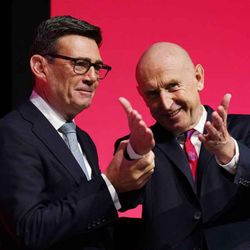
Burnham's first budget – trick or treat?
15:42|Budget week is finally here but it's also the week of Hallowe'en so Patrick Gibbons asks James Heale and Michael Simmons: will Burnham's first budget be one of tricks or treats? There have been a drip-feed of announcements over the weekend, from pensions to rough sleeping, so what have we learnt about the Budget on Wednesday – and about Burnhamism more generally? Plus: a sign of hope or the wrong message – we discuss whether John Healey should drink at the despatch box.You can catch the Spectator's livestream events on Wednesday, following the Budget, at spectator.co.uk/tvProduced by Patrick Gibbons.
Isabel Hardman's Sunday Roundup - 25/10/2026
15:22|Isabel Hardman presents highlights from Sunday morning's political shows.The Budget is fast approaching, and Andy Burnham wants to talk about freedom of movement.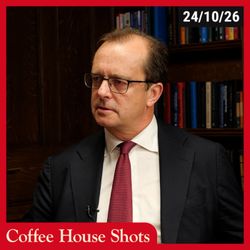
SAS witch hunt: is Britain betraying its own special forces?
31:25|Just days after The Sunday Times revealed that five SAS soldiers were sent back into the war zone while under a three-year murder investigation, MPs passed the Northern Ireland Troubles Bill, which the SAS Regimental Association has threatened to challenge in the High Court. To understand it's implications, Tim Shipman speaks to Richard Williams, former commanding officer of the SAS, about lawfare, the chain of command and what it means for Britain’s standing with Washington.Produced by Oscar Edmondson and Henry Lloyd
EXCL: Andy Haldane turns on Burnham’s Budget plans
17:49|Andy Burnham’s first Budget as Prime Minister is approaching – but have higher borrowing costs already made the sums more difficult for the Prime Minister and his Chancellor, John Healey? Former Bank of England chief economist Andy Haldane joins Michael Simmons to warn that Britain has little room left to borrow more.In this segment from the Reality Check podcast, they discuss what could appear in next week’s Budget, Andy's thoughts about a potential wealth tax and the difficulties faced by the Bank of England.To listen to the full episode, search for Reality Check wherever you get your podcasts, or watch it on The Spectator’s YouTube channel.Produced by Patrick Gibbons and Henry Lloyd.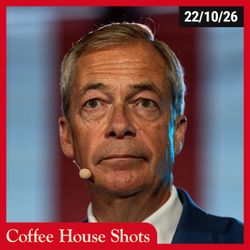
24 hours with Nigel Farage
15:28|On today’s Coffee House Shots, James Heale reports back after spending 24 hours with Reform leader Nigel Farage. It’s a fascinating time to get access to Reform HQ: the party has been rocked by a succession of sting operations, they await the verdict on the £5 million gift from Christopher Harborne, and Farage's favourability ratings are in the doldrums. How is Farage holding up? And does he still have the zeal for campaigning?Also today, Michael Simmons and Tim Shipman have written The Spectator’s definitive guide to next week’s Budget. What should we expect from the Chancellor?Oscar Edmondson speaks to James Heale and Michael Simmons.Produced by Oscar Edmondson.
Drill Andy drill! – Burnham's small victory
11:51|A week before the budget, and hours after ministers approved drilling at the Jackdaw gas field, Andy Burnham faced off with Kemi Badenoch at Prime Minister’s Questions in what James Heale reckons was the PM’s first win in the Commons since taking office. James and Isabel Hardman join Tim Shipman to dispute the score, pick over what Badenoch missed on welfare and immigration, and work out why John Healey’s budget may be smaller than expected.Produced by Henry Lloyd
The Tories are back in the conversation
12:35|Kemi Badenoch has delivered a major speech on the economy ahead of next week's Budget, calling for welfare cuts to fund higher defence spending. But with some encouraging economic figures, is her attack on Labour landing?Meanwhile, new polling suggests the Conservatives are reclaiming their position as the main opposition to Labour. Badenoch says she wants Reform voters back – but not its MPs. Are the Tories back in the conversation? And could Labour's divisions over immigration offer the Tories another opening?Oscar Edmondson speaks to Michael Simmons and Noa Hoffman.Produced by Oscar Edmondson.
LIVE: Who won conference season? | with Scarlett Maguire
25:49|For this live edition of Coffee House Shots, James Heale and Lara Brown are joined by pollster and strategist Scarlett Maguire at the Battle of Ideas Festival to unpack the party conference season and look ahead to the Budget.Who emerged from conference season in the strongest position, and why are the Conservatives and Labour finding their feet while Reform and the Greens falter? With the Budget looming, could suspected tax rises on the banks help Labour avoid a repeat of the political fallout from Rachel Reeves’s budget last year? Can Reform broaden its appeal beyond immigration and make the economy part of its pitch? Plus: with Labour MPs seemingly united behind Andy Burnham, is this really the party’s last chance saloon?Produced by Abigail Brierley.
Isabel Hardman's Sunday Roundup - 18/10/2026
21:02|Isabel Hardman presents highlights from Sunday morning's political shows.Ministers react to Donald Trump's latest interventions in the war Russia-Ukraine conflict. And Zack Polanski is unapologetic in his reaction to the Green Party's 'Zionism is racism' motion.Produced by Joe Bedell-Brill.