Share
Coffee House Shots
Does British politics reward traitors or faithfuls?
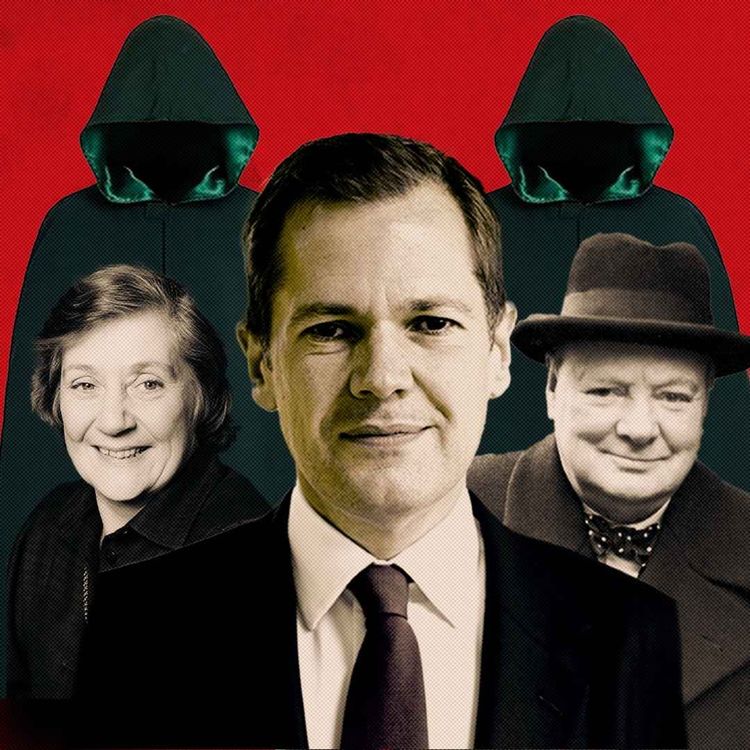
With the Conservatives on watch for further defectors, academic Richard Johnson and Conservative peer Danny Finkelstein join James Heale to discuss whether British politics rewards traitors or faithfuls. Richard points out that often personal success is dependent on whether the party goes on to be a major or minor player in British politics; Winston Churchill and Shaun Woodward fared better, while Shirley Williams and Mark Reckless had less success.
Danny – whose political career began with the SDP in the 1980s – also takes us through his personal experience and the challenges of defecting, from ideology and demography to the perception of betrayal. How fundamental is the shift taking place in British politics?
Produced by Patrick Gibbons.
Become a Spectator subscriber today to access this podcast without adverts. Go to spectator.co.uk/adfree to find out more.
For more Spectator podcasts, go to spectator.co.uk/podcasts.
Contact us: podcast@spectator.co.uk
More episodes
View all episodes

Chris Philp: mass immigration is making Britain ‘ungovernable’
32:59|Chris Philp joins James Heale to discuss what the Conservatives got wrong on immigration – and how they plan to fix it. The shadow Home Secretary argues that mass immigration risks making Britain ‘ungovernable’, says the last Tory government made a ‘catastrophic mistake’ after 2020 and explains why he thinks Reform still lacks a credible plan for government.He also lifts the lid on his time inside the Home Office, from civil service resistance to the Rwanda scheme to the legal constraints he believes stop ministers controlling the borders.Produced Oscar Edmondson and Abigail Brierley.
Burnham's 'new politics' is much the same as the old
12:09|After his first PMQs Andy Burnham came away relatively unscathed, although his dream of a 'new politics' may be rapidly falling apart. To dissect what went on in the chamber, James Heale is joined by Tim Shipman and Isabel Hardman to go over today's more feisty exchanges.Produced by Oscar Edmondson
Politics returns: Tories reshuffle & Starmer slopes off
12:29|Politics is back – and it’s a bumper day in Westminster. Kemi Badenoch got ahead of the field yesterday by reshuffling her top team a day earlier than expected, and the changes are much more comprehensive than first thought. James Cleverly is off to run for the London mayoralty, while Priti Patel and Mel Stride have both been given the boot. Katie Lam takes over Cleverly’s housing brief, while Andrew Griffith will hope to bring some much-needed energy to the role of shadow chancellor. So what does the reshuffle tell us about Badenoch’s strategy – and what does it mean for the Tories’ economic offer?Elsewhere, Keir Starmer has resigned as an MP. Listeners may remember that he used to joke that Rishi Sunak would be the one to leave politics behind for sunnier Californian climes. Now, the shoe appears to be on the other foot.Oscar Edmondson speaks to Tim Shipman and James Heale.Produced by Oscar Edmondson.
Reality Check: who's left to tax?
08:55|To listen to more from the Reality Check podcast, go to spectator.com/reality-checkWith two months to go until Andy Burnham and John Healey’s first Budget, speculation about tax rises is already beginning. But how much should we believe?Michael Simmons looks at five facts about Britain’s tax system that should shape the debate – from a tax burden heading towards post-war highs to the surprising reality that taxes on the average worker remain relatively low. And with the wealthy already heavily squeezed, is there really anyone left to tax?This episode is brought to you by Artemis Fund Managers, for more information on our fund range please click here https://www.artemisfunds.com/
How to write about Farage
19:26|Reform has spent the summer taking lumps out of itself, with the battles leaking into public view, and it's position in the polls slipping to around 25 percent. Just in time for conference season, James Heale is joined by Nick Tyrone, whose new book The Rise of Reform is the product of 18 months trailing the party's candidates and activists, to discuss whether Nigel Farage can get the show back on the road before the May 2027 local elections.Produced by Oscar Edmondson and Henry Lloyd
Is Burnham ready for the world stage?
16:31|Andy Burnham's first overseas trip as Prime Minister took him to Ukraine this week, offering the first real glimpse of what his foreign policy might look like. But with a budget and a party conference ahead, how much time can a PM elected on a domestic agenda really give to the world stage? Oscar Edmondson is joined by James Heale and the foreign policy analyst, Sophia Gaston, to assess Ed Miliband's early moves at the Foreign Office, why Jonathan Powell has made himself indispensable to Britain's allies, and who is in the running to replace Olly Robbins as permanent secretary.Produced by Henry Lloyd
Al Carns: we are failing Northern Ireland veterans – and why I quit government
14:47|Former veterans minister Al Carns joins James Heale to discuss the government’s handling of Northern Ireland legacy cases – and why the issue helped drive him to resign.Writing in The Spectator this week, Al attacks the ‘two-track approach’ to legacy cases, which he says could cost taxpayers billions, and warns against allowing the history of the Troubles to be ‘rewritten through the courts’. He argues that Labour failed to listen properly to veterans before changing the law and sets out what more should be done to protect those who served in Northern Ireland.What was it like fighting the issue from inside government? Did Keir Starmer understand the strength of feeling – and will Andy Burnham take a different approach?Produced by Oscar Edmondson.
Shadow cabinet reshuffle: what to expect | with Lord Goodman
14:24|With Parliament returning next week, the Conservatives are in a much stronger position than they were this time last year. That said, questions remain – not least when it comes to Kemi Badenoch’s top team. A reshuffle is apparently scheduled and, while it won’t be a total overhaul, there could be a few surprises.James Heale and Lord Goodman join Oscar Edmondson to discuss Badenoch’s improving position, why a Tory–Reform pact now looks increasingly unlikely, and who could be in line for promotion. Plus: could Penny Mordaunt be blocked from standing again – and does the Tory party have a growing talent problem?Produced by Oscar Edmondson.
Is Reform right to prioritise ‘British-born’ citizens?
13:04|Lee Anderson and Richard Tice fronted another Reform presser yesterday, this time on their plans for council housing, should they be elected to government. Included in the announcement was the desire to prioritise council housing for married couples with children, as well as 'British-born' citizens. To analyse this fresh distinction, Oscar Edmondson and James Heale are joined by Ameer Kotecha to go over the plans, and ask whether it is right to draw a line between the Brits who are born here, and those who are not.Produced by Henry Lloyd