Latest episode
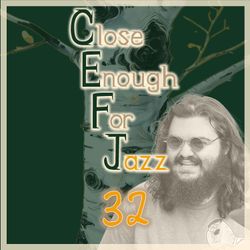
32. Why Physical Media Matters and the NYC DIY Scene with James Paul Nadien
58:29||Season 1, Ep. 32We sit down with incredibly prolific drummer James Paul Nadien to explore his packed gig schedule, ranging from free improvisation and brutal death metal to holding down the drum chair for The Flying Luttenbachers. James talks about his recent trip to China playing the Tomorrow Festival with Weasel Walter, detailing the stressful visa process and the dedicated audience waiting for them in Shenzhen. We go deep into his thoughts on the "uncanny valley" effect of hearing AI-generated music, and why he believes physical media like CDs and cassettes are essential, tangible tools for unplugging from social media addiction. We also compare the legendary Brooklyn loft party scenes of the 2000s to today's fleeting DIY venues, reflect on the appeal of the current Berlin jazz scene, and explore how James adapts his playing style for everything from acoustic string groups to tracking at the historic Rudy Van Gelder Studios. Chapter Timestamps:00:00 - Intro: A crazy schedule00:43 - Is music school worth it? (Studying at the New England Conservatory)04:18 - Growing up with Beatles fanatics and Tom Petty tribute bands07:13 - The Brooklyn loft party scene and surviving DIY venues13:38 - Why younger musicians are returning to CDs and physical media20:04 - The "uncanny valley" effect of AI-generated music28:16 - Touring China with Weasel Walter and The Flying Luttenbachers37:32 - The Berlin jazz scene and an upcoming European tour40:37 - The band Typo: Playing drums alongside violin and cello44:24 - Double kick pedals and playing brutal death metal48:30 - Tracking 40+ albums and using the "Two out of Three" gig rule57:28 - Why there is a rubber chicken on the drum setBIRCH GROVE MEDIAWeb: birchgrove.ioFollow us: @birch.grove.media on Instagram.Watch on YouTube: youtube.com/@BirchGroveMediaGet the Record: Shop our current 180g LP and digital releases on our website. Rate and review us on Apple Podcasts or Spotify.
More episodes
View all episodes
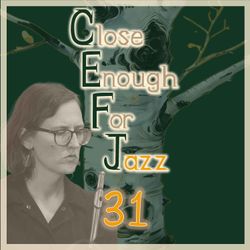
31. Combating Writer’s Block, Composing for Big Bands, and Extended Techniques with Anna Webber
41:44||Season 1, Ep. 31We sit down with composer and saxophonist Anna Webber to explore her disciplined compositional process and look ahead to her upcoming nonet album, It's Easier to Imagine the End of the World. Anna explains how she maintains a daily composition practice by avoiding time crunches, relying on pencil and paper, and utilizing "rogue cop police walls" to combat writer's block. We dive into her strategies for writing difficult "etudes" designed to challenge heavy-hitting musicians, and the financial realities of co-leading a big band with Angela Morris. We also reflect on her time studying in Berlin with John Hollenbeck and how she integrates extended techniques and microtonality into her work. Finally, she previews her upcoming nonet release, inspired by the writings of Noam Chomsky, Angela Davis, and Naomi Klein as a hopeful response to late-stage capitalism. Note: Birch Grove Media does not own the recordings featured in this episode.Timestamps:01:47 - Developing a daily, disciplined compositional process05:14 - The benefits of writing slowly without time crunches07:05 - Composing with pencil and paper vs. the computer10:07 - Strategies for breaking out of writer's block14:42 - Studying in Berlin with John Hollenbeck17:39 - The financial realities of co-leading a big band with Angela Morris23:21 - Finding inspiration in extended techniques and microtonality28:52 - Navigating misogyny and the "boys club" mentality in jazz education36:08 - Previewing her upcoming nonet release, It's Easier to Imagine the End of the WorldBIRCH GROVE MEDIAWeb: birchgrove.ioFollow us: @birch.grove.media on Instagram.Watch on YouTube: youtube.com/@BirchGroveMediaGet the Record: Shop our current 180g LP and digital releases on our website. Rate and review us on Apple Podcasts or Spotify.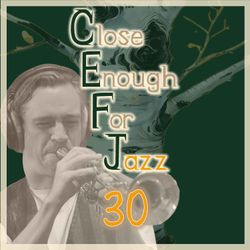
30. Pure Improvisation, the Denver Jazz Scene, and Turning Off the Inner Critic with Kenny Warren
53:39||Season 1, Ep. 30We sit down with trumpeter Kenny Warren to explore the boundless possibilities of modern improvisation and the magic of trusting your instincts on the bandstand. Kenny opens up about his deep connection to free improvisation, describing it as a childlike state of uninhibited play, and details how he turns off his "inner critic" during esoteric sessions. We reflect on his formative years in the Denver scene with the legendary Ron Miles, his "jazz prog rock" roots with JP Schlegelmilch, and the collaborative strength of their current project, Slow Tiger. Kenny also shares his thoughts on the process of mixing and editing albums—comparing psychedelic post-production to a David Lynch film—and discusses how he adapts his compositions when writing for his Sweet World trio.Note: Birch Grove Media does not own the recordings featured in this episode.Catch the Slow Tiger album release gig at Three's Brewing on September 27th.Timestamps:00:30 - Forming the Sweet World trio and adjusting to unique instrumentation02:34 - The slippery slope of editing and mixing your own albums07:59 - The "David Lynch" moments of psychedelic editing in jazz08:37 - Taking inspiration from cellist Hank Roberts09:29 - The magic of pure improvisation vs. playing written music on tour17:32 - Navigating uninspired moments on the bandstand19:57 - Trusting the process and turning off the "inner critic"26:21 - Growing up in the Denver jazz scene with Ron Miles30:35 - How to compose for specific musicians and adapting to line-up changes42:09 - The history of Slow Tiger and taking inspiration from Sonic Youth46:13 - Balancing the writing duties in a collective band51:34 - Outro: Making new music with Tyler Gilmore and Carlo CostaBIRCH GROVE MEDIAWeb: birchgrove.ioFollow us: @birch.grove.media on Instagram.Watch on YouTube: youtube.com/@BirchGroveMediaGet the Record: Shop our current 180g LP and digital releases on our website. Rate and review us on Apple Podcasts or Spotify.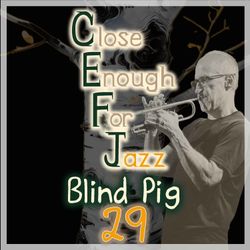
29. Revisiting the Golden Era of Williamsburg Jazz with the Alessi Quartet
47:21||Season 1, Ep. 29We open the vault for another installment of our Blind Pig series, traveling back 20 years to September 15, 2006, for a rare bootleg of the Ralph Alessi Quartet live at Layla Lounge. In this episode, we revisit a nostalgic set at the Williamsburg Jazz Festival featuring Ralph Alessi on trumpet, Brad Shepik on guitar, Scott Colley on bass, and a 26-year-old Tyshawn Sorey on drums. We reflect on the vibrant, pre-condo Brooklyn loft scene of the mid-2000s, exploring the history of lost venues and the grassroots origins of the Williamsburg Jazz Festival. We also unpack what these heavyweight musicians were up to in 2006, from Alessi’s School for Improvisational Music (SIM) to Brad Shepik’s Balkan folk-jazz integrations, while listening to the quartet's intense interplay over the ambient sounds of a Brooklyn hookah bar. Note: Birch Grove Media does not own the recordings featured in this episode.Timestamps:00:25 - Introducing the Ralph Alessi Quartet bootleg from September 15, 200610:41 - Tyshawn Sorey’s dynamic playing and Brad Shepik's groovy soloing12:33 - The aesthetic of Layla Lounge and mid-2000s Williamsburg14:43 - The history of the Williamsburg Jazz Festival and the FONT festival17:08 - Ben Neill's Mutantrumpet and other featured festival artists27:53 - Hookah lounge acoustics and talking during the bass solo30:30 - What Alessi, Shepik, and Colley were recording in 200632:58 - A 26-year-old Tyshawn Sorey touring with Steve Coleman45:27 - "Allesorey": The intense duo interplay between Ralph and TyshawnBIRCH GROVE MEDIAWeb: birchgrove.ioFollow us: @birch.grove.media on Instagram.Watch on YouTube: youtube.com/@BirchGroveMediaGet the Record: Shop our current 180g LP and digital releases on our website. Rate and review us on Apple Podcasts or Spotify.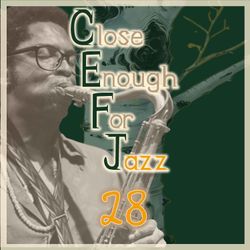
28. Jazztronica, Dream Melodies, and The Big Machine with Aaron Burnett
45:44||Season 1, Ep. 28This episode features saxophonist Aaron Burnett to explore his evolution into "Jazztronica," discussing everything from auditioning for Wynton Marsalis over the phone to building a custom digital pedalboard in Ableton. We examine his unique compositional process, which he describes as "downloading" full melodies from his dreams—a method that helped him write his upcoming swinging, nostalgic album Archangel at just 21 years old. Aaron breaks down his boundary-pushing group The Big Machine and details his use of audio-to-MIDI pitch followers to manipulate his saxophone sound. We also discuss his experiences touring with powerhouse vocalists like Esperanza Spalding and Corinne Bailey Rae, including a nightmare scenario where an airline destroyed his baritone saxophone right before a week of gigs. Packed with stories about going viral with drum and bass remixes and shouting out the next generation of killer musicians, this episode covers the cutting edge of modern improvised musicNote: Birch Grove Media does not own the recordings featured in this episode.Chapter Timestamps:01:01 - The culture of sitting in on gigs and finding inspiration05:22 - The Big Machine: Fusing modern classical, hard bop, and world music07:11 - Creating "Jazztronica" with Ableton and audio-to-MIDI modules12:19 - Branding the music and the upcoming Quantum Breaks project16:37 - Bringing dance music back into the modern jazz ecosystem17:27 - Taking inspration from Tyshawn Sorey, Morton Feldman, and Steve Coleman21:53 - Going viral on social media with a drum and bass remix of "Countdown"25:51 - Touring with Esperanza Spalding and Corinne Bailey Rae28:43 - "Downloading" melodies from dreams and the upcoming Archangel album31:38 - Auditioning for Wynton Marsalis over the phone with "Cherokee"37:25 - Shouting out the next generation of killer jazz musicians41:07 - Aaron's best gig ever: Roulette with Craig Taborn and Tyshawn Sorey42:17 - The worst gig ever: Playing a European tour with a broken baritone saxophoneBIRCH GROVE MEDIAWeb: birchgrove.ioFollow us: @birch.grove.media on Instagram.Watch on YouTube: youtube.com/@BirchGroveMediaGet the Record: Shop our current 180g LP and digital releases on our website. Rate and review us on Apple Podcasts or Spotify.AARON BURNETThttps://www.instagram.com/aarondjuan/?hl=enhttps://aarondburnett.bandcamp.com/https://soundcloud.com/aaron-burnett-musichttps://www.youtube.com/@aaronburnett476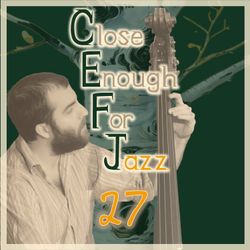
27. Inside the Mind of Chris Tordini: Upright Bass vs. Electric and Prioritizing Opportunities
57:16||Season 1, Ep. 27We sit down with highly in-demand bassist Chris Tordini to discuss his unique approach to the instrument, from his early days playing South Jersey bookstores to holding down the bass chair on Broadway. Chris shares the story of how he unexpectedly came to author two instructional books for Mel Bay, and why his early background in piano helped him seamlessly transition between guitar, electric bass, and upright bass. We talk about his formative years building a DIY jazz scene in South Jersey, how he navigates the New York gig economy using his trusty "two out of three" rule, and the realities of playing eight shows a week on Broadway's Hadestown. Chris also shares his strategies for staying grounded when playing with intense drummers—drawing inspiration from veteran bassist Drew Gress—and recounts a disastrous 2022 European tour featuring a flip-phone-wielding bandleader that taught him the ultimate lesson in trusting his gut. Note: Please go find and enjoy the music of Timo Vollbrecht, Marko Churnchetz, Alec Goldfarb, Chris Speed and Angelika Niescier. A few clips of their music were reposted in this episode. Birch Grove Media does not claim ownership of these performances or musical works, and is not monetizing this episode. This is shared purely for educational and archival appreciation.Chapter Timestamps:00:00 - Intro: Sweating with certain drummers00:25 - Writing two upright bass books for Mel Bay06:00 - Translating technique between electric and upright bass11:06 - Taking the "rock route" to the upright bass13:08 - Growing up and gigging in the South Jersey music scene18:25 - How to prioritize gigs: The "Two out of Three" rule24:41 - Practicing quarter tones, polyrhythms, and meditative focus28:01 - Keeping calm while playing with intense, complex drummers29:56 - Finding inspiration in Drew Gress's relaxed playing at the Village Vanguard32:00 - Knowing when to step out and when to be the glue36:44 - Taking over the bass chair on Broadway's Hadestown42:32 - The mental challenges of playing repetitive shows eight times a week47:55 - Exploring groove-based improvisation and extreme math jazz51:04 - Storytime: The worst tourBIRCH GROVE MEDIAWeb: birchgrove.ioFollow us: @birch.grove.media on Instagram.Watch on YouTube: youtube.com/@BirchGroveMediaGet the Record: Shop our current 180g LP and digital releases on our website. Rate and review us on Apple Podcasts or Spotify.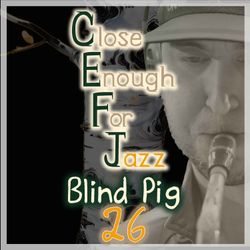
26. The Blind Pig Series - Bootleg from August 24, 2011
37:33||Season 1, Ep. 26We open the vault for another installment of our Blind Pig series, traveling back to August 24, 2011, for a rare recording of the Steve Lehman Trio featuring Carlos Homs at The Stone. In this episode, we revisit a blazing set featuring Steve Lehman on alto, Carlos Homs on keys, Chris Tordini on bass, and Damion Reid on drums, listening to a massive wall-of-sound take on Jackie McLean's "Mr. E", a lightning-fast run of Lehman's original "Curse Fraction" and more. Beyond the music, we explore the history and rules of The Stone under John Zorn's direction, including the strict "no bathroom breaks" policy and the origin of its name . We also discuss the 2011 curator scene and note how this unique, one-off quartet served as an early preview for the Sélébéyone project, tracing the group's collaborative roots back to Andrew Carrico's 2008 New School senior recital.Note: Please go find and enjoy the music of Steve Lehman, Carlos Homs, Chris Tordini and Damion Reid. A few clips of their music were reposted in this episode. Birch Grove Media does not claim ownership of these performances or musical works, and is not monetizing this episode. This is shared purely for educational and archival appreciation.Chapter Timestamps:00:00 - Intro: Someone has to... 01:15 - The Steve Lehman Trio featuring Carlos Homs at The Stone 08:42 - Listening to a burning take on Jackie McLean's "Mr. E" 10:05 - Discussing the infamous rules and history of The Stone 13:22 - The 2011 curator scene and Karl Berger's CMS workshops 23:06 - Carlos Homs floating over the top of Lehman's dense harmony 24:38 - What Tordini, Reid, and Homs were recording in 2011 27:08 - A preview of Sélébéyone and Andrew Carrico's 2008 senior recital 29:07 - A lightning-fast performance of "Curse Fraction"BIRCH GROVE MEDIAWeb: birchgrove.ioFollow us: @birch.grove.media on Instagram.Watch on YouTube: youtube.com/@BirchGroveMediaGet the Record: Shop our current 180g LP and digital releases on our website. Rate and review us on Apple Podcasts or Spotify.