Latest episode
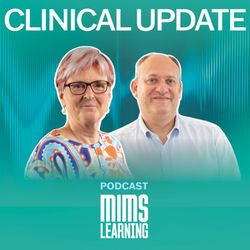
37. Identifying and managing childhood food allergy, with Professor Adam Fox
31:49||Season 6, Ep. 370.5 CPD hoursThe bulk of childhood food allergy is dealt with in primary care, yet access to educational opportunities for GPs have been ‘limited’, according to Professor Adam Fox in conversation with MIMS Learning editor Pat Anderson.In this interview recorded in August 2026, he provides tips for GPs on spotting symptoms, conducting investigations, and advising parents. He also highlights management options including the use of adrenaline auto-injectors, the introduction of nasal adrenaline, and the potential of biologics and immunotherapy.NB: the nasal adrenaline product mentioned received marketing authorisation in July 2025, and a lower-dose formulation for younger children received marketing authorisation in June 2026.Educational objectivesAfter listening to this podcast, GPs and other healthcare professionals should be better able to:Take an allergy-focused history and advise on the role of allergy testingDistinguish between immediate and delayed allergic reactionsUnderstand the link between eczema and food allergyAdvise parents on early introduction of common allergenic foodsUnderstand what to consider when deciding whether to prescribe an adrenaline auto-injectorUnderstand the role of nasal adrenaline as an alternative to injected adrenalineFind useful resources such as NICE guidance and BSACI resourcesYou can access the website version of this podcast, along with key learning points, on MIMS Learning. MIMS Learning offers hundreds of hours of CPD for healthcare professionals, along with a handy CPD organiser and note-taking for appraisal.Please note: this podcast is presented by medical editors and discusses educational content written or presented by doctors, nurses and other healthcare professionals on the MIMS Learning website and at live events.ResourcesMIMS LearningGuidance update: anaphylaxisFeeding difficulties in infantsEczema management: latest therapies
More episodes
View all episodes
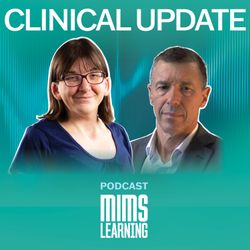
36. Podcast: the past, present, and future of GLP-1 medications with Professor John Wilding
24:45||Season 6, Ep. 36GLP-1 medications, long-established as treatments for type 2 diabetes, are now recognised as highly effective treatments for managing obesity. In this episode of the Clinical Update podcast, Professor John Wilding talks to Dawn Liz Powell about how evidence is building for new ways to support people living with obesity.As well as the development of subcutaneous and oral GLP-1 medications and how they work, Professor Wilding discusses their current role in the management of type 2 diabetes and obesity, their potential additional benefits (such as cardiovascular risk reduction), and their possible side-effects. Looking to the future, he says that there are ‘over 50 drugs in either phase II or phase III development’ including amylin analogues, triple analogues, and a monthly GLP-1/GIP antibody injection. Educational objectivesAfter listening to this podcast, healthcare professionals should be more aware of:How GLP-1 medications work for both type 2 diabetes and for obesityTheir current role in the management of obesityThe risks and benefits of GLP-1 medicationsWhat new oral preparations for weight loss are emerging New and combination medications that may be available in the futureYou can access the website version of this podcast, along with key learning points, on MIMS Learning. MIMS Learning offers hundreds of hours of CPD for healthcare professionals, along with a handy CPD organiser and note-taking for appraisal.Please note: this podcast is presented by medical editors and discusses educational content written or presented by doctors, nurses and other healthcare professionals on the MIMS Learning website and at live events.MIMS LearningObesity in adultsObesity and pregnancyObesity podcourse with Dr Patrick Holmes, part 1: metabolic vulnerabilityObesity podcourse with Dr Patrick Holmes, part 2: established metabolic diseaseObesity podcourse with Dr Patrick Holmes, part 3: obesity and multiple comorbiditiesMIMSObesity treatments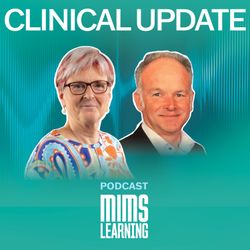
35. Supporting patients with Parkinson’s disease, with Dr Alistair Church
21:35||Season 6, Ep. 350.5 CPD hoursParkinson’s disease is ‘not a condition of one person’ because the families of people with Parkinson’s are very much affected by the condition, according to Dr Alistair Church. In this episode of the Clinical Update podcast, he talks to MIMS Learning editor Pat Anderson about the role of GPs in the management of the condition. He says GPs are ‘the spider in the middle’ of support for patients — first in picking up signs and symptoms, referring promptly, and helping patients with all the aspects of the condition that can be managed in primary care. Dr Church also highlights ‘lots of energy’ around the development of disease-modifying therapy for Parkinson’s in the medium term.Educational objectivesAfter listening to this podcast, healthcare professionals should be better able to:Recall the prevalence of Parkinson’s diseaseUnderstand how Parkinson’s is a ‘family disease’ in terms of the family’s rolePick up signs and symptoms that may suggest Parkinson’sBe alert to the possibility of Parkinson’s in younger patientsDistinguish Parkinson’s from other neurological conditionsUnderstand the key role of exercise in managing Parkinson’sSupport patients by managing non-motor aspects of the diseaseBe aware of the prospects for disease-modifying therapy in futureYou can access the website version of this podcast, along with key learning points, on MIMS Learning. MIMS Learning offers hundreds of hours of CPD for healthcare professionals, along with a handy CPD organiser and note-taking for appraisal.Please note: this podcast is presented by medical editors and discusses educational content written or presented by doctors, nurses and other healthcare professionals on the MIMS Learning website and at live events.ResourcesMIMS LearningGuidance update: latest NICE guidelines on neurological conditionsTremor - red flag symptomsGuidance update: latest NICE guidelines on neurological conditions
32. Obesity podcourse with Dr Patrick Holmes, part 1: metabolic vulnerability
12:03||Season 6, Ep. 32Sophie is 28 years old, lives with obesity, and has just discovered that she is pregnant with her second child. Prior to her pregnancy, a blood glucose test indicated that she had pre-diabetes. In this episode, the first of a three-part podcourse, GP Dr Patrick Holmes reviews how to support Sophie through pregnancy, and after delivery,how to reduce the risk of further weight gain and progression to type 2 diabetes.Educational objectivesAfter listening to this podcourse episode, healthcare professionals should be more aware of:How to raise the issue of weight sensitivelyThe modifiable and non-modifiable factors that can drive obesityManagement priorities in a pregnant woman with obesityLong-term goals after pregnancy in a woman living with obesityListen to this three-part audio series, then go to mimslearning.co.uk to read downloadable worksheets and test your knowledge, to ensure you are up to speed with all the key points primary care professionals need to know about obesity management.If you enjoy a blend of online learning and podcast-style listening that you can fit into your busy life, then this podcourse is for you.MIMS LearningObesity podcourse with Dr Patrick Holmes, part 1: metabolic vulnerabilityObesity podcourse with Dr Patrick Holmes, part 2: established metabolic diseaseObesity podcourse with Dr Patrick Holmes, part 3: obesity and multiple comorbidities
33. Obesity podcourse with Dr Patrick Holmes, part 2: established metabolic disease
11:12||Season 6, Ep. 33In the second episode of this three-part podcourse, Sophie is now 35 years old and is approaching obesity class 3. She has also developed young-onset type 2 diabetes, dyslipidaemia, and hypertension. This represents disease progression from when we first met Sophie in episode 1 where she was 28 years old and living with obesity class 1. GP Dr Patrick Holmes discusses available treatment options for Sophie now that she has established metabolic disease, and how to reduce the risk of further disease progression. Educational objectivesAfter listening to this podcourse episode, healthcare professionals should be more aware of:The available treatment options for established metabolic diseaseNICE recommendations for managing young-onset type 2 diabetesThe effect of established metabolic disease on quality of lifeHow parental obesity can affect the health of the whole familyListen to this three-part audio series, then go to mimslearning.co.uk to read downloadable worksheets and test your knowledge to ensure you are up to speed with all the key points primary care professionals need to know about obesity management.If you enjoy a blend of online learning and podcast-style listening that you can fit into your busy life, then this podcourse is for you.MIMS LearningObesity podcourse with Dr Patrick Holmes, part 1: metabolic vulnerabilityObesity podcourse with Dr Patrick Holmes, part 2: established metabolic diseaseObesity podcourse with Dr Patrick Holmes, part 3: obesity and multiple comorbidities
34. Obesity podcourse with Dr Patrick Holmes, part 3: multiple comorbidities
11:52||Season 6, Ep. 34After seeing Sophie at 28 years (first episode) and at 35 years (second episode), the third and final episode of this podcourse looks at Sophie at 40 years old. She now has multiple obesity-related comorbidities — hypertension, type 2 diabetes, dyslipidaemia, obstructive sleep apnoea and metabolic dysfunction-associated steatotic liver disease. GP Dr Patrick Holmes reviews how to reduce Sophie's risk of experiencing a cardiac event and improve her quality of life.Educational objectivesAfter listening to this episode, healthcare professionals should be more aware of:The effect of having multiple obesity-related comorbidities on life expectancy and quality of lifeHow weight loss medication, such as tirzepatide, could improve the health status of a person living with multiple obesity-related comorbiditiesThe need to provide non-pharmacological support to people living with obesity, regardless of whether they are taking weight loss medicationsHow, without effective intervention, a person with obesity can progress from metabolic vulnerability, to established metabolic disease, and to having multiple comorbiditiesListen to this three-part audio series, then go to mimslearning.co.uk to read downloadable worksheets and test your knowledge to ensure you are up to speed with all the key points primary care professionals need to know about obesity management.If you enjoy a blend of online learning and podcast-style listening that you can fit into your busy life, then this podcourse is for you.MIMS LearningObesity podcourse with Dr Patrick Holmes, part 1: metabolic vulnerabilityObesity podcourse with Dr Patrick Holmes, part 2: established metabolic diseaseObesity podcourse with Dr Patrick Holmes, part 3: obesity and multiple comorbidities
31. Deprescribing opioids in primary care, with Dr Faheem Shakur
23:07||Season 6, Ep. 31‘Successful opioid deprescribing is built on trust. Listen to patients, acknowledge that their pain is real, avoid stigmatising language, and involve them in every decision. Patients are much more likely to engage when they feel supported rather than judged,’ Dr Faheem Shakur says in this episode of the Clinical Update podcast.Dr Shakur explains that while opioids do have a role in the management of acute pain, they should not routinely be used to manage chronic pain. He reviews how primary care teams can identify patients who may benefit from coming off opioids, how best to reduce opioid use while deploying other ways to manage pain, and how to build trust with patients so that they engage in the process.If an opioid is appropriate, according to Dr Shakur, it should be prescribed at the lowest effective dose for the shortest possible duration with a clear stop date or review date. Patients should be informed, from the beginning, that the opioid will only be used for a limited time. Educational objectivesAfter listening to this podcast, healthcare professionals should be more aware of:When prescribing an opioid is, and is not, appropriate in primary careThe place of opioid deprescribing within strategies for better pain management How to ensure patients are not left on opioids long termHow practices can identify patients on opioids who would benefit from a medication reviewRed flags that indicate a patient may be dependent on opioidsStrategies for deprescribing opioids, including how to engage patients in the processHow to identify and manage withdrawal symptoms You can access the website version of this podcast, along with key learning points, on MIMS Learning. MIMS Learning offers hundreds of hours of CPD for healthcare professionals, along with a handy CPD organiser and note-taking for appraisal.Please note: this podcast is presented by medical editors and discusses educational content written or presented by doctors, nurses and other healthcare professionals on the MIMS Learning website and at live events.MIMS LearningOsteoarthritis: clinical reviewCase study: chronic pain reviewGuidance update: NICE guidelines on chronic pain in over 16s