
Latest episode
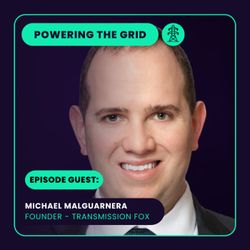
Interconnection software: why needs to be improved
44:04|Gigawatt loads are being studied on software that looks like it was built for Windows 95. The math underneath has barely changed. Everything around it has.Clare Southworth talks with Mike Malguarnera of Transmission Fox about the state of interconnection modeling and what it would take to make the results worth trusting.In this episode:Why interconnection software has not moved since the 1990s and how it makes results less reliableWhich utilities and regions are winning in the 'speed to power' raceWhat happens to a model when you have to solve for load and generation at onceUtilities and risk, and why nobody wants to lose ten cents to make a dollarMike Malguarnera has spent 15 years in power, starting on one of the last coal plants built in the United States, then resource planning and power market strategy at ACES, then solar and storage development and interconnection at BW Solar. He now runs Transmission Fox, helping developers review interconnection results and set transmission strategy.Views are his own
More episodes
View all episodes
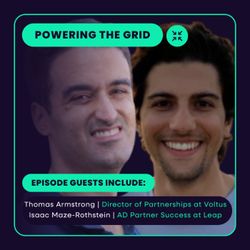
The importance of VPPs for Powering the Grid
48:57|Power demand in the US is outstripping the grid's current capacity, with interconnection queues taking years and transmission lines taking over a decade to build; the country urgently needs a short-term solution.Clare Southworth talks with Isaac Maze-Rothstein of Leap and Thomas Armstrong of Voltus about what virtual power plants can do.In this episode:Why VPPs can help with immediate needs and also long-term needs, and the importance of a flexible grid both financially and for reliabilityWhy extreme weather is just as important as data centers in pushing costs up for customersThe C&I gap, why it is currently on 1% of the market and the potential it can haveWhether data centers will flex, and whether anyone will pay them toThe market rules both guests would tear up, starting with PJM's ELCC deratesIsaac Maze-Rothstein is Associate Director of Partner Success at Leap, where he helps partners get more value from grid services. He previously led research on virtual power plants, Bitcoin mining, and microgrids at Wood Mackenzie.Thomas Armstrong is Director of Partnerships at Voltus, focused on monetizing commercial and industrial batteries in wholesale markets. He worked in EV charging and for utilities before joining.Views are their own.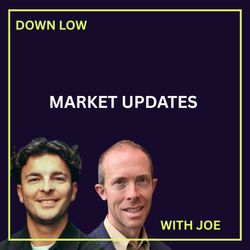
Mid Q1 Market Updates
46:05|In this episode of Down Low with Joe, Lewis Martin is joined by Joe Aamidor for a market update on what is shaping the smart buildings industry in 2026.They cover Copeland's acquisition of Bueno, what it says about OEM digital strategy, and why more major players are pushing to own the software and data layer.They also unpack Cambio’s $18M Series A, the current state of sustainability software, and why this may now be more of a replacement market than a greenfield opportunity. Joe shares his view on fragmentation, TAM, and why smart buildings have not produced a single dominant software winner.The conversation also dives into Clockworks’ latest raise, the strength of the fault detection category, and why established leaders are still attracting capital. Finally, Lewis and Joe discuss Trane Cloud, the broader wave of OEM platform launches, and the challenge of building and scaling software inside large incumbents.Topics covered:Bueno acquired by CopelandWhy OEMs are doubling down on softwareCambio’s raise and sustainability software market dynamicsWhy TAM in smart buildings is often overstatedClockworks and the future of fault detectionTrane Cloud and OEM digital platformsThe challenge of building software inside large industrial companiesIf you work in smart buildings, HVAC, controls, real estate technology, or climate software, this episode is packed with sharp insight on where the market is heading.
Beyond the Dashboard with Derek John Mullassery
18:57|Most smart building systems are excellent at telling you what’s wrong.Far fewer are designed to change what happens next.In this episode of Quick Cuts, Ben Muwoki sits down with Derek John Mullassery (COO, CopperTree Analytics) to explore the shift from fault detection and diagnostics (FDD) to automated action inside commercial buildings. Fault detection is no longer novel. Dashboards and alarms are everywhere. The real constraint in modern building automation is execution.Derek explains how automated system optimisation and remote commissioning are moving the industry beyond detection and into action, while keeping operators in control.This conversation explores:Why “insight” does not equal impactThe gap between analytics and operational changeWhat it takes for software to safely write back to a BASWhy automation only scales when trust scalesThe importance of guardrails: traceable, reversible, explainable decisionsHow automated commissioning can test 100% of systems remotelyWhy culture, not technology, is often the bottleneckAbout Derek John MullasseryDerek is the Chief Operating Officer at CopperTree Analytics, a pioneer in building analytics and FDD. He works at the intersection of building automation, energy efficiency, and software-driven operational performance. His focus is on helping commercial buildings move beyond dashboards and alerts toward measurable outcomes, while maintaining operator trust and control. Throughout his career, Derek has worked closely with building owners, operators, and portfolio teams to scale analytics across complex real estate environments, bridging the gap between technology capability and real-world adoption.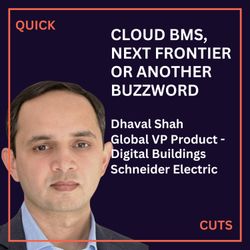
Cloud BMS: The Next Frontier or Just Another Buzzword? with Dhaval Shah | Schneider Electric
22:21|For years, building management systems have lived on-premise. Local servers. Mechanical rooms. Site-by-site maintenance.But as HVAC, lighting, and access control become increasingly IP-connected, the conversation around Cloud BMS is accelerating.In this episode of Quick Cuts, Ben Muwoki sits down with Dhaval Shah, VP and Head of Product, Software and Services Portfolio for Digital Buildings at Schneider Electric, to unpack what Cloud BMS actually means and whether it’s becoming an operational reality or remaining a strategy deck concept.In this episode, we cover:What “Cloud BMS” really means (hosted vs hybrid vs cloud-native architectures)Why CIOs are now driving the conversation around building systemsThe impact of IT/OT convergence on building automationCybersecurity, data governance, and resilience concernsHow portfolio scale changes the economics of BMS deploymentWhy hybrid architecture may be the practical transition pathWhat needs to happen for Cloud BMS to move from early adopter to mainstreamAs Dhaval explains, the shift is not just technical. It’s organisational. Once building systems sit on enterprise networks and connect to cloud platforms, they become part of broader IT strategy, cybersecurity policy, and portfolio-wide standardisation efforts.At scale, this stops being an architecture debate and becomes an operating leverage question.If you operate or deploy BMS across multi-site portfolios, this episode offers a grounded view of where Cloud BMS stands today and what to watch over the next few years.About Dhaval ShahDhaval Shah is VP and Head of Product, Software and Services Portfolio for Digital Buildings at Schneider Electric. He has spent his career across engineering and business leadership roles spanning industrial automation, automotive, solar energy storage, and building automation. He focuses on shaping the future of building systems through software, cloud architecture, and scalable service models.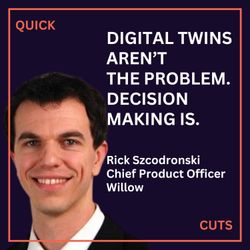
Digital Twins that Drive Decisions: Speed to Value, Adoption, & Operational AI with Rick Szcodronski
18:48|Digital twins have been in the smart building conversation for more than a decade. What is changing now is the expectation.In this Climate Gap Quick Cuts episode, Ben Muwoki sits down with Rick Szcodronski, Chief Product Officer at Willow, to unpack how digital twins are evolving from visualisation and data layers into decision-making platforms that operators can actually trust and use.This conversation covers what separates digital twin projects that scale from those that stall, why speed to value has become the real maturity test, and how AI is shifting operator workflows away from dashboards and towards clear, actionable decisions.Key topics covered- Why owners and operators are expecting measurable value from digital twins- Speed to value and why ROI has to show up in days, not months- Why adoption and internal champions determine whether deployments stick- Balancing technical accuracy with usability and real operational outcomes- Why the future is enterprise workflow integration, not standalone visualisation- How AI interfaces reduce cognitive load and change how decisions get madeAbout RickRick Szcodronski is the Chief Product Officer at Willow. He has spent his career in the smart building sector, starting in design consulting and smart building strategy before moving into product leadership. At Willow, he focuses on digital twin platforms and operational AI, helping owners and operators turn complex building data into practical decisions at portfolio scale.Subscribe for more interviews on smart buildings, digital twins, building automation, energy management, and operational AI.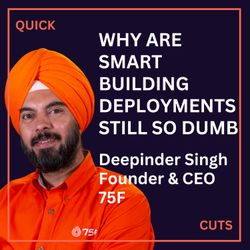
Why is smart building deployment still so slow, fragile, and expensive, decades into building automation with Deepinder Singh CEO 75F
20:18|In this episode of The Climate Gap: Quick Cuts, Ben Muwoki sits down with Deepinder Singh, Founder and CEO of 75F, to unpack a problem many facility operators already understand: the issue is not data. It is deployment.While enterprise towers often receive bespoke engineering attention, the mid-market, small, and midsize buildings where most people actually work face a different challenge. Equipment diversity, inconsistent standards, retrofit history, and fragmented systems make repeatability difficult at scale. The conversation explores whether AI can meaningfully improve smart building deployment, not by replacing expert engineers, but by helping everyday operators perform more consistently.Key themes include:Why mid-market buildings are not “simple” in aggregateThe concept of the zero-interface buildingAI as assistant, not replacementRaising the floor, not the ceilingClean data, consistent algorithms, and digital twinsStandardising deployment across diverse portfoliosThis episode challenges the industry to move beyond dashboards and toward systems that are easier to deploy, commission, and operate at scale. If you operate, design, or invest in building automation systems, BMS, energy management platforms, or AI-driven controls, this discussion is for you.About Deepinder SinghDeepinder Singh is the Founder and CEO of 75F, a vertically integrated IoT-based building controls company focused on intelligent HVAC automation for commercial buildings.A serial entrepreneur, Deepinder previously built companies in high-speed networking and infrastructure technologies. He is known for bridging advanced networking and software thinking into the building automation and energy management space. At 75F, he is leading the development of AI-enabled controls, digital twin architectures, and the concept of the “zero-interface building”, where operators interact conversationally with building systems rather than through traditional dashboards.His work focuses on improving deployment speed, commissioning quality, and operational consistency across the fragmented mid-market building sector.