Share

Security Clearance Careers Podcast
Top 10 Mid-Sized Contractors in the D.C. Region
•
The Washington Post recently surveyed the D.C. area for the eighth year in a row in its Top Workplaces survey, conducted in partnership with Energage, LLC. Over 65,500 employees in the area responded, representing 413 companies. While there are many organizations in the D.C. area, government contractors provide a broad range of work and support to the federal government. Here is part II, where we tell you the top 10 mid-size defense contractors to work for in the DMV - what is a common theme between these great companies? Most of them are ClearanceJobs partners 😉
Stay tuned for Part III in the next few weeks!
More episodes
View all episodes
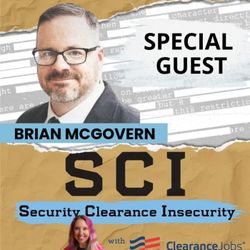
Who Am I Now? Finding Your Identity After the Uniform Comes Off
17:38|The military gives you an identity whether you want one or not: your rank, your uniform, your ribbon rack. When you take off the uniform, all of that disappears overnight.In this episode of Security Clearance Insecurity on Federal News Network, Lindy Kyzer of ClearanceJobs talks with Army veteran Brian McGovern. McGovern spent nearly 12 years on active duty as a paralegal specialist and public affairs specialist, with deployments to Iraq and Afghanistan, and left the Army as a staff sergeant. He is the author of Who Am I Now: An NCO’s Guide to Life, Work, and Identity After Military Service, a book less about landing your first civilian job and more about figuring out who you are before you decide what you want to do.Brian explains:Why your transition should start on day one, and why that isn’t disloyaltyWhy trading your rank for a CAC card and a badge reel can work as a “shock absorber” that postpones your identity shift instead of completing itWhat happens to an NCO’s sense of purpose when the 2 a.m. phone calls stopMoney mistakes that follow service members out, from 27% APR car loans to underestimating civilian cost of living, and why Guideline F makes financial health a career issueWhy your family is transitioning too, and the honest question every household should ask: whose turn is it to sacrifice?How he found his people after leaving the Army, as an introvert, by showing up consistently over timeIf you’re six months from getting out, Brian’s advice is simple: read chapter four.Get Who Am I Now here.Have a question or a topic you’d like covered? Email editor@clearancejobs.com.
ClearanceJobs Heads to Texas
15:37|From NFL veterans and military transitions to artificial intelligence and quantum technology, ClearanceJobs Connect San Antonio is bringing some big conversations to Texas.Cleared recruiting isn't your average talent acquisition gig. Between navigating security clearance requirements, shifting government contracts, evolving technologies, and an increasingly competitive talent market, recruiters supporting national security have a unique set of challenges. And sometimes, the best way to tackle those challenges is to get everyone in the same room. On November 5, ClearanceJobs Connect San Antonio will bring together cleared recruiting professionals, industry leaders, and subject matter experts at the InterContinental San Antonio Riverwalk for a full day of conversations about what's happening in our industry and where we're headed next. From finding purpose after military service to navigating AI in recruiting, here's a look at some of the conversations we're especially excited about.Conference: 8am-3pm https://about.clearancejobs.com/employers/events/clearancejobs-connect-san-antonio Career fair: 3pm-6pm https://about.clearancejobs.com/candidates/career-events/san-antonio-in-person
Clearance Horror Stories: What Applicants and Clearance Holders Need to Know
29:55|A security clearance problem rarely begins with a denial letter. More often, it starts with a financial issue, an arrest, undisclosed drug use, a forgotten foreign contact, or a decision not to report something because the clearance holder hopes it will quietly disappear. Then the paperwork arrives. In this episode of the Security Clearance Careers Podcast, security clearance attorney Matthew Thomas joins us to discuss clearance horror stories and, more importantly, what applicants and clearance holders can learn from them.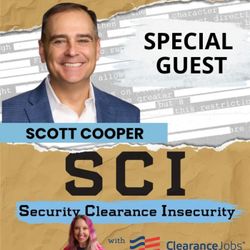
Radical Moderates and the Ethos of Service: Scott Cooper of With Honor
21:17|Lindy Kyzer of ClearanceJobs talks with Scott Cooper, a retired Marine who leads policy at With Honor, about veterans in Congress and what they get done when they work across party lines. Scott explains how With Honor started as an effort to elect more veterans to Congress. Today it supports the For Country Caucus, a bipartisan group of more than 50 House and Senate members he calls “radical moderates.” He describes the caucus’s role in passing the Russia Sanctions Act and the friendships behind its work.Lindy and Scott also cover:With Honor’s 13-month congressional fellowship, which gives mid-career professionals Hill experience. Veterans and military spouses get preference, but anyone can apply.The civil-military divide, and why it matters that veterans make up a larger share of Congress than of the general populationWhy security clearance reform has strong support from both parties, and how Congress shapes clearance policy through the NDAA and the Intelligence Authorization ActScott’s book recommendation, Courage Can Save Us, and the Winslow Homer painting that reminds him that service doesn’t end when you take off the uniformLearn more about With Honor: https://withhonor.org/ Have a topic that you'd like to cover? Send your questions to editor@clearancejobs.com.
PCS Moves, Career Gaps, and New Beginnings: How Military Spouses Can Get Ahead
30:54|Military spouses are no strangers to change. Between permanent change of station (PCS) moves, deployments, unpredictable schedules, and the constant balancing act of military family life, building a successful career can sometimes feel like an uphill battle. But those same experiences can also create some of the most adaptable, resilient, and resourceful professionals in the workforce.On this episode of the Security Clearance Careers Podcast, we're joined by Rae Mueller, who supports strategic accounts for Point Solutions Group, a ClearanceJobs brand, to discuss navigating a career as a military spouse, building professional relationships, and finding opportunities in the national security industry.
Cleared Jobs with Salaries Listed Over $150,000 Per Year
17:40|From creative work and defense business development to military advising, industrial risk, and telehealth, explore five ClearanceJobs listings with salary ranges reaching beyond $150,000. When someone says "high-paying cleared job," your mind might jump straight to software engineering or cyber. Those are certainly options, but they're far from the whole story. These five ClearanceJobs listings show how varied a six-figure career in national security can be. Each posted salary range reaches above $150,000, though that doesn't mean every candidate will earn that amount. Consider qualifications, location, and the final offer. For the part-time role below, hours worked count too.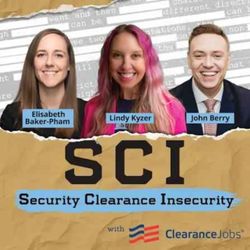
Growing the Pool: Jamie Jones Miller on Building the Next Generation of Cleared Talent
21:20|Government and industry keep competing for the same small pool of cleared professionals. How do we grow it? Lindy Kyzer of ClearanceJobs talks with Jamie Jones Miller of Northeastern University, a member of the ClearanceJobs Policy Advisory Board. Jamie got her first clearance at 19 as a Defense Intelligence Agency intern. She explains how Northeastern's co-op model sponsors students for clearances and places them with industry partners. They also discuss why scaling university programs is hard, the friction of reciprocity and eligibility timelines, and how to keep human judgment at the center as AI changes intelligence work. Hear Jamie in person at ClearanceJobs Connect Reston, October 15–16.
How to Get a Job at the Central Intelligence Agency (CIA)
29:12|What does it take to build a career spanning nearly four decades inside the CIA? And what can today’s cleared professionals learn from someone who has experienced the intelligence mission from just about every angle? On this episode of the Security Clearance Careers Podcast, we sit down with retired CIA officer Susan Miller to talk about the people, skills, and career paths behind the Intelligence Community.Miller spent nearly 40 years at the CIA, building a career that included HUMINT, counterintelligence, overseas assignments, leadership positions, and serving as a Chief of Station. But like many intelligence professionals, her path into the field may not look exactly like what aspiring IC employees expect.
Landing the Job Isn’t the Finish Line: Rethinking Military Transition
25:20|When we talk about leaving the military, we tend to talk about the checklist.Build a resume. Translate your MOS. Start networking. Apply for jobs. Figure out SkillBridge. Prepare for interviews. And, if you’re part of the cleared community, try not to let that security clearance collect dust while you figure out what comes next.Those things matter. But they’re also only one piece, because landing a civilian job and successfully transitioning into civilian life are not necessarily the same thing.On a recent episode of the Security Clearance Careers Podcast, I sat down with Emily King Grandinetta, a behavioral scientist, Master Certified Coach, organizational consultant, military transition expert, and author of At Ease: The Guide to a Smooth & Successful Military Transition, to talk about what happens beyond the resume and job offer.