Share
Citizen Science Show
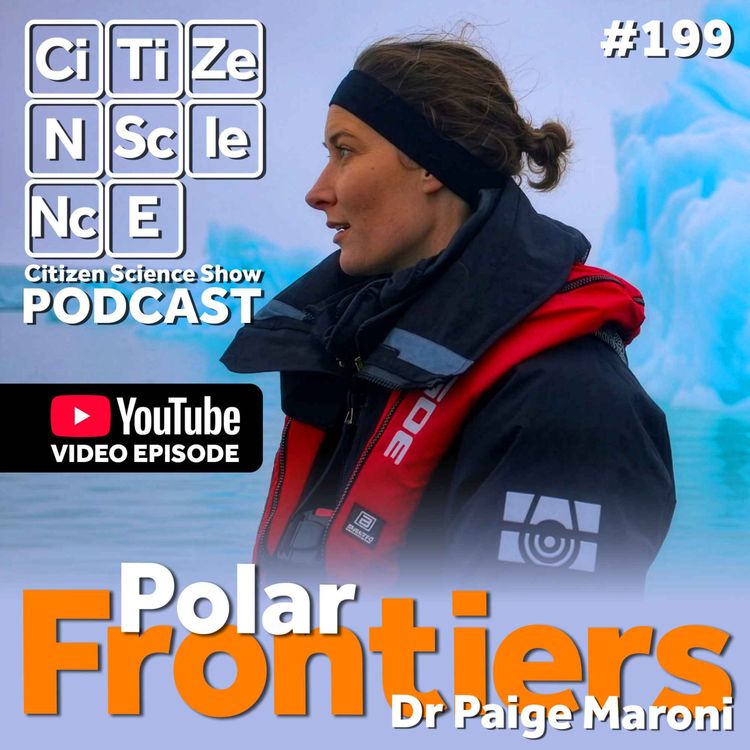
Polar Blast and Yachts for Science. Mapping the ocean floor with Dr Paige Maroni (#199)
Ever wondered how you could contribute to ocean science without being a scientist yourself?
In this episode, we speak with Dr Paige Maroni, founder of the Polar Blast Project, about how private yacht owners, captains and crews around the world are helping scientists access some of the most remote and least understood marine environments on Earth.
From automated water samplers to remotely operated vehicles surveying the Antarctic seafloor, Paige reveals just how many ways an ordinary vessel, and an ordinary person, can help fill in the map of our unexplored oceans.
We also dig into the incredible biodiversity hiding beneath the polar ice, a newly documented squid species, and why protecting these fragile ecosystems is a race against time.
More Information
Yachts for Science: https://www.yachtsforscience.com/
Polar BLAST: https://www.polarblast.org/
DONATE to Polar BLAST: https://giving.uwa.edu.au/online-giving?id=f6f8e736-5885-4772-ae45-9c98e6105894
Dr Paige Maroni: https://research-repository.uwa.edu.au/en/persons/paige-maroni/
A recent short film: https://www.youtube.com/watch?v=bHIppptKE58
If you enjoy this podcast, please like and subscribe to our show wherever you get your podcasts.
Leave us a review and share this show with your friends.
It really helps us to reach more citizen scientists, like you.
Contact the Show
We are always looking for more guests to tell us about interesting citizen science projects, research and events.
You can email us at: info@citizenscienceshow.com
Watch on YouTube
More episodes
View all episodes
206. From Gold Mines to Gumboots: Rod Ingersoll's Unlikely Path to Redclaw | #206
49:12||Season 5, Ep. 206How does a frog surveyor end up running a wildlife sanctuary in the PNG Highlands, working with gold mines, earning an OBE and then farming redclaw in far north Queensland? Dani sits down with Rod Ingersoll, environmental scientist, conservationist, farmer and author of Crayfish Cashflow: From Gold Mines to Gumboots.Rod talks about his 22 years in Papua New Guinea, where he survived kidnappings and hundreds of gunpoint encounters, and helped protect 200,000 hectares of wilderness that turned up more than 50 species new to science. He tells us how he bought an aquaculture farm while looking for a single barramundi and lost it all in Cyclone Jasper. He also explains how he rebuilt with grants, volunteers and citizen science, running his own trials on pond aeration and redclaw trapping that challenge what many farmers believe.It's a conversation about resilience and community, and about how much you can learn from your own backyard.In this episode:- Running a PNG wildlife sanctuary with no outside management- Talking his way out of danger as the "Jungle Warrior"- Working inside the mining industry to protect wilderness- Surviving Cyclone Jasper and rebuilding Barron River Redclaw- Farm-based research on aeration and trapping techniques- Aquaponics, food security and starting smallContent note: This episode includes a reference to suicide. If you need support, contact Lifeline on 13 11 14.More Informationhttps://book.australianredclaw.com/https://www.aquaponicgardener.com.au/https://barronriverredclaw.com.au/https://www.facebook.com/BarronRiverRedclawhttps://www.facebook.com/AustralianRedclawCrayshttps://www.facebook.com/AquaponicGardenerIf you enjoy this podcast, please like and subscribe to our show wherever you get your podcasts.Leave us a review and share this show with your friends.It really helps us to reach more citizen scientists, like you.Contact the ShowWe are always looking for more guests to tell us about interesting citizen science projects, research and events.You can email us at: info@citizenscienceshow.comWatch on YouTubehttps://www.youtube.com/@citizenscienceshow
205. Giving Nature a Hand: Carolyn Hall on Rehydrating Australia, One Creek at a Time | #205
43:41||Season 5, Ep. 205Where does the water go when it rains, and what happens when we help the landscape hold onto it?In this episode, John Marsh talks with Carolyn Hall, CEO of the Mulloon Institute, a not-for-profit restoring the health of Australian landscapes through landscape rehydration, science and community engagement. Carolyn explains how the Institute grew from a single farm pilot into a 23,000 hectare catchment project, why winning farmers' trust comes before moving any earth, and what twenty years of data reveals about more water, not less.She shares how restored creeks help protect Sydney's drinking water, buffer against drought, flood and bushfire, and even brought native fish back from the brink, plus the regulatory red tape doubling the cost of restoration, and simple ways city dwellers can reconnect with the waterways around them.More Informationhttps://mullooninstitute.org/https://www.scienceaustralia.org.au/carolyn-hall/https://waterpartnership.org.au/partner-logos/mulloon-institute/https://www.youtube.com/watch?v=KNK3wAtDHq0https://www.facebook.com/MulloonInstitute/If you enjoy this podcast, please like and subscribe to our show wherever you get your podcasts.Leave us a review and share this show with your friends.It really helps us to reach more citizen scientists, like you.Contact the ShowWe are always looking for more guests to tell us about interesting citizen science projects, research and events.You can email us at: info@citizenscienceshow.comWatch on YouTubehttps://www.youtube.com/@citizenscienceshow
204. AR Welding, AI and the Future of Advanced Manufacturing with TAFE NSW's Nick Whalan-Daniels | #204
15:51||Season 5, Ep. 204Recorded live in the Citizen Science Show podcast booth at the Hunter Science Festival, Dani sits down with Nick Whalan-Daniels, Head Teacher for the TAFE NSW Manufacturing Centre of Excellence at Tighes Hill, to talk about a stand packed with augmented reality welding, robotics and renewable energy demonstrations.Nick explains how the new centre is training the Hunter's next generation of advanced manufacturing workers, why the region's shift away from coal is creating fresh skills gaps in renewable energy, and how "micro skills" and "micro credentials" are opening trade pathways to people who've never picked up a tool.Plus, why Nick thinks AI is a tradesperson's friend, not their replacement.More Informationhttps://www.tafensw.edu.au/specialty-schools/manufacturing-centres-of-excellenceAbout the Hunter Science Festival 2026https://newcastlemuseum.com.au/what-s-on/current-events/national-science-week-hunter-science-festivalhttps://www.hish.org.au/If you enjoy this podcast, please like and subscribe to our show wherever you get your podcasts.Leave us a review and share this show with your friends.It really helps us to reach more citizen scientists, like you.Contact the ShowWe are always looking for more guests to tell us about interesting citizen science projects, research and events.You can email us at: info@citizenscienceshow.comWatch on YouTubehttps://www.youtube.com/@citizenscienceshow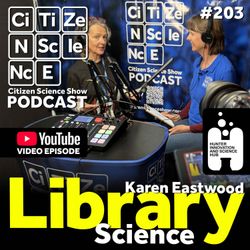
203. How Newcastle Library and Museum is Turning Preschoolers into Citizen Scientists with Karen Eastwood | #203
10:59||Season 5, Ep. 203Recorded live in the Citizen Science Show podcast booth at the Hunter Science Festival, Dani sits down with Karen Eastwood, Program Delivery Officer for Newcastle Museum and Library, to talk about the library's new Little Bang Discovery Club, a hands on program turning preschoolers into "little scientists" (and their parents into "lab assistants").Karen shares what's inside the program's take home discovery box, how the four week journey builds to a mini science fair, and how Newcastle Museum and Library is reshaping what a library can be, from a citizen science corner to borrowable fossil kits and a chill out zone stocked with genuine dinosaur poo.More Informationhttps://newcastlelibraries.com.au/About the Hunter Science Festival 2026https://newcastlemuseum.com.au/what-s-on/current-events/national-science-week-hunter-science-festivalhttps://www.hish.org.au/If you enjoy this podcast, please like and subscribe to our show wherever you get your podcasts.Leave us a review and share this show with your friends.It really helps us to reach more citizen scientists, like you.Contact the ShowWe are always looking for more guests to tell us about interesting citizen science projects, research and events.You can email us at: info@citizenscienceshow.comWatch on YouTubehttps://www.youtube.com/@citizenscienceshow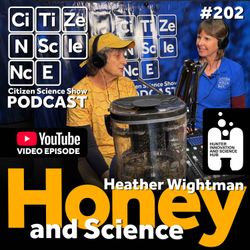
202. Fresh Honey, Hard Science: Inside the Fight to Save Australia's Bees with Heather Wightman | #202
18:31||Season 5, Ep. 202Recorded live in the Citizen Science Show podcast booth at the Hunter Science Festival, Dani sits down with Heather Wightman, biosecurity officer for the Hunter Valley Amateur Beekeepers, to find out about a gold medal winning Australian invention putting fresh, spin-your-own honey on the kitchen bench, and what's changed for beekeepers since Varroa mite arrived in Australia.Heather explains how a new mite strain resistant to standard treatments is spreading, what it could mean for pollination and our food supply, and how everyday beekeepers have quietly become citizen scientists, monitoring their hives every month just to keep their bees alive.More Informationhttps://www.facebook.com/profile.php?id=100063618307697https://hunter-valley-amateur-beekeepers.org.au/About the Hunter Science Festival 2026https://newcastlemuseum.com.au/what-s-on/current-events/national-science-week-hunter-science-festivalhttps://www.hish.org.au/If you enjoy this podcast, please like and subscribe to our show wherever you get your podcasts.Leave us a review and share this show with your friends.It really helps us to reach more citizen scientists, like you.Contact the ShowWe are always looking for more guests to tell us about interesting citizen science projects, research and events.You can email us at: info@citizenscienceshow.comWatch on YouTubehttps://www.youtube.com/@citizenscienceshow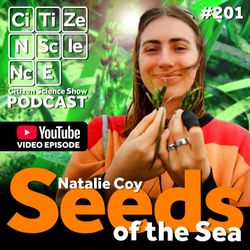
201. The Rainforests of the Ocean: Natalie Coy on Seagrass, Seeds and the Fight to Save Posidonia Australis (#201)
45:32||Season 5, Ep. 201Beneath the waves, one of the ocean's most important ecosystems is hiding in plain sight.In this episode, Sarah talks with Natalie Coy, a PhD candidate and founder of the citizen science project Seeds of the Sea, about Posidonia australis, an endangered, flowering seagrass found only in Australia, and home to a single clone in WA stretching 180 kilometres, making it the largest known organism on Earth.Natalie explains why seagrass meadows matter so much for carbon storage, coastline protection and marine nurseries, why NSW's Posidonia populations behave so differently to WA's, and what's driving the species' decline, from swing moorings to stormwater runoff.She also shares how everyday Australians can help simply by photographing seagrass they spot while diving, boating or walking the beach, and her hope for a future of small, community-led restoration projects up and down the coast.More Informationhttps://www.seedsofthesea.org/https://www.unsw.edu.au/research/cmsi/research-projects/Marine-Environmental-Sustainability/seeds-of-the-seaIf you enjoy this podcast, please like and subscribe to our show wherever you get your podcasts.Leave us a review and share this show with your friends.It really helps us to reach more citizen scientists, like you.Contact the ShowWe are always looking for more guests to tell us about interesting citizen science projects, research and events.You can email us at: info@citizenscienceshow.comWatch on YouTubehttps://www.youtube.com/@citizenscienceshow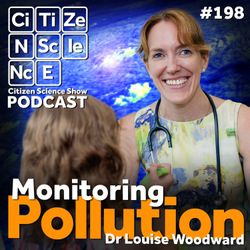
198. The Paediatrician Who Didn't Wait: Dr Louise Woodward and the Fight for Clean Air Over Darwin (#198)
32:38||Season 4, Ep. 198What's really in the air over Darwin, and why wasn't anyone measuring it?In this episode, Dani talks with Dr Louise Woodward, a Darwin paediatrician and founder of CHANT (Community Healthy Air Northern Territory), Australia's first community-led air quality monitoring project. Louise explains how a Senate inquiry into a major gas industry expansion in Darwin Harbour revealed the Northern Territory wasn't monitoring for toxic chemicals like benzene at all, and how her community responded by crowdfunding over $130,000 to buy their own mobile air monitor.The conversation covers the real health risks of living near gas processing facilities, why "natural gas" isn't the safe, clean option it's marketed as, and how CHANT's advocacy has already led to formal prosecution over misreported emissions, plus what Louise sees as reason for real hope in the twilight of the fossil fuel era.More Informationhttps://www.healthyairnt.au/https://www.facebook.com/profile.php?id=61591465550473https://www.abc.net.au/news/2026-08-05/nt-epa-prosecutes-gas-company-inpex/106998434If you enjoy this podcast, please like and subscribe to our show wherever you get your podcasts.Leave us a review and share this show with your friends.It really helps us to reach more citizen scientists, like you.Contact the ShowWe are always looking for more guests to tell us about interesting citizen science projects, research and events.You can email us at: info@citizenscienceshow.com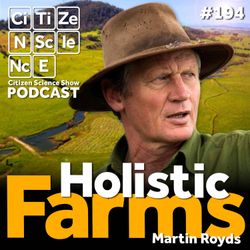
194. Listening to the Land: How Regenerative Farmer Martin Royds Is Rewriting the Rules of Agriculture (#194)
58:34||Season 4, Ep. 194What is the Australian landscape trying to tell us, and are we actually listening?In this episode, host John Marsh sits down with regenerative farmer Martin Royds of Jillamatong, near Braidwood, NSW, to explore a philosophy built over four decades: reading weeds, soil and water as feedback rather than problems to be sprayed away.Martin shares how a simple handful of urea outperforms a toxic, decades-old herbicide, why his nutrient-dense grass-finished beef was once rejected by a supermarket for having the "wrong" coloured fat, and the remarkable story of senior fast food executives travelling from the United States to see his water-positive farming system firsthand.The conversation ranges from Indigenous knowledge and the hidden marketing history behind "grain-fed" beef, to Sydney's multi-billion-dollar water infrastructure debate, and closes with Martin's simple advice for anyone, farmer or city dweller, wanting to reconnect with the living systems around them.More InformationJillamatong:https://jillamatong.com.au/Soils for Life interview:https://soilsforlife.org.au/the-jillamatong-story/Australian Museum Interview:https://australian.museum/learn/climate-change/climate-solutions/future-now-makers/green-solutions/The Mulloon Institute:https://mullooninstitute.org/2019/11/06/braidwoods-secret-water-supply-waiting-in-weir/Soils for Life PODCAST:https://podcasts.apple.com/au/podcast/making-decisions-in-the-dry-with-martin-royds/id1582582411?i=1000709860943The Land Article:https://www.theland.com.au/story/9179532/drought-resilience-lessons-from-aussie-farmers/Charlie Arnott Podcast Episode:https://charliearnott.com.au/s2-e3-martin-royd/ABC:https://www.abc.net.au/news/rural/2010-09-21/braidwood-farmer-looks-to-diversification/6195980Landcare:https://landcarensw.org.au/landcarers-holistic-management-approach-is-paying-dividends-during-drought/Matters Journal:https://mattersjournal.com/stories/regenerative-agricultureQPRC ‘Region’:https://region.com.au/braidwoods-secret-water-supply-waiting-in-weir/335126/ If you enjoy this podcast, please like and subscribe to our show wherever you get your podcasts.Leave us a review and share this show with your friends.It really helps us to reach more citizen scientists, like you.Contact the ShowWe are always looking for more guests to tell us about interesting citizen science projects, research and events.You can email us at: info@citizenscienceshow.com