Share
Citizen Science Show
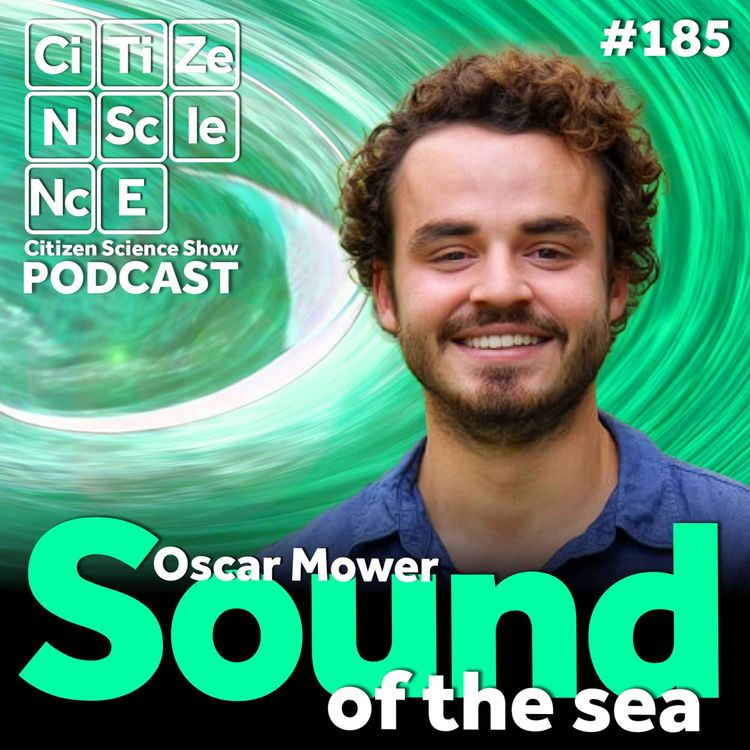
#185 The Sound of a Whale You've Never Heard: How Oscar Mower Taught a Computer to Listen
At just 22, Oscar Mower built a machine learning model that can listen to raw ocean audio and pick out the call of a minke whale in real time, one of the most elusive and under-studied baleen whales in the world.
In this episode, Oscar explains how he turned whale song into images a computer could learn to recognise, why minke whales have been so hard to track using traditional methods, and how the same technology could one day help prevent ship strikes, one of the leading causes of whale mortality worldwide.
We also talk about the ongoing tension between abundant ocean audio data and the much scarcer resource of labelled data, why NOAA's open data repository made this project possible, and what a University of Sydney undergraduate research paper turned into: a tool with the potential to help map minke whale migration routes for the first time.
More Information
https://www.fisheries.noaa.gov/national/science-data/sounds-ocean-environmental-and-anthropogenic
If you enjoy this podcast, please like and subscribe to our show wherever you get your podcasts.
Leave us a review and share this show with your friends.
It really helps us to reach more citizen scientists, like you.
Contact the Show
We are always looking for more guests to tell us about interesting citizen science projects, research and events.
You can email us at: info@citizenscienceshow.com
More episodes
View all episodes
194. #194 Listening to the Land: How Regenerative Farmer Martin Royds Is Rewriting the Rules of Agriculture
58:34||Season 4, Ep. 194What is the Australian landscape trying to tell us, and are we actually listening?In this episode, host John Marsh sits down with regenerative farmer Martin Royds of Jillamatong, near Braidwood, NSW, to explore a philosophy built over four decades: reading weeds, soil and water as feedback rather than problems to be sprayed away.Martin shares how a simple handful of urea outperforms a toxic, decades-old herbicide, why his nutrient-dense grass-finished beef was once rejected by a supermarket for having the "wrong" coloured fat, and the remarkable story of senior fast food executives travelling from the United States to see his water-positive farming system firsthand.The conversation ranges from Indigenous knowledge and the hidden marketing history behind "grain-fed" beef, to Sydney's multi-billion-dollar water infrastructure debate, and closes with Martin's simple advice for anyone, farmer or city dweller, wanting to reconnect with the living systems around them.More InformationJillamatong:https://jillamatong.com.au/Soils for Life interview:https://soilsforlife.org.au/the-jillamatong-story/Australian Museum Interview:https://australian.museum/learn/climate-change/climate-solutions/future-now-makers/green-solutions/The Mulloon Institute:https://mullooninstitute.org/2019/11/06/braidwoods-secret-water-supply-waiting-in-weir/Soils for Life PODCAST:https://podcasts.apple.com/au/podcast/making-decisions-in-the-dry-with-martin-royds/id1582582411?i=1000709860943The Land Article:https://www.theland.com.au/story/9179532/drought-resilience-lessons-from-aussie-farmers/Charlie Arnott Podcast Episode:https://charliearnott.com.au/s2-e3-martin-royd/ABC:https://www.abc.net.au/news/rural/2010-09-21/braidwood-farmer-looks-to-diversification/6195980Landcare:https://landcarensw.org.au/landcarers-holistic-management-approach-is-paying-dividends-during-drought/Matters Journal:https://mattersjournal.com/stories/regenerative-agricultureQPRC ‘Region’:https://region.com.au/braidwoods-secret-water-supply-waiting-in-weir/335126/ If you enjoy this podcast, please like and subscribe to our show wherever you get your podcasts.Leave us a review and share this show with your friends.It really helps us to reach more citizen scientists, like you.Contact the ShowWe are always looking for more guests to tell us about interesting citizen science projects, research and events.You can email us at: info@citizenscienceshow.com
197. #197 Sharing is Caring: Dr Jessie Oliver on where to share and find Citizen Science
19:27||Season 4, Ep. 197It's National Science Week, and Dani welcomes back a familiar face: Dr Jessie Oliver, Technical Manager of SciStarter Australia, the local home for finding and sharing citizen science projects across the country.Jessie walks through what's currently on the platform, from backyard biodiversity spotting on iNaturalist to hyperlocal air-quality monitoring in Tasmania, and explains why physics-based projects remain rare while health and technology projects are on the rise.She also opens up about her background in tech design research, why so many people feel discouraged by "unfriendly" citizen science apps, and why that's rarely their fault. Plus: how project organisers, big or small, can get their own citizen science projects listed on SciStarter Australia, and why Jessie is personally offering to help anyone who gets stuck.Event detailsHunter Science Festival, Newcastle Museum, Sunday 23 August 2026. Free entry. Presented by the Hunter Innovation and Science Hub (HISH) and the City of Newcastle, supported by the Australian Government.https://newcastlemuseum.com.au/More Information https://www.scistarteraustralia.au/If you enjoy this podcast, please like and subscribe to our show wherever you get your podcasts.Leave us a review and share this show with your friends.It really helps us to reach more citizen scientists, like you.Contact the ShowWe are always looking for more guests to tell us about interesting citizen science projects, research and events.You can email us at: info@citizenscienceshow.com
196. #196 Physics by Stealth: Associate Professor Dr Karen Livesey on Nanomagnets, Ghost Fungus and Getting Australia Curious About Science
22:48||Season 4, Ep. 196It's National Science Week, and this episode is all about physics and the people bringing it to life across Australia.Dani sits down with Associate Professor Dr Karen Livesey, Chair of the NSW branch of the Australian Institute of Physics and a 2023 Marie Curie Lecturer, to talk about the AIP's first-ever stall at the Hunter Science Festival, the 2026 Marie Curie Lecture Series touring the country with astrophysicist Dr Karelle Siellez, and the surprising careers a physics degree can lead to.Karen also shares her "secret mission" to find physics hiding in the everyday world, from rainbows to nanomagnets, and reveals her other secret life running Ghost Fungus Tours, where quantum mechanics meets glowing mushrooms in the bush.Catch the AIP at the Hunter Science Festival on Sunday 23 August at Newcastle Museum, and the Marie Curie Lecture live in Newcastle on Friday 21 August.Event detailsHunter Science Festival, Newcastle Museum, Sunday 23 August 2026. Free entry. Presented by the Hunter Innovation and Science Hub (HISH) and the City of Newcastle, supported by the Australian Government.https://newcastlemuseum.com.au/More Information https://www.aip.org.au/Women-in-Physics-Lecture-TourIf you enjoy this podcast, please like and subscribe to our show wherever you get your podcasts.Leave us a review and share this show with your friends.It really helps us to reach more citizen scientists, like you.Contact the ShowWe are always looking for more guests to tell us about interesting citizen science projects, research and events.You can email us at: info@citizenscienceshow.com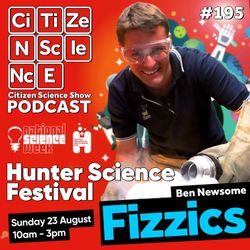
195. #195 From Bone-Conducted Sound to Moon Dirt: Ben Newsome Wants Every Kid to Think Like a Scientist
24:12||Season 4, Ep. 195Ben Newsome, founder and director of Fizzics Education, has spent over two decades turning kids into scientists, reaching more than four million young Australians since 2004. In this episode, recorded ahead of National Science Week 2026, Ben joins Dani to unpack this year's "Seeds of Science" theme, runs three physics experiments live on the podcast using nothing but a balloon, a straw and his own elbow, and shares how student-designed experiments have made it all the way to the International Space Station, including an ongoing project tackling real NASA engineering problems for future lunar habitation.Ben also previews his lineup for the Hunter Science Festival at Newcastle Museum on Sunday 23 August, a free, family-friendly event where the Citizen Science Show will be running a live pop-up podcasting booth.If you're in the Hunter region, come find us and say hello.Event detailsHunter Science Festival, Newcastle Museum, Sunday 23 August 2026. Free entry. Presented by the Hunter Innovation and Science Hub (HISH) and the City of Newcastle, supported by the Australian Government.https://newcastlemuseum.com.au/More Informationhttps://www.fizzicseducation.com.au/https://www.fizzicseducation.com.au/free-resources/https://www.fizzicseducation.com.au/programs/https://www.churchilltrust.com.au/fellow/benjamin-newsome-nsw-2013/https://www.virtualexcursionsaustralia.com.au/events/inspiring-australia-training/https://www.facebook.com/fizzicseducationhttps://www.youtube.com/@fizzicseducationhttps://www.lakemac.com.au/Events-directory/Council-events/Maker-Con-26https://www.virtualexcursionsaustralia.com.au/events/scifest-2026/https://avachallenge.org/simple-seeds/https://stars-align.org/If you enjoy this podcast, please like and subscribe to our show wherever you get your podcasts.Leave us a review and share this show with your friends.It really helps us to reach more citizen scientists, like you.Contact the ShowWe are always looking for more guests to tell us about interesting citizen science projects, research and events.You can email us at: info@citizenscienceshow.com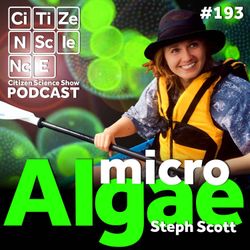
193. #193 Down the Rabbit Hole: How Steph Scott Is Turning Pond Scum Into Planetary Wonder
26:41||Season 4, Ep. 193Two billion years ago, a microscopic organism invented photosynthesis and changed the fate of life on Earth.In this episode, we go micro with Steph Scott, founder of the East Coast Algae Group and a micro-documentary filmmaker who spends her days peering through a microscope at nearly 1,000x magnification.Steph unpacks the surprising world of microalgae, from beta-glucan compounds that could replace antibiotics in aquaculture, to the ancient partnership between algae and fungus that gave rise to every plant on land, to the citizen science platforms anyone can use to get involved.It's a journey into a universe most of us walk past every day without ever seeing.More Informationhttps://coastalscience.noaa.gov/monitoring-and-assessments/pmn/East Coast Algae Website https://sites.google.com/ecabiosystems.com/eastcoastalgaebio/home?authuser=0The Microlage Project websitehttps://sites.google.com/ecabiosystems.com/eastcoastalgaebio/the-microalgae-project?authuser=0Steph's photography sitehttps://sites.google.com/ecabiosystems.com/srm/images?authuser=0Citizen science initiativesOzGreen' MacroMusterhttps://www.ozgreen.org/macromusterIf you enjoy this podcast, please like and subscribe to our show wherever you get your podcasts.Leave us a review and share this show with your friends.It really helps us to reach more citizen scientists, like you.Contact the ShowWe are always looking for more guests to tell us about interesting citizen science projects, research and events.You can email us at: info@citizenscienceshow.com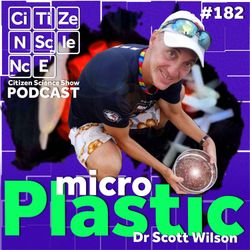
182. #182 Tracking the Invisible Flood: Dr Scott Wilson on Microplastics and the Power of Citizen Science
36:36||Season 4, Ep. 182Microplastics are everywhere, in our waterways, our food, and now, our bloodstreams, yet almost entirely invisible to the naked eye. In this episode, Sarah talks with toxicologist Dr Scott Wilson, research director of AUSMAP (the Australian Microplastic Assessment Project), about what plastic actually is, why "degradable" packaging is a greenwashing trap, and how bioaccumulation and biomagnification carry plastic particles up the food chain and into our bodies.Scott shares AUSMAP's citizen science model, which has trained over 1,300 volunteers to track microplastic pollution at hundreds of sites nationally, including some confronting news about Bondi Beach, and explains how that data is already shaping national policy and international treaty negotiations.It's a sobering picture, but one with a clear, hopeful message: everyday choices and community science really can drive change.More Informationhttps://www.ausmap.org/https://www.implasticfree.com/https://www.beatthemicrobead.org/https://www.unep.org/inc-plastic-pollutionIf you enjoy this podcast, please like and subscribe to our show wherever you get your podcasts.Leave us a review and share this show with your friends.It really helps us to reach more citizen scientists, like you.Contact the ShowWe are always looking for more guests to tell us about interesting citizen science projects, research and events.You can email us at: info@citizenscienceshow.com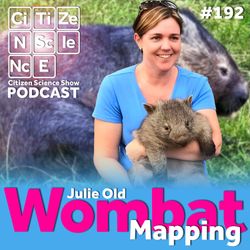
192. #192 Meet the Wombat Warriors: Inside Julie Old's Citizen Science Mission to Save Australia's Underrated Marsupial
39:33||Season 4, Ep. 192Wombats might be Australia's most underrated marsupial, and Associate Professor Julie Old has spent over a decade making sure they get the attention they deserve.In this episode, Dani talks with Julie about founding WomSAT, the citizen science project that's logged more than 25,000 wombat sightings, burrows and scat records since 2015.They cover the devastating impact of sarcoptic mange, how everyday Australians can train to treat wild wombats, the real science behind those famous cube-shaped droppings, and why wombat burrows are both an ecological treasure and, occasionally, a farmer's headache.Plus: how you can become a wombat warrior yourself, and why World Wombat Day (22 October) deserves a spot on your calendar.More Informationhttps://womsat.org.au/womsat/If you enjoy this podcast, please like and subscribe to our show wherever you get your podcasts.Leave us a review and share this show with your friends.It really helps us to reach more citizen scientists, like you.Contact the ShowWe are always looking for more guests to tell us about interesting citizen science projects, research and events.You can email us at: info@citizenscienceshow.com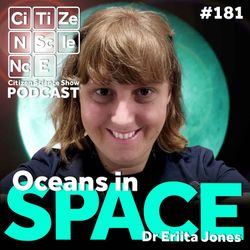
181. #181 From Mars to Bushfires: Dr Eriita Jones Brings Planetary Science Back Down to Earth
38:43||Season 4, Ep. 181This episode leaves Earth's oceans behind, almost.Planetary scientist Dr Eriita Jones from Curtin University joins Sarah to explore what it really takes for a planet to support life, from deep-sea hydrothermal vents to supercooled microbes floating in Earth's stratosphere.Eriita explains why Europa, Enceladus and Mars remain the solar system's most tantalising candidates for extraterrestrial oceans, shares the ethical questions she believes should come before any human mission to Mars, and reveals how her Mars-hunting techniques are now helping predict bushfires and floods right here at home.Plus: how accurate is *The Martian*, really, and how you can get involved in real space science through citizen projects like the Desert Fireball Network.More Informationhttps://science.nasa.gov/citizen-science/https://science.nasa.gov/citizen-science/impact-flash/https://science.nasa.gov/citizen-science/planet-hunters-tess/If you enjoy this podcast, please like and subscribe to our show wherever you get your podcasts.Leave us a review and share this show with your friends.It really helps us to reach more citizen scientists, like you.Contact the ShowWe are always looking for more guests to tell us about interesting citizen science projects, research and events.You can email us at: info@citizenscienceshow.com