Share
Citizen Science Show
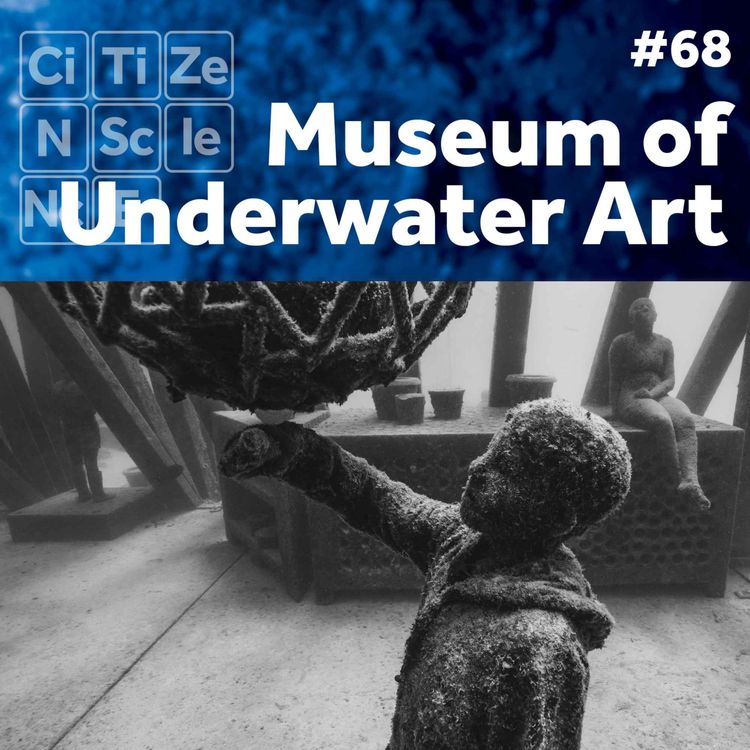
#068 - Dr Adam Smith & Christian Bartens | MOUA | Ocean Sentinels
Season 2, Ep. 68
•
Our guests tonight are involved in an incredible underwater project that has gained a Guinness World Record, and combines art, science and humanity to protect the Great Barrier Reef in Australia.
Based at John Brewer Reef, the Museum Of Underwater Art has created artificial habitats that attract and provide shelter for marine species and promote coral growth and regeneration. The unique installations have created awareness for the challenges of corals worldwide and revitalized and rejuvenated areas of the reef, fostering a thriving ecosystem where corals flourish and fish thrive.
More Information
https://www.youtube.com/@moua-museum-of-underwater-art
More episodes
View all episodes
210. The Forest on Our Doorstep: Inside the Slow, Patient Work of Bringing Munibung Hill Back to Life | #210
49:20||Season 5, Ep. 210Thousands of people drive past Munibung Hill in Speers Point every day without knowing it shelters a rare coastal rainforest.Andy talks with Gavin Ord, a volunteer with The Friends of Munibung Hill Landcare, about clearing walls of lantana, why his group has never needed to plant a single tree, and the careful balancing of sunlight, erosion and habitat that brings native bush back.Gavin shares the hill's quarry history and Aboriginal stories, the native hibiscus that surprised everyone, and why iNaturalist records matter.He also explains how walkers can help find microbats, swamp wallabies, frogs and endangered glossy black cockatoos, and what the hill has given him personally.More Informationhttps://www.lakemacquarielandcare.org.au/About-Landcare/Landcare-groups-maphttps://www.munibunghill.com/If you enjoy this podcast, please like and subscribe to our show wherever you get your podcasts.Leave us a review and share this show with your friends.It really helps us to reach more citizen scientists, like you.Contact the ShowWe are always looking for more guests to tell us about interesting citizen science projects, research and events.You can email us at: info@citizenscienceshow.comWatch on YouTubehttps://www.youtube.com/@citizenscienceshow
209. Anyone Can Discover a Planet: Inside Zooniverse, the World's Biggest Citizen Science Platform | Dr Laura Trouille | #209
35:25||Season 5, Ep. 209Could you discover a planet from your couch?Sarah talks with Dr Laura Trouille, astronomer, Vice President of Science Engagement at the Adler Planetarium and one of the leaders of Zooniverse, the world's largest online platform for people-powered research. With more than three million registered volunteers in over 190 countries, Zooniverse lets anyone classify galaxies, hunt for planets, tag penguins, help cancer research or transcribe history.Laura shares how Galaxy Zoo crashed its servers on launch day, why machines still need human eyes, the idea of "knitting sweaters" projects that choose people over AI, and how volunteers found a planet in a four-star system that theory said could not exist.She also explains how anyone can build their own project for free.More Informationhttps://www.zooniverse.org/https://www.adlerplanetarium.org/If you enjoy this podcast, please like and subscribe to our show wherever you get your podcasts.Leave us a review and share this show with your friends.It really helps us to reach more citizen scientists, like you.Contact the ShowWe are always looking for more guests to tell us about interesting citizen science projects, research and events.You can email us at: info@citizenscienceshow.comWatch on YouTubehttps://www.youtube.com/@citizenscienceshow
208. Citizen Scientists Help to Uncover the Hidden Whales of the Mediterranean | #208
39:23||Season 5, Ep. 208What if your next holiday helped protect whales?Sarah talks with Maddalena Jahoda, biologist and science communicator at the Tethys Research Institute, which has been studying whales and dolphins in the Mediterranean for 40 years with the help of around 7,500 citizen scientists.Maddalena shares how research holidays began as a way to fund the very first surveys, what participants actually do on six-day trips in the Pelagos Sanctuary and Greece's Ionian Sea, and how their data helped create a marine protected area across Italy, France and Monaco.She also talks about returning sperm whales, scarred fin whales, the threat of ship strikes, why the Mediterranean is a natural laboratory for climate change, and why AI will never replace the connection citizen science builds between people and the sea.More Informationhttps://whalesanddolphins.tethys.org/https://www.facebook.com/IonianDolphinProject/https://www.facebook.com/profile.php?id=100064499420279https://www.facebook.com/baleneedelfinihttps://www.youtube.com/user/TETHYSResInstIf you enjoy this podcast, please like and subscribe to our show wherever you get your podcasts.Leave us a review and share this show with your friends.It really helps us to reach more citizen scientists, like you.Contact the ShowWe are always looking for more guests to tell us about interesting citizen science projects, research and events.You can email us at: info@citizenscienceshow.comWatch on YouTubehttps://www.youtube.com/@citizenscienceshow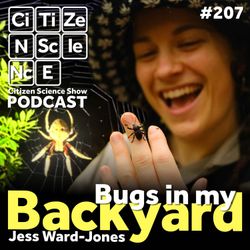
207. How Bugs in My Backyard Turns Every Garden into a Biosecurity Frontline | #207
33:54||Season 5, Ep. 207November is about to get a whole lot buggier. Dani talks with Jess Ward-Jones, Citizen Science Coordinator at the Invasive Species Council of Australia, about Bugs in My Backyard Week, a national springtime snapshot of Australia's invertebrates running from 16 to 22 November.All you need is a phone and the iNaturalist app to help spot invasive species before they spread and learn about the 300,000 native invertebrates around us, most of which are still undescribed. Jess shares why this spring's bogong boom is a hopeful sign, what a new fire ant incursion in Sydney means, how a citizen scientist recorded the rare Dinosaur Ant, and why snails fire love darts at each other.She also explains the invasion curve, warns about invaders like the polyphagous shot-hole borer and giant African snail, and shares easy ways to make your garden better for native bugs.Jess Photo Credit: Hayden StarrMore Informationhttps://bughunt.org.au/bugs-in-my-backyard-week/https://www.facebook.com/invasivespeciescouncilhttps://invertebratesaustralia.org/https://inaturalist.ala.org.au/projects/bugs-in-my-backyard-yard-week-2026https://www.facebook.com/Invertebrates.Australiahttps://www.instagram.com/invasive_species_council/If you enjoy this podcast, please like and subscribe to our show wherever you get your podcasts.Leave us a review and share this show with your friends.It really helps us to reach more citizen scientists, like you.Contact the ShowWe are always looking for more guests to tell us about interesting citizen science projects, research and events.You can email us at: info@citizenscienceshow.comWatch on YouTubehttps://www.youtube.com/@citizenscienceshow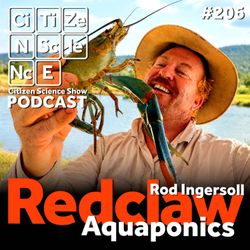
206. From Gold Mines to Gumboots: Rod Ingersoll's Unlikely Path to Redclaw | #206
49:12||Season 5, Ep. 206How does a frog surveyor end up running a wildlife sanctuary in the PNG Highlands, working with gold mines, earning an OBE and then farming redclaw in far north Queensland? Dani sits down with Rod Ingersoll, environmental scientist, conservationist, farmer and author of Crayfish Cashflow: From Gold Mines to Gumboots.Rod talks about his 22 years in Papua New Guinea, where he survived kidnappings and hundreds of gunpoint encounters, and helped protect 200,000 hectares of wilderness that turned up more than 50 species new to science. He tells us how he bought an aquaculture farm while looking for a single barramundi and lost it all in Cyclone Jasper. He also explains how he rebuilt with grants, volunteers and citizen science, running his own trials on pond aeration and redclaw trapping that challenge what many farmers believe.It's a conversation about resilience and community, and about how much you can learn from your own backyard.In this episode:- Running a PNG wildlife sanctuary with no outside management- Talking his way out of danger as the "Jungle Warrior"- Working inside the mining industry to protect wilderness- Surviving Cyclone Jasper and rebuilding Barron River Redclaw- Farm-based research on aeration and trapping techniques- Aquaponics, food security and starting smallContent note: This episode includes a reference to suicide. If you need support, contact Lifeline on 13 11 14.More Informationhttps://book.australianredclaw.com/https://www.aquaponicgardener.com.au/https://barronriverredclaw.com.au/https://www.facebook.com/BarronRiverRedclawhttps://www.facebook.com/AustralianRedclawCrayshttps://www.facebook.com/AquaponicGardenerIf you enjoy this podcast, please like and subscribe to our show wherever you get your podcasts.Leave us a review and share this show with your friends.It really helps us to reach more citizen scientists, like you.Contact the ShowWe are always looking for more guests to tell us about interesting citizen science projects, research and events.You can email us at: info@citizenscienceshow.comWatch on YouTubehttps://www.youtube.com/@citizenscienceshow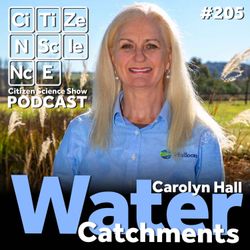
205. Giving Nature a Hand: Carolyn Hall on Rehydrating Australia, One Creek at a Time | #205
43:41||Season 5, Ep. 205Where does the water go when it rains, and what happens when we help the landscape hold onto it?In this episode, John Marsh talks with Carolyn Hall, CEO of the Mulloon Institute, a not-for-profit restoring the health of Australian landscapes through landscape rehydration, science and community engagement. Carolyn explains how the Institute grew from a single farm pilot into a 23,000 hectare catchment project, why winning farmers' trust comes before moving any earth, and what twenty years of data reveals about more water, not less.She shares how restored creeks help protect Sydney's drinking water, buffer against drought, flood and bushfire, and even brought native fish back from the brink, plus the regulatory red tape doubling the cost of restoration, and simple ways city dwellers can reconnect with the waterways around them.More Informationhttps://mullooninstitute.org/https://www.scienceaustralia.org.au/carolyn-hall/https://waterpartnership.org.au/partner-logos/mulloon-institute/https://www.youtube.com/watch?v=KNK3wAtDHq0https://www.facebook.com/MulloonInstitute/If you enjoy this podcast, please like and subscribe to our show wherever you get your podcasts.Leave us a review and share this show with your friends.It really helps us to reach more citizen scientists, like you.Contact the ShowWe are always looking for more guests to tell us about interesting citizen science projects, research and events.You can email us at: info@citizenscienceshow.comWatch on YouTubehttps://www.youtube.com/@citizenscienceshow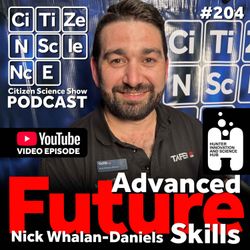
204. AR Welding, AI and the Future of Advanced Manufacturing with TAFE NSW's Nick Whalan-Daniels | #204
15:51||Season 5, Ep. 204Recorded live in the Citizen Science Show podcast booth at the Hunter Science Festival, Dani sits down with Nick Whalan-Daniels, Head Teacher for the TAFE NSW Manufacturing Centre of Excellence at Tighes Hill, to talk about a stand packed with augmented reality welding, robotics and renewable energy demonstrations.Nick explains how the new centre is training the Hunter's next generation of advanced manufacturing workers, why the region's shift away from coal is creating fresh skills gaps in renewable energy, and how "micro skills" and "micro credentials" are opening trade pathways to people who've never picked up a tool.Plus, why Nick thinks AI is a tradesperson's friend, not their replacement.More Informationhttps://www.tafensw.edu.au/specialty-schools/manufacturing-centres-of-excellenceAbout the Hunter Science Festival 2026https://newcastlemuseum.com.au/what-s-on/current-events/national-science-week-hunter-science-festivalhttps://www.hish.org.au/If you enjoy this podcast, please like and subscribe to our show wherever you get your podcasts.Leave us a review and share this show with your friends.It really helps us to reach more citizen scientists, like you.Contact the ShowWe are always looking for more guests to tell us about interesting citizen science projects, research and events.You can email us at: info@citizenscienceshow.comWatch on YouTubehttps://www.youtube.com/@citizenscienceshow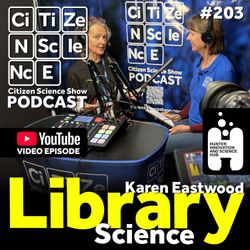
203. How Newcastle Library and Museum is Turning Preschoolers into Citizen Scientists with Karen Eastwood | #203
10:59||Season 5, Ep. 203Recorded live in the Citizen Science Show podcast booth at the Hunter Science Festival, Dani sits down with Karen Eastwood, Program Delivery Officer for Newcastle Museum and Library, to talk about the library's new Little Bang Discovery Club, a hands on program turning preschoolers into "little scientists" (and their parents into "lab assistants").Karen shares what's inside the program's take home discovery box, how the four week journey builds to a mini science fair, and how Newcastle Museum and Library is reshaping what a library can be, from a citizen science corner to borrowable fossil kits and a chill out zone stocked with genuine dinosaur poo.More Informationhttps://newcastlelibraries.com.au/About the Hunter Science Festival 2026https://newcastlemuseum.com.au/what-s-on/current-events/national-science-week-hunter-science-festivalhttps://www.hish.org.au/If you enjoy this podcast, please like and subscribe to our show wherever you get your podcasts.Leave us a review and share this show with your friends.It really helps us to reach more citizen scientists, like you.Contact the ShowWe are always looking for more guests to tell us about interesting citizen science projects, research and events.You can email us at: info@citizenscienceshow.comWatch on YouTubehttps://www.youtube.com/@citizenscienceshow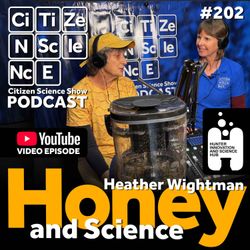
202. Fresh Honey, Hard Science: Inside the Fight to Save Australia's Bees with Heather Wightman | #202
18:31||Season 5, Ep. 202Recorded live in the Citizen Science Show podcast booth at the Hunter Science Festival, Dani sits down with Heather Wightman, biosecurity officer for the Hunter Valley Amateur Beekeepers, to find out about a gold medal winning Australian invention putting fresh, spin-your-own honey on the kitchen bench, and what's changed for beekeepers since Varroa mite arrived in Australia.Heather explains how a new mite strain resistant to standard treatments is spreading, what it could mean for pollination and our food supply, and how everyday beekeepers have quietly become citizen scientists, monitoring their hives every month just to keep their bees alive.More Informationhttps://www.facebook.com/profile.php?id=100063618307697https://hunter-valley-amateur-beekeepers.org.au/About the Hunter Science Festival 2026https://newcastlemuseum.com.au/what-s-on/current-events/national-science-week-hunter-science-festivalhttps://www.hish.org.au/If you enjoy this podcast, please like and subscribe to our show wherever you get your podcasts.Leave us a review and share this show with your friends.It really helps us to reach more citizen scientists, like you.Contact the ShowWe are always looking for more guests to tell us about interesting citizen science projects, research and events.You can email us at: info@citizenscienceshow.comWatch on YouTubehttps://www.youtube.com/@citizenscienceshow