Share

Celeste's Podcast
Relax your Mind - 10 Minute Meditation
https://www.youtube.com/watch?v=Yfcd4oRHBKoIn the hurrying busstle of our lives it is sometimes necessary to take a short break inbetween to refuel our mind-body-soul. Only then can we become more creative and productive once we have balanced out our energy. Even you need time out for yourself.
Guided Short Meditation Script For Relaxation and Healing Your Mind and Body
Assume a comfortable position. Shut your eyes as you start to relax. Take in a deep breath, now breathe out, emptying your lungs entirely. And once again. Take full deep breaths, never strained or rushed.
Breathe in strength, breathe out tension. Carry on to relax. Take full deep breaths. Allow your breathing to discover its own natural, unhurried pace. And as ideas enter your mind, allow them to go without attachment.
As you sink into comfort and relaxtion, see yourself enjoying a waterfall of sunlight and crystal water.
As the sun and water cascade over your body, you absorb the healing oxygen carried inside your blood vessels through your whole system.
The oxygen heals and releases the holding contraction of each muscle. Every muscle becomes taffy… soft and pliable.
All tension gives way to easiness. The cascade of sunlight reminds you of the source of all energy.
Your whole being sings with release and renewal as the source refuels and strengthens your body and spirit.
In healingall is possible. As you heal your spirit and body your gifts to the universe emerge. The healing vision of cascading sunshine and water is yours whenever you want it to be.
Your breathing is unstrained. Relax your toes and feet. Relax your ankles and knees. Relax your leg muscles. Your breathing is deep and relaxing. Relax your fingers and hands. Loosen up your wrists and elbows. Relax your arms.
Your breathing is slow and peaceful. Feel your feet and legs get heavy and warm. Feel your hands and arms get warm and heavy. Simply breathe as your thoughts come and go.
Center on your breathing. Let go of tension as your body falls into a state of peaceful quiet. Unclench your jaw. Relax your face and let go of your tongue. Your heartbeat and breathing are serene and steady. Your breathing is relaxed. Void your mindof all thoughts. Your abdomen is soft and warm, your limbs are heavy and warm.
Watch your thoughts come and go like clouds in the sky. Your hands are warm, your forehead is cool, and your breathing is deep and relaxed. Feel your breath sink lower and lower into your lungs. As your shoulders drop, feel your breath fill the upper part of your chest. You’re relaxed and peaceful.
Your breathing is deep and relaxed. Warm hands, cool forehead. Empty your lungs totally. Hear the silence grow as your mind hushes. You are relaxed, calm, and centered. Your heart rate and breathing are calm and steady. Warm hands, cool forehead. Your breathing is deep and relaxed. Enjoy the quiet.
When you know it is time to leave this place, begin to return. Let your breathing bring you back. Gently take a couple of deep breaths. Pause a moment. Remember one last time that you can return to this place any time you wish. It may only be for a moment, but it will remind you of the sense of peacethat’s yours.
Open your eyes. Feel the goodness of the meditation for a few moments.
More episodes
View all episodes

22. Color Relaxation Hypnosis for better Sleep
18:25||Season 4, Ep. 22SLEEP Hypnosis using Colour Imaging Technique A lot of people have a hard time “turning of their thoughts” and fear that because of this theycannot experience hypnosis. In reality, “turning off our thoughts” is impossible. Like a fishswims in water, people swim in thoughts. During this session you will think, you mind may drift, you may even remember something important that you don’t want to forget later, or get an idea. You do not have stress about whether this will keep you from experiencing hypnosis, it is actually a part of hypnosis. What I will be doing in this session is not having you ‘shut off the mind” -- that would be impossible, but rather, learning how to not follow a thought and just let it be a thought without becoming entangled in it.This session is designed to teach you how to sleep. Perhaps your sleep difficulties come fromsensitivity to light, noises, stress, or even your sleep partner’s movements. It is amazing, but the mind actually has the ability to learn how to tune out these distractions and even use them as sleep cues to reinforce healthy sleep patterns. Do you want change in your life? Do you want to be able to bring life to the depression yoursleeplessness has brought you? Do you want to set aside the anxieties of the day and see yourlife in a new way? Are you ready for peaceful nights of profound rest and to wake up in themorning feeling your very best?Then let’s begin!As you relax in the chair where you are, make sure that you prepare for this time switching off any digital devices. By focussing solely on this session, you will get the most benefit and discover new pathways for deep and relaxing sleep.Dr. Celeste Fabrie
21. Male Psychology - Do Real Men Meditate?
18:12||Season 4, Ep. 21Do real men meditate?The short answer is yes, real men meditate!Mindfulness has been proven to reduce stress and anxiety as well as help you become more productive in your life (by focusing on the present). By practising mindfulness, men can learn how to deal with emotions such as anger or sadness rather than suppressing them which results in feelings of depression or isolation.Mindfulness can be a very powerful tool for men to use, especially when it comes to improving your life. One of the many benefits that mindfulness can have is helping you cope with difficult emotions and negative thoughts. There is a lot of talk about mindfulness for women but it can also benefit men. Men have to deal with stress in their everyday lives. Work, family life and a wide selection of responsibilities and worries all contribute to stress in men. Stress over long periods of time can cause all sorts of mental and physical health problems. Men tell you what is on their minds, but not what is in their heart,” – I have had a lot of experience with male psychology and one of the biggest issues with my male patients was the word PURPOSE in Life.Most of their problems started after they had lost their jobs, had major relationship problems, are a war veteren, serious accidents, loss of face, huge life setbacks, going on pension, not having hobbies, interests, strong frienship circle etc. Once that „purpose“ for example, worker, husband, father, sportsman etc was taken away from them then their real troubles started. Not coincidentally, boys and men commit the vast majority of violent acts, from domestic violence, to murder. Many struggle with expressing empathy and compassion.The problem does not seem to center on mindfulness. Men practice high levels of mindfulness in a variety of arenas in our society. At military boot camps and police academies, men learn to control their breathing and focus on a target before firing a weapon. Sports are a great training ground for mindfulness: Basketball players are taught to clear their mind by going through a routine when shooting a free throw. Being in “the zone” is active meditation in its highest form. Notice, however, that in all of these mindfulness practices, compassion is removed from the equation. These boys and men are being trained for win-or-lose competition. “It has been historically dangerous for a man to be vulnerable,” or a pussy. Men’s resistance to explore interior emotions like compassion is the result of hundreds of years of conditioning.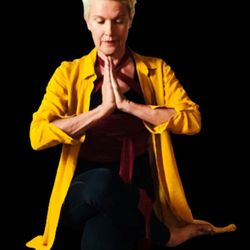
20. Mindfulness & Buddhism Explained
11:33||Season 3, Ep. 20Explaning the difference between mindfulness and Buddhism?Many of my clients and patients ask me this question.Video: https://www.youtube.com/watch?v=Yfcd4oRHBKoBuddhist meditation was designed not to make us happier, but to radically change our sense of self and perception of the world.In terms of the modern mindfulness movement, the real difference is that Buddhist meditation happens in an overall context, the noble eightfold path, which gives the practice depth and meaning. Without such a context, mindfulness is still useful, but is more like a healthy mental exercise than a true spiritual path.What is the Noble Eightfold Path simplified?The Fourth Noble truth charts the method for attaining the end of suffering, known to Buddhists as the Noble Eightfold Path. The steps of the Noble Eightfold Path are Right Understanding, Right Thought, Right Speech, Right Action, Right Livelihood, Right Effort, Right Mindfulness and Right Concentration. Mindfulness is, however, a specialty of Buddhism. Buddha himself referred to it as “the path to enlightenment.Do all Buddhists do “mindfulness practice”?Many Buddhists do specifically undertake practices meant to cultivate mindfulness. Others may not, but it’s fair to say that the lion’s share of Buddhist practices help produce in us a greater sense of awareness and connection to the people and world around us. The very name “Buddha,” after all, means “Awakened One.”What are the “Four Foundations of Mindfulness?The Four Foundations of Mindfulness, as taught by the historical Buddha and ever since, are key things that we should practice being mindful of. These are: our bodies, our feelings, our minds themselves, and phenomena / the world around us. By training in mindfulness of these four foundations, we see, more and more, how all of these things really are, outside from our conceptual ideas of them. Training in the four foundations of mindfulness is training in seeing reality with more clarity and equanimity.We suffer, according to Buddhism, not because there’s anything inherently wrong with us but simply because we misunderstand the nature of reality. Buddhist practice helps us come to terms with reality by cultivating our awareness of the “three characteristics of experience,” also known as “the three marks of existence.”These are: impermanence, suffering, and insight—words that will likely be familiar to anyone who’s read about Buddhism more than a little. Contemplating them, can help liberate us from fear and suffering. Living mindfully and with concentration, we see a deeper reality and are able to witness impermanence without fear, anger, or despair.”Dr. Celeste Fabrie
19. Mindfulness 🧘♀️ Journey into Yourself
29:20||Season 3, Ep. 19https://www.youtube.com/watch?v=xQoi3R0CQTkLearning to let go and Embrace “Acceptance”An effective 30 minutes Mindfulness Meditation where all negative thoughts, as well as your pain, sufferings, anxieties, fears, stress, and other problems miraculously dissolve into the air as you walk through different stages of your life and encounter people from your past and present. A wonderful spiritual cleansing effect that works wonders when nothing else seems to help. Mindfulness is a type of meditation in which you focus on being intensely aware of what you're sensing and feeling in the moment, without interpretation or judgment. Practicing mindfulness involves breathing methods, guided imagery, and other practices to relax the body and mind and help reduce stress. Join me on this relaxing cosmic journey listening to the soothing backround music and beautiful symphony of pictures. You will feel completely relaxed and full of positive energy after this 20 minute "Cosmic" mindfullness training. The 8 Pillars of Mindfulness 1: Attention & the Now. A core component of mindfulness practices, is focusing attention on the present moment. ... 2: Automaticity. ... 3: Judgment. ... 4: Acceptance. ... 5: Goals. ... 6: Compassion. ... 7: The Ego. ... 8: Integration. Origin of Mindfulness Mindfulness originated from ancient eastern and Buddhist philosophy and dates back around 2500 years. The concept of mindfulness was introduced to the western world by Jon Kabat-Zinn.We can think of mindfulness as two parts: attention and curiosity. Attention means that we take time to focus our attention and awareness on physical sensations, thoughts that come up, or the environment around us. The practice of mindfulness meditation is gaining popularity in the business world. It's gained interest because it changes the wiring and makeup of our brains; allowing us to better manage stress and anxiety. Mindfulness and meditation are mirror-like reflections of each other: mindfulness supports and enriches meditation, while meditation nurtures and expands mindfulness. ... Mindfulness is the awareness of “some-thing,” while meditation is the awareness of “no-thing.” Dr. Celeste Fabrie - Psychologist
18. South Africa Cannabis Background and USA 🇺🇸 Cannabis Churches ⛪️
18:51||Season 3, Ep. 18https://www.youtube.com/watch?v=7Hf-wfOqvDs&t=10sToday I am going to discuss the first two Cannabis Churches ever started in the USA which is rather interesting considering the reasons behind such decisions and the founders who started this movement.But first of all I would like to explain as a Psychologist how I became involved in this continuous and rather controversial debate with the Cannabis Industry and the many interesting characters who support this strongly growing movement worldwide: From medical, legal, political, religious and businessmen to name a few.
16. Pastors Speak out for Cannabis
11:40||Season 2, Ep. 16https://www.youtube.com/watch?v=zjy83gjktL0&t=180sAcross America 🇺🇸 pastors are discussing their views on cannabis as a medicinal and health benefit quoting from the Bible.
15. Let's Talk Cannabis and Gospel
43:32||Season 2, Ep. 15Videolink: https://youtu.be/Ktl5gJtQPf8 Teil zwei " Lets Talk Cannabis and Gospel" zwischen Psychologin Dr. Celeste Fabrie und Theologe Güny von der Johannesgemeinde in Gummersbach, Deutschland - eine unabhängige Evangelisch-Lutherische Gemeindekirche. Dies ist eine Offenbarung über Gott, Cannabis, die Bibel und viele weitere unveröffentlichte Fakten, die die Kirche in ihren verschlossenen Gewölben hält. Güny Eliezer Wirths aus Gümmersbach im nordrhein-westfälischen Kreis ist einer der wenigen theologischen Fachleute weltweit, der über langjährige Erfahrung in allen Religionen und Glaubensrichtungen wie auch im Altertum der Welt verfügt. Er wird seinen Zuhörern erstaunliche Geheimnisse und unveröffentlichte Fakten offenbaren. Nicht nur sein erstaunliches Wissen wird Sie kennenlernen, sondern auch seine musikalischen Talente werden Sie auf eine emotionale Reise ins Unbekannte mitnehmen. Es ist eine große Ehre, dieses wandelnde biblische Enzyklopädium mit allen zu interviewen. Güni teilt mit uns sein Fachwissen und seine Sichtweise sowie die Kontroverse um Cannabis. Er klärt uns mit seinen langjährigen Forschungen über die Zusammenhänge von Cannabis und der Bibel auf, sowie über die medizinischen Eigenschaften und Verdampfungstechniken im Vergleich zum Verbrennen. In der Sonntagsschule wird einem nicht beigebracht, dass Cannabis im Alten Testament vorkommt, aber die moderne Wissenschaft zeigt, dass Cannabis von Moses und den alten Israeliten sakramental verwendet wurde. Nach den Forschungen der polnischen Etymologin Sula Benet, deren Arbeit Chris Bennett später erweiterte, wird Cannabis im hebräischen Originaltext der Bibel fünfmal namentlich erwähnt. Das hebräische Wort "kaneh bosm" ist Cannabis, wurde aber später fälschlicherweise mit anderen Pflanzen wie Kalmus oder aromatischem Rohr übersetzt. Das Alte Testament erzählt die Geschichte des Judentums und wie über einen Zeitraum von tausend Jahren die Anbetung des einzigen israelitischen Gottes schließlich die einheimische polytheistische Kultur verdrängte. Die alten Israeliten lebten zur Zeit Moses um 1500 v. Chr. im Land Kanaan (dem heutigen Israel und Palästina) inmitten der kanaanitischen Kultur, die die Muttergöttin und viele Götter verehrte.
14. Let’s talk “Lies”
25:16||Season 2, Ep. 14Today, I am going to talk about lying and deception.Lying, on one hand, refers to telling someone something that is not accurate. In this sense, it is either verbal or written. Deception, on the other hand, is much broader. It usually refers to causing someone to believe something false as the truth. But both can leave a path of destruction behind them. I am going to begin my discussion with just 5 questions.1. When was the last time someone lied to you?2. How many times can you recall a close friend or partner who has lied to you?3. Do you feel sad, disgusted or helpless when you are lied to continuously?4. When somone lies to you, do you tell them this or do you just shrug it off?5. Have relationships been ruined because of lies and deception?The fact is, why do we often accept lies as been part of human nature? Why don’t we just address those people with their own lies? Many of us do not know how to recognise those signs of behaviour and often fall victim to all kinds of manipulation tactics and devious conduct.I will briefly explain my background as to why I am doing this podcast today. IntroductionMy job as a psychologist and criminologist (profiling) often overlap each other. In fact both professions really are beneficial to understand your client, patient and generally speaking most people we come into contact with on a daily basis either privately or in business.My profession entails making accurate decisions based on facts from criminal, military, police and psychological records etc. How often have I sat in front of prisoners and have been told „I am innocent and should not be sitting here“. How often have I had dealings with lawyers and doctors who could lie the „hind legs off a donkey!“ Then there were the soldiers wanting to end their services in one way or the other and try to convince us professionals that they had psychological disorders. Strangely enough PTSD (post-traumatic stress disorder) was one of the most common.When it comes to pathological liars, it is observed that people who have an antisocial personality disorder (APD) and narcissistic personality disorder (NPD) indulge in lying. A pathological liar is often goal-oriented (i.e., Very focused in order to get their way.). They are the most challenging of patient and client to expose! They often create a great amount of destruction in their paths.The list is long and each one of us have had to deal with family, colleagues, bosses, friends etc. But in my profession it is important to read the verbal and non-verbal behaviour of our clients and patients as well as keep a clear conscious facing dilemmas of all kinds and also human tragedies that people are faced with and where deception is their only way out to feeding their families or survival against all odds.The digital world has created unfortunately a breeding ground for deceptive practices. Social media platforms encourage this phenomenal development much to the detriment of mental health. We are social creatures wanting to be part of the big picture but at what price?I have been asked several times if men are bigger liars than women. A study has found that men don’t just rank higher than women in terms of how often they lie – they also consider themselves better liars. This is according to researchers from the University of Portsmouth. Men were more than twice as likely to consider themselves expert liars who got away with it.https://www.youtube.com/watch?v=26gaGbzrSEQ&t=7s