Share
Cato Event Podcast
What Would Online Age Verification Mean for Speech, Privacy, and Youth Online Safety? Examining the Potential Impact of Recent Legal Cases and Proposed Legislation
A new wave of age-verification laws for app stores and internet services like social media have been proposed at both state and federal levels. These laws raise pressing constitutional concerns about privacy, free speech, and the proper role of government in regulating online behavior. The Supreme Court decided Free Speech Coalition v. Paxton, a pivotal case challenging a requirement that users verify their age, such as by uploading government-issued identification, to access online adult content. While well-meaning adults may want to protect young people from certain harms both online and off, these proposals could also threaten to chill lawful speech, compromise privacy, and set dangerous precedents. Requiring age verification for online content could open the door to broader government controls over political speech and dissent. These burdens are felt not only by “Big Tech” but also by smaller companies that may be providing services for more specific communities. Furthermore, it’s unclear if these proposals will actually improve online safety. Are there alternative approaches that can balance the concerns of parents with the freedoms of users of all ages and the benefits of innovation? How should courts, policymakers, and parents weigh the potential trade-offs between the benefits and risks for kids and teens online? This event will explore the legal, technological, and ethical implications of age-verification laws.
More episodes
View all episodes
SHUFFLE Directed by Benjamin Flaherty
01:05:40|Winner of the Grand Prize for Documentary at the 2025 South by Southwest Film Festival, Shuffle is filmmaker Benjamin Flaherty’s powerful exposé of unintended consequences in American health policy. Through intimate portraits of people seeking recovery from opioid addiction, Flaherty reveals how federal mandates—particularly within the Affordable Care Act and Medicaid—have unintentionally enabled predatory rehab operators to turn human suffering into revenue streams. The federal mandates are likely even increasing and subsidizing suffering, rather than reducing it.Join us for a screening of Shuffle in the Cato Institute’s F. A. Hayek Auditorium, followed by a discussion of what the film uncovers about the incentives that are shaping America’s addiction-treatment system and how policymakers, clinicians, and advocates can work toward more effective solutions.
Violent Saviors: The West’s Conquest of the Rest
01:32:23|In the name of material progress, the West has sought to develop and frequently exploit the less-developed “rest.” William Easterly will draw from 400 years of history—ranging from the conquest of the Americas and the Atlantic slave trade to colonization in Asia and Africa and the invention of the Third World—to show how the West has justified different forms of intervention in the societies it has purportedly intended to improve. Easterly will explain why development based on consent, choice, and human agency is superior to an approach that neglects dignity, focuses narrowly on material improvements, and too often justifies various degrees of coercion. Deirdre McCloskey will comment on the fundamental role of freedom in development.
Fiscal Democracy in America: How a Balanced Budget Amendment Can Restore Sound Governance
01:03:30|As America’s debt climbs and the danger of a fiscal crisis grows, is it time to add a constitutional guardrail? In Fiscal Democracy in America, Kurt Couchman proposes a principles-based balanced budget amendment (BBA) to address the persistent deficits in Washington in a flexible and politically feasible manner. Marc Goldwein draws on his experience in fiscal commissions and provides a challenge to the BBA as a silver-bullet solution to America’s fiscal crisis.How could a principles-based BBA work, and how would it handle entitlement programs, recessions, and crises? Why did previous attempts at a BBA fail, and what makes a principles-based BBA different? Is a BBA just a distraction from adopting specific policy reforms? And if an amendment were adopted, do other reforms need to occur to complement its implementation? Join us for a discussion with Kurt Couchman and Marc Goldwein, moderated by Romina Boccia.Fighting for the Freedom to Learn: Examining America’s Centuries-Old School Choice Movement
01:01:39|The school choice movement is often seen as a modern, partisan undermining of a cherished institution: public education. Fighting for the Freedom to Learn shows that the struggle for educational freedom is not new but an enduring part of US history. It is rooted in traditions of parents and communities shaping how children learn and perpetual struggles for people without political power to get the education they believe they need.Join us to discuss this important new book!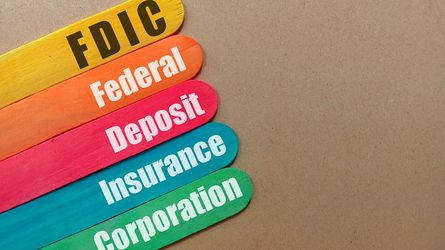
The Risks of Expanding FDIC Deposit Insurance
51:31|Since the 1930s, the federal government has used the Federal Deposit Insurance Corporation’s (FDIC) deposit insurance to justify its increased involvement in banking. Now, in the name of supporting community banks, some policymakers have proposed raising the FDIC insurance cap from $250,000 to $10 million. They claim that in the wake of the bank failures of 2023, depositors fled from small banks and moved their money to “too big to fail” institutions that enjoy implicit government backing. Increasing the FDIC insurance cap, these policymakers argue, will encourage depositors to stay with community banks.Yet for nearly a century, Congress and the FDIC have continued to expand and increase federal involvement in banking, creating a complex web of regulation, increasing costs for consumers, and burdening American taxpayers. Despite these changes being implemented in the name of safety, a select few institutions still clamor for special protection.The proposed expansion will magnify all these problems, making the system more fragile and less resilient, and forcing millions of Americans to bear its cost. Sadly, this latest expansion would come at a time when an incredibly small share of depositors even need additional coverage.Join leading policy experts for a discussion on why expanding FDIC insurance is not only unnecessary but could also ultimately harm both the economy and the community banks it was designed to protect.China’s Economy and How It Matters for US Policy
01:26:57|How does China’s economy affect US policy? US policymakers have responded to perceived dangers from China by using industrial policy, export controls, and attempting to reduce supply chain vulnerabilities. Some analysts have concluded that China is developing a sizable technological capacity that poses a challenge to the US economy, and potentially constrains US foreign policy. How much leverage has the Chinese economy purchased for policymakers in Beijing? What does the ceasefire in the US-China trade war tell us about the future of US-China competition? Finally, what do these questions about China’s economy tell us about the security threat China potentially poses?Getting the answers to these questions right is essential for crafting an effective US grand strategy. This policy forum brings together two leading experts on Chinese political economy to discuss what China’s economy really looks like and what the implications are for US grand strategy.A Conversation with George White
32:19|George White, CEO of The C.M. Paula Company—an Ohio-based holding company with businesses across several industries—recently joined Scott Lincicome to discuss the impact of the Trump administration’s tariffs on several of C.M. Paula’s affiliated companies. White discussed the intricacies of managing firms with a global network of suppliers, the costs the tariffs have imposed on the companies’ operations, and the adjustments that he and his teams have made to operate amid an uncertain business environment.