Share
Catching North Stars
The Power of language, metaphor, and archetypes to transform your view of yourself and the world with Mary Reynolds Thompson
Season 1, Ep. 20
•
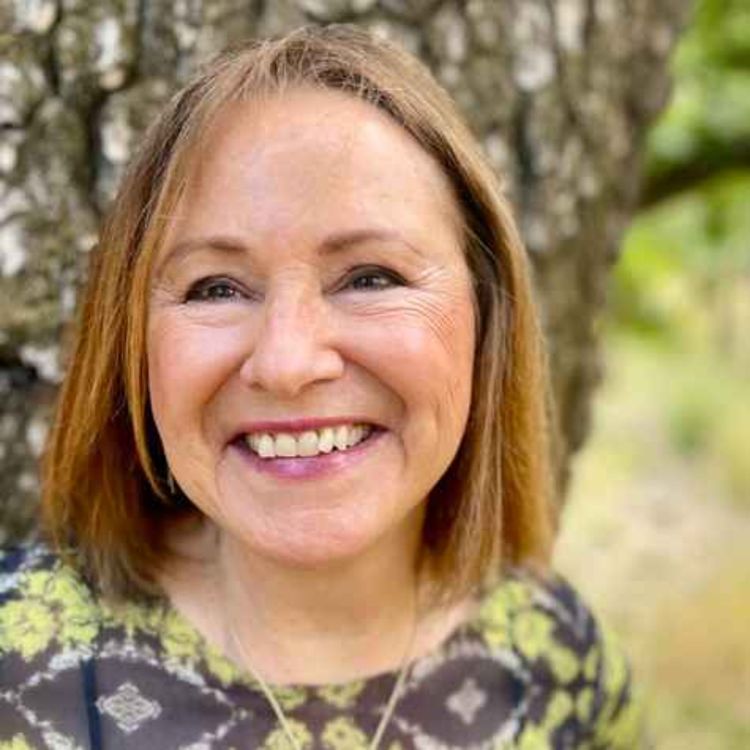
In this episode, I speak with Mary Reynolds Thompson - author of The Way of the Wild Soul Woman: 5 Archetypes to Unleash Your Full Feminine Power (and other books) about her relationship with nature and the wild. We talk about how she became a facilitator of Journal and Poetry Therapy; her love of language and metaphor as well as the power of archetype to change the ways we see ourselves as well as why archetypes are particularly important for women to work with. Mary shares generously from her own experiences as well as walking us through some exercises she uses with her own clients.
More episodes
View all episodes

8. Fighting the Silence: Columbine, Body-Based Healing, and the Stories We Think Are Too Small with Krista Hanley
48:09||Season 2, Ep. 8Krista Hanley got out of Columbine High School quickly. She didn't see the worst of it, and she wasn't close friends with anyone who died. For years, she took that as proof she had no story to tell - of course, that was never the truth. I met Krista during a self-defense class I signed up for, and later I volunteered with her as an assistant instructor for many years. So, I've known her in the space of being both adrenalized and intensely vulnerable. I've known that she was a Columbine survivor for a long time, but we've never talked about it in detail. I waited a long time to read her memoir, How to Survive a Mass Shooting: A Columbine Memoir. I found it to be incredibly powerful, providing insight to the insidious ways trauma takes over the life of a teenage girl - while she struggles with the intensity of survivors' guilt and still being a teen needing to navigate her life and future.We talk about the writing group that convinced her that her story was important to tell and that she did, indeed, have a book. We also talk about the padded-suit self-defense classes where, she says, she wasn't replaying her trauma but fighting "the silence and the hurt and the guilt and the grief and the shame." Then we get into the harder questions. How does picking up a gun change a person? Why do we keep asking survivors, including the Parkland students, to fix what adults won't? There's so much in this conversation that I haven't finished thinking about it.
7. The Funny Thing about Humans: How Addressing the Elephants in the Room Creates Cultures That Thrive through Major Organizational Change with Ronica Roth
01:00:10||Season 2, Ep. 7Ronica Roth has elephants all over her house now, and after this conversation I have them running through my head. Ronica co-wrote Practice Makes Culture with Christine Hudson, and has spent 25 years helping leaders change culture, often sneaking it in under the label of agile adoption because culture wasn’t what anyone wanted to buy. We talked about the elephants organizations refuse to see: the system nobody sees whole, the emotions we pretend we left at home, and the stories everyone knows and no one speaks. I thought about the elephant sanctuary I visited in South India, and the mahouts who never take the animal’s size for granted - much as we cannot take our emotional elephants for granted. Ronica argues that culture shifts through small practiced behaviors, like having an accountabili-buddy or a leader who agrees to stay quiet in his own meeting, and not through the all-hands announcement. Then we got to AI and the stress it brings, where she calls herself curious and terrified. Humans sit at the center of every change, and telling people about a change is not the same as making room for them to engage with it. I keep thinking about her point that learning prompts is easier than caring for the elephants, and I wonder why so many organizations will choose the easier one.
6. Be in the Room Cognitive Privacy, Childhood Development, and What We Owe Kids in the Age of AI with Timothy Cook
01:04:14||Season 2, Ep. 6Timothy Cook teaches third grade in Amman, Jordan, and has taught in five countries so far. His knowledge of childhood development is grounded in working directly with 9-year-olds in the classroom as well as collecting stories from colleagues who teach children of various ages. In our conversation, Tim shares some of the activities he uses to understand how kids are affected by the various technologies that are at their disposal now. For example, he ran a boat-building experiment with his students in 2013 and again last year, providing real insight into what children do when left to figure something out for themselves. We also talk about cognitive foreclosure — when a child misses the key developmental windows for building skills because AI cuts the learning process short. We also get into whether it matters if harm comes from actual bad actors or is due to a lack of consideration of factors that disrupt young people's development. We talk about cognitive privacy, the surveillance problem in schools, and why the question of what assessment is for has become suddenly urgent. Finally, Tim shares some ways to use AI that keep children thinking and trying. Timothy's book Built to Think is forthcoming from MIT Press, and this conversation is a good early look at why it matters.
5. Fumbling the Bag: AI, Democratic Backsliding, and What Our Systems Reveal About Us with Sofia Romansky
57:56||Season 2, Ep. 5Sofia Romansky studies AI ethics in the military domain, which sounds like a narrow specialty until she explains what that actually covers: not just autonomous weapons, but every decision-support system informing every level of a military command structure. She asks important questions about human accountability when the judgment call has been pre-digested by a large language model before it reaches the person responsible for making decisions. I met Sofia at the Conference on World Affairs in Boulder, and I've been wanting to have this conversation ever since. We discuss automation bias, the war-bias how the dominant language of AI (English) has a bias towards going to war, and Responsibility by Design (noting responsibility has to be part of the design and cannot be assumed). Sofia is not an AI pessimist, she says, but she has healthy doubts — and her reasons have less to do with the technology than with what she's watching us do with it.
4. Just Because We Can Build It Women's Health, the Funding Gap, and What Happens with All That Data with Dr. Rachel Miller
47:05||Season 2, Ep. 4Rachel Miller has been thinking about the doctor-patient relationship since she was 13, when an anesthesiologist made her feel comfortable before a procedure and she decided that was the kind of physician she wanted to be. What she didn't anticipate was practicing inside healthcare enterprises that span twelve states, under political conditions that have put OBGYNs on the front lines of a crisis they can't publicly talk about, with patients arriving at 15-minute appointments carrying pages of data from their Oura Ring. In this episode, we get into the gap Rachel keeps identifying in the women's health tech space — between what founders build, what investors fund, and what physicians can actually do with the tools once they reach clinical practice. She's also someone sitting with The Power of Now while navigating all of this, and that tension between presence and the relentless forward motion of innovation runs underneath the whole conversation. This is not a simple "technology will fix healthcare" episode. It's more interesting than that.
3. Things with Layers: Branded Selves, Broken Politics, and the Cost of Losing Friction with Jose Marichal
01:00:39||Season 2, Ep. 3Jose Marichal has spent two decades studying what social media has done to politics — not just how campaigns use it, but what it's done to the way people relate to each other and to their own sense of political identity. In this conversation, Alexis and Jose trace a line from the early Facebook groups of the Obama campaign to the concept of "ontological enclosure" — Jose's term for the algorithmically constructed environment that walls off dissent and mistakes that narrowing for freedom. They also get into philosopher Byung-Chul Han's distinction between "things" (layered, resistant, worth sitting with) and "non-things" (smooth, optimized, immediately digestible), and what it means that we're building platforms — and selves — that reward the second kind. Jose's key provocation: the work of politics has always required moving someone 10% toward your position, and we've built an entire media environment that makes that feel both harder and less satisfying than simply performing rightness.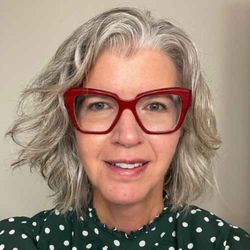
2. Hyperadaptive and Human: Envisioning the Future of Work, Deliberately with Melissa Reeve
47:30||Season 2, Ep. 2In this episode, I sit down with Melissa Reeve to talk about her up-coming book, Hyperadaptive: Rewiring the Enterprise to Become AI Native. We cover a lot of ground, including: how Melissa become inspired to write this book (spoiler alert - she's got a deep history with lean manufacturing, scaling agile, learning organizations and more that informs her thinking). Melissa's take is optimistic and urgently important. She sees possibility in human curiosity and creativity and she frames her thinking from a systems-perspective. If organizations want to develop through this new AI era, they are going to need to change in substantial ways. This requires mechanisms for expertise to be shared in a bi-directional way and for organizations to flatten their hierarchical structures. Luckily, we have Melissa's framework to help guide us through this.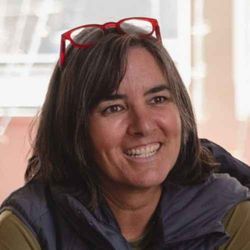
1. Riding the Sand Worm: Thriving through Tech Disruption with Crystal Street
50:17||Season 2, Ep. 1In the first episode of our second season, we switch our attention to the elephant in the room - AI and other major tech incursions. I have subtitled this season, "Being Cyborgs," borrowing from Donna Haraway's important essay, "the Cyborg Manifesto," which speaks to this moment in ways I am sure Haraway did not anticipate. I sit down with journalist and block-chain innovator, Crystal Street, to discuss the ways she is working with AI to build infrastructure to enable true intellectual sovereignty for those who are losing their careers as AI encroaches on all kinds of thought work. We talk transformation and survival, sand worms, Tantra, and ways of subverting big tech.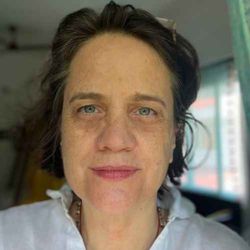
25. Being Alive: Transforming the physical and spiritual using art as an anchor with Nathalie Latham
37:16||Season 1, Ep. 25In this episode of Catching North Stars, I speak with Nathalie Latham, a multidisciplinary artist and filmmaker whose work bridges art, healing, and environmental advocacy. Nathalie shares how her creative path took a profound turn after a diagnosis of advanced cancer in 2009. What began as a meditative drawing practice during treatment became a powerful tool for navigating recovery, depression, and PTSD in the years that followed. We talk about the role of art and spiritual practice in healing, the courage it takes to transform suffering into creative expression, and how Nathalie’s work continues to connect storytelling, activism, and the natural world.